Blog of the Society for Menstrual Cycle Research

“Lives will be saved” – the FDA decision not to ban Bayer’s birth control pill

April 18th, 2012 by Elizabeth Kissling

Guest Post by Holly Grigg-Spall


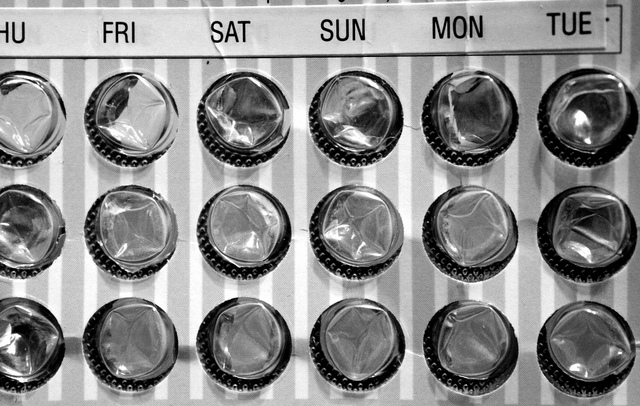
Photo by Monik Markus // CC 2.0

How many of us read the inserts included in a packet of pills? How many decide not to take the pills on the basis of the information enclosed?  The rapidly reeled-off list of side effects stated at the end of a televised advert for a new drug has more comedic value than serious consequence to most. If we do have doubts, many of us will rely on the reassurance of a doctor, and then take the pill anyway.

I recently wrote a piece for Ms. Magazine Blog outlining the FDA reappraisal of top-selling oral contraceptives Yaz and Yasmin. It was discovered that drugs such as these containing drospirenone held a significantly higher risk of causing blood clots. Research by the FDA and other bodies suggested this conclusion was definite, while research funded by the pharmaceutical company behind these billion-dollar products, Bayer, suggested the opposite conclusion to be true: that there was no increased risk evident. A team of experts, some of which had financial ties to the company, voted against having the pills taken off the market when presented with the question of whether the risks of taking these pills outweighed the benefits.

Bayer is facing 11,300 lawsuits from women who have been seriously injured and family members of women who have died after taking one of the company’s bestselling hormonal contraceptives. They have settled the first 500 addressed with a total of $110 million in payouts. When discussing this process with a lawyer representing many of the women I was told that Bayer would do anything to avoid a trial wherein the full spectrum of their marketing strategies would be revealed.

The FDA came to the decision to add into the insert included with these drugs a statement of the discovery of “conflicting” research that suggested the pills had a higher risk of causing blood clots  (up to three times higher) – acknowledging the discrepancy of the research funded by Bayer and giving it equal standing as that performed by other bodies including the FDA itself.

Prior to this decision being announced a number of women’s health groups got together to write a letter to the FDA asking that they look again at the question put to the board of experts. They argued that the correct comparison for the board to consider would be between drospirenone-containing contraceptives and other oral contraceptives, and not between Bayer’s drugs and unwanted pregnancy. In the final sentence, they remarked that they believed that “lives will be saved” if the pills were no longer on the market. They met with the FDA and one representative asked that the FDA strongly reassess its acceptance of Bayer-funded research. Another asked that the drugs no longer be prescribed and that the FDA “get back to the arc of history and progress that protects women while supporting their contraceptive needs.”

The new labeling will state the “conflicting” findings and advise that women speak to their doctor if concerned. The official statement on this decision, relayed through the media coverage, reminded women that when compared to pregnancy the risk of development of a blood clot was insignificant. They also asked that women currently taking the drugs not stop doing so. Despite the FDA studies suggesting the blood clot risk is particularly high for women under 30, the statement compounded the understanding that the issue is only relevant to those over 35,  those overweight, those that smoke, and those with relevant medical history.

Yaz, Yasmin and Ortho Evra patch increase risk of blood clots

December 14th, 2011 by Laura Wershler

Blood clots are a serious, if rare, side-effect of hormonal contraceptives. If left untreated, clots can lead to debilitating, or fatal, strokes. The increased risk of blood clots in users of some hormonal birth control brands has been the subject of several recent news stories.

In early December, Health Canada asked Bayer Inc. to change the labels on Yaz and Yasmin, two of the most popular birth control pills, because use of the drugs is linked to higher rates of blood clots.

According to a November 2011 story at cbc.ca/news, health problems associated with these two drugs include stroke, deep vein thrombosis, pulmonary embolism and heart attack.

The concern surrounds the progestin – drospirenone –  used in Yaz and Yasmin. Although promoted as being associated with less bloating and clearer skin than other progestins, drospirenone is also associated with a “1.5-to-three fold increased risk of experiencing a clot compared to women using other birth control drugs.

What this means in real terms varies from study to study, but one study led by Susan Jick of Boston University found the rate of non-fatal blood clots to be 30.8 per 100,000 among women taking Yaz or Yasmin (the only drugs containing drospirenone) compared to 12.5 per 100,00 among those taking pills containing the older, more common progestin levonorgestrel.

In related news this past week, advisers to the FDA recommended that Johnson and Johnson revise the label on its Ortho Evra birth control patch to better explain the risk of blood clots. Use of the patch has been associated with a higher rate of blood clots for several years. Publicity about the clot risk has no doubt contributed to a 50% decline in sales in the last five years. The formulary problem with the patch is its higher dose of estrogen compared to other pills.

The FDA advisers also recommended more detailed description of blood clot risks for Yaz and Yasmin.

What caught my eye in both stories were the take home messages from those requiring these label changes to women using these drugs.

Health Canada said women should talk with their doctors about the risks and benefits of taking drospirenone-containing oral contraceptives but did not urge women to stop using Yaz and Yasmin.

The FDA’s reproductive health advisers “voted 19-5 that the benefits of the weekly Ortho Evra patch outweigh its risks, including a potentially higher risk of dangerous blood clots that can cause heart attack, stroke and other life-threatening problems.”

I want to know why the five FDA panelists opposed to this decision think the benefits of the patch DO NOT outweigh the risks.

These news stories beg the question:  Should women be concerned enough about the increased blood clot risk associated with Yaz, Yasmin and the Ortho Evra patch to stop using these brands?  If you take these drugs, are you concerned?

If adverse publicity about blood clots resulted in a sharp decline in sales of the Ortho Evra patch, we should expect to see a similar decline in sales of Yaz and Yasmin.

The cbc.ca article reports that the family of a Toronto woman, who died of a large pulmonary embolism after taking Yasmin, has filed the first individual civil suit against Bayer Inc. in Canada. It also states that “more than 10,400 individual lawsuits related to the two pills have been filed in the U.S.”  Not to mention the class action suits related to these drugs currently in progress in both countries.

One thing is certain, the litany of stories about the adverse effects of hormonal contraceptives is not about to end anytime soon. Stay tuned.

Post to Twitter Post to Plurk Post to Yahoo Buzz Post to Delicious Post to Digg Post to Facebook Post to MySpace Post to Reddit Post to StumbleUpon

Pill-pushers

January 19th, 2011 by Holly Grigg-Spall

yaz

In the LA Times earlier this month, under the banner ‘oddities, musings and news from the health world,’ came a rewritten press release masquerading as one of the above that stated ‘Birth control pills using 24-day regimen may be more effective.’ Firstly, just from the headline, it is clear that this is one of those tell-us-what-we-already-know stories that only serve to reveal the amount of money wasted on research that concludes the obvious. If a woman takes a pill more days a month than she does not, then she’s less likely to forget to take that pill. Plus the more pills you take, the more days of the year, the less likely your body will find an opportunity to ovulate. The article, and the study on which it is based, attempts to suggest that 24-day regimen pills are more effective for other reasons. Other reasons like those pills – or should we say pill, as there’s only one this is referring to, without actually being named as Yaz – contain drospirenone.

Bayer, the pharmaceutical company behind Yaz, has long implemented an aggressive marketing campaign in the promotion of its now number-one selling product. However, it has never before been able to claim that Yaz was more effective as birth control than any other pill on the market. This is one reason why the adverts emphasize other benefits – that Yaz is acne-clearing, reduces bloat. Originally Yaz was also suggested to improve a woman’s mood all-round, and reduce PMS-related anxiety and depression. The FDA had Bayer change that message, so that now Yaz can only be said to improve symptoms of PMDD, although the definition and existence of this syndrome is still in controversy. Birth control pills are hard to market when, until now, they could all only be said to be as effective at their primary objective – preventing pregnancy – as each other. There was no way to differentiate. It’s similar to the way bottled waters must strive to stand out from the crowd. Different pills do use different progestins, and these cause different side effects, and so women are often encouraged to swap from one to the next in avoidance of problems from breakthrough bleeding to depression. The synthetic oestrogen used is the same for all, but at different levels. A study that suggests Yaz is better at doing its actual job – aside from all the other suggested benefits, many of which have been overturned over time – is a boon for Bayer.

And an important boon, considering sales of Yaz have dropped since drospirenone was linked to the deaths and injuries of many young women, and has become the centre of hundreds of court cases against the company. Not to mention the web-based uproar over the negative impact Yaz has had on many women’s emotional and mental well-being.

That the study, or at least its promotion, leans heavily on the drospirenone as the cause of this effectiveness, and not just that the pill is taken for 24 days out of the 28 day cycle, and inactive pills are taken during the break thus producing more of a ritual and habit to pill-taking, than those brands that have a longer break, or no inactive pills, suggests that either this study was funded by Bayer – it was undertaken in Germany, and Bayer is a German company – or that Bayer is manipulating the study and paying off the researchers. That the statistics state that Yaz has a 2.1% failure rate after one year in comparison to a norm of 3.5%, and a 4.7% failure rate after four years in comparison to the 6.7% norm concretes that this difference is down to the method of pill-taking and not the drospirenone. After four years a woman is more likely to forget to take a pill here or there, the drospirenone level and impact remains the same and so cannot be the cause of the change in rate from one to four years. Only the method can be taken into account here.

The Don’t Do Drugs

November 24th, 2010 by Holly Grigg-Spall

15 Dangerous Drugs Big Pharma Shoves Down Our Throats

best-diet-pills1

Alternet recently posted a list of the drugs most likely to make you sick. Writer Martha Rosenberg’s ’15 Dangerous Drugs Big Pharma Shoves Down Our Throats’ contained some startling choices.

Yaz is there, described as a “too good to be true” birth control pill that purported to do away with acne, bloating and PMS but ended up causing the deaths of many young women from blood clots and gall bladder disease. Interestingly, she points out that although the pharmaceutical company Bayer has seen a sales slump of late this has been attributed to the appearance of a generic, cheaper version of the pill, and not women’s suspicion of its side effects. This is a testament to the power of the company’s aggressive marketing campaign, and the pull of Yaz’s promise.  I have written at length on my blog, Sweetening the Pill, about the impact Yaz had on my health – from the UTIs to the paranoia – but still when I saw Bayer would be releasing a rebranded version of the drug – Beyaz, with added vitamin B – I still felt tempted to try it. My life has been entirely transformed since ditching the Pill after ten years and looking back I can see very clearly how Yaz destroyed my body and mind, but I am still a woman living in a Pill-pushing culture just trying to avoid the self-doubt I’m sold on every day.

The birth control pill was the first drug created for and prescribed to healthy people. Its release was a catalyst for the industry, showing that although pills for sick people could make a profit, pills for healthy people could make millions. The Pill had a massive potential market of fertile women, and soon became a cure-all for any ailment seen as specific to them. This paved the way for another medicine on Alternet’s list – Lipitor – the heart-attack preventer drug, on which Martha Rosenberg writes:

“”My older patients literally do without food so that they can buy these medicines that make them sicker, feel bad, and do nothing to improve life,” says an ophthalmologist web poster from Tennessee. “There is no scientific basis for treating older folks with $300+/month meds that have serious side-effects and largely unknown multiple drug interactions.” What kinds of side effects? All statins can cause muscle breakdown but combining them with antibiotics, protease inhibitors drugs and anti-fungals increases your risks. In fact, Crestor is so highly linked to muscle breakdown it is double dissed: Public Citizen calls it a Do Not Use and the FDA’s David Graham named it one of the five most dangerous drugs before Congress.”

Lipitor is the best-selling drug in the world because its market is huge – healthy people holding any risk of heart attack, or just holding the fear of a heart attack are the demographic. Whereas the Pill is confined to female parameters, Lipitor also hooks men. Those behind the Pill had to first convince women that stopping ovulation is okay, then that menstruation is at best bothersome and unattractive, and at worst dangerous. Lipitor had a lost less work to do.

Don’t Just Take Yaz, Be Yaz

November 17th, 2010 by Holly Grigg-Spall

yaz-tv-commercial-300x168Despite facing ever-rising numbers of lawsuits over their top-selling drug – birth control pill Yaz – the Bayer pharmaceutical company has released a rebranded version, with added vitamin B. Despite, or perhaps as a result of, the mounting claims for compensation made by those who believe Yaz, or more specifically the synthetic progesterone component of Yaz – drospirenone, caused their stroke, blood clot or heart attack or that of their now dead or disabled loved one, the company has seen fit to produce a modified alternative to improve on the risk of other, lesser known side effects.

Bayer suggests that Beyaz, with its added levomefolate calcium – a form of folic acid, which is a B vitamin – will alleviate the possibility of pregnancy complications and birth defects produced by the original Yaz pill. Yaz causes folate deficiency which creates problems if a woman falls pregnant whilst taking the drug, or soon after stopping. In the press release sent out by Bayer last week, the company stated that Beyaz would provide ‘folate supplementation’ – admitting in subtext that Yaz causes this deficiency and that the millions of women taking Yaz as the most popular birth control pill in the US and Europe have therefore experienced deficiency in a type of vitamin B seen as vital enough to necessitate the creation of a new drug.

Just as it seemed possible Yaz might be taken off the market, here is Yaz, new and improved. Except Beyaz still contains drospirenone, the claimed cause of not only serious physical side effects – but also a negative mental and emotional impact documented by women across the Internet.

Bayer is focusing on the effect of folate deficiency on pregnancy and the unborn. This choice suggests Bayer’s marketing department is aware that most women taking the Pill aren’t wanting to get pregnant, aren’t planning on getting pregnant soon and therefore will dismiss folate deficiency as nothing to worry over, yet. Although some women may be alarmed at their suggestion that you can get pregnant when on the Pill. A little research reveals folate supplementation has been linked in studies to a decrease in stroke and thrombosis risk – a subtext Bayer could not print without admitting blame and accepting the law suit claims.

The production of pharmaceuticals is a billion dollar industry and it is, unfortunately, necessary to assume moves are made for money and the market and not in the hope of improving the lives of women. The less sick, or deceased women, the less lawsuits, and the more money to be made for Bayer. The creation of Beyaz suggests Bayer cares, and has the interests of women at heart, but essentially it is a cynical ploy to win back the loyalty of the many women who have become suspicious of Yaz, and consequently the Pill as a whole, due on the controversies and, most importantly, their own experiences.

Bayer has created a product that will solve a problem caused by one of its products, and make money from this. Even more ludicrous than that, it is ‘solving’ a problem by making an addition to a Pill that is causing the problem, in the hope the negative impact on the body will be balanced out. Bayer could have told its customers that they need to take a folic acid supplement when using Yaz, or eat foods rich in folic acid, instead of creating Beyaz.

The Next YAZ?

May 7th, 2010 by Elizabeth Kissling

In the flood of media commemorating the 50th anniversary of FDA approval of the birth control pill, this story from the Washington Post about its newest iteration may just slide under your radar: FDA approves new birth control pill from Bayer.

Bayer, as you may recall, is the manufacturer of Yaz and Yasmin, which is currently facing more than 1100 U.S. lawsuits and two Canadian class action suits. The new drug, Natazia, contains various dosing of estrogen and progestin throughout the cycle, making it the first four-phase hormonal contraceptive. The new pill uses dienogest, rather than drospirenone, the synthetic progestin in Yaz that is the apparent source of its dangerous side effects. The most common side effects of Natazia in clinical trials included irregular bleeding, headaches, nausea, and vomiting.

Yaz and Yasmin are Bayer’s best-selling prescriptions, by the way -  combined sales for 2009 were $1.64 billion.


Post to Twitter Post to Plurk Post to Yahoo Buzz Post to Delicious Post to Digg Post to Facebook Post to MySpace Post to Reddit Post to StumbleUpon

What’s Up with Yaz?

April 3rd, 2010 by Elizabeth Kissling

Yaz box and pill pack.We’ve mentioned Yaz and its sister drug Yasmin before, and our friend Holly Grigg-Spall tracks the progress of complaints against them and other oral contraceptives. Yaz and Yasmin were Bayer’s top-selling drugs in 2008, bringing in about $1.8 billion, a 17 percent increase from 2007. The key element that makes them different from other OCs is drospirenone, a new form of synthetic progestin which has a pharmacological profile that is reported to be closer to the human body’s own progesterone but a safety profile that has come under scrutiny since the FDA approval of Yaz/Yasmin. Last fall, Bayer revealed that they were fighting 129 lawsuits over side effects and marketing of Yaz and Yasmin. More suits have since been filed.

So with this context in mind, it was with great interest that I noticed this study in my periodic searching of menstruation research literature: Bleeding patterns and menstrual-related symptoms with the continuous use of a contraceptive combination of ethinylestradiol and drospirenone: a randomized study, published in last month in Contraception. It’s a small study, only 78 women over six months time, but the researchers conclude: “Continuous use was associated with amenorrhea and fewer menstrual-related symptoms compared to cyclic use.”

It looks like Yaz and/or its analogues are being tested for marketing as menstrual suppression drugs. Time to put in an interlibrary loan request to get my hands on the full study. Anyone want to place bets on how the study was funded?

Post to Twitter Post to Plurk Post to Yahoo Buzz Post to Delicious Post to Digg Post to Facebook Post to MySpace Post to Reddit Post to StumbleUpon

Readers should note that statements published in re: Cycling are those of individual authors and do not necessarily reflect the positions of the Society as a whole.