Blog of the Society for Menstrual Cycle Research

And the Bad News about Hormone Therapies Continues to Accumulate…

October 21st, 2010 by Heather Dillaway

Yes, the hormone therapies prescribed for women in perimenopause and beyond have already been suspect. Especially after the initial Women’s Health Initiative (WHI) trial results in 2002 (but even before that), researchers documented the health risks associated with the use of hormones during menopause, especially combination hormone therapies (therapies including estrogen plus progesterone, such as Prempro). SMCR’s Jerilynn Prior has done plenty of work on this as has SMCR’s Paula Derry, and WHI researchers and spokespeople have had to come out about many of the health risks as well. Now, this week, we find out that not only is there an increased risk of breast cancer for women who use these hormone therapies but that, according to a New York Times article published on Tuesday, “Women who took hormones and developed breast cancer were more likely to have cancerous lymph nodes, a sign of more advanced disease, and were more likely to die from the disease than were breast cancer patients who had never taken hormones.” According to this New York Times article, this report is the first to reveal WHI death rates.

After the dust settled from the original WHI reports about the risks of hormone therapies, researchers and doctors often made claims that it was still okay for women to be on hormone therapies for an extended period of time. Instances of death (instead of just disease/illness) are now causing some researchers and doctors to come forward and say that it is no longer safe for women to be on hormone therapies for this amount of time. Dr. Chleblowski, an author of the latest study about women’s mortality, is quoted in the New York Times article as saying that women should not stay on Prempro for more than a year or two.

Bottom line, these drugs are dangerous for women. The older we get, the more we realize that illness, disease, and death are a normal part of life. I find myself realizing this more and more each day as I watch people around me get sick, die, or have to deal with the loss of loved ones. But illness, disease, and death caused by prescriptions and indirectly by doctor’s care (what is often termed iatrogenic illness or death) is just not okay – especially when more caution could be used. Sure, it’s happened all throughout history. Plenty of people died so we could have Aspirin, Viagra, epidurals, Coumadin, birth control pills, safe abortions, hysterectomies, and pacemakers, just to name a few.  But, as a doctor quoted in the New York Times article says, “The fallback is that doctors and patients should be deciding this on a one-to-one basis, weighing risks and benefits,” [but] “How do you do that when you don’t know what the risks are?”

We know that doctors are left in a precarious position, as are female patients, as they contemplate the use of hormone therapies….but what these articles and reports aren’t saying outright is that it is probably better NOT to use these drugs unless we absolutely have to. I was listening to Detroit’s NPR station driving home from work yesterday and heard even Dr. Susan Hendrix, a Detroit-based WHI researcher and doctor say, “maybe we can now just laugh at hot flashes,” instead of rely on combination hormone therapies to help us. At least that’s what she was inferring. We don’t completely understand all of the risks of combination hormone therapies but we know they include possible cancer and death, and delayed diagnosis of cancer as well (which means further death).  Since yesterday was “Love Your Body Day,” I think perhaps we need to love our bodies more by remembering that some of the signs and symptoms we experience (such as hot flashes and irregular bleeding in menopause, no matter how hard to deal with) are not life-threatening, are completely normal, and can be dealt with without drugs — because the alternative is not so benign. Why should women continue to worry about whether they’ll die by Prempro? It seems WHI results are beginning to get even clearer, and I’ll be interested to see whether rates of prescription decrease after this last report. I also wonder what the makers of Hot Flash Havoc might think of this.

Time and Time Again

April 18th, 2010 by Elizabeth Kissling

Guest Post by Paula S. Derry, Ph.D.

Déjà vu

An article in today’s New York Times Magazine recounts the author’s experience with a debilitating depression that began during her perimenopause, the transitional time leading up to menopause.   For her, prescription estrogen was a life-saver that alleviated her symptoms.  The article places her experience in the context of research on the Timing Hypothesis, an idea that arose after the Women’s Health Initiative, or WHI, research project.  WHI clinical trials documented that hormone supplements after menopause did not, as had previously been assumed, lower a woman’s risk of heart disease.  Heart disease risk was not lower, and, in fact, when a number of chronic illnesses were considered together, the medication did more harm than good overall.  The Timing Hypothesis is the idea that the WHI was fundamentally flawed, because hormones must be started right around the time of menopause to have a health-promoting effect and the subjects in WHI were on average over 60; if started when a woman is older, when chronic illnesses have already started, the hormones are actually harmful rather than helpful.  The Sunday New York Times article presents this idea uncritically, without quoting any of the many experts who do not find it plausible or convincing, and, in addition, presents a lurid, unscientific  description of perimenopausal hormonal dynamics with words like “ricocheting hormones” and an “upheaval” that causes a “hellacious strain” on the brain. The author suggests that WHI was  a poorly planned study that asked the wrong questions with the wrong methodology.  The Timing Hypothesis, if true, might lead to a cure for Alzheimers and have other important health repercussions.


Time for a reality check.

Let’s go back in time to before the WHI research. Beginning in the 1980s, professionals asserted that hormone therapies were safe and effective to prevent chronic illnesses, especially heart disease, in postmenopausal women.   This idea was aggressively promoted, and it was not limited to women around the time of menopause.  Clinical trials are required to prove that a new medication is safe and effective before the Food and Drug Administration will approve that medication. However, once approved and available on the market, it is okay for doctors to use their judgment and prescribe the drug for whatever use they believe is reasonable.  Many of the claims for estrogen were for this kind of off-label use because there was no clinical trial proof that estrogens reduced heart disease, made women “feel better,” or improved their lives in many other ways being claimed.  However, other kinds of evidence made it seem plausible. There were “biologically plausible” mechanisms–this means that because of things we know about the body–like the fact that there are estrogen receptors in the brain–it is plausible, we can hypothesize a way that  estrogen would have a certain health effect.  There were the personal experiences of women. There was the idea that menopause was intrinsically unhealthy and that women were not meant to “outlive their ovaries.” Using estrogens was compared by some to using vitamin supplements or to a diabetic using insulin. There was a strong conviction among certain enthusiastic scientists and practitioners, some of them highly respected individuals, that it was all so. Professional groups of various sorts frequently issue opinions about medications; here, many groups offered the opinion that all women be offered hormone treatment.  Physicians were encouraged to prescribe hormones for disease prevention because it was so certain that it would help their patients, rather than waiting for the slow process of clinical trials to take place. Wyeth, a pharmaceutical company,  asked the FDA to approve estrogen for heart disease prevention even without clinical trials.

Newsflash: Women get older with or without hormone therapy

January 5th, 2010 by Elizabeth Kissling

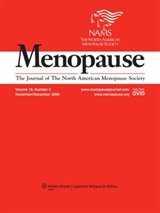
Cover of journal MENOPAUSEAs we have often noted here, one of the key reasons the marketing of hormone therapy for menopausal women has been so successful is the misguided belief that menopause is an estrogen-deficiency disease. Among other purported disadvantages of the decline in estrogen that accompanies normal aging was the belief that this decline caused muscle loss and other declines in physical functioning. (Muscle cells have receptors for estrogen, and recent research has linked higher blood levels of the hormone to greater muscle strength in elderly women.)

But the Women’s Health Initiative (WHI) is still providing new information about the lack of benefits of HT. (For those who are new around here, the WHI is a large US clinical trial begun in 1991, in which thousands of postmenopausal women were randomly assigned to take either HT or placebo pills. The study was abruptly ended ahead of schedule in 2002, when researchers discovered that the women taking the hormones had higher risks of heart attack, stroke, breast cancer, and blood clots – the very conditions the drugs were assumed to prevent – than placebo users.) In a new study based on a subgroup of 2400 women to be published in a forthcoming issue of Menopause (February 2010), both the women using HT and the placebo groups showed similar dips in muscle strength and walking speed over six years. In other words, women get older and show physical indications of aging with or without hormone therapy.


Post to Twitter Post to Plurk Post to Yahoo Buzz Post to Delicious Post to Digg Post to Facebook Post to MySpace Post to Reddit Post to StumbleUpon

Readers should note that statements published in re: Cycling are those of individual authors and do not necessarily reflect the positions of the Society as a whole.