Blog of the Society for Menstrual Cycle Research

Off the Pill, Off the Magazines

January 12th, 2012 by Elizabeth Kissling

Guest Post by Holly Grigg-Spall

“Less stressed, thinner and more interested in sex.” – but not buying magazines.

In a recent issue of the UK’s Stylist magazine — a weekly women’s glossy that is available for free at tube stations and selected clothing stores — there was an article headlined ‘What does 10 Years On The Pill Do To You?‘ As a result of my on-going blog, Sweetening the Pill, which documents my experience of coming off the contraceptive pill, I was contacted by the writer to provide some quotes for this piece. Unfortunately, I was edited out. As a journalist myself, I understood this situation has little to do with the writer’s choice of content and more to do with the magazine editor’s final say on what was most fitting for the feature. Yet the title question is the very crux of my blog: having taken the Pill for 10 years, stopping as a result of discovering the answer to this very question.


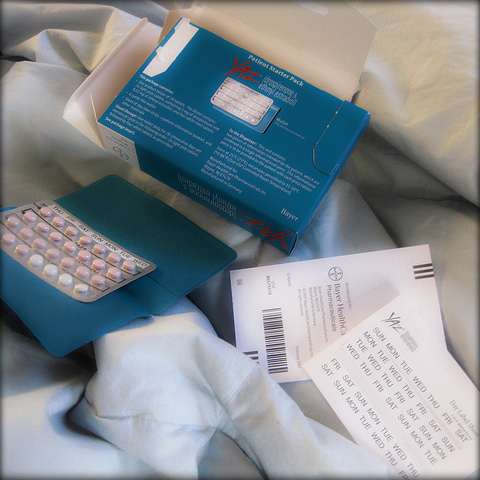
Photo Credit: Anthony Easton // CC 2.0

According to the Stylist piece the answer is that the Pill changes your memory skills, lowers your libido, makes you attracted to the wrong kinds of men for you, changes weight distribution, prevents you building muscles, make you retain water, make you depressed and jealous…and how can you tell if this all is just you or the Pill? You can’t and you shouldn’t try to find out, is the message here. We are advised to not take a break from the Pill, not even for a week, and if you are concerned, just ask for a different brand from your doctor. There is no discussion of non-hormonal alternatives. There is also no discussion of the benefits of not taking the Pill, of allowing your body to ovulate once a month.


My answer to this question was: “The Pill has a whole body impact. Taking the Pill shuts down a woman’s hormone cycle — and the ovulation and menstruation that is an essential part of this cycle — and replaces it with a low stream of synthetic hormones. This has an affect on every organ in the body — the impact is wide-reaching and crudely administered. The peaks, troughs, and plateaus of a woman’s ‘natural’ cycle are wiped out. The monthly hormone cycle is integral to many of the body’s central functions, including the metabolic, immune, and endocrine systems. This changes everything — from your sense of smell to your libido to your ability to absorb vitamins from your food.


Many women have said to me that coming off the Pill was ‘life-changing’ and, as someone now two years off the Pill after ten years on, I have to agree with the description. The life-threatening potential effects of the Pill get publicity — the blood clots and strokes — but the quality of life-threatening and the emotional and mental effects are barely discussed. Fatigue, muscle loss, urinary tract infections, bleeding gums, stomach disorders, flu-like symptoms, hair loss — relatively minor physical issues caused by the Pill that together can make life very hard. Depression, anxiety, panic attacks, rage, paranoia — all issues brought on by the Pill, due to a combination of switching off the hormone cycle and vitamin B deficiency. I experienced the whole package and when I wasn’t bordering on nervous breakdown I was flatlining, barely able to feel anything at all.”


The Next YAZ?

May 7th, 2010 by Elizabeth Kissling

In the flood of media commemorating the 50th anniversary of FDA approval of the birth control pill, this story from the Washington Post about its newest iteration may just slide under your radar: FDA approves new birth control pill from Bayer.

Bayer, as you may recall, is the manufacturer of Yaz and Yasmin, which is currently facing more than 1100 U.S. lawsuits and two Canadian class action suits. The new drug, Natazia, contains various dosing of estrogen and progestin throughout the cycle, making it the first four-phase hormonal contraceptive. The new pill uses dienogest, rather than drospirenone, the synthetic progestin in Yaz that is the apparent source of its dangerous side effects. The most common side effects of Natazia in clinical trials included irregular bleeding, headaches, nausea, and vomiting.

Yaz and Yasmin are Bayer’s best-selling prescriptions, by the way -  combined sales for 2009 were $1.64 billion.


Post to Twitter Post to Plurk Post to Yahoo Buzz Post to Delicious Post to Digg Post to Facebook Post to MySpace Post to Reddit Post to StumbleUpon

Readers should note that statements published in re: Cycling are those of individual authors and do not necessarily reflect the positions of the Society as a whole.