Blog of the Society for Menstrual Cycle Research

Hot Flashes: Now Especially for Fat Ladies

July 14th, 2010 by Elizabeth Kissling
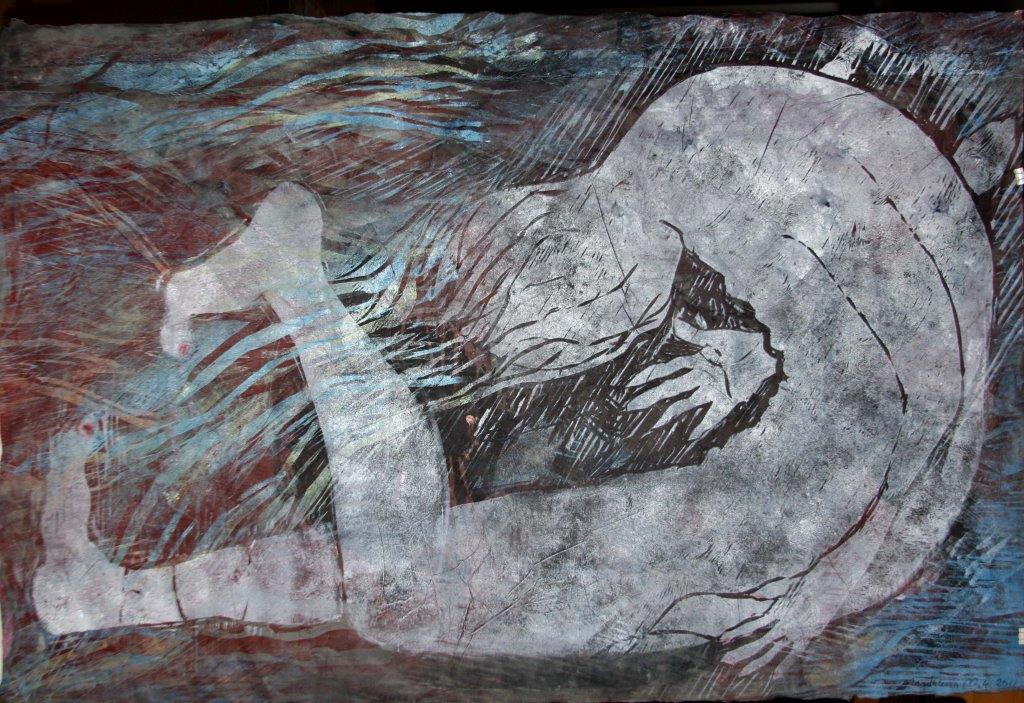
Photo of art by Czarnobyl by Flickr user urbanartcore.eu || CC 2.0

Photo of art by Czarnobyl by Flickr user urbanartcore.eu || CC 2.0

Since yesterday, although it seems longer, my RSS reader has been clogged with links to news reports about a UCSF study in which some women who lost weight found that their hot flashes diminished. Of course, that’s not what the headlines say. Here’s a sample of some of the titles of current stories about this study on Google news:

  • Hot Flash Relief: Weight Loss Works, What Doesn’t? (US News & World Report)
  • Bad hot flashes? Try dropping a few pounds (MSNBC.com)
  • Losing weight may ease menopause symptoms (NBC13.com)
  • Symptoms of Menopause Can Be Relieved by Weight Loss (Health News)
  • Weight Loss Helped Overweight And Obese Women Reduce Hot Flushes (Medical News Today)

OK, that’s enough – see the trend? Suddenly weight loss is the cure for hot flashes. But in the actual study – which was about urinary incontinence, not menopause -141 women provided researchers with data about their hot flash symptoms six months after the study began. Sixty-five of the 141 women said they were less bothered by their hot flashes six months after participating in the weight loss program, 53 reported no change, and 23 women reported a worsening of symptoms.

Look at those numbers again, more slowly this time: 65 of 141 women who participated in a weight loss program were less bothered by hot flashes after six months. That’s 46% of the women – less than half – who found relief. Almost as many reported no change in symptoms, so why is this being touted as a successful intervention?

Because the women lost weight. Most of the news reports of this research stop just short of fat-shaming, but I submit that is exactly why this study is getting so much media attention. Even though it is well-established that diets do not work, even if you call them a “lifestyle change” or “a whole new way of eating”, and that the BMI (Body Mass Index) is useless as a gauge of health. In fact, fat is not a measure of health. But why pass up an opportunity to shame women about their bodies?

Post to Twitter Post to Plurk Post to Yahoo Buzz Post to Delicious Post to Digg Post to Facebook Post to MySpace Post to Reddit Post to StumbleUpon

Attention, U by Kotex: We have a message for you

April 20th, 2010 by Elizabeth Kissling

Guest Post by Chella Quint, Adventures in Menstruating


UbyKotex-2

Okay, Kotex? Here’s the deal: We’re only gonna stop feeling the shame when we take ownership of our periods. And we’re taking it back from you, dude. So you can’t reclaim our periods for us. You’re some of the people we’re reclaiming them from. Got it?

Post to Twitter Post to Plurk Post to Yahoo Buzz Post to Delicious Post to Digg Post to Facebook Post to MySpace Post to Reddit Post to StumbleUpon

Kotex Anti-Ads, Round Two

March 21st, 2010 by Elizabeth Kissling

Over the last week, I thought I had participated in enough discussions of Kotex’s new “Break the Cycle” campaign; we had a lengthy discussion here at re:Cycling, and I’ve joined in the comments at several other ladyblogs, as have my co-bloggers. But then I discovered there are more videos!

Don’t expect to see any of these on U.S. television, but they’re definitely worth checking out: in one, a man seeks the advice of other shoppers in selecting the right tampons for his girlfriend (hint: her height and weight really aren’t relevant); in another, people appear reluctant to identify ink blots that resemble a human vulva, more so than identifying those that resemble a human penis. And you won’t believe the names for both. But I think this one is my favorite:


I want to be able to just press the play button on this one the next time I hear someone say, “What?!? There’s a Society for Menstrual Cycle Research?!?”


Post to Twitter Post to Plurk Post to Yahoo Buzz Post to Delicious Post to Digg Post to Facebook Post to MySpace Post to Reddit Post to StumbleUpon

“Prince Charles made me do it.”

March 15th, 2010 by Elizabeth Kissling

Frequent re:Cycling contributor David Linton was profiled last week in The Online Rocket, the student newspaper of Slippery Rock University. Professor Linton gave a talk on campus about the role of men in advertising for menstrual products.

Post to Twitter Post to Plurk Post to Yahoo Buzz Post to Delicious Post to Digg Post to Facebook Post to MySpace Post to Reddit Post to StumbleUpon

What’s Menstruation Got to Do with It?

March 3rd, 2010 by Chris Bobel

vday in london

Tina Turner didn’t sing THOSE lyrics, but what if?

Those that follow re:Cycling may recall-with a grin and a cringe–how Ingrid Berthon-Moine’s portraits of women wearing their menstrual blood as lipstick sent many Guardian and Salon Broadsheet readers to the “icky” place, where unexamined assumptions run amok.

Plenty of folks readily expressed their disgust at the idea of menstrual blood on display (ack!!!on the mouth??)  but few were willing to dig into WHY this disgusted them and how that disgust hurts women and girls…..if they dared to really look first, at those blood-smeared lips, and then,  at themselves.

Moine’s models, silent and unblinking, issue a challenge. When we meet their gaze and contemplate their deep red mouths, we are forced to look back at ourselves, and at each other.

Why is  there a menstrual taboo, anyway? And who and what does it serve? There must be an awful lot at stake when people work so hard to keep it alive.

This week Moine is exhibiting her work in London. Placing her portraits in the context of a V-Day show makes explicit the connections between the denigration of women’s bodies and violence against women and girls.

Charlie’s Tampon

February 10th, 2010 by Elizabeth Kissling

Guest Post by David Linton, Marymount Manhattan College


Four years ago I published an article in Sex Roles (March 2006) about the twists and turns of the media coverage of a scandal that came to be known as “Camillagate.”  It concerned the publication of a surreptitiously recorded phone chat between Prince Charles, heir to the British throne, and his lover, Camilla Parker-Bowles, that occurred in 1993.  The reason the mild sex banter between two horny middle-aged royals got so much attention was that at one point they made joking references to tampons in an erotic context.  The exchange was widely misreported with a distorted claim that Charles expressed a desire to be transformed into a tampon.  It even became the basis for a skit on Saturday Night Live (only a small portion of it is available now online).

At the time I predicted that Charles would never get away from the tampon association.   What I could not predict was how nuanced the forms of mockery would be.  Who could possibly have guessed that the story would play out as a means of bolstering George W. Bush’s faltering reputation by contrasting his macho style with the more effete image of The Prince of Wales?

Telling Secrets

November 22nd, 2009 by Elizabeth Kissling

Screen shot of Twitter post that reads, I sign men who I don't like up for every single pad and tampon sample I can find.I’m guessing many re:Cycling readers are familiar with Frank Warren’s Post Secret project. Every Sunday, Frank publishes online a collection of confessional postcards he’s received. He’s also curated several larger collections into best-selling books. The postcards are fascinating, both sociologically and artistically.

If you follow Frank on Twitter, you are privy to additional secrets posted mid-week via his Twitter stream. That’s how I came across the secret posted at right: “I sign men who I don’t like up for every single pad and tampon sample I can find.”

Apparently menstruation is so disgusting, so shameful, so dirty, that the writer of this secret believes that receipt of new, clean menstrual products is a good way to humiliate a man.

Note, however, that this revenge strategy works only on men; perhaps women are in a state of perpetual humiliation from dealing with femcare products on a regular basis. This message reinforces the core feature of hegemonic masculinity: the worst insult to a man’s masculinity is to suggest that he is female.

Post to Twitter Post to Plurk Post to Yahoo Buzz Post to Delicious Post to Digg Post to Facebook Post to MySpace Post to Reddit Post to StumbleUpon

Introducing…

October 30th, 2009 by Chris Bobel

bledbook copyThem was fightin’ words.

re:Cycling readers (thanks!) already know about Redbook’s dimwitted “snub” of the soon-to-be released FLOW: The Cultural History of Menstruation:

You welcome it, bemoan it, or just live with it. However you feel about your period, we’re pretty sure most of you would rather spend your cash on a three- to five-day supply of Ben & Jerry’s than this 250-plus-page tome that teaches you about menstruation in the animal kingdom and the origin of tampons.

Menstrual activists Chella Quint and Sarah Thomasin sprung into comedic action and put together this oh-so-clever response ’cause they know a knee-jerk reaction to the big M when they see it.

Luckily, Redbook readers can and do think for themselves!  Quint remembers her ahead-of-her-time Grandma who knew a thing or two about our favorite topic  IN SPITE of her subscription to a particular ladymag.

Way to give it back, gals!

Post to Twitter Post to Plurk Post to Yahoo Buzz Post to Delicious Post to Digg Post to Facebook Post to MySpace Post to Reddit Post to StumbleUpon

‘Well, there is plenty of blood, but none of it’s bad’

September 29th, 2009 by Elizabeth Kissling

Apropos of Chris’ most recent post, the video of Serena Williams’ new ad for Tampax just popped up in my RSS feed. You can check it out at right.

I’m so torn on this. I’m pretty certain that this is the First. Time. Ever. that the word “blood” has been used in an ad for menstrual products. Do you know what a huge step forward for body acceptance and menstrual literacy that is? When I was growing up in the 1970s, pads were advertised by showing how well they absorbed BLUE fluid. (So were diapers, by the way.) Kotex was the first company to use the color red and the word “period” in ad campaign less than ten years ago. So there is a part of me that is delighted when Catherine Lloyd Burns, playing Mother Nature, smiles slyly and says, “Well, there is plenty of blood, but none of it’s bad”.

I also enjoy seeing a powerful woman say that she isn’t afraid of menstruation, and shown succeeding athletically while menstruating. Kinda reminds me of when Uta Pippig won the Boston Marathon while menstruating.

But the core message and most troubling element of this entire “Mother Nature” campaign is the idea that menstruation is the gift nobody wants. Can’t P&G (and Kotex, and every other femcare advertiser) just promote the damn products without promoting shame and body hatred? Women will buy menstrual products without being told that periods should make them feel “not so fresh”. In fact, the ads might be more compelling if they emphasized the absorbency of the product and treated menstruation as a fact of life, rather than a secret disaster. Just spare us the blue fluid, please.

Post to Twitter Post to Plurk Post to Yahoo Buzz Post to Delicious Post to Digg Post to Facebook Post to MySpace Post to Reddit Post to StumbleUpon

Penelope Trunk: Telling the truth about women’s lives

September 24th, 2009 by Elizabeth Kissling

I adore Penelope Trunk. I may not always agree with her, but I always read her column, and I’m glad she exists. Today, she wrote about the backlash she received for this recent tweet:

Twitter _ Penelope Trunk_ I_m in a board meeting. Ha ...-2

She is a little stunned that there was such an uproar about her tweet: other bloggers wrote posts about the “disgustingness” of it all, and 70 people stopped following her on Twitter (at this moment, she has more than 18,000 followers, so it’s not a huge uproar). She writes,

Most miscarriages happen at work. Twenty-five percent of pregnancies end in miscarriage. Seventy-five percent of women who are of child-bearing age are working. Most miscarriages run their course over weeks. Even if you are someone who wanted the baby and are devastated by the loss, you’re not going to sit in bed for weeks. You are going to pick up your life and get back to it, which includes going back to work.

This means that there are thousands of miscarriages in progress, at work, on any given day. That we don’t acknowledge this is absurd. That it is such a common occurrence and no one thinks it’s okay to talk about is terrible for women.

Throughout history, the way women have gained control of the female experience is to talk about what is happening, and what it’s like. We see that women’s lives are more enjoyable, more full, and women are more able to summon resilience when women talk openly about their lives. [Emphasis mine]

I practically stood up and cheered. This is exactly why we started our little blog (I say ‘little’ because I know we don’t have 18,000 followers). We want to talk openly about women’s lives, and invite others to join the conversation. Although there are many times it is inconvenient, messy, sometimes even painful, menstruation, like miscarriage, is part of (most) women’s lives.

And like miscarriage, menstruation happens at work, too. From the factory floor to the board room, women are bleeding on the job. And sometimes, women need or want to talk about it. Maybe to seek support. Maybe to request a bathroom break to change her pad or tampon. Maybe to lie down for an hour until the cramps subside. Maybe just to know she’s normal. What’s “disgusting” isn’t the menstruating or the miscarrying, or even the talking about it, but the shaming of women for doing so. (Read the whole thing – the quote above is just an excerpt.)

And one more thing: Penelope Trunk is absolutely right – it is fucked up to have to wait three weeks for an abortion.

Post to Twitter Post to Plurk Post to Yahoo Buzz Post to Delicious Post to Digg Post to Facebook Post to MySpace Post to Reddit Post to StumbleUpon

Readers should note that statements published in re: Cycling are those of individual authors and do not necessarily reflect the positions of the Society as a whole.