Blog of the Society for Menstrual Cycle Research

Sex, Lies and Pharmaceuticals

December 16th, 2010 by Chris Hitchcock

There’s a new book about the intimate role of the pharmaceutical industry in the construction of diseases, using the example of FSD (female sexual dysfunction). The authors are Ray Moynihan, an Australian investigative journalist with a longstanding interest in this topic, and Barbara Mintzes, Assistant Professor in the Department of Pharmacology & Therapeutics at the University of British Columbia. I haven’t yet seen the book, but listened to the webinar, which is now available on the Canadian Women’s Health Network (CWHN) website.

There were a few things that struck me. One is how blatant the interference of the pharmaceutical industry can be. For example, the webinar includes a reference to an email sent to Lenore Tiefer letting her know that a formative 1997 meeting about female sexual dysfunction was only open to those who were either part of or willing to work with the pharmaceutical industry. Another was the way in which the language about the medical understanding of the cause of FSD tracked the introduction of 3 different potential drugs, each with different targets and different mechanisms. So far, each drug has failed in clinical trials.

The medicalization of human sexuality separates our bodies from our emotional lives, and creates a framework within which emotional or relationship difficulties are seen as being caused by the biological, rather than being interdependent. And little attention is paid to the ways in which pharmaceutical cures may even create relationship problems that were not there before.

There are, of course, parallels with other cases. For example, the idea that menopausal is a hormone deficiency disease makes it much easier to argue that every healthy menopausal woman should take hormone replacement therapy. This replacement language is unfortunately still alive and well in both medical and popular usage.

Another parallel is the construction of “premenstrual syndrome” into a psychiatric diagnosis. This has been provisionally incorporated into the Diagnostics and Statistics Manual (DSM) of the American Psychiatric Association, initially as “Late Luteal Dysphoric Disorder”, now “Premenstrual Dysphoric Disorder”. Among other things, this construction supported the repackaging and marketing of Prozac as Sarafem for this newly created psychiatric disorder, extending the marketability of Prozac beyond its patent expiry date.

The APA is currently working on DSM V, to be published in May, 2013, and there is an opportunity for activism. So far, PMDD is listed in the “needs more research” section. But chances are it will be put forward again for the next edition.

Post to Twitter Post to Plurk Post to Yahoo Buzz Post to Delicious Post to Digg Post to Facebook Post to MySpace Post to Reddit Post to StumbleUpon

Help Trixie Films Go All the Way

June 9th, 2010 by Elizabeth Kissling

All the way to $10,000, that is. Work on the new production from Trixie Films, How to Lose Your Virginity, is nearly complete. This film promises to be an innovative exploration of the American obsession with virginity and an outstanding classroom teaching tool:

It’s a quest to dig beneath the damned-if-you-do, damned-if-you-don’t double-speak of a culture that cynically encourages both virginity and promiscuity. How can young women wade through these mixed messages–like a reality show that auctions off virgins to the highest bidder or Disney starlets flashing purity rings while writhing on stripper poles–and act instead on their own needs and desires? What’s behind this strange moment in American culture?

The road to understanding our obsession with virginity takes me to places I never thought I’d go–from the set of a Barely Legal porn movie shoot in the San Fernando Valley to a Love & Fidelity Abstinence Conference at Harvard to the fitting rooms of David’s Bridal.

Can you help?  Independent women’s media needs support, and lots of small contributions add up to a big total. Visit the film’s fundraising page, and give what you can. Thanks to kickstarter.com, almost $5000 has been raised. But there are only 23 days left to reach the $10,000 goal or they’ll get none of it (which is how Kickstarter works).

Post to Twitter Post to Plurk Post to Yahoo Buzz Post to Delicious Post to Digg Post to Facebook Post to MySpace Post to Reddit Post to StumbleUpon

Be part of the next edition of Our Bodies, Ourselves

January 26th, 2010 by Elizabeth Kissling

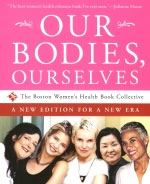
Cover of OUR BODIES, OURSELVESOur Bodies, Ourselves is seeking up to two dozen women to participate in an online discussion on sexual relationships.

Stories and comments may be used anonymously in the next edition of Our Bodies, Ourselves, which will be published in 2011 by Simon & Schuster.

We are seeking the experience and wisdom of heterosexual, lesbian, bisexual, queer and trans women. Perspectives from single women are encouraged, and you may define relationship as it applies to you, from monogamy to multiple partners. We are committed to including women of color, women with disabilities, and women of many ages and backgrounds.

In the words of the brilliant anthology “Yes Means Yes,” how can we consistently engage in more positive experiences? What issues deserve more attention? And how do we address social inequities and violence against women? These are some of the guiding questions that will help us to update the relationships section in “Our Bodies, Ourselves.”

The conversation will start Sunday, Feb. 14 (yes, Valentine’s Day) and stay open through Friday, March 12.

Participants will be invited to answer relevant questions (see sample below) and build on the responses of other participants. We’ll use a private Google site to post questions and responses.

Personal stories and reflections are welcomed, along with updated research and media resources. While we hope to use some of the stories and experiences in the book, names will not be published.

We hope the open process* will spark robust discussion. We expect new questions to arise that challenge us to re-work this section even more.

If you would like to participate in this conversation, please e-mail OBOS editorial team member Wendy Sanford: wsanford@bwhbc.org

In your email, please tell us about yourself and what you would bring to the conversation. We need to hear from you by Feb. 5 Feb. 3 and will let you know soon thereafter about participation. Thanks for considering this!

*We have thought a great deal about privacy. If you want to share a story or information, but do not want to participate in the private Google site discussion, please indicate that in your email. We may send you questions that you can answer on your own.

* * * * * *
Sample Questions
Participants can suggest other questions

How do you define — and express — intimacy?

What are you looking for in a relationship? What kind of relationship do you seek at this time in your life — monogamous, non-monogamous, long-term, short-term, one partner or more than one? How is this related to being a woman or to your gender or sexual identity in the society(ies) and culture(s) to which you belong?

What do you enjoy most about being sexual?

What are your experiences in a relationship that spans differences such as class, race, age, physical or mental ability, chronic illness, other?

How does it affect your relationships when you are with someone whom the world gives more or less power than you have — because of race, income, gender or disability?

What role has love played or not played in your relationships?

Describe a time when you realized that despite the romantic images you may have grown up with, a relationship you intended to stay in over time was going to be work.

What are some obstacles that can get in the way of our relationships? What images or stereotypes in popular culture add to the difficulties?

What helps? What books or other resources do you trust to speak honestly about relationships?

Period Sex is a Bloody Good Time (says college newspapers)

January 4th, 2010 by Elizabeth Kissling

Back in November, we commended a bold student columnist for taking on menstrual sex in the student paper at Chico State University. In yesterday’s edition of The Faster Times, columnist Veronica Mittnacht advises a reader about how to broach the subject of period sex in a casual relationship, and works to normalize menstruation – even heavy flow.

Fortunately, most men, even if they don’t really like it [menstruation], know enough to pretend not to mind, because, after all, most women do it, and there’s not much men can do about it.  And for your purposes, for now, pretending is enough. There’s still the occasional guy who can’t handle blood, but the bell curve compensates by giving us the occasional fetishist or enthusiast to make up for it.

Post to Twitter Post to Plurk Post to Yahoo Buzz Post to Delicious Post to Digg Post to Facebook Post to MySpace Post to Reddit Post to StumbleUpon

Human Mate Choice and the Pill

October 8th, 2009 by Chris Hitchcock

In a review article in the journal Trends in Ecology and Evolution, University of Sheffield researchers Alexandra Alvergne and Virpi Lummaa [1] present a range of evidence that using oral contraceptives influences women’s preferences for mates, and men’s sexual interest. Some of the research shows that women’s preference for human odors while taking the pill are for odors from men who are more likely to be close relatives, with similar variants of the majorhistocompatibility locus (MHC), but that women who are ovulating prefer odors from men who are less similar. There is speculation that the degree of similarity in the MHC locus may affect fertility.

Further evidence comes from a study by Geoffrey Miller and colleagues, looking at men’s willingness to pay professional lap-dancers for sexual access over the menstrual cycle. This was a difficult study to do, and assumed that ovulation occurred on a standard day during the menstrual cycle, which we know is not valid, because women vary in ovulatory timing and may not ovulate in otherwise normal menstrual cycles. Nonetheless, the average curves for women selling sexual access through lap-dancing show a menstrual pattern in profits that is strikingly similar to the pattern of estrogen over the menstrual cycle. Women taking oral contraceptives both made less money, and did not show the same pattern as those who were naturally cycling.

Men's willingness to pay for sexual access to lap dancers by menstrual cycle day. From Miller (2007)

Men's willingness to pay for sexual access to lap dancers by menstrual cycle day. From Miller (2007)

There is further work that needs to be done here to connect all of the dots, but the information is interesting and points to an unsuspected role of the menstrual cycle in women’s (and men’s) lives.

What I would like to know is this:
1. How much of a difference does the degree of MHC similarity make to the average couple’s fertility? Are those who are similar in MHC overrepresented in fertility clinics?
2. Is there an effect of odor preferences on what we think of as “chemistry” in a relationship? On conflicts and marital harmony? On sexual behaviour? I am thinking of some of the excellent work done by John Gottman in Seattle, analyzing couple interactions and predicting relationship success. Do couples who start on the pill differ from those who don’t? Does that relationship dynamic change when pill use changes?
3. What happens when a woman stops using oral contraception? Do her preferences change? How (if at all) does that show up in the relationship?
4. And what about other relationships where odor-based mate choice is blocked, such as internet dating? Are there similar issues?

The bigger picture for me is this – science knows very little about the many roles and effects of the naturally cycling menstrual cycle, and replacing that naturally occurring cycle with oral contraceptive pills is likely to be having other effects that we will come to know in the future.

Control over our own reproduction is a very important part of women’s rights, health and well-being. However, oral contraceptives are not the only effective method of birth control. In addition to a variety of rare but serious side effects, they also leave women at risk of sexually transmitted infections, interfere with peak bone acquisition in younger women, and are the highest risk factor for young men not using condoms during intercourse. Perhaps it is time to rethink the wisdom of widespread and routine use of oral contraceptives, and to recognize the value and the unexamined effects of the menstrual cycle.

Readers should note that statements published in re: Cycling are those of individual authors and do not necessarily reflect the positions of the Society as a whole.