Blog of the Society for Menstrual Cycle Research

Cardiovascular deaths increase with steady aging, not menopause

September 27th, 2011 by Chris Hitchcock

Earlier this month, researchers published a statistical analysis of mortality data in England, Wales and the United States, disproving the common statement that, after menopause, women face increased rates of mortality from heart disease. There are other studies that have come to similar conclusions, but there are a few things that make this study different. One is that it drew on epidemiological data from three different parts of the world, which reduces the likelihood of a local coincidence. A second is that they took care to create longitudinal data sets, comparing women born in different birth decades with the appropriate mortality over time. In doing so, they avoided the problems of cross-sectional data.

The authors found that there was a steady exponential increase in risk with age, and that there was no sign of accelerated risk at the typical age of menopause (50). They compared different versions of mortality curves, and were able to show that a two-stage model of mortality with a hinge at menopause was not a good fit to the data.

These findings have received national and international coverage, and are a major blow to the argument that menopausal women require premenopausal hormones to retain premenopausal protection from cardiovascular risk. Menopausal women are older than premenopausal women, and that is why they are more likely to die from cardiovascular disease, not because of the hormonal changes of menopause.

Post to Twitter Post to Plurk Post to Yahoo Buzz Post to Delicious Post to Digg Post to Facebook Post to MySpace Post to Reddit Post to StumbleUpon

Sex, the Brain, and the Pill

August 18th, 2010 by Elizabeth Kissling
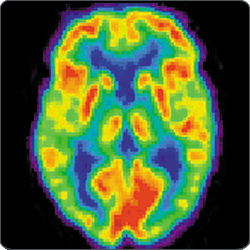
Positron emission tomography image of a human brain

Positron emission tomography image of a human brain

Does taking the Pill increase the size of your brain? According to this story in The Daily Mail, you betcha. And it makes women more talkative, too. That’s right – brain scans of 28 women PROVE it.

I know not to take too seriously such headlines in The Daily Mail (there’s a reason my British friends like to call it The Daily Fail), but if that story has you gnashing your teeth, consider this piece from The Guardian to be the antidote:

In fact, there are no major neurological differences between the sexes, says Cordelia Fine in her book Delusions of Gender, which will be published by Icon next month. There may be slight variations in the brains of women and men, added Fine, a researcher at Melbourne University, but the wiring is soft, not hard. “It is flexible, malleable and changeable,” she said.

In short, our intellects are not prisoners of our genders or our genes and those who claim otherwise are merely coating old-fashioned stereotypes with a veneer of scientific credibility. It is a case backed by Lise Eliot, an associate professor based at the Chicago Medical School. “All the mounting evidence indicates these ideas about hard-wired differences between male and female brains are wrong,” she told the Observer.

“Yes, there are basic behavioural differences between the sexes, but we should note that these differences increase with age because our children’s intellectual biases are being exaggerated and intensified by our gendered culture. Children don’t inherit intellectual differences. They learn them. They are a result of what we expect a boy or a girl to be.”

Now adding Delusions of Gender to my reading list; I’ve already read Lise Eliot’s Pink Brain, Blue Brain. (I also heard her present this work at a conference; it’s a very compelling presentation.)


Post to Twitter Post to Plurk Post to Yahoo Buzz Post to Delicious Post to Digg Post to Facebook Post to MySpace Post to Reddit Post to StumbleUpon

Readers should note that statements published in re: Cycling are those of individual authors and do not necessarily reflect the positions of the Society as a whole.