Blog of the Society for Menstrual Cycle Research

Whose “Last Stand?”

February 19th, 2010 by Chris Bobel

If you watched the Super Bowl this year, you likely saw the new Dodge Charger ad “Man’s Last Stand.” If not, drop what you are doing and watch it right this minute and sound the gender panic alarm!


There’s a crisis!

Masculinity is endangered! The women are taking over!

Men are-day in and day out–emasculated by the nagging, demanding, self-centered women in their lives and their trivial concerns (vampire lust! hairless sinks! fruit for breakfast!  civility toward family members!)

It is so bad out there, apparently, that men need to recapture their manliness by “driving the car (they) want to drive.” (I don’t know what’s more offensive here, women-as-problem or car-as-solution)

The blogosphere and its environs is a-buzz with the work of MacKenzie Fegan who found, in her words, the commercial uh….“oft-putting”. She posted this response.  Not sure I would have chosen the same complaints to highlight, but I did cheer with this dig:

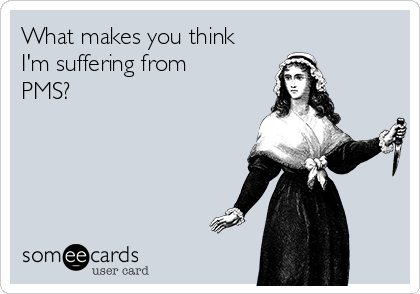
“I will get angry and you will ask if it’s that time of the month.”


Crisis?  If only there were one and that tired old excuse for not taking women seriously was on the way out!


Post to Twitter Post to Plurk Post to Yahoo Buzz Post to Delicious Post to Digg Post to Facebook Post to MySpace Post to Reddit Post to StumbleUpon

Menstruation and Music Don’t Mix

January 29th, 2010 by Elizabeth Kissling

Cartoon illustration of opera singerThat’s the report from this arts blogger at the New York Times. Yesterday, doctors from the Methodist Center for Performing Arts Medicine of the Methodist Hospital in Houston held a daylong symposium on the management of medical problems among musicians specifically and performing artists more generally. Performing-arts medicine is a relatively new specialty, and frankly, I’m not surprised by the need for it. (I know a drummer who has ongoing neck and back problems caused – or at least aggravated – by his art.)

But I was surprised to see a blanket recommendation that female vocalists use oral contraceptives to suppress menstruation. According to Keith O. Reeves, the deputy chief of Gynecology at the Methodist Hospital and a professor at Weill Cornell, premenstrual syndrome “brings vocal fatigue, decreased range, loss of power and loss of some harmonics.” Continuous use of synthetic hormones is quite an extreme remedy for an illness without a clear definition or etiology.

But apparently menopause is much harder on the vocal folds – our intrepid blogger can’t even tell us:

As for menopause, you don’t want to know. As Dr. Reeves quotes the great mezzo-soprano Christa Ludwig, “It was a hell of some years.”


Post to Twitter Post to Plurk Post to Yahoo Buzz Post to Delicious Post to Digg Post to Facebook Post to MySpace Post to Reddit Post to StumbleUpon

The cure for all things menstrual?

December 24th, 2009 by Chris Hitchcock

A recent press release from the American College of Obstetricians and Gynecologists announces that Hormonal Contraceptives Offer Benefits Beyond Pregnancy Prevention. This is in the same vein as similar articles published over the years about “non-contraceptive benefits of the pill” – a laundry list of the many benefits women may obtain by using hormonal contraception. It’s not clear how they should be used by practicing obgyn’s. One use is certainly as additional talking points to convince women who are cautious or reluctant to replace their body’s own menstrual physiology with a pharmaceutical product.

I haven’t been able to read the full document (for some reason my university access seems to only find the first page of the full document), but it appears that, like previous reviews I have read, it is a biased list, including benefits but not risks. Perhaps what is most in common is the sense that a spontaneous menstrual cycle is somehow suspect, that fluctuations over time are unnatural, and that pharmaceutical control is a good solution.

I can understand why the pharmaceutical industry might want to publish a long list of off-label uses (although they would be quickly stopped by the US’s FDA and regulatory bodies in other countries). But it is a curious thing to find a professional group extolling the many off-label benefits of a class of pharmaceutical drugs. Do cardiologists publish practice bulletins about the non-cardiovascular benefits of statins?

There are other perspectives about how one might treat painful periods or heavy menstrual flow. The published Cochrane Reviews (well-respected summaries of published studies) about cramps suggest that the evidence for non-steroidal anti-inflammatories (NSAIDS, such as ibuprofen) is more solid and clear than that for combined oral contraceptives, and that, to date, no studies have compared them head-to-head. Moreover, NSAIDs also have been shown to reduce menstrual flow.

The press release notes the protective effects against endometrial, ovarian and colorectal cancer, but fails to note the increased risk of sexually transmitted infections. Being on the pill is the most important risk factor for not using condoms.

And when absent or long periods occur, inducing regular and predictable flow will reduce the risk of endometrial cancer, but otherwise primarily serves to mask the underlying issue. In that case, going on the pill can be like hitting snooze on your smoke alarm.


Post to Twitter Post to Plurk Post to Yahoo Buzz Post to Delicious Post to Digg Post to Facebook Post to MySpace Post to Reddit Post to StumbleUpon

Please Advise: Matt’s girlfriend doesn’t know she has PMS

November 27th, 2009 by Elizabeth Kissling

cartoon_No_pmsDear Amy: My girlfriend wants to “talk” again. She is currently experiencing her monthly cycle.

Can I ask her to wait until this is over? She usually gets a bit worked up and later apologizes.

I do not want to come across as inconsiderate. Based on past discussions, I’m sure she wants to talk about our future together. This is important but shouldn’t it be done when she is a little more balanced?

If you agree, can you offer a caring way to frame this statement of concern to talk at a later time?

— Matt

Poor considerate Matt. He doesn’t want to hurt his girlfriend’s feelings by telling her that he doesn’t take her feelings seriously. What would you tell him, re:Cycling readers? Ask Amy advises him to patronize and belittle her.

Dear Matt: You might think: “Let’s have this conversation at a time when I don’t think your head will spin around and fall off.”

What you should say is, “I want to talk to you, too, honey — because this is important. But for now, why don’t you enjoy these flowers? Oh, and by the way, have you lost weight?”

Amy further suggests that Matt do her the kind favor of letting her know that she’s moody: “You should also talk about her hormonal issues. Many women, myself included, don’t quite realize the patterns in our monthly moods until someone else lovingly points them out to us.”

I can’t help but recall Joan Chrisler’s comments about over-diagnosis of PMS and PMDD (which are both associated with high levels of relationship and family stress): “We’re conditioned to want a pill. Instead of something you might need more, like a nap or a divorce, or the ERA.”

[via Melissa McEwan at Shakesville]

Post to Twitter Post to Plurk Post to Yahoo Buzz Post to Delicious Post to Digg Post to Facebook Post to MySpace Post to Reddit Post to StumbleUpon

Blood on Screen: MENstruation

November 4th, 2009 by Giovanna Chesler

I often hear women state that men would be uncomfortable if they overheard our discussion of menstruation. Many women work to keep men out of the menstruation conversation. But… surprise! Men are ready to participate. And very often, I hear men say that they want to learn more about menstruation. In studies by Jane Ussher and Jane Perz they found that women in lesbian relationships that are more egalitarian, empathetic and satisfying have different PMS experiences than women whose male partners misunderstand their PMS symptoms. That is partially because their lesbian partners understand the experiences of menstruation, even if they do not share the same symptoms. Imagine, straight ladies, if a male partner were also aware of your PMS symptoms through the information you impart? And that through this conversation and hopefully, through different behavior on his part, you could potentially change your PMS experience?

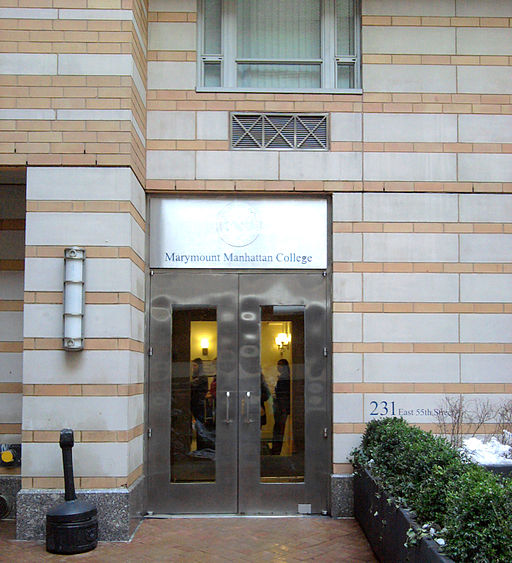
Or…what if he understands those symptoms through his own experience?! Last year, Angelique Smith, then a student at Marymount Manhattan College in a course called Social Construction and Images of Menstruation (co-taught by David Linton and myself) made MENstruation. This video was inspired by Gloria Steinem’s 1978 Ms. Magazine article “What if Men Could Menstruate?”. As Smith asks her participants Steinem’s question, “What if men could menstruate,” their answers  reveal much about cross-gender consciousness.  It screened as part of the Blood on Screen series at the Spokane SMCR conference.

Post to Twitter Post to Plurk Post to Yahoo Buzz Post to Delicious Post to Digg Post to Facebook Post to MySpace Post to Reddit Post to StumbleUpon

Putting the ‘Men’ in Menstruation

October 8th, 2009 by Elizabeth Kissling

Guest Post by David Linton, Marymount Manhattan College

pms_buddyA lot of ideas get hatched in a bar over drinks with friends. Most don’t make it past the sober morning after.  But a conversation in a Denver bistro in 2008 led to the creation of a new Internet service that aims to address Rodney King’s eternal question, “Can’t we all just get along?”  In this case the “getting along” applies to men and women who feel afflicted by the scourge of Pre-Menstrual Syndrome – PMS – and its presumed negative impact on otherwise harmonious relationships.

Despite the sound research and persuasive arguments of writers such as Carol Tavris (The Mismeasure of Woman), Anne Fausto-Sterling (Myths of Gender), Joan C. Chrisler (Charting a New Course for Feminist Psychology) and Paula Caplan (Fighting the Pathologizing of PMS), to name just a few who have labored to dispel the pernicious misconceptions and stigma surrounding the menstrual cycle, stereotypes and myths have been tenacious.  Thus, in the digital age it was probably inevitable that PMS Lore would find new outlets for dissemination.  Which brings us back to Denver.

One of the participants in the fateful exchange over Coors and coolers in the Mile High City was Jordan Eisenberg, a self-described entrepreneur.  He and a group of friends had somehow gotten into a spirited conversation about PMS.  The women expressed annoyance that men sometimes asked, “Are you getting your period?” as a way to discredit feelings women had about real concerns.  It was so bad, they said, that even if they actually were menstruating, they could never acknowledge it because they’d be dismissed out of hand.

Opinions bounced around until one of the men mentioned that he put the date of his girl friend’s expected period in his Palm Pilot so he could anticipate her mood swings and avoid topics that might provoke conflict on “those days.”  The men thought that this was a sensible idea, and the women were outraged that anyone would track their biology so mechanically.

For all but one of the participants the evening’s outing yielded no more than another story to share with friends at some future bar gathering.  But for Jordan Eisenberg it was an inspiration.  And so was born the Web site PMSBuddy.com.

In no time at all, the site has become an Internet hit.  It can be found as an iPhone application and comes up under a number of Google search terms. Within a year of its launch, the site claimed to have 150,000 registered users and that it was currently tracking (as of 10/5/09) 33,192  menstrual cycles.  According to the daily tally 1,366 women whose cycles were being tracked began to have PMS that day.   Another 6,437 would begin within five days and the “Overall Threat Index” was “1-4:1,” whatever that means.

One might view the site as just a “guy joke,” another way for men to make light of something they don’t understand and to cope with their menstrual fears.  The PMSBuddy web site uses fairly benign language and claims to have good intentions.  It even has what it calls an “altruistic” aim with a slogan that boasts, “Saving relationships, one month at a time!” yet it reflects an underlying anxiety.  It addresses male subscribers in a chummy voice: “PMSBuddy.com is a free service . . .to keep you aware of when . . . things can get intense for what may seem to be no reason at all. . . .there is no reason to ever be blindsided by PMS again.”
In addition to tracking the cycles of women in the lives of its subscribers and sending warning announcements about the impending periods of one’s wife, girlfriend, daughters, etc., it has a section called “PMS Stories,” submissions from subscribers about their PMS encounters and opinions.   On the first day I first looked at the site there were nearly 150 stories posted from both men and women, but by the time these pages are being read there are surely many more.

The Top Ten Explanations for an Angry Woman

September 29th, 2009 by Chris Bobel
USA Today reports Serena Williams deal with P&G

USA Today reports Serena Williams deal with P&G

10) She is upset and wants someone to know

9) Something about estrogen levels

8 ) She is about to start her period

7) Matter over mind…her body has taken over

6) I don’t know, but she will feel better in a week or less

5) Hormones

4) Women do that about every 28 days

3) Time for tampons

2)We gave up trying to figure that out a long time ago, but it will pass

1) PMS, of course.

I know I am not the only one exasperated with the easy dismissal of women’s anger as little more than PMS.

Sometimes (and I’d venture, MUCH of the time), an angry woman IS simply, well, an angry woman.

But WE (culturally-speaking), tend to immediately link women’s anger with PMS. This is lazy and effectively trivializes and silences women. While I don’t dispute that hormonal fluctuations can and often do explain the TIMING and/or SEVERITY of a woman’s emotional expression, I argue that is it important, no IMPERATIVE, that we resist the temptation to immediately attribute a woman’s rage to the biological.

On 12 September 2009, Serena Williams verbally abused a line judge during the US Open. In the following days, the blogosphere hosted a hungry feast on the event. Racists had their usual deplorable field day; biological determinists joined in for the fun. Bloggers (many of them devoted fans) breezily attributed Serena’s outburst (and sure, it WAS a doozy), to PMS. One blogger referred to the incident as “Serena’s PMS Moment.”

“It was a total PMS moment…. completely unexplainable…

Another blogger wrote,

“Serena has already told the world that she has very difficult periods, in particular, menstrual migraines. And where there are menstrual migraines, PMS poisoning can’t be too far away.”

One more sample:

“She had a bad day on court, but to me, it just sounds like classic PMS emotional roller-coastering.

Then on 21 September 2009, Procter & Gamble’s announced that Serena Williams will headline a series of their “Outsmart Mother Nature” ads (print and video). Williams, says, P&G, was chosen because she “represents the energy, independence and strength of women they want to celebrate.” (And P&G supports her apology for her outburst.)

See the ad here. (Great fodder for another post, another time.)

Even though this deal was in works months (longer?) before the US Open and thus, unrelated to Serena’s “PMS Moment,” the press, like USA Today, still implicitly makes the link.

Take a good look at this story.  Notice the juxtaposition of a very angry (and very powerful) Serena Williams underneath the brand name TAMPAX. No cognitive dissonance there, right? Even funny, as in, ‘that’s rich….now Ms PMS is the spokesperson for a MENSTRUAL product. Good one, Tampax!”

Yesterday, I entered PMS + Serena Williams + US Open into google and I got 45, 000 hits. The feast continues.

Maybe Serena was PMSing that fateful day. Maybe not. I am not in a position to evaluate what motivated her to come unhinged. But neither are the legions of others who think they’ve got it all figured out, or worse, code anger as PMS, reducing a woman’s emotional expression to a “PMS moment.”

I realize that often, people use PMS to (generously?) excuse a woman’s anger (as in ‘she didn’t mean it, she was just hormonal’). But that’s no better, really. Anger should be neither erased nor excused. Anger is powerful stuff. Anger is energy. Anger is information.

Does PMS Cause Chocolate Cravings?

July 20th, 2009 by Elizabeth Kissling

Chocolate BarsA new study published in the journal, Appetite, suggests there is not a hormonal reason for premenstrual women to crave chocolate. The research was based on the premise that if the craving for chocolate was in fact related to a premenstrual surge in hormones, postmenopausal women would display diminished cravings for chocolate. Although the researchers did find a small drop in chocolate cravings after menopause in their small sample of women, the drop was not as great as expected, if the cravings were related to premenstrual hormones. This suggests that women crave chocolate for some other reason. Perhaps the concept of PMS cravings is a social construct. Or maybe some women just like chocolate – as the researchers state, we’re only talking about one-quarter of U.S. women: “[A]bout half of American women crave chocolate, and approximately half of the cravers crave it specifically around the onset of menstruation.”

Here’s another possible conclusion: Maybe women aren’t a monolithic group one can make facile generalizations about.

Post to Twitter Post to Plurk Post to Yahoo Buzz Post to Delicious Post to Digg Post to Facebook Post to MySpace Post to Reddit Post to StumbleUpon

Readers should note that statements published in re: Cycling are those of individual authors and do not necessarily reflect the positions of the Society as a whole.