Blog of the Society for Menstrual Cycle Research

Endometriosis and the Mysteries of Pelvic Pain

December 16th, 2011 by Elizabeth Kissling
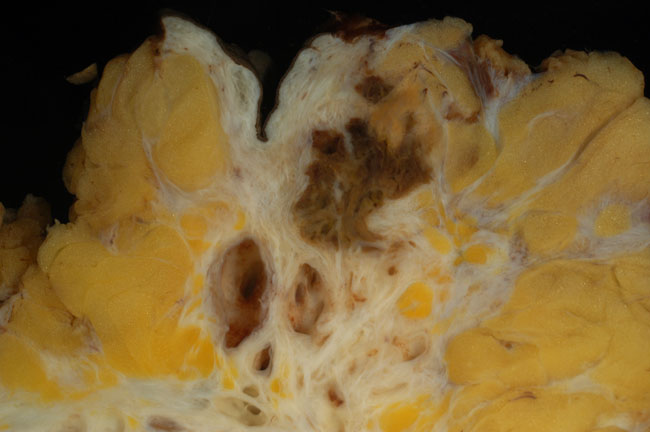
Endometrial tissue embedded in abdominal wall

Endometriosis in abdominal wall. Photo by Ed Uthman, MD. Public domain.

I’ve recently developed a whole new understanding of why it takes so long for women to receive a diagnosis of and treatment for endometriosis. It’s not just the constraints of menstrual etiquette or the belief that painful periods are normal, especially for young women.


It’s about poop. No one wants to talk about that, least of all me.


I have endometriosis, and I’ve known it known for years. My doctors know it, too. It was seen through the laparoscope during a procedure for something else when I was about 35. But I’m still having trouble getting a diagnosis and treatment.


A flare-up of pain began two months ago, and I went to the clinic for relief and told the responding physician, “I think it might be my endometriosis”, pointing to the low area on my pelvis where it hurts. He asked a lot of questions about my bowels — I’ll spare you the grisly details — and ordered blood tests and an abdominal x-ray. After studying the results, he prescribed treatment for constipation, and urged me to call or return if my pain was not soon resolved.


Since that October afternoon, I’ve seen three additional physicians and continue to experience daily pelvic pain. I’ve had more blood tests, another x-ray, and a contrast CT scan, which showed normal bowel function. Perhaps because I had a hysterectomy a few years ago for adenomyosis, my doctors* continued to focus their attention on my ‘bowel problem’, rather than reproductive health issues, even though I retain healthy, functioning ovaries.


Until this week, when I finally saw the gastroenterologist. He listened to my description of the pain and its location, and more detail about my bowel habits than I’ve ever had to report since my mother toilet-trained me. And after a brief examination, he referred me back to the gynecologist who performed my hysterectomy. That’s right — he found nothing wrong with my bowels. My appointment with the gynecologist is early next week, and I’m optimistic that I will finally have an answer about the source of my pain, and even better, a means to resolve it.


For me, a well-educated, 48-year-old ciswoman with good health insurance who already knows she has endometriosis, this has been only two months of dealing with pain and the annoyance of waiting and medical bureaucracy. I can only imagine what kind of torment this might be for women with more severe symptoms without these resources, and without the knowledge that endometriosis frequently presents as, or with, gastrointestinal symptoms. Doctors who don’t specialize in women’s reproductive health may not even know this. Frequently, the symptoms of endometriosis are bowel symptoms:

  • Painful bowel movements
  • Constipation
  • Diarrhea
  • Alternating constipation and diarrhea
  • Intestinal cramping
  • Nausea and/or vomiting
  • Abdominal pain
  • Rectal pain
  • Rectal bleeding

I’m reminded again of my friend and colleague Laura Wershler’s frequent calls for body literacy; we need to know our own bodies, and know how to talk about them. I can talk about menstrual cycles until the cows come home, but it has been a real challenge to observe and talk about the details of bowel habits, even with my trusted physician.


Good health requires good communication.


P.S. I’m still in pain, and it’s really hard to say this in public, but thank you, Dr. S., for recommending the daily dose of MiraLax.


*I’m compelled to note that, Dr. S., my primary care physician, or ‘PCP’, as my health insurance plan refers to him, is a wonderful doctor. I really don’t have complaints about his care, and I have pretty good health insurance, and I’m lucky to have both.

Post to Twitter Post to Plurk Post to Yahoo Buzz Post to Delicious Post to Digg Post to Facebook Post to MySpace Post to Reddit Post to StumbleUpon

Painful Periods as Predictor of Endometriosis?

November 29th, 2010 by Elizabeth Kissling

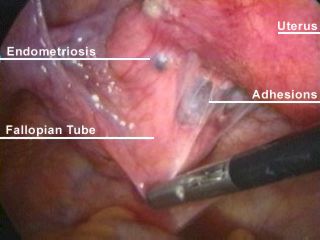
endometriosis_and_adhesionA cross-sectional study published in the November, 2010, issue of Fertility and Sterility reports that very painful menstrual periods during the teen years (that is, period pain so severe that girls miss school) may be predictive of an increased risk of developing deep infiltrating endometriosis (DIE), the most extensive form of endometriosis.

In a study of 229 women undergoing surgery for endometriosis, French researchers found that those with the most extensive form — known as deep infiltrating endometriosis (DIE) — were more likely to have had particularly painful periods as teenagers.

As a group, they were four times as likely as women with non-DIE endometriosis to have used birth control pills to treat severe menstrual pain before the age of 18. And they were 70 percent more likely to say they’d missed school days because of menstrual symptoms.

Although these findings may help women receive a diagnosis of endometriosis sooner,* it is unclear whether progression to DIE (what an unfortunate acronym!) can be prevented. And there is no real cure for endometriosis.

*As we reported previously in writing about Kate Seear’s research about the diagnostic delay in treating endometriosis, the delay is non-trivial: research estimates an average delay of 8 years in the UK and 11 years in the US.

Post to Twitter Post to Plurk Post to Yahoo Buzz Post to Delicious Post to Digg Post to Facebook Post to MySpace Post to Reddit Post to StumbleUpon

Social Effects of Menstrual Pain for Turkish Teens

September 10th, 2010 by Elizabeth Kissling
Illustration via sexualityandu.ca

Illustration via sexualityandu.ca

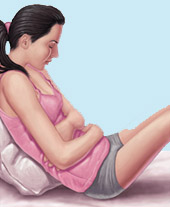
A new study published in the Journal of Pediatric Adolescent Gynecology reports on a study of how dysmenorrhea affects girls’ relationships with families and friends and school performance for girls in Turkey. Previously, we reported on research documenting that menstrual pain is the norm for adolescents; this study represents a next step by looking at the effects of that pain. 1951 girls from 26 high schools completed surveys assessing the level and the nature of menstrual pain they experienced and answered questions about how their pain affected their school work and relationships.

Unsurprisingly, more than half of the girls surveyed reported that dysmenorrhea does affect their ability to perform well at school, with 50% of the girls reporting “lack of focus on the content of the courses” and 26.9% reporting “not being able to answer the questions in exams despite having the knowledge”.  A staggering 77.3% report “having problems with their families” when they are experiencing menstrual pain.

Post to Twitter Post to Plurk Post to Yahoo Buzz Post to Delicious Post to Digg Post to Facebook Post to MySpace Post to Reddit Post to StumbleUpon

Exercise for dysmenorrhea?

July 26th, 2010 by Elizabeth Kissling

Women have long been advised that exercise is among the best pain relievers for painful periods. But a new Cochrane Review (also published in July, 2010, issue of Obstetrics & Gynecology) indicates that research confirming that advice is inconclusive.

Yet, the data on exercise and dysmenorrhea are quite limited, and only one clinical trial met review standards. The main outcome measure was the change in The MOOS Menstrual Distress Questionnaire (MDQ) after three cycles of treatment. The MDQ is commonly used in menstrual cycle research (and also commonly criticized). Exercise was found to improve MDQ scores within three cycles. This Cochrane review offers some preliminary, although not robust, evidence for the effectiveness of exercise in the treatment of dysmenorrhea.

So if exercise helps your period pain, keep it up!

Post to Twitter Post to Plurk Post to Yahoo Buzz Post to Delicious Post to Digg Post to Facebook Post to MySpace Post to Reddit Post to StumbleUpon

Teens and the IUD

July 8th, 2010 by Elizabeth Kissling


Art by Flickr user Buhny | CC 2.0

Art by Flickr user Buhny | CC 2.0

A new study published in the Journal of Obstetrics and Gynecology has found that adolescents are usually able to tolerate the Mirena® IUD rather well. The mean age of girls in this British study was 15.3 years, and they were prescribed the Mirena® for painful and/or heavy periods that did not respond to oral medications. 93.4% of girls in the study (45 young women) reported “significant improvement” within four months. The researchers conclude “that Mirena is a well tolerated and effective alternative for heavy periods±dysmenorrhoea in adolescents who do not respond to oral therapy.”


So will this finding make it easier for young women to obtain an IUD if they’d like it for birth control, now that there is evidence that it is well tolerated?

Post to Twitter Post to Plurk Post to Yahoo Buzz Post to Delicious Post to Digg Post to Facebook Post to MySpace Post to Reddit Post to StumbleUpon

Readers should note that statements published in re: Cycling are those of individual authors and do not necessarily reflect the positions of the Society as a whole.