Blog of the Society for Menstrual Cycle Research

Teenagers and Menstrual Pain

December 14th, 2009 by Elizabeth Kissling
Cover of 1963 edition of "Growing Up and Liking It" booklet from Personal Products, Inc.

Cover of 1963 edition of "Growing Up and Liking It" booklet from Personal Products, Inc.

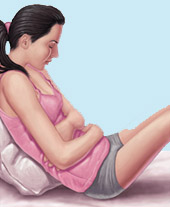
A recently published population-based study of teens in Australia found that menstrual pain is the norm among young women: Typical menstruation in adolescence includes pain (93%), cramping (71%), premenstrual symptoms (96%) and mood disturbance (73%).

This surprises me; I (mistakenly) thought the literature showed painful periods and PMS to be more common in the thirties, and fairly infrequent in the teen years. I can’t help but wonder if these reports of such high levels of pain and PMS are influenced by the pervasive cultural representations of periods as unpleasant and/or painful. It’s noteworthy that only 1% of the girls surveyed reported periods with no pain and no symptoms, and  78% consider their periods to be ‘normal’ most of the time. Assuming those other 22% significantly overlap with the 33% who experienced pain severe enough to consult a physician, I infer that most girls think painful periods are normal.

Please note that I am NOT suggesting that girls are lying about pain or that their period pain is “all in their heads” or psychosomatic; I am merely suggesting that our bodily experience and our perceptions of our bodies always take place in specific cultural and historical contexts. It may also be that dietary and environmental changes have influenced the rise in menstrual pain these researchers document.

(To see more editions of “Growing Up and Liking It”, visit the Museum of Menstruation.)

Post to Twitter Post to Plurk Post to Yahoo Buzz Post to Delicious Post to Digg Post to Facebook Post to MySpace Post to Reddit Post to StumbleUpon

Adenomyosis: Under-diagnosed cause of pelvic pain

December 3rd, 2009 by Elizabeth Kissling

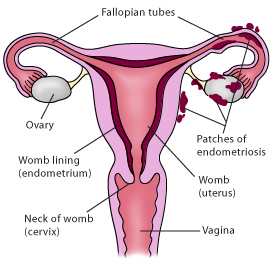
adenomyosis1.jpg (JPEG Image, 250x297 pixels)A couple of months ago, we wrote about Kate Seear’s research findings that menstrual etiquette is a frequent cause of delayed diagnosis of endometriosis. In related news, medical researchers writing in a recent issue of the Journal of Obstetrics and Gynaecology have found that adenomyosis, the presence of endometrial tissue embedded within the muscular wall of the uterus, is under-diagnosed.

S. Basak and A. Saha, the study’s authors, examined the data of more than 1000 hysterectomies performed for pelvic pain or abnormal uterine bleeding (in other words, hysterectomies for cancer and uterine prolapse were excluded from the data set) in the UK in a three-year period. In 26 of those cases, adenomyosis was identified post-surgery via tissue analysis.

The medical histories in these 26 cases were then examined more closely. The majority of the women had sought medical attention for menorraghia (excessive menstrual bleeding) and dysmenorrhea (painful periods). Eleven of the women’s uteruses were enlarged, and 16 underwent pelvic ultrasound exams. But adenomyosis was suspected clinically in only one case; the others were identified as uterine fibroids (five cases) or “dysfunctional uterine bleeding” (20 cases).

Examination of patients’ case histories found that the medical consultations focused on menstrual flow. The researchers found that other symptoms of adenomyosis, such as pelvic pain, pain during intercourse, painful periods, and feelings of pelvic pressure, were not adequately addressed – even when examination or ultrasound findings indicated an enlarged uterus.

Basak and Saha ask,

Does failure of preoperative suspicion of adenomyosis matter? In the absence of an accurate diagnosis, appropriate treatment is unlikely to be offered, or may be delayed. This results in failure of treatment and continued suffering.

To identify adenomyosis earlier, they recommend more careful discussion with patients of pelvic symptoms, MRI, and follow-up care with women who elect for conservative management of their symptoms. Once again, open communication about all aspects of menstruation isn’t about challenging taboos just for the sake of challenge; it’s critical for women’s health and well-being.

Post to Twitter Post to Plurk Post to Yahoo Buzz Post to Delicious Post to Digg Post to Facebook Post to MySpace Post to Reddit Post to StumbleUpon

Is Menstruation a Disability?

November 19th, 2009 by Elizabeth Kissling

I think few people would consider menstruation per se a disability, with exceptions for menorrhagia and unusually painful periods. But I’ve been reading a bit in the field of disability studies lately, for both professional and personal interest, and starting to think about disability differently. I’m currently reading Susan Wendell’s The Rejected Body and finding it especially powerful and provocative.*

She writes of disability as social construction; that is, disability cannot be defined solely in biomedical terms but must be considered in terms of a person’s social, physical, and cultural environment. A person is disabled when they live in a society that is “physically constructed and socially organized with the unacknowledged assumption that everyone is healthy, non-disabled, young but adult, shaped according to cultural ideals, and, often, male” (p. 39).

A feminist philosopher by training, Wendell points out that feminists have long sustained criticisms that the world has been designed for the convenience of men and male bodies.

In many industrialized countries, including Canada and the United States, life and work have been structured as though no one of any importance in the public world, and certainly no one who works outside the home for wages, has to breast-feed a baby or look after a sick child. Common colds can be acknowledged publicly, and allowances are made for them, but menstruation cannot be be acknowledged and allowances are not made for it. Much of the public world is also structured as though everyone were physically strong, as though all bodies were shaped the same, as though everyone could walk, hear, and see well, as though everyone could work and play at a pace that is not compatible with any kind of illness or pain, as though no one were ever dizzy or incontinent or simply needed to sit or lie down. [p. 39, emphasis added]

It is this physical structure and social organization that causes much of the disability in our society. Similarly, it is the physical structures and social organization of my culture that make menstruation a problem and a secret. I’ve written about some of this before (and SMCR members probably also see Emily Martin’s work echoing here), but was reminded of this issue in a recent conversation with a reporter about attitudes toward menstruation.

The journalist wanted to know if perhaps menstruation was kept hidden just because it’s private, rather than shameful. I asked her to think about the ways our society structures work that compel us to keep it private and secret. For instance, how easily can you find menstrual products in your school or workplace when you need them? (There’s a tampon dispenser in the women’s room in my campus building, but the sign has read EMTY for the all the years I’ve worked there.) I also spoke with her about a terrific study by Tomi-Ann Roberts and her colleagues about attitudes toward menstruation, in which a research confederate dropped a hair clip in one scenario and a tampon in another. Dropping the tampon led the research participants to offer lower evaluations of the confederate’s competence and decreased liking for her; they even displayed a mild tendency to avoid sitting close to her. This suggests that women conceal menstruation for good reason – to avoid appearing disabled.

Prejudice against menstruators is similar to prejudice against people with disabilities, particularly in judgments about competence, intelligence, and strength. Many disabled people do their damnedest to pass as non-disabled to avoid these same judgments. And in most of North America, people who menstruate do their damnedest to conceal their menstruation, because our physical and social structures are configured in ways that make it disadvantageous to menstruate.

The Etiquette of Menstrual Concealment Preserves Pain as well as Secrecy

October 9th, 2009 by Elizabeth Kissling

abdominal_painIt’s great that menstrual taboo and stigma is ‘over’, as Amanda Fortini informed us earlier this week (see Chris’ post about the menstrual activism shitstorm across several blogs this week). Now maybe all those women suffering from debilitating endometriosis can get some relief.

Kate Seear’s newly published study about the diagnostic delay in treating endometriosis finds that menstrual etiquette rules and the culture of concealment are among the most profound causes of the delay between the first experience of menstrual pain and the diagnosis of endometriosis, which then opens avenues for relief through either surgery or medical treatment. The delay is non-trivial: research estimates an average delay of 8 years in the UK and 11 years in the US. Reasons for the delay include minimizing of menstrual pain by doctors, family members, and others, and women’s inability to distinguish between ‘normal’ menstrual pain and abnormal pain, and, Seear argues, the social sanctioning women experience when they talk about menstruation in general or menstrual pain in particular.

Copyright restrictions prevent me from re-publishing the article that details her findings and analysis, but here is the abstract:

Endometriosis is a chronic gynaecological condition of uncertain aetiology characterised by menstrual irregularities. Several studies have previously identified a lengthy delay experienced by patients between the first onset of symptoms and eventual diagnosis. Various explanations have been advanced for the diagnostic delay, with both doctors and women being implicated. Such explanations include that doctors normalise women’s menstrual pain and that women might delay in seeking medical advice because they have difficulty distinguishing between ‘normal’ and ‘abnormal’ menstruation. It has been suggested that the diagnostic delay could be reduced if women were trained in how to distinguish between ‘normal’ and ‘abnormal’ menstrual cycles. In this paper I argue that whilst these may be factors in the diagnostic delay, women’s reluctance to disclose problems associated with their menstrual cycle may be a more significant and hitherto neglected factor. I argue women are reluctant to disclose menstrual irregularities because menstruation is a ‘discrediting attribute’ (Goffman, 1963) and disclosure renders women vulnerable to stigmatisation. Women actively conceal their menstrual irregularities through practices of the ‘menstrual etiquette’ (Laws, 1990) which involves the strategic concealment of menstrual problems. This argument is supported through an analysis of the experiences of 20 Australian women diagnosed with endometriosis. The ramifications of this analysis for chronic pain conditions more generally and for practical strategies designed to address the endometriosis diagnostic delay are considered.

If you have access to an academic library (or other source for Social Science & Medicine), I highly recommend reading this article.

Post to Twitter Post to Plurk Post to Yahoo Buzz Post to Delicious Post to Digg Post to Facebook Post to MySpace Post to Reddit Post to StumbleUpon

Readers should note that statements published in re: Cycling are those of individual authors and do not necessarily reflect the positions of the Society as a whole.