Blog of the Society for Menstrual Cycle Research

The pill, reduced period pain and the ongoing delusion

January 20th, 2012 by Laura Wershler

Is there a woman over the age of 18 anywhere who doesn’t know that taking the birth control pill can make her periods lighter and less painful? Most women know this, but not many know why. The news stories swirling around a new study about the pill and period pain will not enlighten them.

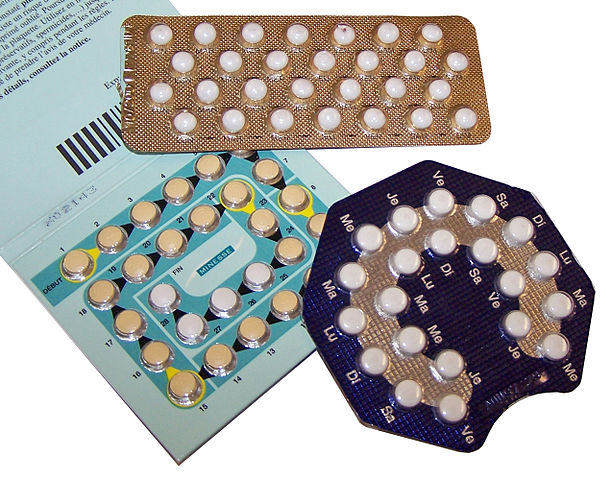
Photo credit: Ceridwen, Creative Commons 2.0

A 30-year longitudinal Swedish study has finally proved the worth of what is accepted practice in North America and Europe: the prescribing of combined oral contraceptives (COCs), or birth control pills with synthetic estrogen and progestin, to treat painful periods known clinically as dysmenorrhea.

Of course, pharmaceutical companies that manufacture COCs are probably eager for this research, as prescribing the pill for dysmenorrhea is still an off-label use in the U.S. (unlicensed use in the U.K.). Pill manufacturers may be able to use this finding to lobby the FDA (or equivalent agencies in other nations) to approve the pill as treatment for menstrual pain, leading to increased sales and insurance coverage. Perhaps that’s why news media have been treating this discovery as breaking news.

Take this headline: Yes, the Pill CAN ease the agony of period pain: Scientists confirm what millions of women already know, or this one: The pill ‘does ease period pain’, or this one: Combination oral contraception pills cut menstruation pain, or, really, any of these.

You can read the abstract of the study by Swedish researchers Ingela Lindh, Agneta Andersson Ellström and Ian Milsom, published this week in the journal Human Reproduction, here: The effect of combined oral contraceptives and age on dysmenorrhoea: an epidemiological study. The conclusions are simple: “COC use and increasing age, independent of each other, reduced the severity of dysmenorrhoea. COC use reduced the severity of dysmenorrhea more than increasing age and childbirth.”

Forget the age factor for the purposes of this discussion. The fact that COC use reduces the severity of dysmenorrhea is not astounding. This is old news. So says Dr. Steven Goldstein, an obstetrician/gynecologist at NYU Langone Medical Center in New York City, quoted in a USA Today story:

“The study results are not surprising. It’s gratifying to see researchers documenting scientifically what practitioners have been seeing for a very long time. The amount of discomfort from a woman’s period with a combination birth control pill is a fraction of what it is without the Pill. There is a diminution of pain from the Pill.”

What is astounding is what Dr. Goldstein, and other OBGYNs, didn’t say in responding to the study. That the reason the pill reduces menstrual pain is because the synthetic hormones in the pill shut down a woman’s own menstrual cycle. The “period” women experience when on the pill is technically known as a “withdrawal bleed,” brought on by seven days of placebo pills. While it feels like a period to menstruators, it is not the same physiologically as the period they experience when NOT on the pill. That’s why it doesn’t hurt as much.

The point is, the pill is too often credited with regulating the menstrual cycle. It does no such thing. The pill does not regulate any woman’s menstrual cycle; it supercedes it. This research, and the many news stories that reported it, once again ascribe power to the pill – this time the power to cut menstrual pain. This is an incomplete truth.

Post to Twitter Post to Plurk Post to Yahoo Buzz Post to Delicious Post to Digg Post to Facebook Post to MySpace Post to Reddit Post to StumbleUpon

Endometriosis and the Mysteries of Pelvic Pain

December 16th, 2011 by Elizabeth Kissling
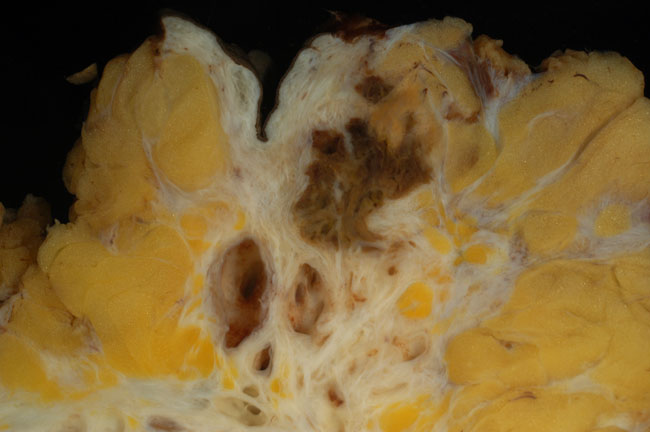
Endometrial tissue embedded in abdominal wall

Endometriosis in abdominal wall. Photo by Ed Uthman, MD. Public domain.

I’ve recently developed a whole new understanding of why it takes so long for women to receive a diagnosis of and treatment for endometriosis. It’s not just the constraints of menstrual etiquette or the belief that painful periods are normal, especially for young women.


It’s about poop. No one wants to talk about that, least of all me.


I have endometriosis, and I’ve known it known for years. My doctors know it, too. It was seen through the laparoscope during a procedure for something else when I was about 35. But I’m still having trouble getting a diagnosis and treatment.


A flare-up of pain began two months ago, and I went to the clinic for relief and told the responding physician, “I think it might be my endometriosis”, pointing to the low area on my pelvis where it hurts. He asked a lot of questions about my bowels — I’ll spare you the grisly details — and ordered blood tests and an abdominal x-ray. After studying the results, he prescribed treatment for constipation, and urged me to call or return if my pain was not soon resolved.


Since that October afternoon, I’ve seen three additional physicians and continue to experience daily pelvic pain. I’ve had more blood tests, another x-ray, and a contrast CT scan, which showed normal bowel function. Perhaps because I had a hysterectomy a few years ago for adenomyosis, my doctors* continued to focus their attention on my ‘bowel problem’, rather than reproductive health issues, even though I retain healthy, functioning ovaries.


Until this week, when I finally saw the gastroenterologist. He listened to my description of the pain and its location, and more detail about my bowel habits than I’ve ever had to report since my mother toilet-trained me. And after a brief examination, he referred me back to the gynecologist who performed my hysterectomy. That’s right — he found nothing wrong with my bowels. My appointment with the gynecologist is early next week, and I’m optimistic that I will finally have an answer about the source of my pain, and even better, a means to resolve it.


For me, a well-educated, 48-year-old ciswoman with good health insurance who already knows she has endometriosis, this has been only two months of dealing with pain and the annoyance of waiting and medical bureaucracy. I can only imagine what kind of torment this might be for women with more severe symptoms without these resources, and without the knowledge that endometriosis frequently presents as, or with, gastrointestinal symptoms. Doctors who don’t specialize in women’s reproductive health may not even know this. Frequently, the symptoms of endometriosis are bowel symptoms:

  • Painful bowel movements
  • Constipation
  • Diarrhea
  • Alternating constipation and diarrhea
  • Intestinal cramping
  • Nausea and/or vomiting
  • Abdominal pain
  • Rectal pain
  • Rectal bleeding

I’m reminded again of my friend and colleague Laura Wershler’s frequent calls for body literacy; we need to know our own bodies, and know how to talk about them. I can talk about menstrual cycles until the cows come home, but it has been a real challenge to observe and talk about the details of bowel habits, even with my trusted physician.


Good health requires good communication.


P.S. I’m still in pain, and it’s really hard to say this in public, but thank you, Dr. S., for recommending the daily dose of MiraLax.


*I’m compelled to note that, Dr. S., my primary care physician, or ‘PCP’, as my health insurance plan refers to him, is a wonderful doctor. I really don’t have complaints about his care, and I have pretty good health insurance, and I’m lucky to have both.

Post to Twitter Post to Plurk Post to Yahoo Buzz Post to Delicious Post to Digg Post to Facebook Post to MySpace Post to Reddit Post to StumbleUpon

Menstrual Pain Hurts because It’s Cyclic

February 16th, 2011 by Elizabeth Kissling
Photo by Abbey Hambright under Creative Commons 2.0

Photo by Abbey Hambright under Creative Commons 2.0

A new study published in the Journal of Experimental Psychology reports that menstrual pain — like annoying noises and tedious computer tasks — hurts more in retrospect, if we anticipate experiencing it again:

In the culminating field study of 180 women (average age 29), those whose menstrual periods had ended fewer than three days earlier or who expected their periods within three days remembered their last period as significantly more painful than women in the middle of their cycle (none were currently menstruating).

Oddly enough, I found this information about the study in article in Computers, Networks and Communication. They report that “[i]n a series of eight studies exposing people to annoying noise, subjecting them to tedious computer tasks, or asking them about menstrual pain, participants recalled such events as being significantly more negative if they expected them to happen again soon.”

The researchers suspect that this is an adaptive reaction; that is, people use the memory to steel themselves against future pain.


Post to Twitter Post to Plurk Post to Yahoo Buzz Post to Delicious Post to Digg Post to Facebook Post to MySpace Post to Reddit Post to StumbleUpon

Menstruating Women are Like Vikings!

December 13th, 2010 by Elizabeth Kissling

At least according to the newest ad for Kitadol, a menstrual pain reliever sold in Chile.

According to The Viking Network, Viking women retained property and inheritance rights after marriage, plus the right to divorce a husband who mistreated her or their children, insulted her family, or failed to be a good provider. These are considerably greater legal rights than most women had in that era (approximately 800-1050 CE).

I can think of worse metaphors for menstruating women.

(So can Kitadol.)

[Via Copyranter]

Post to Twitter Post to Plurk Post to Yahoo Buzz Post to Delicious Post to Digg Post to Facebook Post to MySpace Post to Reddit Post to StumbleUpon

Social Effects of Menstrual Pain for Turkish Teens

September 10th, 2010 by Elizabeth Kissling
Illustration via sexualityandu.ca

Illustration via sexualityandu.ca

A new study published in the Journal of Pediatric Adolescent Gynecology reports on a study of how dysmenorrhea affects girls’ relationships with families and friends and school performance for girls in Turkey. Previously, we reported on research documenting that menstrual pain is the norm for adolescents; this study represents a next step by looking at the effects of that pain. 1951 girls from 26 high schools completed surveys assessing the level and the nature of menstrual pain they experienced and answered questions about how their pain affected their school work and relationships.

Unsurprisingly, more than half of the girls surveyed reported that dysmenorrhea does affect their ability to perform well at school, with 50% of the girls reporting “lack of focus on the content of the courses” and 26.9% reporting “not being able to answer the questions in exams despite having the knowledge”.  A staggering 77.3% report “having problems with their families” when they are experiencing menstrual pain.

Post to Twitter Post to Plurk Post to Yahoo Buzz Post to Delicious Post to Digg Post to Facebook Post to MySpace Post to Reddit Post to StumbleUpon

Exercise for dysmenorrhea?

July 26th, 2010 by Elizabeth Kissling

Women have long been advised that exercise is among the best pain relievers for painful periods. But a new Cochrane Review (also published in July, 2010, issue of Obstetrics & Gynecology) indicates that research confirming that advice is inconclusive.

Yet, the data on exercise and dysmenorrhea are quite limited, and only one clinical trial met review standards. The main outcome measure was the change in The MOOS Menstrual Distress Questionnaire (MDQ) after three cycles of treatment. The MDQ is commonly used in menstrual cycle research (and also commonly criticized). Exercise was found to improve MDQ scores within three cycles. This Cochrane review offers some preliminary, although not robust, evidence for the effectiveness of exercise in the treatment of dysmenorrhea.

So if exercise helps your period pain, keep it up!

Post to Twitter Post to Plurk Post to Yahoo Buzz Post to Delicious Post to Digg Post to Facebook Post to MySpace Post to Reddit Post to StumbleUpon

That Which Does Not Kill Me Makes Me Stronger

March 24th, 2010 by Elizabeth Kissling

Cartoon of women with cramps

London newspaper The Telegraph reports on the development of a new medical treatment for dysmenorrhea, or painful periods. The article contains very little information about the new pill — most of the article describes the variety of misery some women experience with menstruation. The only information about the new medication is that the drug blocks vasopressin, a hormone involved in regulating uterine contractions and thus a cause of menstrual cramping.

But I was struck by this sentence in the second paragraph:

But now [women with painful periods] might no longer have to soldier on stoically after researchers have developed a pill which could put an end to the root cause of their discomfort.

See that? Women with cramps aren’t whiners or crybabies or just making excuses. They’re hard-working troupers who soldier on stoically despite being miserable.

Post to Twitter Post to Plurk Post to Yahoo Buzz Post to Delicious Post to Digg Post to Facebook Post to MySpace Post to Reddit Post to StumbleUpon

New Research Indicates Link between Early Menarche and Endometriosis

March 11th, 2010 by Elizabeth Kissling

Drawing of uterine cross-section indicating endometriosis.In a controlled study of 268 Australian women with surgically confirmed moderate-to-severe endometriosis (cases) and 244 women without endometriosis (controls), researchers found that characteristics of a woman’s early menstrual cycles were associated with later development of endometriosis. Data showed those who did not start their menstrual cycle until after they turned 14 had a significantly reduced risk of later developing endometriosis.

Duration of the cycle, intensity of flow, and preferred choice of menstrual product showed no association with endometriosis.

The results are published in the American Journal of Obstetrics and Gynecology, December 2009. You can read the abstract here.

Post to Twitter Post to Plurk Post to Yahoo Buzz Post to Delicious Post to Digg Post to Facebook Post to MySpace Post to Reddit Post to StumbleUpon

Pain Don’t Hurt

February 25th, 2010 by Elizabeth Kissling

A small study recently published in the European Journal of Pain found that women’s sensitivity to pain does not appear to be increased by the menstrual cycle. The study did not assess perceptions of menstrual pain, but measured pain sensitivity to cold pressor, heat, and ischemic pain at different points throughout the cyle: the early follicular, late follicular, and luteal phases. Men were also tested three times, controlling for number of days between testing sessions. The researchers found that the phase of the menstrual cycle did not affect women’s pain sensitivity, nor did it affect gender differences in pain. (Contrary to popular belief, research indicates that in general, healthy women are more sensitive to pain than healthy men.)

Post to Twitter Post to Plurk Post to Yahoo Buzz Post to Delicious Post to Digg Post to Facebook Post to MySpace Post to Reddit Post to StumbleUpon

Best pain relievers for cramps

January 20th, 2010 by Elizabeth Kissling

A new meta-analysis of previous research on acetaminophen (also known as paracetamol outside the U.S.) vs. NSAIDs (nonsteroidal anti-inflammatory drugs) for treatment of menstrual pain indicates that NSAIDs are more effective. NSAIDs include aspirin, ibuprofen, and naproxen sodium, which are all readily available over-the-counter in the U.S. The research pooled results from 73 randomized controlled trials comparing the effectiveness and safety of NSAIDs vs. placebo, vs. acetaminophen, and each other.

The results don’t indicate whether one NSAID is any better than any other for menstrual pain. Researcher Jane Marjoribanks, M.D., Cochrane Menstrual Disorders and Subfertility Group in Auckland, New Zealand, says they work by reducing prostaglandins, the substance manufactured by the uterine lining to help the uterus contract and expel menstrual fluid.

“Research has shown that women with dysmenorrhoea have high levels of prostaglandins, hormones known to cause cramping abdominal pain. …NSAIDs are drugs which act by blocking prostaglandin production.”

The study was published today in the Cochrane Database of Systematic Reviews.


Post to Twitter Post to Plurk Post to Yahoo Buzz Post to Delicious Post to Digg Post to Facebook Post to MySpace Post to Reddit Post to StumbleUpon

New Treatment for Uterine Fibroids

January 18th, 2010 by Elizabeth Kissling

Illustration of radiofrequency ablation technique to remove fibroids.Tuesday’s Wall Street Journal reports a new surgical technique for relief of uterine fibroids is currently being tested at six medical centers in the U.S., along with two in Mexico and one in Guatemala. Presently, the only sure cure is hysterectomy, because fibroids sometimes grow back when suppressed with drugs or removed individually.

Fibroids are benign growths in the uterus that are estimated to occur in as many as 70% of women. Fibroids are often asymptomatic; many women don’t even know they have them. But fibroids can become large and painful, and can cause heavy menstrual bleeding. Sometimes they can grow large enough to interfere with other organs.

The new technique under investigation is called radiofrequency ablation. The procedure involves three small incisions: one for the laproscopic camera so the surgeon can see inside the abdomen, a second for an intra-abdominal utrasound probe to determine the size and location of fibroids, and a third for the Halt device, a needle electrode that penetrates the fibroid and burns the cells, which are eventually reabsorbed by the body. The device also cauterizes the incision to minimize bleeding.

In early tests outside the U.S. with 70 women, 90% were satisfied with the results. It is unknown whether fibroids destroyed with this technique will grow back.


Post to Twitter Post to Plurk Post to Yahoo Buzz Post to Delicious Post to Digg Post to Facebook Post to MySpace Post to Reddit Post to StumbleUpon

The cure for all things menstrual?

December 24th, 2009 by Chris Hitchcock

A recent press release from the American College of Obstetricians and Gynecologists announces that Hormonal Contraceptives Offer Benefits Beyond Pregnancy Prevention. This is in the same vein as similar articles published over the years about “non-contraceptive benefits of the pill” – a laundry list of the many benefits women may obtain by using hormonal contraception. It’s not clear how they should be used by practicing obgyn’s. One use is certainly as additional talking points to convince women who are cautious or reluctant to replace their body’s own menstrual physiology with a pharmaceutical product.

I haven’t been able to read the full document (for some reason my university access seems to only find the first page of the full document), but it appears that, like previous reviews I have read, it is a biased list, including benefits but not risks. Perhaps what is most in common is the sense that a spontaneous menstrual cycle is somehow suspect, that fluctuations over time are unnatural, and that pharmaceutical control is a good solution.

I can understand why the pharmaceutical industry might want to publish a long list of off-label uses (although they would be quickly stopped by the US’s FDA and regulatory bodies in other countries). But it is a curious thing to find a professional group extolling the many off-label benefits of a class of pharmaceutical drugs. Do cardiologists publish practice bulletins about the non-cardiovascular benefits of statins?

There are other perspectives about how one might treat painful periods or heavy menstrual flow. The published Cochrane Reviews (well-respected summaries of published studies) about cramps suggest that the evidence for non-steroidal anti-inflammatories (NSAIDS, such as ibuprofen) is more solid and clear than that for combined oral contraceptives, and that, to date, no studies have compared them head-to-head. Moreover, NSAIDs also have been shown to reduce menstrual flow.

The press release notes the protective effects against endometrial, ovarian and colorectal cancer, but fails to note the increased risk of sexually transmitted infections. Being on the pill is the most important risk factor for not using condoms.

And when absent or long periods occur, inducing regular and predictable flow will reduce the risk of endometrial cancer, but otherwise primarily serves to mask the underlying issue. In that case, going on the pill can be like hitting snooze on your smoke alarm.


Post to Twitter Post to Plurk Post to Yahoo Buzz Post to Delicious Post to Digg Post to Facebook Post to MySpace Post to Reddit Post to StumbleUpon

Readers should note that statements published in re: Cycling are those of individual authors and do not necessarily reflect the positions of the Society as a whole.