Blog of the Society for Menstrual Cycle Research

“Why I’ll never take the pill again”

May 11th, 2010 by Chris Hitchcock

In an article in today’s Independent, Holly Grigg-Spall presents an alternative to the current celebrations of the pill. It’s an important message to add to the collective contemplation of what the pill has meant to women and to women’s lives, and interesting reading. The pill prevents pregnancy, but not everyone likes how they feel when they take it, and women’s experiences are often not heard or dismissed. In a world where proponents of the pill see it as a cure for all things menstrual, and recommend it as therapy for the painful cramping that the majority of teenagers experience, it is important to also say that there are significant side effects for some women that affect quality of life.

Post to Twitter Post to Plurk Post to Yahoo Buzz Post to Delicious Post to Digg Post to Facebook Post to MySpace Post to Reddit Post to StumbleUpon

50 years of The Pill

May 9th, 2010 by Chris Hitchcock

Today’s the day, ironically enough on Mother’s day, that marks half a century since the FDA approved the pill for contraceptive use in the USA. And, for better or for worse, it’s become part of the fabric of our culture, and allowed women to have both family and a career by providing reliable family planning. Although, as many have commented, the pill may get more credit than it deserves, it serves as a powerful symbol of women’s liberation and sexual freedom.

Recently, in the Vancouver Art Gallery, I learned that, around this time, feminist painters were bringing the body back into art, challenging the largely male trends of abstractionism. Ironically, at the same time, feminist psychologists were working to remove the body from the psychology of women, challenging the prevailing wisdom that the narrative of woman is the narrative of her womb, and that when it ceases to be productive, so does she. How does the pill, with its chemical silencing of women’s reproductive endocrinology, fit with this interplay between owning and disowning our female bodies? And how can we own our bodies without allowing them to be our only defining features?

Post to Twitter Post to Plurk Post to Yahoo Buzz Post to Delicious Post to Digg Post to Facebook Post to MySpace Post to Reddit Post to StumbleUpon

The Pill in the News

April 25th, 2010 by Chris Hitchcock

This week was a big one for media coverage of the 50th anniversary of the Pill. And it looks like this is also being taken as an opportunity to reflect on women’s history over the past 50 years, which will also be a good thing. Women often lose our history, and those of us who are 70 now grew up in a very different reality than those of us who are 20. I am 45, smack in the middle of that span, and it’s very interesting to me to look both forward and back. We are living through incredible changes in social history, and we need to know this to understand what is going on today and what will happen tomorrow.

The pill made the front cover of Time magazine. The author, Nancy Gibb, makes some very good points about how the existence of the pill changed young women’s ideas about the possibility of planning a career path that included being sexually active (probably in the context of marriage) but with control over the timing of pregnancy.

There’s a Time editorial here.

And there are a few interviews with Nancy Gibb, the author of the Time article, on Time’s own web page, on CNN, and NPR (Gather.com).

In the Huffington Post, Christianne Northrup discusses important social and medical context for decision-making about contraception, including the Pill.

Katrina Onstad wrote about the pill’s birthday in Chatelaine magazine.

Books and book reviews on the anniversary of the pill:

Michelle Goldberg reviews a new book about the pill in the American Prospect.

Post to Twitter Post to Plurk Post to Yahoo Buzz Post to Delicious Post to Digg Post to Facebook Post to MySpace Post to Reddit Post to StumbleUpon

What do vaginal rings and tampons have in common?

April 22nd, 2010 by Elizabeth Kissling

Vaginal ring held up for display in gloved right hand.

So here’s an odd little study: when women are given a choice between oral contraceptives and the contraceptive vaginal ring, what characteristic is most highly correlated with a slightly greater interest in using the vaginal ring? If you said “tampon use”, you’re right!

Among contraceptive vaginal ring and OCP users, 247 (79%) reported using tampons. Contraceptive vaginal ring users were not significantly different from OCP users in terms of age, race or ethnicity, marital status, insurance, body mass index, or parity. Adjusted analysis indicated that tampon users were more likely to choose the contraceptive vaginal ring instead of OCPs.

The study was published this month in Obstetrics & Gynecology. The researchers conclude, “but all women should be offered the contraceptive vaginal ring regardless of experience with tampon use”. No kidding. Sadly, they don’t appear to be offered any non-hormonal contraceptive options, as this research was conducted in conjunction with The Contraceptive Choice Project, described in the research report as “a longitudinal study of 10,000 St. Louis area women promoting the use of long-acting, reversible methods of contraception and evaluating user continuation and satisfaction for all reversible methods.”

It seems to me that the researchers want to predict contraceptive choices based on how willing contraceptive users are to touch their own genitals, but apparently they can’t directly ask them. They might accidentally discover an interest in using a diaphragm or cervical cap!

Post to Twitter Post to Plurk Post to Yahoo Buzz Post to Delicious Post to Digg Post to Facebook Post to MySpace Post to Reddit Post to StumbleUpon

Does your birth control method stop your cycle?

April 20th, 2010 by Chris Hitchcock

It’s starting. With the approaching 50th anniversary of the birth control pill, there will be a flood of anniversary celebrations and reviews of birth control methods. Which is good. We should have those discussions more often. Just say “no” (on the part of parents who don’t want to hear about it) is a big contributor to unwanted teen pregnancy.

Today’s Wall Street Journal is running an article called The Birth-Control Riddle. The riddle is apparently the high rate of unwanted pregnancy, despite the availability of a range of effective birth control methods. And, as befits the Wall Street Journal, each birth control method is accompanied by a price tag, so you can make an informed consumer decision.

But what I noticed was that there is no real awareness of what we at SMCR feel is an important consideration: Does your birth control method stop your cycle?

Some methods do – they deliver progestins and/or estradiol in high enough doses to act on the parts of the brain that normally make the hormones that talk to the ovaries that stimulate growth of a follicle, then trigger its release. This is a complex, whole body system, that normally we only notice because of uterine effects (that would be menstrual bleeding or pregnancy). And as a culture we have fairly casually accepted the idea that it is optional, and perhaps even optimally replaced by a pill made by a drug company.

When addressing the (no longer so) new extended use cycle-stopping contraceptive options, the WSJ glibly explains that “Experts say there is no health reason that women need to have a period if they are not ovulating or building up uterine lining each month.” In other words, so long as your uterus is not endangered (by pregnancy or endometrial cancer), there is no worry. Never mind that both estrogen and progesterone act on receptors throughout the body (bone, skin, blood vessels, brain, gut, breast), or that the synthetic estrogens and progestins don’t quite act in the same way, and we don’t quite completely understand how yet. And it’s just a change of schedule, so what difference can it make that your tissues are stimulated for 12 (or 52) weeks at a time instead of 3 before they get a break?

The problem is, with changes in the schedule of delivery and the reduction in hormone-free time, we really won’t know whether there are any consequences for a while. Oral contraceptives are taken by healthy young women, so the base rate of problems is low, and you need large numbers to measure the rates of serious side effects. I haven’t heard any further about the post-marketing surveillance studies for blood clots (venous thromboembolism) that the FDA asked Lybrel to conduct following its 2007 approval. But those 5-year followup data should be out around 2013. It will be interesting to see whether they are published, or just submitted as a report to the FDA. I’m guessing that will depend on whether the company likes the story they tell.

What’s Up with Yaz?

April 3rd, 2010 by Elizabeth Kissling

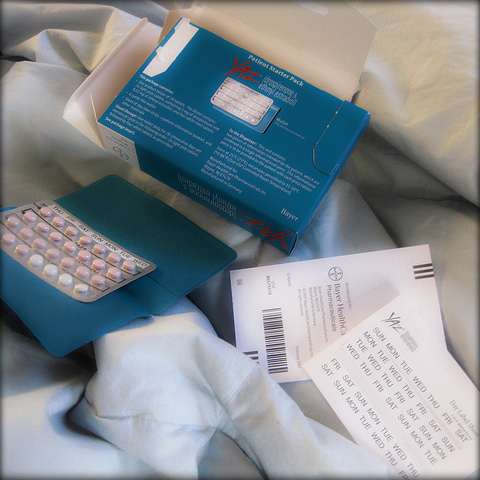
Yaz box and pill pack.We’ve mentioned Yaz and its sister drug Yasmin before, and our friend Holly Grigg-Spall tracks the progress of complaints against them and other oral contraceptives. Yaz and Yasmin were Bayer’s top-selling drugs in 2008, bringing in about $1.8 billion, a 17 percent increase from 2007. The key element that makes them different from other OCs is drospirenone, a new form of synthetic progestin which has a pharmacological profile that is reported to be closer to the human body’s own progesterone but a safety profile that has come under scrutiny since the FDA approval of Yaz/Yasmin. Last fall, Bayer revealed that they were fighting 129 lawsuits over side effects and marketing of Yaz and Yasmin. More suits have since been filed.

So with this context in mind, it was with great interest that I noticed this study in my periodic searching of menstruation research literature: Bleeding patterns and menstrual-related symptoms with the continuous use of a contraceptive combination of ethinylestradiol and drospirenone: a randomized study, published in last month in Contraception. It’s a small study, only 78 women over six months time, but the researchers conclude: “Continuous use was associated with amenorrhea and fewer menstrual-related symptoms compared to cyclic use.”

It looks like Yaz and/or its analogues are being tested for marketing as menstrual suppression drugs. Time to put in an interlibrary loan request to get my hands on the full study. Anyone want to place bets on how the study was funded?

Post to Twitter Post to Plurk Post to Yahoo Buzz Post to Delicious Post to Digg Post to Facebook Post to MySpace Post to Reddit Post to StumbleUpon

So the pill won’t kill me; what’s the point?

March 18th, 2010 by Laura Wershler

Women on the pill live longer. So touts a March 12, 2010 Reuters news story out of London, England reporting on a study published March 11 in the British Medical Journal (BMJ). A misleading headline if ever there was one.

The study followed 46, 000 women for up to 40 years, to see if the mortality risk among women sho have used oral contraceptives differs from that of never users. What the study actually found, according to the public release issued by BMJ on March 12 is this: “Women in the UK who have ever used oral contraceptives are less likely to die from any cause, including all cancers and heart disease, compared with never users.”

The study also found a slightly higher risk (of death, I presume) in women under 45 years old who are current or recent users of the pill.  As such, the authors assert:

Many women, especially those who used the first generation of oral contaceptives many years ago, are likely to be reassured by our results.  However, our findings might not reflect the experience of women using oral contraceptives today, if currently available preparations have a different risk than earlier products.

I’m 56 years old. I didn’t take the pill in the UK. But I did take it in Canada in the early to late seventies, back when it was much stronger than it is today. And back when it was NOT common for women to start the pill at 15 and take it for a decade or longer.  Am I reassured by these findings? Sort of. Although years of hard-fought-for healthy, ovulatory menstruation, subsequent to my year long post-pill amenorrhea, are more likely responsible for my good health than having  been an “ever user” of oral contraceptives. And more likely to protect me from heart disease and cancer than whatever benefits I may have derived from my on again, off again pill-taking history.

As for women under 45, it’s not just the “currently available preparations” I’d be concerned about. And there are tons of them: multiple variations of standard pills, continuous use pills like Seasonale and Lybrel, and cycle-stopping contraceptives like Depo-Provera and the Mirena IUD. The other concern is that the contraceptive use of young women today is much different than it was in my youth. They start using oral and other hormonal contraception at younger ages, before their reproductive systems have fully matured and their fertility (regular, ovulatory menstrual cycles) is well established. And they tend to take it for longer. The verdict on the long-term effects of this kind of contraceptive use is yet to be determined.

I’m not going to debate the merits or faults of this study or the unanswered questions it raises. The question I really want to ask is “What’s the point?”

The cynic in me believes that this study, and misleading headlines like Women on the pill live longer, will be used to compel women of all ages to ‘shut up already’ about their growing concerns with hormonal contraception. It will be dragged out as “scientific evidence” that taking the pill saves lives, as is implied in this article published by the Daily Mail:

The contraceptive Pill can extend your life and may even save 1,500 lives a year, a study has suggested.

Women who have taken the Pill at any stage in their life are less likely to die from any cause – including heart disease and all types of cancer – than those who have never taken the oral contraceptive.

But wait, here’s the next paragraph:

However, the positive effects may only be enjoyed by women who have taken older-style pills rather than those on newer drugs.

Menstruation and Music Don’t Mix

January 29th, 2010 by Elizabeth Kissling

Cartoon illustration of opera singerThat’s the report from this arts blogger at the New York Times. Yesterday, doctors from the Methodist Center for Performing Arts Medicine of the Methodist Hospital in Houston held a daylong symposium on the management of medical problems among musicians specifically and performing artists more generally. Performing-arts medicine is a relatively new specialty, and frankly, I’m not surprised by the need for it. (I know a drummer who has ongoing neck and back problems caused – or at least aggravated – by his art.)

But I was surprised to see a blanket recommendation that female vocalists use oral contraceptives to suppress menstruation. According to Keith O. Reeves, the deputy chief of Gynecology at the Methodist Hospital and a professor at Weill Cornell, premenstrual syndrome “brings vocal fatigue, decreased range, loss of power and loss of some harmonics.” Continuous use of synthetic hormones is quite an extreme remedy for an illness without a clear definition or etiology.

But apparently menopause is much harder on the vocal folds – our intrepid blogger can’t even tell us:

As for menopause, you don’t want to know. As Dr. Reeves quotes the great mezzo-soprano Christa Ludwig, “It was a hell of some years.”


Post to Twitter Post to Plurk Post to Yahoo Buzz Post to Delicious Post to Digg Post to Facebook Post to MySpace Post to Reddit Post to StumbleUpon

Soon: (Even)Better ‘Bitch’ing

January 28th, 2010 by Chris Bobel

bitch magAs of Feb 8th, freelance writer, re:Cycling guest blogger, and oral contraception watchdog Holly Grigg-Spall (check out her blog “Sweetening the Pill”) will join the Bitch magazine blog team. She will opine on women’s reproductive health—news stories, developments, research, and more.

I have been a long time fan of Bitch and expect to love it that much more with Grigg-Spall burning up the blogscape with her take on things.

More eyes and ears and voices! Hurrah!

Post to Twitter Post to Plurk Post to Yahoo Buzz Post to Delicious Post to Digg Post to Facebook Post to MySpace Post to Reddit Post to StumbleUpon

There’s an app for that

January 14th, 2010 by Elizabeth Kissling

Screen shot from iPhone app to remind user to take birth control pill.There are a number of web sites and mobile applications for tracking one’s cycle (such as MyMonthlyCycles.com) and for tracking PMS – either one’s own or someone else’s, as frequent guest contributor David Linton pointed out a few months ago. Is anyone surprised that there is also an app to remind you to take your birth control pill every day?

Of course, if you’re going to take oral contraceptives, taking it consistently is important. With a short half-life and low dosage in many of today’s pills, ideally they should be taken at the same time each day for maximum effectiveness. (This also may reduce breakthrough bleeding.) Research indicates that the average birth control pill user misses three pills each month, which changes the failure rate from 0.3% to 8%.

The commonly used Dialpak® dispenser, introduced in 1965, was designed to make it easy to remember to take the pill every day, long before iPhones or internet access. Legend has it that it was invented by a fellow who frequently argued with his wife over whether or not she had taken her pill. The Dialpak® is iconic in American culture; it has made the birth control pill the only prescription drug identifiable at a distance simply by its container. It is even evoked in the perfectly circular swimming pool and costumed synchronized swimmers of the NuvaRing® advertisement frequently seen on American television.


These ads (“Break Away from the Pack”) promote NuvaRing® for those who can’t be arsed to take a pill every day, rather than any claims of its effectiveness as birth control. (Needless to say, the ads neglect to mention that the ring can be accidentally expelled surprisingly easily. That’s got to impact its effectiveness rate.)


Physicians refer to failure to take one’s medication as “non compliance”, as though patients – especially female patients – are deliberately defiant rather than forgetful. But wouldn’t a real rebel be more likely to reject hormonal contraception completely in favor of Fertility Awareness and/or barrier methods? And she’d employ reusable menstrual products, too.

[via Holly Grigg-Spall]

Post to Twitter Post to Plurk Post to Yahoo Buzz Post to Delicious Post to Digg Post to Facebook Post to MySpace Post to Reddit Post to StumbleUpon

‘Should You Get Rid of Your Period’ Debated at MSN

January 8th, 2010 by Elizabeth Kissling

SMCR and re:Cycling‘s own Chris Hitchcock is featured in a menstrual suppression for-and-against article at MSN today. Chris explains why using hormonal contraceptives to stop periods is generally bad idea, except in very limited medical circumstances. Leslie Miller, professor of obstetrics and gynecology at University of Washington, defends the proposition that there’s no reason to menstruate unless one wants to get pregnant.

The article also includes a Consumer Reports video analysis of that annoying Seasonique ad that presents women as split personalities between “emotional” and “logical”. (Because it’s logical to get rid of menstruation – it only makes you emotional, dontcha know.)

Post to Twitter Post to Plurk Post to Yahoo Buzz Post to Delicious Post to Digg Post to Facebook Post to MySpace Post to Reddit Post to StumbleUpon

The “standard of care” for being a girl?

December 22nd, 2009 by Laura Wershler

In a December 21, 2009 news release the American College of Obstetricians and Gynecologists (ACOG) proclaimed that “hormonal contraceptives offer benefits beyond pregnancy prevention“.

You’d have to be an ostrich with her head in the sand not to have heard this message before.  Just open any woman’s magazine to any ad for the pill, or any of the myriad varieties of drug-based birth control, and you’ll find the litany (a prolonged and tedious account) of non-contraceptive benefits used as marketing messages to “sell” birth control to girls and women.  So the news release begs the question: why now?

Maybe the pharmaceutical companies are putting pressure on the gynies to protect their funding and the drug companies profits.  Maybe this news release is damage control.  A recent article in Maclean’s magazine proclaimed a trend towards ”ditching the pill for good“.

[O]ral contraceptive prescriptions in Canada levelled off in 2008, reports pharmaceutical industry analyst IMS Health Canada. Health care workers are seeing a growing demand for non-hormonal methods. Spurred by concerns about their health, the environment, or even frustration with family doctors, who sometimes seem to push the pill as a modern-day cure-all, Canadian women are looking for other options.

Are declining prescriptions for hormonal contraceptives a growing trend in North America?  Is there a backlash brewing against the pill, the patch and the ring?  One can only hope that the days when your gynecologist could convince you that taking the pill is a panacea for everything that, supposedly, is “wrong” with women’s bodies are coming to an end.

Hormonal contraceptives are drugs that disrupt a woman’s normally functioning endocrine system with synthetic versions of estrogen (ethinyl estradiol) and progesterone (progestin) to induce infertility.  [Do not be fooled by the language used in the press release.]  These drugs have a time and place.  But precribing the pill must never become the “standard of care” for being a girl.  Mothers everywhere, take note.


Post to Twitter Post to Plurk Post to Yahoo Buzz Post to Delicious Post to Digg Post to Facebook Post to MySpace Post to Reddit Post to StumbleUpon

Readers should note that statements published in re: Cycling are those of individual authors and do not necessarily reflect the positions of the Society as a whole.