Blog of the Society for Menstrual Cycle Research

Working Mothers

April 29th, 2013 by Paula Derry

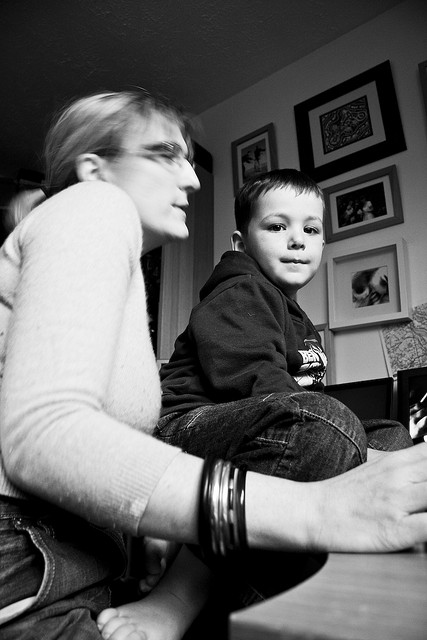
“Working Mother and Son” Photo by Russell Chopping // Creative Commons 2.0
http://www.flickr.com/photos/russellchopping/3501039851/

Research is often reported as though it is news, as though the most recent article is the best and research that was not published this year is somehow not as interesting or is out-of-date. I recently dug out some articles I wrote about the psychology of working mothers that were based on a study I did in the mid-1980s. I interviewed psychotherapists about how being a mother had affected their professional lives. This study was qualitative research. I offer the results as interesting ideas, not as definitive conclusions.  Some points I think are still interesting:

  1. Overall, about 64% of the 25 mothers I interviewed opted for part-time work; when children were preschoolers, this was about 78%. Psychotherapists, unlike many other women, have the option of working part-time:  part-time jobs, especially for therapists who see clients in private practice, are the same jobs that a full-time worker would have.
  2. I compared the mothers with another group of 19 therapists who did not have children. The non-mothers tended to work full time (about 90%).  However, both groups of women were deeply and apparently equally committed to their jobs.
  3. Many of the mothers (about 60%) felt that work was not as important to them as it would be if they were childless. However, this did not mean that work was unimportant. For most women, it only meant that they now had two strong priorities instead of one.
  4. Almost all of the mothers (88%) felt that having children affected their work as psychotherapists by deepening their empathy, understanding, or emotional knowledge about parents and parenting. This was not simply intellectual, that they knew more facts, although this was also true. It was experiential understanding, a different experience of what facts mean. This was so even though their profession involves helping clients understand their parents or their parenting, and was reported whether they had a child while in graduate school or after they had worked for many years.
  5. One aspect of this increased knowledge was an experience of how passionate an experience mothering is. Another aspect was a less idealized view of both parents and children, and greater tendency to see the experiences of parents and children from their own perspectives. For example, in addition to seeing parents in terms of how their children felt (e.g., that the parent was mean or rejecting), the therapists might perceive more clearly where parents were coming from or that children might misunderstand or be unreasonable.
  6. This greater ability to see the position of both parents and children more clearly is what a psychologist might call psychological individuation. That is, the stereotype is that mothers are or should be all-giving, selfless, thinking only about their children. However, these mothers seemed to grow more realistic, clear about and accepting of who children as well as parents are. As I said in one paper:  “Interconnectedness, or intimacy, requires a sense of oneself and the other as separate but related. (If children really do lack a sense of this separation, that is no reason why their parents, who are adults, should identify with their perspective.)”

References

Derry, P.S. (1994) Motherhood and the importance of professional identity to psychotherapists. Women & Therapy, 15, 149-163.
Derry, P.S. (1992) Motherhood and the clinician/mother’s view of parent and child. In  J. Chrisler & D. Howard (Eds.), New directions in feminist psychology:  Scholarship/Practice/Research. New York: Springer.

Motherhood

January 7th, 2013 by Paula Derry

I recently had the opportunity to present a talk at something called Ignite Baltimore. Scheduled a few times a year, Ignite has proven to be extremely popular. I discovered that not only had the event sold out, but people arrived early for a pre-event reception in a sprawling lobby filled with animated people conversing.

The format is this: Sixteen speakers each give a five-minute talk. During each talk, twenty slides are each shown for 15 seconds, and the talk has to be built around this constraint. During my Ignite event, the topic of talks ranged from musings about what magic is, to how to revitalize Baltimore, to mine on motherhood. For me, giving a presentation was an opportunity to experiment with using a different kind of language than I use in more academic presentations, and to experiment with a mixture of words and visual imagery.

Here’s the YouTube video of my talk about what it means to be a mother. It’s also about the idea that we exist as whole, integrated people, not isolated bits of hormone, brain chemicals, stereotyped behaviors, stimulus-response connections to the environment. The imagery is unfortunately blurred, but I hope you can make out enough, and I hope that what I say is of interest.

The Eternal Feminine: Focused, Goal-Oriented, Practical, and Loving

April 30th, 2012 by Paula Derry

Visiting colleges became part of our repertoire of family trips back when my daughter was a senior in high school.   We visited many schools to get a sense of the range of possibilities that existed.   As was typical, Vassar offered a tour of the campus for groups of prospective students and their parents, led by tour-guides who were undergraduate students.  Vassar’s tour had one unique feature.  An original campus building, which dated to the post-civil war era, had an exceptionally wide hallway.  This, we were told, was because the all-woman student body needed to be able to walk back and forth repeatedly in the halls in their wide skirts, as part of a college program in physical fitness. Vassar, founded on the idea that the education of women should equal that of men, had a program of physical culture to offset criticisms that the school was endangering women’s health by educating them.

Sheila Rothman describes Vassar’s history in her book “Woman’s Proper Place,” published by Basic Books in 1978.  The common wisdom in the second half of the 19th century was that people have a limited amount of biological “vital energy.”  Rothman (p.24) quotes a contemporary physician:  ”Woman has a sum total of nervous force equivalent to a man’s” but the force is “distributed over a greater multiplicity of organs…The nervous force is therefore weakened in each organ…it is more sensitive, more liable to derangement.”  Menstruation and pregnancy were times of special danger, when the demands on her system were greater and the possibility of physical and mental disorder increased.  Menstruation was a time when women were irrational, even insane.  Caution, however, was always called for, as when intellectual activity or other exertion used up nervous energy.  Thus, when Vassar was founded, a program was put in place to overcome women’s predisposition to illness through a structured environment and programs of physical exercise.  Later, the Association of Collegiate Alumnae conducted a survey to provide research evidence as to whether female college graduates were normal.

Image by Thiophene_Guy // CC 2.0

Back in the Vassar of the present, our student tour guide wondered:  “How could anyone believe anything so silly?” It’s true that we no longer talk about a “vital force.”  Yet, broad generalizations about the nature of women and reproductive physiology continue to exist that have an air of plausibility, based today on a different scientific language, one of hormones, neurotransmitters, and other players.   Not very long ago, menopause was defined as an “estrogen deficiency disease” that had a uniquely powerful effect on health.  Heart disease was a disease of civilization for men and a disease of the ovaries for women.   The idea that the menstrual cycle destabilizes women’s minds, creating mood and intellectual changes, continues to exist.

One of my favorites is the idea that women are somehow receptive, loving, and self-denying because of their maternal role, which is somehow mediated by estrogen.  Thus menopause may be said to be a time that women regain the ability to focus more on themselves, liberated from a physiological preparedness for reproduction and its needs.   Pregnancy is a dreamy time when women are moody and unable to think clearly.

Sure, mothers are receptive, loving, self-denying, but they are also many other things.  I love being a mother.  My relationship with my daughter has been powerful, unique, and wonderful.  However, I know that a mother who is lost in a dreamy connectedness to her child or reflexively puts her child before herself can’t do everything she needs to do.   A mother is emotionally connected to her child but also must be an individual who perceives the child accurately, as a separate person, in terms of the child’s motivation and perspective, in order to provide both a sense of connection and the mirroring needed for a child’s emotional development.   Further, children misbehave, make mistakes, and must be taught all kinds of things; mothers must have clear-headed, pragmatic, problem-solving skills.

‘Baby Brain’ Is a Myth

February 5th, 2010 by Elizabeth Kissling
Mama and baby elephant in Masai Mara National Reserve, Kenya

Mama and baby elephant in Masai Mara National Reserve, Kenya

When new moms are sometimes forgetful or spacey, it is often attributed to ‘baby brain’ or ‘mumnesia’ or some other clever appellation that reinforces the idea that pregnancy leads to memory loss. It’s another variation on the women-are-ruled-by-hormones meme. In my humble opinion, the sleep deprivation that often accompanies late pregnancy and life with a newborn is a far more likely cause of memory loss.

While the research team at the Centre for Mental Health Research of the Australian National University didn’t investigate my theory, their research found no evidence that pregnancy or motherhood affects women’s brain power.

Professor Christensen’s team recruited 1,241 women aged 20-24 in 1999 and 2003 and asked them to perform a series of tasks. The women were followed up at four-year intervals and asked to perform the same cognitive tests. A total of 77 women were pregnant at the follow-up assessments, 188 had become mothers and 542 remained childless. The researchers found no significant differences in cognitive change for those women who were pregnant or new mothers during the assessments and those who were not.

The researchers suggest that previous findings that appear to confirm the ‘baby brain’ phenomenon are likely due to biased sampling. Their study, published in the British Journal of Psychiatry, was the first time women had been recruited from the general population before pregnancy.

[Via Skepchick]

Readers should note that statements published in re: Cycling are those of individual authors and do not necessarily reflect the positions of the Society as a whole.