Blog of the Society for Menstrual Cycle Research

Teens and the IUD

July 8th, 2010 by Elizabeth Kissling


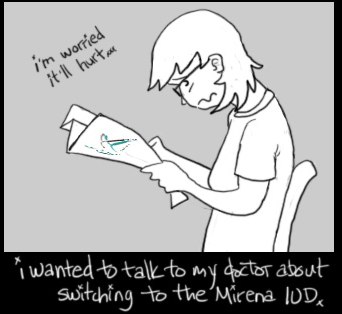
Art by Flickr user Buhny | CC 2.0

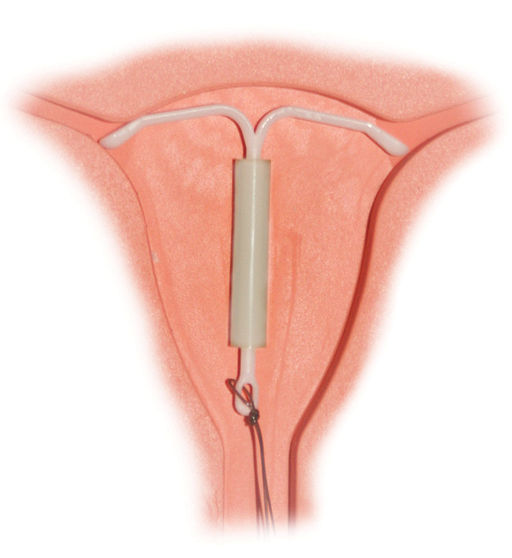
Art by Flickr user Buhny | CC 2.0

A new study published in the Journal of Obstetrics and Gynecology has found that adolescents are usually able to tolerate the Mirena® IUD rather well. The mean age of girls in this British study was 15.3 years, and they were prescribed the Mirena® for painful and/or heavy periods that did not respond to oral medications. 93.4% of girls in the study (45 young women) reported “significant improvement” within four months. The researchers conclude “that Mirena is a well tolerated and effective alternative for heavy periods±dysmenorrhoea in adolescents who do not respond to oral therapy.”


So will this finding make it easier for young women to obtain an IUD if they’d like it for birth control, now that there is evidence that it is well tolerated?

Post to Twitter Post to Plurk Post to Yahoo Buzz Post to Delicious Post to Digg Post to Facebook Post to MySpace Post to Reddit Post to StumbleUpon

Does your birth control method stop your cycle?

April 20th, 2010 by Chris Hitchcock

It’s starting. With the approaching 50th anniversary of the birth control pill, there will be a flood of anniversary celebrations and reviews of birth control methods. Which is good. We should have those discussions more often. Just say “no” (on the part of parents who don’t want to hear about it) is a big contributor to unwanted teen pregnancy.

Today’s Wall Street Journal is running an article called The Birth-Control Riddle. The riddle is apparently the high rate of unwanted pregnancy, despite the availability of a range of effective birth control methods. And, as befits the Wall Street Journal, each birth control method is accompanied by a price tag, so you can make an informed consumer decision.

But what I noticed was that there is no real awareness of what we at SMCR feel is an important consideration: Does your birth control method stop your cycle?

Some methods do – they deliver progestins and/or estradiol in high enough doses to act on the parts of the brain that normally make the hormones that talk to the ovaries that stimulate growth of a follicle, then trigger its release. This is a complex, whole body system, that normally we only notice because of uterine effects (that would be menstrual bleeding or pregnancy). And as a culture we have fairly casually accepted the idea that it is optional, and perhaps even optimally replaced by a pill made by a drug company.

When addressing the (no longer so) new extended use cycle-stopping contraceptive options, the WSJ glibly explains that “Experts say there is no health reason that women need to have a period if they are not ovulating or building up uterine lining each month.” In other words, so long as your uterus is not endangered (by pregnancy or endometrial cancer), there is no worry. Never mind that both estrogen and progesterone act on receptors throughout the body (bone, skin, blood vessels, brain, gut, breast), or that the synthetic estrogens and progestins don’t quite act in the same way, and we don’t quite completely understand how yet. And it’s just a change of schedule, so what difference can it make that your tissues are stimulated for 12 (or 52) weeks at a time instead of 3 before they get a break?

The problem is, with changes in the schedule of delivery and the reduction in hormone-free time, we really won’t know whether there are any consequences for a while. Oral contraceptives are taken by healthy young women, so the base rate of problems is low, and you need large numbers to measure the rates of serious side effects. I haven’t heard any further about the post-marketing surveillance studies for blood clots (venous thromboembolism) that the FDA asked Lybrel to conduct following its 2007 approval. But those 5-year followup data should be out around 2013. It will be interesting to see whether they are published, or just submitted as a report to the FDA. I’m guessing that will depend on whether the company likes the story they tell.

Readers should note that statements published in re: Cycling are those of individual authors and do not necessarily reflect the positions of the Society as a whole.