Blog of the Society for Menstrual Cycle Research

Don’t Ask, Don’t Smell

January 27th, 2011 by Elizabeth Kissling

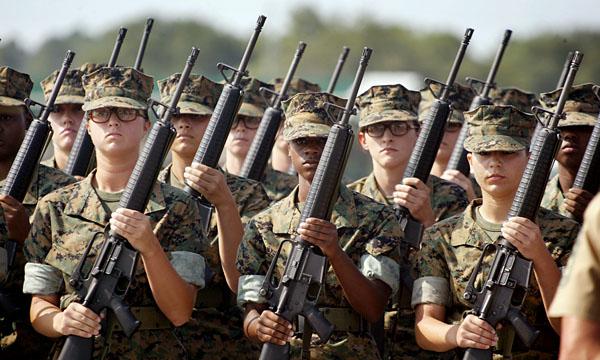
female-minority-happy-military-wide-horizontalGuest Post by Emily Swan, Marymount Manhattan College

With the military’s history of suppressing minority groups, its new effort to conceal and terminate menstruation comes as no surprise. Hopefully, the menses will be able to come out of the closet soon enough.

I recently wrote a paper about menstruation in the military and was excited to see this recent post at re:Cycling. Researchers have suddenly become sensitive to the “devastating” effects of menstruation on women in combat and training, citing a potential link to iron-deficiency, among other things. (Might I add that, while the article identifies menses as the culprit, the actual data suggest no correlation between the loss of menstrual blood and the low iron levels of the participants.) Researchers have also conducted studies and interviews to determine the level of difficulty menstruation adds to a variety of physical activities and expose reported difficulty in obtaining, storing, transporting, changing, and disposing of “sanitary products” (Note the hygiene-promoting terminology). These reports have indicated a significant struggle with menstrual management, giving grounds to the military’s new encouragement for women to use continuous oral contraceptive pills (OCPs) to “temporarily” induce amenorrhea.

What’s happening here is not simply a conquering of the menses but an overpowering of women as a whole. The article about iron deficiency says it best, with its opening paragraph explaining the biological disadvantages of women: women’s lower levels of physical strength, inferior aerobic performance, and a number of other physical and mental “shortcomings” that include the ability to menstruate. It states, “the physical differences between genders in the military setting should be minimized as much as possible” (866). They’re not trying to make women more comfortable by stopping their periods; they’re using men to set the physical and mental performance standard for which women must strive. The failure of women to meet this standard lies in their very biology; the study directly blamed their femaleness as the source of this imbalance. It’s not, “Stop menstruating because it will help you.” It’s, “Stop menstruating because it will get you that much closer to being a man.” Oh joy.

The misogyny embedded within this move toward menstrual suppression does not discount the results of the studies; menstrual management poses a serious issue for most military women! In addition to the difficulty reported in transporting, obtaining, and storing products, another article relayed the troubling results of interviews from women of the Air Force, Army, and Navy regarding personal hygiene and field menstrual management.4 These interviews told of highly unsanitary bathroom facilities in combat environments, lack of privacy for the use and changing of menstrual products, and bathrooms that rarely contained receptacles for disposing of the products. The women reported collecting used products in Ziploc bags to either bury them in the secrecy of night or to keep them in their luggage until they returned to the U.S. Because of the hot, moist climates inhabited during deployment; the heavy, reused, and unwashed clothing; and the frequent lack of water or time to wash up, the interviewees reported constant awareness and humiliation surrounding menstrual odor. Most of the women also admitted hesitancy toward utilizing the clinic for menstrual health issues because they were made to feel that their menstrual symptoms were not worthy of care. They also reported that gynecological exams were excluded from their general deployment health examinations.

Menstrual Suppression for Military Women

January 13th, 2011 by Elizabeth Kissling

One of the arguments for using hormonal contraception to suppress the menstrual cycle is that it mitigates the logistical challenges menstruation can present in high-stress occupations in harsh settings — such as military service in a combat theatre. Given how  compelling the argument is, it’s surprising that birth control pills/patches aren’t used in these settings more frequently.

A new study in Women’s Health Issues indicates that although service women are eager to learn more about the option of menstrual suppression, education about it is lacking. A survey of U.S. women serving in Iraq, Afghanistan, and other combat operations indicates that the number of lost duty days due to menstrual pain would likely decrease with better education about suppression options and compliance regimens.

Post to Twitter Post to Plurk Post to Yahoo Buzz Post to Delicious Post to Digg Post to Facebook Post to MySpace Post to Reddit Post to StumbleUpon

Should menstruating women be permitted on submarines?

January 11th, 2010 by Elizabeth Kissling

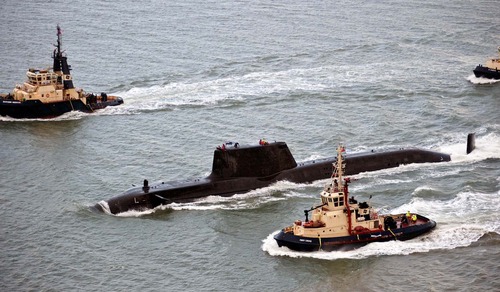
The Royal Navy's newest state-of-the-art submarine leaves Barrow-in-Furness to begin sea trials.Britain’s North West Evening Mail reports that nation’s department of defense is considering whether or not to allow women to serve on subs. Women have gone to sea on submarines in pilot studies in the past, but presently only the Norwegian, Danish, Swedish, Australian, and Canadian navies allow women on submarines.

The primary objections to the new inclusiveness are the possibility of minute radiation affecting chromosomes in pregnancy; screening equipment in submarine toilets that may not be capable of dealing with items like tampons; and the belief that having women and men working in close, cramped quarters could “create tension.” Plus, “it might worry submariners’ wives if women go on subs,” according to one merchant seaman who is a Petty Officer in the Sea Cadet corps.

However, it’s the Ministry of Defense that will be making the decision. A spokesperson told the paper, “The UK is bound by law to reassess occupations from which women are excluded every eight years. We expect the review will be completed in early 2010 and once the results have been evaluated we will publish our conclusions.”

Until then, I’ll join the Evening Mail in letting local businessperson Sally Broom have the last word.

“As far as I am aware, the only ‘official’ reasons for women not being allowed to spend time in submarines at depth are lack of facilities, and medical concerns surrounding pregnancy. In this case facilities should be made available and there should be no issue for women who are not pregnant.

“A traditional and ‘unofficial’ viewpoint is that the presence of women leads to lack of focus. But the idea that, as soon as a woman sets foot on a submarine with a team of highly drilled, disciplined men, the whole thing would collapse into a lustful mess is an absurd insult to both male and female sailors.

Post to Twitter Post to Plurk Post to Yahoo Buzz Post to Delicious Post to Digg Post to Facebook Post to MySpace Post to Reddit Post to StumbleUpon

Readers should note that statements published in re: Cycling are those of individual authors and do not necessarily reflect the positions of the Society as a whole.