Blog of the Society for Menstrual Cycle Research

Breaking News: Men Discover Tampons Can Absorb Blood

June 13th, 2012 by Elizabeth Kissling

Photo by henteaser // CC 2.0

Last week at The Art of Manliness, a contributor wrote a post about numerous possible wilderness survival uses of tampons. The post was picked up by the popular site, Boing Boing, and the commenters in both sites added more uses, as well uses for disposable maxi pads (although some contributors seem uncertain of the difference). Many creative uses for disposable femcare products were suggested, and while I can’t personally vouch for (or against) any of them, I offer this post as Public Service Announcement to correct some of the misinformation about tampons and pads that those uses presume.

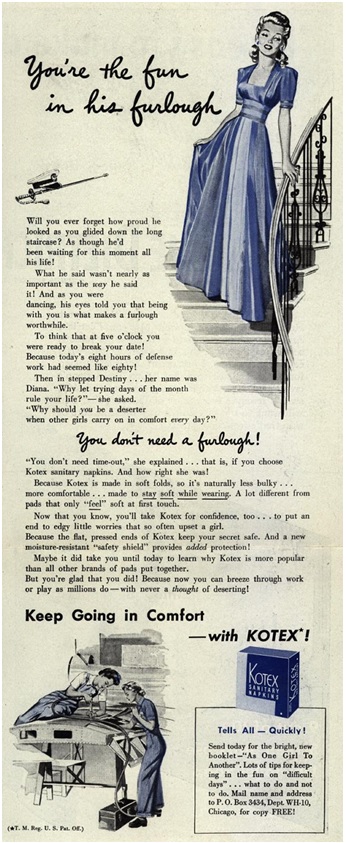
The use of an opened tampon or a maxi pad for a bandage probably seems obvious to re:Cycling readers, as many are familiar with the history of Kotex, developed when World War I nurses discovered that the cotton cellulose they were using on wounded soldiers was highly absorbent. (The phrase ko-tex stands for cotton texture.) But as a few sharp readers of The Art of Manliness are aware, it has been decades since maxi-pads or tampons of any brand were made of cotton (except, obviously, the all-cotton types sold in health food stores). Pads are made from mostly from wood cellulose fibers, with plastic outer layers made of polypropylene or polyethylene. Some of the newer, improved maxi-pads feature synthetic gels designed to draw blood away from the body — not exactly a feature you’d want in a bandage, when you’re trying to stanch the flow of blood and promote clotting. If you’re bleeding heavily, you’re probably better off tearing off your t-shirt and pressing it against the wound. Tampons are also made of wood cellulose, often with a core of viscose fiber. Viscose fiber is rayon, created by treating cellulose with sodium hydroxide and carbon disulfide.

And although most brands are individually wrapped these days, neither tampons nor pads are sterile. Nor are they produced in sterile conditions. I’d be very leery of using a tampon as a water filter. Surely there are safer, equally portable, emergency filters one could pack in a wilderness survival kit.

Many of the other emergency uses of tampons involved using the fluffy wood pulp as kindling, or otherwise setting them on fire. Now there’s a use I can get behind!

Menstrual Marketing Around the Globe — Israel

May 22nd, 2012 by David Linton

Scary Little Menstruating Girl

[note: Although re:Cycling has an international audience, the following post is written from the perspective of an North American consumer.]

As is well known, cultural practices and attitudes regarding menstruation vary widely from place to place and time to time. re:Cycling has commented on the variety frequently in the past.  Differences also make themselves felt even in advertising and packaging of menstrual products, as the notorious Kotex Beaver ads from Australia demonstrate, despite the fact that the products are manufactured by global, trans-national corporations. Though the fact that the menstrual cycle itself is a world-wide biological phenomenon might suggest that views of its meaning and management would be universal as well, nothing could be further from the truth.

Kita and package of Kotex YoungConsider an ongoing marketing campaign that originated in Israel that features a cartoon character named Kita. To the best of my knowledge this campaign has not been adapted for use in the United States, nor, in my opinion, is it likely to find a place in American advertising nor on American market shelves. The spookiness of the cartoon girl who resembles a Japanese anime character seems strangely unlike the way that American consumers commonly depict young teens in a menstrual context. Even the lettering of “Young” and the way the term is used are unfamiliar to American eyes. Of course, the term “Normal Plus” is meaningless but that’s not unusual in advertising everywhere. And all the shades of red and the display of hearts across the bottom of the package are unfamiliar to American consumers as well. In fact, the menstrual taboos in America have resulted (with few exceptions) in a near absence of red, other than in carefully planted touches such as the ribbon on Mother Nature’s menstrual gift box in Tampax Pearl ads, the hair and lipstick of the magician in the Always pad ads, and the big red dot in many Kotex ads.

The Kita campaign began with careful planning and design. As this promotional video from McCann-Erickson, the Tel Aviv ad agency behind the campaign, explains, it began with the creation of a character and an internet world based on notions of what the target consumers – 10 to 13 year old girls – are thought to love most: shopping, the Internet, shopping, clothing, and, of course, in addition to shopping, more shopping. The character of Kita (“the coolest friend any girl could want”), who narrates her own creation and success story, speaks in a voice that is derived from the American “Valley girl” model, complete with plenty of “like” phrases, a few “awesomes,” an “as if” and a “duh” or two. How Kita immigrated from the San Fernando Valley to Tel Aviv is a mystery, although her native voice does come through a few times via some non-Valley pronunciations. (She pronounces “Kotex” as though it were spelled “Kodex.”) According to the boastful promotional video clip, Kita has achieved remarkably high market saturation. It claims that, “95% of Israeli girls know me and love me” and that “1 of every 2 Israeli girls (12-15) has a profile in Kita City.” Furthermore, since the launch in 2007, the “Kotex market share grew by 56%.” If this is what it takes — a menstrual role model who babbles in clichés, is consumed with consuming, wallows in the trivial, yet does so with seeming self-confidence and menstrual cycle savoir faire — to break down even an iota of menstrual shame and insecurity, who are we to object? And the fact that Kita has become a transnational, widely identified cultural meme, as the agency seems to claim, then maybe her next assignment should be to promote world peace. Ya never know!

KOTEX IS IN THE HOUSE! (or, Is the House?)

April 27th, 2012 by David Linton

Despite occasional efforts by manufacturers of menstrual pads and tampons (the giants of the menstrual-industrial complex – thanks, President Eisenhower) to present period-positive images, they still seem unable to resist representing menstruation as an undesirable, embarrassing phenomenon. Women, particularly teens, are expected to grin and bear it as best they can while enduring their monthly misery.  Consider a recent example.

A few weeks ago, the small college where I work received 12 large cartons from a firm called Brand Connections, which apparently specializes in managing promotional campaigns that involve providing free samples of products.  Each carton contained 72 box-like items made up to look like thick text books but with a cover that closely resembled a copy of Teen or Seventeen magazine.  In large letters on the spine and front are the words, “GET REAL.”  The instruction sheet in each carton included warnings that the contents “may not be suitable for children” and that selling the items rather than giving them away “may result in civil and/or criminal prosecution.”  And, in bold type, the page states, “This box contains FREE House of Kotex samples!”  The college authorities were directed to, “Please hand out the House of Kotex samples to your Universities [sic] female students for their enjoyment.”


However, the contents of the package itself were a bit more ambivalent about any connection between menstrual products and enjoyment.

The box opens to disclose, on the right side, two plastic pouches, one white containing a pad and a panty liner, and one black containing a pad, a wipe and a tampon.  On the left, emulating a feature popular in teen girl magazines, is a six item quiz in which girls are asked to choose favorite shoes, lip gloss colors, eye shade, date wear and weekend entertainment.  The sixth item, “Being on your period is. . .” provides the following choices:

  1. the worst
  2. not so bad
  3. part of life
  4. super annoying

If one picks 1. or 4., one is directed to the black pouch; if one chooses 2. or 3., the white pouch is for you.

The cartons were placed around the campus at strategic locations for young women (or curious young men) to pick up the packets.  One enterprising student rifled a few dozen of the tampon packs to store up a stash of her preferred product for the next few months.

Though the cover photo of two smiling young women and the slangy headline references to bonding, fun, and sharing, as well as the playful references to popular items inside created a sense of happy girlhood, the non-so-subtle way the period was described unfortunately reinforced the nuisance trope that is so deeply engraved in young women already.

Readers are invited to propose alternative options to the last question in the menstrual quiz.

Kotex Tampons Recalled Due to Bacterial Contamination

November 14th, 2011 by Elizabeth Kissling

From parenting.com:

If you’ve got Kotex tampons at home, check your boxes: Kimberly-Clark, Kotex’s parent company, has recalled the brand’s Natural Balance Security Unscented Tampons (Regular Absorbency) in both the 18- and 36-count boxes, reports the U.S. Food and Drug Administration. The recalled tampons were sold at select Walmart stores in Iowa, Kansas, Missouri, Nebraska, New Mexico and Texas; select Fry’s stores in Arizona; and select Smith’s stores in Utah and Arizona.

During the manufacturing process, the tampons were contaminated with the bacterium Enterobacter sakazakii, which can cause UTIs, pelvic inflammatory disease, and potentially life-threatening vaginal infections. There is also a chance that the bacteria can be transmitted between individuals.

Consumers should stop using the tampons immediately and contact a physician if you have used them, or if you experience unusual vaginal discharge, rash, fever, headache, vomiting or abdominal pain, particularly if you have AIDS, are HIV-positive, are pregnant or have cancer or any other existing serious illness.

Consumers should also contact Kimberly-Clark’s Consumer Services Division at 1-800-335-6839 so the necessary information and arrangements can be made to retrieve the unused product.

A full list of products is available at the original post.

Culture-Jamming Kotex

October 5th, 2011 by Elizabeth Kissling

If you’ve been with us for a while, you might remember that we (and our fabulous readers) had a lot to say in the spring of 2010 when Kotex launched U by Kotex (or YOU.BUY.KOTEX, as we came to call it) and its “Break the Cycle” campaign.

In digging up a copy of the “Reality Check” video that launched the campaign for one of my classes this week, I came across this critique of “Reality Check” by an activist/artist identified online only as Annamalprint. She’s a menstrual activist after our own bleedin’ hearts!

The campaign has won many advertising industry awards, and has been credited with increasing Kotex sales by 10%, by the way. We can expect those neon tampons to be around for a while.

The Two Voices of Kotex

August 16th, 2011 by Elizabeth Kissling

This Kotex advertisement appeared in the September, 2011, issue of Ebony magazine.

Slip on stilettos and zip up those skinny jeans. Because there’s nothing so comfortable to a menstruating woman as skin-tight pants, right? At least they’re not white pants.

It is interesting that for one line of products, Kotex is mocking the usual tropes of femcare ads, while deploying those very same clichés for their other line.


Tampon Wars

August 12th, 2011 by Elizabeth Kissling

Remember back in February when I made fun of Tampax for explicitly comparing their Tampax Pearl to U by Kotex in their newest print ads? Such direct comparison to the competitor’s product is not a trendy marketing strategy; it hearkens back to the days when Darrin Stephens was a copywriter. (You young-uns can look up that reference.)

I wasn’t the only one who noticed: a recent article in Ad Age says the “30% better protection” strategy has not been used in femcare marketing since Rely tampons were withdrawn from the market in 1980. Not coincidentally, that was the last time Tampax picked up significant market share — a lot of those former Rely users switched to Tampax (Tampax was not owned by P&G at the time, but Rely was).

With the U by Kotex brand apparently winning new customers as well as winning others away from Tampax, how successful will “30% better protection” be as a persuasive strategy? Jack Neff (author of the Ad Age piece) points out that it’s pretty challenging “in a category where absorbency has been tightly regulated by the Food and Drug Administration in the wake of the Rely withdrawal.”

Shed the Shame

March 10th, 2011 by Elizabeth Kissling

Kotex still wants us to “break the cycle“. But every time I see these ads, I think of Chella Quint‘s message to Kotex: We’re only gonna stop feeling the shame when we take ownership of our periods. And we’re taking it back from you, dude. So you can’t reclaim our periods for us. You’re some of the people we’re reclaiming them from. Got it?

youBUYkotex


KOTEX: The Antidepressant of the Ancients

March 3rd, 2011 by David Linton

BH0260-medIn the late 1920s, at the peak of the Flapper Era, a series of Kotex ads made extravagant use of images of attractive young women in couture outfits in sophisticated settings. The most intriguing and subtle ad in the series was published in 1929. It shows two slender young women lounging on the deck of an ocean liner dressed for the evening’s shipboard festivities. The way we know that they are aboard a liner is the presence of a life preserver attached to the railing beside them. The name of the ship is printed in large letters upon the device. They are aboard The Nepenthe.

This is an extraordinary detail, perhaps penned by an English major turned copy writer who remembered fondly Edgar Allen Poe’s well known and often taught “The Raven.” Poe’s poem, the tale of a grief stricken man unable to overcome the loss of his dead lover, pleads with the stolid, unflinching raven for “surcease of sorrow,” some balm or drug to slake his misery, such as the mythic potion alluded to in Homer’s Odyssey and Edmund Spenser’s The Faerie Queen: the mysterious elixir, nepenthe, the drug that banishes sorrow by making the user forget his woes, the antidepressant of the ancients. The narrator implores the raven,

“Wretch,” I cried, “thy God hath lent thee–by these angels he hath sent thee
Respite–respite and nepenthe from thy memories of Lenore!
Quaff, oh quaff this kind nepenthe and forget this lost Lenore!”
Quoth the Raven, “Nevermore.”

The young women in the ad have set sail on the good ship Kotex Nepenthe, the miracle conveyance that will carry them away from conscious need to worry or grieve over the burden of their menstruating bodies.

What does it mean to board the Kotex Nepenthe? What port is being left behind? Where have the women set sail for? The ad copy provides three answers. First, as the headline and the first sentence of the text assert, one can advance one’s class: “Why 9 out of 10 smart women instinctively prefer this new sanitary protection,” states the headline, and the copy adds, “It is easy to see why the use of Kotex has become a habit among women who set the standard of good taste.” Furthermore, as one “smart matron,” puts it, “Now I wouldn’t go back to the old way. This is so much more civilized-how did we ever get along without it?” By implication, women who continue to use old rags are of a primitive nature. And note the use of the phrase “Kotex has become a habit,” an apt coinage for a drug-use metaphor.

Second, as the photo illustration and the copy confirm, a Kotex user can feel young and glamorous: “For such women have young ideas, young minds.”

Third, and most significant, Kotex can help one hide the olfactory and visible signs of one’s very gender: the scent of menses and the sight of a pad beneath one’s dress: “ROUNDED, TAPERED CORNERS – make for inconspicuous protection,” and “DEODORIZES. . . safely, thoroughly, by a patented process.” [caps in original]

The ad embodies the major theme that runs through nearly a century of advertising, that one can pass through the decades of one’s menstrual life as one who does not menstruate. The difference is that rather than using a drug metaphor to claim you can make the period disappear, now, thanks to the pharmaceutical industry, we’ve got the real thing.

Advertising Wars: Tampax vs. Kotex

February 22nd, 2011 by Elizabeth Kissling

It looks like Kotex is winning. Explicit comparison to the competitor’s product is an advertising strategy of 30-40 years ago. Under the new rules, the competitor’s product doesn’t even exist, and certainly isn’t deserving of mention in a promotion for your own.

Tampax02-2011

This ad for Tampax appeared in the March, 2011, issue of Marie Claire


Cheerleader: “P-E-R-I-O-D”

February 17th, 2011 by Elizabeth Kissling

Last spring, Kotex introduced U by Kotex, a.k.a. You Buy Kotex, small tampons with bright neon applicators and a forward-thinking “Break the Cycle” advertising campaign announcing that Tampon Ads Are Ridiculous. Apparently tampon ads are STILL ridiculous. Here’s the new installment, developed by New York ad agency Ogilvy:


Colored Tampons: For Whites Only?

May 5th, 2010 by Elizabeth Kissling

Guest Post by Nicole Luna, Marymount Manhattan College

"Try Something BOLD"Elizabeth Kissling’s March 16 post on the launch of the U by Kotex campaign and the comments that followed touched on the implications of the “new” Kotex products and their accompanying empowerment crusade. Comments ranged from how the new tampon applicators resemble glow sticks to how, with the new “menstruation optional” pills and implants, tampon and pad manufacturers are grasping any marketing ploy to keep girls menstruating and buying their products. Indeed, “empowering” women about their menstrual cycle and encouraging women to “celebrate their bodies” is a smart marketing move by Kotex in the face of the menstrual suppression option. The following comment from Giovanna Chesler’s on Kissling’s March 16 post sums up my own opinion about the “radical new product”.:

“Might I add that when I heard that Kotex was bringing a new, radical product to market, I assumed it would be a menstrual cup. What’s new about painting a tampon applicator? Still plastic. Still disposable. Shows how naive I am. Kotex selling menstrual cups… that would be the day!”

Let us not forget, these products still have the same pesticide-infused cotton and the same one-time-use, land fill-bound plastic applicators and wrappers.

At first, Kotex had successfully baited me with their empowerment rhetoric (although I do not buy their products), because YES I want the shame and embarrassment that surrounds the menstrual cycle to be banished, and YES I want “vagina” to be taken off of the list of “dirty words”, and YES I think tampon and pad commercials are ridiculous. Thus, the Kotex marketing campaign is remarkably cleaver, since it speaks, at least on some level, to those of us who want what is on the “U by Kotex Declaration of real Talk” pledge, which is as follows:

I Will…

  • Celebrate my body and my period as natural, normal, and important
  • Respect my vagina, and know that ‘vagina’ is not a dirty word
  • Challenge society to think differently about what it means to be a woman
  • Talk openly and without embarrassment about periods and vaginal care with my friends and family
  • Take good care of myself and encourage my girlfriends to do the same

If you think this is a progressive step in the direction of menstrual activism, visit the U by Kotex website, where you will find a woman to show you, with the aid of a vulva pillow, how to insert a tampon. She mercifully doesn’t make any reference to freshness or boys; instead, she just gives you straight-forward tampon instructions using candid language and anatomy books (although the images she uses are depictions and not actual human genitalia). Also, the U by Kotex site makes the connection that women who are not ashamed about their periods are more likely to have a positive self-image. My own research has shown me that the more educated a woman is about the logistics of her menstrual cycle, the more likely she is to be assertive about safe sex practices and actually enjoy sex more. She is also less likely to fall for age-old myths like “you can’t get pregnant on your period”.

Readers should note that statements published in re: Cycling are those of individual authors and do not necessarily reflect the positions of the Society as a whole.