March 1st, 2010 by Elizabeth Kissling

POZ magazine and poz.com claim to be the leading publication and website in the U.S. about HIV/AIDS. The March 2010 issue has a great article by Suzanne Bopp about menstruation, menopause, and HIV. As with medical and cultural knowledge about HIV itself, understanding of how HIV affects menstruation continues to evolve. Irregular menstruation is a common complaint of women with HIV, but
“[Today] we have a better grasp of factors associated with abnormal menstrual cycles: substance abuse, AIDS, wasting disease—it relates more to overall nutritional status,” says Kristine Patterson, MD, clinical assistant professor at the University of North Carolina School of Medicine in Chapel Hill. “If the body doesn’t have enough fat, production of estrogen and progesterone shuts down,” Patterson says. This can happen anytime a woman loses too much weight, and it is exacerbated by advanced HIV disease, which causes the body to burn calories more rapidly.
. . . .
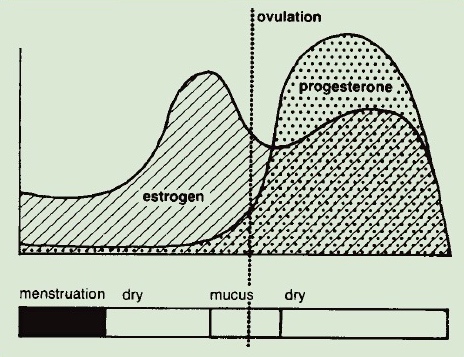
Researchers do know, however, that female hormones affect the virus—and that sex hormones generally have an impact on immunity. “We know that where a premenopausal woman is in her menstrual cycle affects her infectiousness,” Patterson says. “Estrogen plays a role—not only in HIV and the interplay of HIV and meds, but also in [the likelihood of] women transmitting and acquiring HIV.” Estrogen’s role may explain why women progress to AIDS at lower viral loads than men.
Highly recommended. Read the whole thing.

Tags: AIDS, estrogen, Health Care, HIV, hormones, Menopause, Menstruation
Posted in Health Care, Menopause, Menstruation, New Research, Sex | Comments Off
February 7th, 2010 by Elizabeth Kissling
Tags: asthma, drugs, hormone therapy, hormones, Menopause
Posted in Menopause, New Research, Pharmaceutical | Comments Off
February 5th, 2010 by Elizabeth Kissling

Mama and baby elephant in Masai Mara National Reserve, Kenya
When new moms are sometimes forgetful or spacey, it is often attributed to ‘baby brain’ or ‘mumnesia’ or some other clever appellation that reinforces the idea that pregnancy leads to memory loss. It’s another variation on the women-are-ruled-by-hormones meme. In my humble opinion, the sleep deprivation that often accompanies late pregnancy and life with a newborn is a far more likely cause of memory loss.
While the research team at the Centre for Mental Health Research of the Australian National University didn’t investigate my theory, their research found no evidence that pregnancy or motherhood affects women’s brain power.
Professor Christensen’s team recruited 1,241 women aged 20-24 in 1999 and 2003 and asked them to perform a series of tasks. The women were followed up at four-year intervals and asked to perform the same cognitive tests. A total of 77 women were pregnant at the follow-up assessments, 188 had become mothers and 542 remained childless. The researchers found no significant differences in cognitive change for those women who were pregnant or new mothers during the assessments and those who were not.
The researchers suggest that previous findings that appear to confirm the ‘baby brain’ phenomenon are likely due to biased sampling. Their study, published in the British Journal of Psychiatry, was the first time women had been recruited from the general population before pregnancy.
[Via Skepchick]

Tags: cognition, hormones, motherhood, pregnancy
Posted in New Research, Reproduction | 1 Comment »
January 5th, 2010 by Elizabeth Kissling
As we have often noted here, one of the key reasons the marketing of hormone therapy for menopausal women has been so successful is the misguided belief that menopause is an estrogen-deficiency disease. Among other purported disadvantages of the decline in estrogen that accompanies normal aging was the belief that this decline caused muscle loss and other declines in physical functioning. (Muscle cells have receptors for estrogen, and recent research has linked higher blood levels of the hormone to greater muscle strength in elderly women.)
But the Women’s Health Initiative (WHI) is still providing new information about the lack of benefits of HT. (For those who are new around here, the WHI is a large US clinical trial begun in 1991, in which thousands of postmenopausal women were randomly assigned to take either HT or placebo pills. The study was abruptly ended ahead of schedule in 2002, when researchers discovered that the women taking the hormones had higher risks of heart attack, stroke, breast cancer, and blood clots – the very conditions the drugs were assumed to prevent – than placebo users.) In a new study based on a subgroup of 2400 women to be published in a forthcoming issue of Menopause (February 2010), both the women using HT and the placebo groups showed similar dips in muscle strength and walking speed over six years. In other words, women get older and show physical indications of aging with or without hormone therapy.

Tags: hormone therapy, hormones, Menopause, postmenopause, WHI
Posted in Menopause, New Research, Pharmaceutical | 4 Comments »
December 29th, 2009 by Elizabeth Kissling

Three of my young nieces, Labor Day Weekend 2009.
Janice Horowitiz’ “Dueling Docs” feature at Huffington Post today is about the issue of girls reaching puberty at increasingly earlier ages than previous generations. Both Dr. Alisan Goldfarb and Dr. Stephen Safe talk about endocrine disruptors such as BPA (bisphenol-A, a carcinogenic component of some plastics found in some baby bottles and water containers) and pesticides. Certainly both types of chemicals are likely to be a factor in early menarche, but I find it surprising that those are the only factors mentioned. There’s no discussion of the roles of psychosocial stressors, low birth weight, or formula feeding. Neither physician gives serious consideration to the endocrine disruptors that are the hormones used in raising beef and dairy cattle as well as chicken in this country; Dr. Safe acknowledges that “[a]lmost all foods have endocrine disruptors”, but qualifies that statement with, “particularly fruits and vegetables.” (Do you suppose the beef and dairy lobby advertise at Huffington Post?)
For a more thorough, nuanced analysis of this issue, see Sandra Steingraber’s report, The Falling Age of Puberty in U.S. Girls: What We Know, What We Need to Know, published in 2007 by the Breast Cancer Fund. Among other findings, Steingraber reports that new research has revealed that the amount of natural hormones a child’s body produces on its own is much lower than previously estimated; this means “safe levels” of exposure to synthetic hormones and endocrine disruptors must be recalibrated, and policy modified accordingly.

Tags: breast cancer, environment, Girls, hormones, Menarche, puberty
Posted in Girls, Internet, Menarche, New Research | 3 Comments »
December 18th, 2009 by Elizabeth Kissling
You may have heard the news that 23 hormone replacement therapy lawsuits filed by women diagnosed with breast cancer were dismissed by a New York judge this week. Judge Martin Shulman granted Pfizer’s motion to dismiss for two reasons: the plaintiff’s delayed filing exceeded the the three-year statute of limitations in New York, and that “the potential risk of contracting breast cancer from taking HRT medication was well known at all times out there in the stream of public information.” Oddly, Judge Shulman simultaneously asserted “that the debate over HRT health problems has not yet been settled.”
I can’t argue about exceeding the statute of limitations, but it’s difficult for a judge to assert that breast cancer risk of hormone therapy is well known public information. The Lancet reported today that up to half of US adults have trouble interpreting medical information, displaying low levels of health literacy. Health literacy, according to The Lancet, is the ability to comprehend and use medical information that can affect access to and use of the health-care system. Health literacy is more than reading and comprehending news reports of medical issues (which are often of poor quality – see Health News Review for sharp analysis of health news); one must also know how to navigate the complexities of the health care system, including knowing how and when to question one’s physicians and pharmacists. Continue reading...
Tags: advertising, big pharma, breast cancer, drugs, government agencies, Health Care, hormones, lawsuit, Menopause
Posted in Health Care, Law/Legal, Menopause, Pharmaceutical | 1 Comment »
December 16th, 2009 by Elizabeth Kissling
Tags: big pharma, breast cancer, hormones, lawsuit, Menopause, Prempro, viral video
Posted in Internet, Law/Legal, Media, Menopause, Pharmaceutical | Comments Off
December 13th, 2009 by Elizabeth Kissling
There’s a pretty good essay in this weekend’s New York Times (online here Saturday, in print Sunday in the Business section) about how hard Big Pharma has worked to market menopause as an estrogen deficiency disease. In addition to discussion of Wyeth’s advertising campaigns, the article mentions the firm’s contract with DesignWrite, a company drug makers pay to develop manuscripts for publication in medical journals, to prepare at least 60 articles for publication in medical journals on the potential benefits of hormone therapy for cardiovascular disease, Alzheimer’s disease, diabetes, colon cancer, vision loss and other health problems.
The article also includes access to PDFs of some of the thousands of pages of documents from Wyeth that were requested by plaintiffs in the lawsuits against the drug manufacturer. (To date, more than 13,000 people have sued Wyeth claiming that they developed breast cancer and other health problems after taking the company’s menopausal hormone drugs. As we reported three weeks ago, in ten of the twelve verdicts so far, juries have awarded significant sums to plaintiffs. ) The documents available at the New York Times include a publication plan for Wyeth from DesignWrite, a 1995 product launch speech from Wyeth’s marketing director proclaiming the company’s mission of bringing to fruition Dr. Bernadine Healy’s vision of “a world in which the vast majority of women would begin taking HRT, and we know that means Prempro, at menopause and continue on for the rest of their lives.” There’s also this handwritten note from a 1996 meeting about how to respond to a new study raising breast cancer concerns (red markings added by me): Continue reading...
Tags: advertising, big pharma, breast cancer, drugs, economics, hormones, lawsuit, Menopause
Posted in Advertising, Law/Legal, Media, Menopause | 2 Comments »
December 10th, 2009 by Laura Wershler

Mammograms showing healthy (left) and (right) cancerous breast. Courtesy of the National Cancer Institute.
Can having too many menstrual cycles give you breast cancer? That’s what one might conclude from two unrelated articles that appeared in national newspapers this week.
First was Nicholas D. Kristof’s Op-Ed in the New York Times. Kristof had recently attended a symposium exploring whether certain common chemicals are linked to breast cancer and other ailments. The role of estrogen – both the real thing our bodies produce and the pseudo-estrogens – in breast cancer was his major example.
The real thing:
One theory starts with the well-known fact that women with more lifetime menstrual cycles are at greater risk for breast cancer, because they’re exposed to more estrogen. For example, a woman who began menstruating before 12 has a 30 percent greater risk of breast cancer than one who began at 15 or later.
The pseudo-estrogens:
One class of chemicals that creates concern — although the evidence is not definitive — is endocrine disruptors, which are often similar to estrogen and may fool the body into setting off hormonal changes. This used to be a fringe theory, but it is now being treated with great seriousness by the Endocrine Society the professional association of hormone specialists in the United States. …These endocrine disruptors are found in everything from certain plastics to various cosmetics.
Continue reading...
Tags: birth control pill, breast cancer, drugs, estrogen, hormones, Menarche, Menopause
Posted in Birth Control, Health Care, Media, Menarche, Menopause, Menstruation, Newspapers, ovulation | Comments Off
November 25th, 2009 by Elizabeth Kissling
re:Cycling readers may be interested in this story in the current issue of Macleans about the declining interest in oral contraceptives among Canadian women, particularly among women in their 20s who’ve been using The Pill for a decade.
[O]ral contraceptive prescriptions in Canada levelled off in 2008, reports pharmaceutical industry analyst IMS Health Canada. Health care workers are seeing a growing demand for non-hormonal methods. Spurred by concerns about their health, the environment, or even frustration with family doctors, who sometimes seem to push the pill as a modern-day cure-all, Canadian women are looking for other options.
The report echoes a couple of recent discussions here at re:Cycling, such as our guest post from Holly Grigg-Spall and Laura Wershler’s response, guest post from Moira Howe about the quiescent uterus, and discussion of risks of YAZ.
And Dr. Jerilynn Prior, scientific director of the Centre for Menstrual Cycle and Ovulation Research (and past president of the Society for Menstrual Cycle Research) is quoted in the article: “There’s an emotional identity attached to achieving your own menstrual cycle, and being able to read your body,” she says. “When you’re on the pill, it’s the doctor who’s controlling your cycle. You don’t own it.”
It’s good to see this issue getting some attention in mainstream media.
[via Sexual Health Access Alberta]

Tags: big pharma, birth control pill, hormones
Posted in Birth Control, Menstruation, Pharmaceutical, magazines, ovulation | 2 Comments »
Readers should note that statements published in re: Cycling are those of individual authors and do not necessarily reflect the positions of the Society as a whole.