Blog of the Society for Menstrual Cycle Research

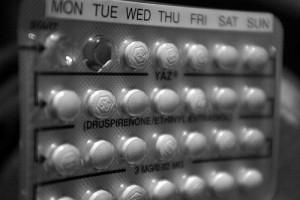
Libido and the Pill

September 7th, 2010 by Laura Wershler
Laura Berman, Ph. D.

Laura Berman, Ph. D.

It’s great to see celebrity sexpert Laura Berman, Ph. D. – frequent Oprah TV guest, Oprah radio host, and (according to her website) world renowned sex and relationship expert - talk truth about the effect of the birth control pill on women’s libido.

In the September 2010 issue of Parenting magazine, Dr. Berman acknowledges that the pill can lower libido and clearly explains the mechanisms for this.  So far so good. What bothers me is her advice to moms experiencing this problem.

Happily, there are solutions, short of becoming celibate. Here are four options— talk to your doctor to see if any of them might be right for you.

Her recommendations include two alternative forms of hormonal contraception –  the Nuvaring and the Mirena IUD, the hormone-free IUD, and a sterilization method called Essure that scars the fallopian tubes to prevent sperm reaching egg.

Granted, all are legimate alternatives to the pill.  But the message sent, yet again, is that women who don’t want to get pregnant or remain celebate must depend on drugs, foreign objects inserted into the uterus, or sterilization.  If nothing else is mentioned, then nothing else must be trustworthy.

It has become all too typical for sexual healthcare providers to ignore the needs of women seeking information, support and services to use non-hormonal, non-invasive methods of birth control confidently and effectively.  This was a golden opportunity for Dr. Berman to talk about the ever effective condom, the new FemCap cervical barrier, and the growing interest amongst American women in Fertility Awareness Methods, which though wildly misunderstood by most in the medical and sexual health community have proven effectiveness equal to the pill.

Kudos to Laura Berman for telling the truth about the pill and libido.  Many sexual health care providers are not this open about the libido lowering effects of oral contraceptives.  Check out the comments at this May 2010 discussion at Jezebel.com about the subject.

Now I urge Berman to take on the challenge of providing information and support for women who are ready to turn the page on hormonal and invasive birth control methods.  For some women it will be the only way to achieve the better sex and intimacy at any age she promises on her website.


Post to Twitter Post to Plurk Post to Yahoo Buzz Post to Delicious Post to Digg Post to Facebook Post to MySpace Post to Reddit Post to StumbleUpon

Ultrasound Man:Birth Control Superhero

May 17th, 2010 by Laura Wershler

superheroYou know how most superheros become superheros because of exposure to some weird, intensified chemical or element? Take Peter Parker’s spider bite for example.

According to a story reported in various media, including International Planned Parenthood Federation’s website, if science can perfect the contraceptive effect of ultasound on men’s testicles, then we may be in for a new breed of superhero.  Ultrasound Man: able to bear the burden of pregnancy prevention for women everywhere. 

I joke, but for decades women have yearned for gender equality when it comes to bearing the burden of birth control. Could the promise of six months of ultrasound induced, reversible infertility in men be the answer? Well, to date, we only know it works in rats. There is a long way to go before we send the men for a bi-annual ultrasound “zap test”.

This isn’t the first male method touted over the last decade. In 2003, news out of the UK about a birth control pill for men had women nodding their heads with approval. I was immediately dubious and dashed off a commentary for the Calgary Herald that began thus:

Memo to Big Pharma: Save your money. If you think the male birth control pill is going to be a big seller, think again. Memo to women everywhere: Curb your enthusiasm. If you think it’s time men took more responsibility, you’re right — but the Pill for Bill is not going to be it.

Because of the complex hormonal action of the pill for men, I knew it wouldn’t fly. As I noted in my piece:

According to a story from the London Telegraph, because the treatment is invasive, it is likely to be used only by men in long-term relationships. Read it and weep, gals, because this is the wicked truth. It’s OK for women of any age or relationship status to ingest birth control pills or receive the Depo-Provera injection that completely shuts down their reproductive systems, but men would never do the same. It is already postulated that only men in committed relationships are likely to submit to invasive hormonal contraception. That would be supportive husbands and partners of the best kind.

Although a recent  survey by the Family Planning Association found that one third of men would definitely use a birth control pill for men if it became available, I doubt very much, once the mechanism of action were explained (full disclosure), that there would be many takers. I suspect the side effects, and concerns about synthetic testosterone, would result in a pathetic compliance rate.

Certainly the ultrasound method sounds much less invasive. Research leader James Tsuruta of the University of North Carolina said: “We think this could provide men with reliable, low-cost, non-hormonal contraception from a single round of treatment.

Happily, “the team plans to investigate the mechanism that causes temporary infertility.” I think the guys would want to know how and why it works before signing up.  But they can rest assured because Dr. Tsuruta also said: “Establishing safety, efficacy and reversability: these are our top concerns.”

As media stories proliferate documenting the growing trend among young women to eschew the Pill (et. al) in favour of non-hormonal methods, news that there may be a safe, simple method for men on the horizon is both welcome and long overdue.

What I find hard to take, however, is this suggestion expressed by Allan Pacey from the University of Sheffield:

There is certainly a place for an effective non-hormonal contraceptive in men, but whether men would find it acceptable to have their testicles scanned regularly remains to be seen.

How to overcome resistance to Cycle-Stopping Contraception (a physician’s guide)

May 12th, 2010 by Chris Hitchcock

If you’re wondering why your doctor might not take you seriously when you question taking the pill to abolish your periods, you might want to look at this piece of advice.

I had a look at the Clinical Advisor magazine information – it looks like they pay for articles, help to massage them into shape, but as far as I can tell the articles are not peer-reviewed, and the editorial staff do not have any credentials after their names, so they look like non-medical people. But it is freely available on the web, and apparently gets sent to many practicing physicians and nurses. And it’s a lot more readable than other sources of medical education.

The article is framed as a doctor-to-doctor question:

What can I do to overcome patient resistance to continuous use of oral contraceptives (OCs)? So many women say it’s not natural.—SHERRY HILL, ARNP, Bothell, Wash.

And, the answer? Explain the physiology, explain that there is no build up of old blood, that menstrual flow doesn’t have any effect on infections or toxins. And, for talking points, use the educational materials about cycle-stopping contraceptives on the Association of Reproductive Health Professionals web page (coincidentally funded with unrestricted educational funds from companies who happen to make cycle-stopping contraceptive products). And use Malcolm Gladwell’s 2000 article, John Rock’s Error, to reframe monthly menstrual flow as a historic anomaly (“you don’t need that old-fashioned thing”) and help women to see their regular menstrual flow as unnatural, so that the synthetic drugs you are suggesting will seem less unnatural by comparison.

But, ultimately, “if a patient feels that a monthly withdrawal bleed suits her best, many OCs containing 21 active pills and seven inert pills are available.”

I guess the option of using non-hormonal contraception just won’t come up.

Post to Twitter Post to Plurk Post to Yahoo Buzz Post to Delicious Post to Digg Post to Facebook Post to MySpace Post to Reddit Post to StumbleUpon

Readers should note that statements published in re: Cycling are those of individual authors and do not necessarily reflect the positions of the Society as a whole.