Blog of the Society for Menstrual Cycle Research

Libido and the Pill

September 7th, 2010 by Laura Wershler
Laura Berman, Ph. D.

Laura Berman, Ph. D.

It’s great to see celebrity sexpert Laura Berman, Ph. D. – frequent Oprah TV guest, Oprah radio host, and (according to her website) world renowned sex and relationship expert - talk truth about the effect of the birth control pill on women’s libido.

In the September 2010 issue of Parenting magazine, Dr. Berman acknowledges that the pill can lower libido and clearly explains the mechanisms for this.  So far so good. What bothers me is her advice to moms experiencing this problem.

Happily, there are solutions, short of becoming celibate. Here are four options— talk to your doctor to see if any of them might be right for you.

Her recommendations include two alternative forms of hormonal contraception –  the Nuvaring and the Mirena IUD, the hormone-free IUD, and a sterilization method called Essure that scars the fallopian tubes to prevent sperm reaching egg.

Granted, all are legimate alternatives to the pill.  But the message sent, yet again, is that women who don’t want to get pregnant or remain celebate must depend on drugs, foreign objects inserted into the uterus, or sterilization.  If nothing else is mentioned, then nothing else must be trustworthy.

It has become all too typical for sexual healthcare providers to ignore the needs of women seeking information, support and services to use non-hormonal, non-invasive methods of birth control confidently and effectively.  This was a golden opportunity for Dr. Berman to talk about the ever effective condom, the new FemCap cervical barrier, and the growing interest amongst American women in Fertility Awareness Methods, which though wildly misunderstood by most in the medical and sexual health community have proven effectiveness equal to the pill.

Kudos to Laura Berman for telling the truth about the pill and libido.  Many sexual health care providers are not this open about the libido lowering effects of oral contraceptives.  Check out the comments at this May 2010 discussion at Jezebel.com about the subject.

Now I urge Berman to take on the challenge of providing information and support for women who are ready to turn the page on hormonal and invasive birth control methods.  For some women it will be the only way to achieve the better sex and intimacy at any age she promises on her website.


Post to Twitter Post to Plurk Post to Yahoo Buzz Post to Delicious Post to Digg Post to Facebook Post to MySpace Post to Reddit Post to StumbleUpon

The Disappearing Diaphragm

June 24th, 2010 by Elizabeth Kissling
Photo courtesy of Jenny Lee Silver under Creative Commons 3.0.

Photo courtesy of Jenny Lee Silver under Creative Commons 3.0.

Did you know that last year’s combined sales of Yaz and Yasmin, the most popular oral contraceptives in the U.S., totaled $1.64 billion? Did you know the drugs are also the target of 1,100 lawsuits for potentially fatal blood clots? Did you know that an estimated 50 women have died from taking those contraceptives?

Despite such health risks,  however, oral contraceptives remain an extremely popular method of birth control in the U.S., second only to sterilization. The Guttmacher Institute reports that whether a woman prefers the Pill or sterilization is largely a function of age, with women under 30 choosing the Pill and women over 30 choosing permanent methods. These trends have been fairly stable since 1982.

None of these facts surprised me as much as the news that fewer than one percent of women in North America (and northwestern Europe) use the diaphragm–or any other woman-controlled barrier method. I’m puzzled that a safe, reliable, fairly easy-to-use (with some training and practice), inexpensive method of controlling fertility is not more widely recommended. Used correctly and consistently, the diaphragm has an effectiveness rate of 94 percent. Nevertheless, diaphragm use declined after the Pill was introduced, from 25 percent of married women in 1955 to 10 percent in 1965, and kept dropping thereafter, to just 4.5 percent of all women in 1982 and 0.2 percent today, according to the CDC [pdf].

U S. Medical Eligibility Criteria for Contraceptive Use, 2010, released last month by the Centers for Disease Control, shows that the diaphragm has no medical contraindications for most women. The exceptions are latex allergies, immediate postpartum or post-termination use, uterine prolapse, and women with HIV/AIDS, for whom the risk is not the diaphragm itself but the accompanying spermicide nonoxynol-9, which may increase viral shedding and HIV transmission to uninfected sex partners.

Yet the American College of Obstetricians and Gynecologists (ACOG) Committee on Gynecologic Practice recommends that hormonal methods such as IUDs or injections be offered as “first-line contraceptive methods and encouraged as options for most women.” At this year’s annual ACOG meeting last month in San Francisco, the group issued a press release with eight gushing statements of praise for the Pill on its 50th anniversary. (See re:Cycling‘s response to the ACOG statement here.)

But nearly four of every ten women who use contraceptives are not satisfied with their method, and I hear frequently from young women that they’re pressured at college health centers and physicians’ offices to choose hormonal methods, usually the Pill, over barrier methods such as condoms and diaphragms. Even after negative experiences with the Pill, women are often encouraged to try another brand rather than another method.

I’ve even heard of educators and health care providers actively discouraging use of the diaphragm because “it’s messy”. This complaint baffles me, and I used a diaphragm for 15 years. With or without a diaphragm, sex is messy.

Although diaphragms must be accurately fitted by a health care professional and re-assessed every few years, they remain cheaper than hormonal methods and require less frequent physician visits. A diaphragm can be inserted hours or moments before intercourse, and it is a fully reversible, female-controlled method of birth control. There is some evidence that diaphragm use minimizes women’s exposure to certain STIs , and ongoing research by pharmaceutical companies is aimed at developing a spermicide that is also antimicrobial.

Book Review: In Our Control

May 21st, 2010 by Elizabeth Kissling


 http://www.flickr.com/photos/santarosa/  / CC BY 2.0

http://www.flickr.com/photos/santarosa/ / CC BY 2.0

Laura Eldridge’s new book In Our Control: The Complete Guide to Contraceptive Choices for Women (Seven Stories Press, 2010) isn’t kidding with that subtitle. The last time I remember reading so much detail about contraceptive options was poring over Our Bodies, Ourselves when I was in my 20s.

Eldridge reviews every method of birth control known to modern woman–and, importantly, some that aren’t widely known. She even briefly reviews the history of contraception in 19th and 20th centuries, reminding us that birth control is not a new invention. People, especially female-bodied people, have struggled to control their fertility from pretty much the first moment humans figured out how it worked.

In Our Control differs from Our Bodies, Ourselves in offering more than just the mechanics of both hormonal and barrier methods: Eldridge provides a history of each method and analysis of the political and cultural contexts of their use in the 21st century U.S.

For example, the chapter about the morning-after pill (also known by either the brand name Plan B or as emergency contraception, EC) discusses the political battle to achieve Federal Drug Administration approval, including Susan Wood’s resignation from the FDA’s Office of Women’s Health over what she believed to be “willful disregard of scientific evidence showing Plan B to be safe.”

Eldridge extensively addresses the relationship between birth control and menstruation, focusing one chapter specifically on the use of hormonal contraception to reduce or eliminate menstrual cycles. She draws upon a wide range of resources to illustrate the cultural attitudes and contexts of menstruation, from stories of the role of birth-control pill co-developer John Rock’s Catholicism in the three-weeks-on/one-week-off dosing of the first pill to a Saturday Night Live parody of advertising schemes for menstrual suppression drugs (with Annuale, you’ll menstruate only once a year, but hold on to your fucking hat!).

The book also covers environmental impacts of contraception, the politics of HPV vaccinations, ongoing research into a birth control pill for men and natural methods of birth control such as fertility awareness–which Eldridge carefully distinguishes from the much-maligned “rhythm method.” She notes that the method approved by the Catholic church is properly called a calendar-based method and involves estimating when ovulation occurs and avoiding sex during that time. Fertility awareness, however, involves a more complex, systematic attention to physiological markers of female fertility. It requires careful monitoring of waking temperature, vaginal sensation, position of cervix and cervical fluid, as well as dates of menstrual flow and sexual activity. Eldridge cautions that fertility awareness is too complicated to be taught in a short chapter, and that observing and charting one’s cycle must be done “for a significant amount of time before you begin to rely on it for contraception.”

Laura Eldridge learned women’s health writing at the side of the late women’s health advocate and activist Barbara Seaman, and it shows. She contextualizes her work with her own experience and preferences, but provides thorough documentation so that women can more easily make their own decisions. This is women’s health activism at its best. Feminism isn’t just about choices, but about having access to information and resources to make informed, authentic choices–and that is only possible when reliable and comprehensive information is widely available.

Cross-posted at Ms. magazine blog.

Post to Twitter Post to Plurk Post to Yahoo Buzz Post to Delicious Post to Digg Post to Facebook Post to MySpace Post to Reddit Post to StumbleUpon

SMCR Bloggers Respond to ACOG’s Homage to the Pill

May 20th, 2010 by Laura Wershler

MenstruationResearch.org – Today, during an email exchange among the Society for Menstrual Cycle Research blogging team, research-advocacy experts on the menstrual cycle spoke out in response to the unbridled passion for the pill expressed by members of the American College of Obstetricians and Gynecologists at their 58th Annual Clinical Meeting. Amidst the hoopla surrounding the 50th anniversary of the pill, it must be noted that not all experts believe the pill to be an unequivocally positive contribution to women’s health and well-being that those quoted in the ACOG media release purport it to be.


“The pill has literally changed the world, and it was a primary stimulus to the women’s movement of the 60s. It has done far more for women’s rights than any legislation that has been passed and should be recognized as the great emancipator of women.”


Mark S. DeFrancesco, MD, MBA, Cheshire, CT
Secretary Elect, The American College of Obstetricians and Gynecologists

“When the pill first came out, young unmarried women had to fight for the right to take it. Now, they have to fight for the right NOT to take it. Overhyped as medicine’s gift to women’s health, by mostly male gynecologists who have never taken the drug, the pill has become an almost forced right of passage – the “standard of care” treatment for being a girl. Emancipation or subjugation? Ask the young women who face coercion and control by their doctors when they ask for support to use non-hormonal methods of birth control.”

Laura Wershler, Sexual Health and Reproductive Rights Advocate,
Executive Director, Sexual Health Access Alberta


“Birth control pills provide women with many non-contraceptive benefits, including cycle control, cancer prevention, and pain relief. They have been an integral part of women’s health.”

Scott D. Hayword, MD
Mt. Kisco, NY
Chair, District II, The American College of Obstetricians and Gynecologists

“Birth control pills provide women with many risks in exchange for contraception, including blood clots, stroke, breast, cervical, and liver cancers, diminished libido, and mood disorders. They have been instrumental in activating the women’s health movement, as feminists
demanded responses to these risks.”

Elizabeth Kissling, Ph.D.
President, Society for Menstrual Cycle Research


“I have often thought that the birth control pill should be called a hormone regulation pill because its use and impact have been so much broader than contraception alone. The pill has certainly improved reproductive control, but the impact on menstrual regulation has been very important for women, from adolescence to menopause.”


Jeanne A. Conry, MD, PhD
Roseville, CA
Chair, District IX, The American College of Obstetricians and Gynecologists

“I’m so happy to have The Pill called “a hormone regulation pill” because that is the way it is currently used by many physicians, and some women. It is used to cover up the far-apart cycles of anovulatory androgen excess (also known as PCOS) but doesn’t promote ovulation. The Pill is used to treat heavy bleeding in teenagers, but doesn’t restore her own balance of estrogen and progesterone. It is used for menstrual cramps when ibuprofen or other non-steroidal is more effective and has no suppressive effect. It is used to treat premenopausal osteoporosis when the evidence suggests it causes rather than prevents subsequent fragility fractures.

In short–the Pill has become the major non-surgical tool of gynecology.”

Jerilynn C. Prior, MD, FRCPC
Professor of Endocrinology / Department of Medicine
Centre for Menstrual Cycle and Ovulation Research
University of British Columbia

“The introduction and rapidly accepted, widespread adoption of oral contraceptives among women of reproductive age drastically reduced women’s fear of unplanned pregnancy in ways their mothers and grandmothers never knew. The pill has allowed women to take different roles in all aspects of their lives—career, education, travel, and a host of other beneficial ways.”

J. Craig Strafford, MD, MPH,
Gallipolis, OH
Vice President, The American College of Obstetricians and Gynecologists

“Women realize their full potential when they are supported in making informed decisions in all aspects of their lives. Indeed, oral contraception has enabled women to avoid unplanned pregnancies, but it has never been a risk-free option. While providers are eager to prescribe the pill, they are less eager to fully explain how hormonal contraception works and the side effects it carries. Until women have access to a full range of safe, affordable and accessible options, their freedom is compromised.”

Chris Bobel, Ph.D.
Chair and Associate Professor of Women’s Studies, University of Massachusetts-Boston

“The pill has revolutionized women’s health care. Obviously, the contraceptive benefits are paramount, but I have become a huge advocate for all of the non-contraceptive reproductive health benefits that the pill offers. Another advantage is that the pill has enjoyed incredible safety over its 50-year history.”

Douglas H. Kirkpatrick, MD, Denver, CO
Immediate Past President, The American College of Obstetricians and Gynecologists

“The Pill has its roots in a time much farther back than fifty years.
Historically the female body has been feared and the release of the
Pill fitted very easily into this history. Victorian doctors removed
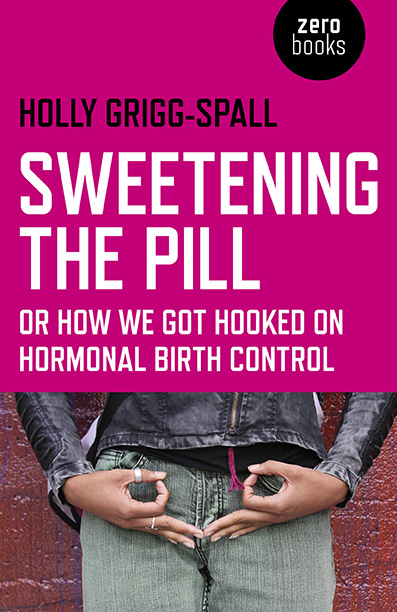
women’s ovaries in response to many perceived female problems, and today doctors prescribe the Pill, shutting down ovulation. The Pill is not only prescribed for birth control – it is handed out to women with acne, PMS, irregular periods, heavy periods. Even light, regular periods are now considered enough of an inconvenience to warrant a long-term drug dependency. The Pill has developed into a medication for the disease of being female. In place of changing society, society decided to fix women. At a time when we are more concerned about what we eat, what we wear, what we use to clean the toilet than ever before, we are still celebrating millions of otherwise healthy women taking a powerful medication every day, for years.”

Holly Grigg-Spall, Journalist

“The advent of effective contraception was revolutionary, transforming, empowering, and a tremendous boost to women’s health. It continues to play a major role in the effort to achieve responsible reproductive health and choice for all women—a goal of every child being a wanted child delivered into a supportive and secure environment.”

James N. Martin, MD, Jackson, MS Secretary, The American College of Obstetricians and Gynecologists

“If the pill was as revolutionary, transforming and empowering as is suggested, then all women should be taking it from menarche to menopause, except when we are ready to have the “wanted child.” But we aren’t. Today, young women are ditching the pill in favor of non-hormonal methods, and still managing to achieve responsible reproductive health choices. As for the pill being ”a tremendous boost to women’s health” – I think not. Troublesome side effects, serious health concerns, and a growing interest in holistic approaches to health care are putting the pill in its proper place. One contraceptive choice that works for some women, some of the time.”

Laura Wershler, Sexual Health and Reproductive Rights Advocate,
Executive Director, Sexual Health Access Alberta


“The pill is probably the single biggest contribution to women’s health in our lifetime. Not only has it given women more control over their fertility, it has been successfully used to treat many gynecologic conditions such as dysmenorrhea, menometrohaggia, PMS, acne, PCOS, and endometriosis, enabling women to have a better quality of life.”


James A. Macer, MD, Pasadena, CA

Assistant Secretary Elect, The American College of Obstetricians and Gynecologists


“Long term safety data on the current patterns of use of the pill do not exist, and are not being collected. When first approved, the pill was available to married women, most of whom had children, and allowed them to space their families. Currently, the pill is most commonly used by childless young women, often during the teen years, and can extend for decades. The consequences of pharmaceutical suppression of the developing endocrine system (during the 12 years following the first period) have, to my knowledge, not been explored. For example, taking the pill interferes with bone acquisition, compromises the accumulation of bone density, and may compromise peak bone mass. Peak bone mass sets the bar for lifelong bone health. In a cohort expected to live into their 80’s, casual and enthusiastic use of the pill may be something society regrets half a century from now. There is a tendency to blame side effects on the bad old days, and to say that things are better now. But a recent large study confirmed blood clot risks with today’s “modern” formulations, and, more worryingly, these risks are amplified by obesity and smoking, both of which are more prevalent in modern populations.”


Christine L Hitchcock, PhD, Research Associate, Centre for Menstrual Cycle and Ovulation Research, and Clinical Assistant Professor, School of Population and Public Health, University of British Columbia

This ACOG statement furthers a broader message to young women that they should trust pharmaceutical menstrual rhythms over that of their own bodies and that they should trust clinical authority over their own authority. In and of itself, ceding their bodily authority, ownership and stewardship to medicine causes harm to women.

###

The Society for Menstrual Cycle Research is a nonprofit, interdisciplinary research organization. Our membership includes researchers in the social and health sciences, humanities scholars, health care providers, policy makers, health activists, and students with interests in the role of the menstrual cycle in women’s health and well-being.

Post to Twitter Post to Plurk Post to Yahoo Buzz Post to Delicious Post to Digg Post to Facebook Post to MySpace Post to Reddit Post to StumbleUpon

Ultrasound Man:Birth Control Superhero

May 17th, 2010 by Laura Wershler

superheroYou know how most superheros become superheros because of exposure to some weird, intensified chemical or element? Take Peter Parker’s spider bite for example.

According to a story reported in various media, including International Planned Parenthood Federation’s website, if science can perfect the contraceptive effect of ultasound on men’s testicles, then we may be in for a new breed of superhero.  Ultrasound Man: able to bear the burden of pregnancy prevention for women everywhere. 

I joke, but for decades women have yearned for gender equality when it comes to bearing the burden of birth control. Could the promise of six months of ultrasound induced, reversible infertility in men be the answer? Well, to date, we only know it works in rats. There is a long way to go before we send the men for a bi-annual ultrasound “zap test”.

This isn’t the first male method touted over the last decade. In 2003, news out of the UK about a birth control pill for men had women nodding their heads with approval. I was immediately dubious and dashed off a commentary for the Calgary Herald that began thus:

Memo to Big Pharma: Save your money. If you think the male birth control pill is going to be a big seller, think again. Memo to women everywhere: Curb your enthusiasm. If you think it’s time men took more responsibility, you’re right — but the Pill for Bill is not going to be it.

Because of the complex hormonal action of the pill for men, I knew it wouldn’t fly. As I noted in my piece:

According to a story from the London Telegraph, because the treatment is invasive, it is likely to be used only by men in long-term relationships. Read it and weep, gals, because this is the wicked truth. It’s OK for women of any age or relationship status to ingest birth control pills or receive the Depo-Provera injection that completely shuts down their reproductive systems, but men would never do the same. It is already postulated that only men in committed relationships are likely to submit to invasive hormonal contraception. That would be supportive husbands and partners of the best kind.

Although a recent  survey by the Family Planning Association found that one third of men would definitely use a birth control pill for men if it became available, I doubt very much, once the mechanism of action were explained (full disclosure), that there would be many takers. I suspect the side effects, and concerns about synthetic testosterone, would result in a pathetic compliance rate.

Certainly the ultrasound method sounds much less invasive. Research leader James Tsuruta of the University of North Carolina said: “We think this could provide men with reliable, low-cost, non-hormonal contraception from a single round of treatment.

Happily, “the team plans to investigate the mechanism that causes temporary infertility.” I think the guys would want to know how and why it works before signing up.  But they can rest assured because Dr. Tsuruta also said: “Establishing safety, efficacy and reversability: these are our top concerns.”

As media stories proliferate documenting the growing trend among young women to eschew the Pill (et. al) in favour of non-hormonal methods, news that there may be a safe, simple method for men on the horizon is both welcome and long overdue.

What I find hard to take, however, is this suggestion expressed by Allan Pacey from the University of Sheffield:

There is certainly a place for an effective non-hormonal contraceptive in men, but whether men would find it acceptable to have their testicles scanned regularly remains to be seen.

What do vaginal rings and tampons have in common?

April 22nd, 2010 by Elizabeth Kissling

Vaginal ring held up for display in gloved right hand.

So here’s an odd little study: when women are given a choice between oral contraceptives and the contraceptive vaginal ring, what characteristic is most highly correlated with a slightly greater interest in using the vaginal ring? If you said “tampon use”, you’re right!

Among contraceptive vaginal ring and OCP users, 247 (79%) reported using tampons. Contraceptive vaginal ring users were not significantly different from OCP users in terms of age, race or ethnicity, marital status, insurance, body mass index, or parity. Adjusted analysis indicated that tampon users were more likely to choose the contraceptive vaginal ring instead of OCPs.

The study was published this month in Obstetrics & Gynecology. The researchers conclude, “but all women should be offered the contraceptive vaginal ring regardless of experience with tampon use”. No kidding. Sadly, they don’t appear to be offered any non-hormonal contraceptive options, as this research was conducted in conjunction with The Contraceptive Choice Project, described in the research report as “a longitudinal study of 10,000 St. Louis area women promoting the use of long-acting, reversible methods of contraception and evaluating user continuation and satisfaction for all reversible methods.”

It seems to me that the researchers want to predict contraceptive choices based on how willing contraceptive users are to touch their own genitals, but apparently they can’t directly ask them. They might accidentally discover an interest in using a diaphragm or cervical cap!

Post to Twitter Post to Plurk Post to Yahoo Buzz Post to Delicious Post to Digg Post to Facebook Post to MySpace Post to Reddit Post to StumbleUpon

Readers should note that statements published in re: Cycling are those of individual authors and do not necessarily reflect the positions of the Society as a whole.