Blog of the Society for Menstrual Cycle Research

Yaz and Yasmin Back in the Spotlight

May 9th, 2013 by Elizabeth Kissling

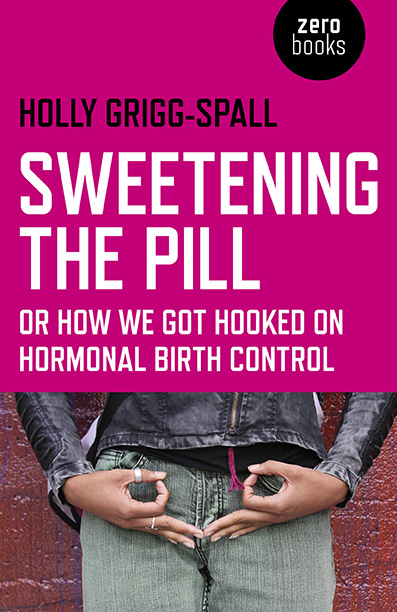
Guest Post by Holly Grigg-Spall, Sweetening the Pill

Last year the FDA made the decision to keep the birth control pills Yaz, Yasmin, and Beyaz on the market despite controversy over corporate corruption of the review process.These drugs are back in the spotlight.

The French health minister has called for doctors to stop writing prescriptions, 2,000 lawsuits against Bayer launched in Canada last month, and Marie Claire Australia dedicated five pages to an in-depth feature about the side effects, instigating an investigation by the country’s top current affairs show Today Tonight.

Bayer has gone about settling the 13,000 lawsuits in the US out of court, likely with the hope of keeping the details of confidential files regarding marketing techniques and research out of the public eye. Unperturbed by mounting reports from women of the myriad health issues caused by their products, the company launched Yaz Flex in Australia at the end of 2012. The first oral contraceptive on the Australian market presented as being for the purpose of preventing periods, Yaz Flex comes in a digital dispenser that records how many pills have been taken and alerts the user when she’s missed a dose. There are enough tablets to allow for just three breaks a year. In the US in April the FDA, equally unperturbed, ruled that pharmaceutical company Activis can start selling generic versions of Yaz, providing a low-cost version of what has been the most expensive oral contraceptive of recent years.

The feature in Marie Claire Australia generated 300+ comments on the magazine and television show’s Facebook pages. Many of the commenters were women who had developed blood clots when taking these brands. Some had made the connection at the time and others made the link only as a result of the coverage after months or years of not knowing why they had endured the injuries. Some of the women were presently experiencing the symptoms of a blood clot mentioned in the show and made the decision to stop taking the pill as they typed.

The piece was written by a long-time member of the Yaz and Yasmin Survivors forum and balances interviews with women who suffered the serious physical side effects with those who have been victim to the serious psychological side effects. I’m among those who experienced a long list of negative physical and psychological effects when taking Yasmin for more than two years and it was this forum that prompted me to stop taking it.

Monash University in Australia is one of the few facilities to have undertaken research into the correlation between birth control pills and depression. Professor Jayashri Kulkarni found that women on the pill were twice as likely to experience depression, anxiety, and mental numbness (known as anhedonia). The Yale Daily News reports that in the wake of her research receiving a little media attention Dr Kulkarni received more than 300 emails from women “clearly describing when they went off the pill that they felt subjectively more happy. The anhedonia, for example, disappeared, the irritability disappeared, the sense of poor self esteem disappeared”.

She is now focusing her attention on researching what she believes to be the particular psychological impact of the Yaz brands, those pills containing the synthetic progesterone drospirenone and low-dose synthetic estrogen.

Footloose and Pharmaceutical-Free?

October 26th, 2012 by Elizabeth Kissling

Guest Post by Holly Grigg-Spall, Sweetening the Pill

At the West Coast Catalyst Convention for sex-positive sex-educators I was listening to a talk on definitions of sexual health when the birth control pill was brought up. I’d spent much of the event feeling desperately vanilla and so was pleased to be discussing something other than strap-ons and lube. The most popular forms of contraception – the hormonal kind – had been notably absent from all discussion that weekend.

Toys in Babeland window display, Photo by Joaquin Uy // CC 2.0

The speaker told the group that the pill is the leading cause of low libido and pelvic pain. She explained that studies had suggested the impact on libido could be permanent. The reaction of the audience was immediate and urgent – questions were fired out and it became clear that this information was news to most. A number of audience members seemed genuinely shocked. “What’s the science behind that?” one woman asked, but the speaker said she didn’t know.

Although the convention’s attendees had an intimidating level of knowledge when it came to sexual technique and sex toys, I discovered that once I mentioned I was there to develop a book and a documentary on hormonal contraceptives, many repeated the usual disinformation about birth control methods.

The speaker was right – the birth control pill is a leading cause of lowered sexual desire and pelvic pain. It’s also known to cause loss of lubrication, vaginitis, and vulvodynia. Other hormonal contraceptives such as the Depo Provera injection, implant, ring and Mirena IUD have been seen to have similar consequences. In fact, Dr. Andrew Goldstein, director of the U.S.-based Centers for Vulvovaginal Disorders and one of the foremost vulvodynia experts in North America, blames an increase in complaints of this kind on third generation low-dose pills.

The study the speaker referred to was conducted by Dr. Claudia Panzer of Boston University and it did suggest some women may see a permanent effect on their testosterone levels, and so their level of desire. There have also been studies on these methods impact on frequency and intensity of orgasm, showing both to be decreased. Not to mention the 50% of women who will experience general negative mood effects that surely impact on their interest in sex. Many, many other studies have shown a clear negative effect on libido whilst using hormonal contraceptives. So many that it’s become something of a joke to roll eyes over the “irony” of prescribing a pill for pregnancy prevention that stops you wanting to have sex anyway.

At a convention dedicated to the celebration of sexual pleasure, I was surprised to see this information received with such confusion. A sex-positive attitude is becoming synonymous with “set it and forget it” long acting hormonal methods of contraception. But it struck me that sex-positive advocates should be the biggest fans of fertility awareness methods. Here’s why:

“Lives will be saved” – the FDA decision not to ban Bayer’s birth control pill

April 18th, 2012 by Elizabeth Kissling

Guest Post by Holly Grigg-Spall


Photo by Monik Markus // CC 2.0

How many of us read the inserts included in a packet of pills? How many decide not to take the pills on the basis of the information enclosed?  The rapidly reeled-off list of side effects stated at the end of a televised advert for a new drug has more comedic value than serious consequence to most. If we do have doubts, many of us will rely on the reassurance of a doctor, and then take the pill anyway.

I recently wrote a piece for Ms. Magazine Blog outlining the FDA reappraisal of top-selling oral contraceptives Yaz and Yasmin. It was discovered that drugs such as these containing drospirenone held a significantly higher risk of causing blood clots. Research by the FDA and other bodies suggested this conclusion was definite, while research funded by the pharmaceutical company behind these billion-dollar products, Bayer, suggested the opposite conclusion to be true: that there was no increased risk evident. A team of experts, some of which had financial ties to the company, voted against having the pills taken off the market when presented with the question of whether the risks of taking these pills outweighed the benefits.

Bayer is facing 11,300 lawsuits from women who have been seriously injured and family members of women who have died after taking one of the company’s bestselling hormonal contraceptives. They have settled the first 500 addressed with a total of $110 million in payouts. When discussing this process with a lawyer representing many of the women I was told that Bayer would do anything to avoid a trial wherein the full spectrum of their marketing strategies would be revealed.

The FDA came to the decision to add into the insert included with these drugs a statement of the discovery of “conflicting” research that suggested the pills had a higher risk of causing blood clots  (up to three times higher) – acknowledging the discrepancy of the research funded by Bayer and giving it equal standing as that performed by other bodies including the FDA itself.

Prior to this decision being announced a number of women’s health groups got together to write a letter to the FDA asking that they look again at the question put to the board of experts. They argued that the correct comparison for the board to consider would be between drospirenone-containing contraceptives and other oral contraceptives, and not between Bayer’s drugs and unwanted pregnancy. In the final sentence, they remarked that they believed that “lives will be saved” if the pills were no longer on the market. They met with the FDA and one representative asked that the FDA strongly reassess its acceptance of Bayer-funded research. Another asked that the drugs no longer be prescribed and that the FDA “get back to the arc of history and progress that protects women while supporting their contraceptive needs.”

The new labeling will state the “conflicting” findings and advise that women speak to their doctor if concerned. The official statement on this decision, relayed through the media coverage, reminded women that when compared to pregnancy the risk of development of a blood clot was insignificant. They also asked that women currently taking the drugs not stop doing so. Despite the FDA studies suggesting the blood clot risk is particularly high for women under 30, the statement compounded the understanding that the issue is only relevant to those over 35,  those overweight, those that smoke, and those with relevant medical history.

Readers should note that statements published in re: Cycling are those of individual authors and do not necessarily reflect the positions of the Society as a whole.