Blog of the Society for Menstrual Cycle Research

Don’t Ask, Don’t Smell

January 27th, 2011 by Elizabeth Kissling

female-minority-happy-military-wide-horizontalGuest Post by Emily Swan, Marymount Manhattan College

With the military’s history of suppressing minority groups, its new effort to conceal and terminate menstruation comes as no surprise. Hopefully, the menses will be able to come out of the closet soon enough.

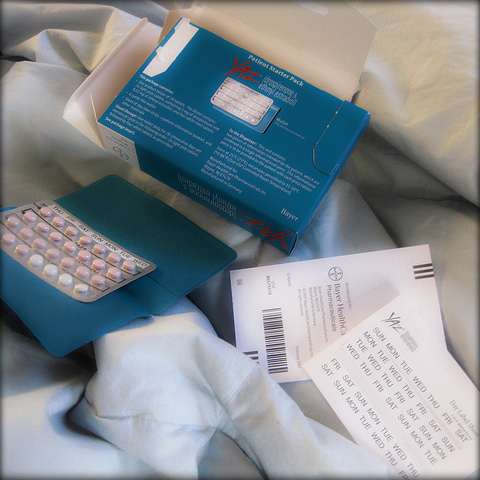
I recently wrote a paper about menstruation in the military and was excited to see this recent post at re:Cycling. Researchers have suddenly become sensitive to the “devastating” effects of menstruation on women in combat and training, citing a potential link to iron-deficiency, among other things. (Might I add that, while the article identifies menses as the culprit, the actual data suggest no correlation between the loss of menstrual blood and the low iron levels of the participants.) Researchers have also conducted studies and interviews to determine the level of difficulty menstruation adds to a variety of physical activities and expose reported difficulty in obtaining, storing, transporting, changing, and disposing of “sanitary products” (Note the hygiene-promoting terminology). These reports have indicated a significant struggle with menstrual management, giving grounds to the military’s new encouragement for women to use continuous oral contraceptive pills (OCPs) to “temporarily” induce amenorrhea.

What’s happening here is not simply a conquering of the menses but an overpowering of women as a whole. The article about iron deficiency says it best, with its opening paragraph explaining the biological disadvantages of women: women’s lower levels of physical strength, inferior aerobic performance, and a number of other physical and mental “shortcomings” that include the ability to menstruate. It states, “the physical differences between genders in the military setting should be minimized as much as possible” (866). They’re not trying to make women more comfortable by stopping their periods; they’re using men to set the physical and mental performance standard for which women must strive. The failure of women to meet this standard lies in their very biology; the study directly blamed their femaleness as the source of this imbalance. It’s not, “Stop menstruating because it will help you.” It’s, “Stop menstruating because it will get you that much closer to being a man.” Oh joy.

The misogyny embedded within this move toward menstrual suppression does not discount the results of the studies; menstrual management poses a serious issue for most military women! In addition to the difficulty reported in transporting, obtaining, and storing products, another article relayed the troubling results of interviews from women of the Air Force, Army, and Navy regarding personal hygiene and field menstrual management.4 These interviews told of highly unsanitary bathroom facilities in combat environments, lack of privacy for the use and changing of menstrual products, and bathrooms that rarely contained receptacles for disposing of the products. The women reported collecting used products in Ziploc bags to either bury them in the secrecy of night or to keep them in their luggage until they returned to the U.S. Because of the hot, moist climates inhabited during deployment; the heavy, reused, and unwashed clothing; and the frequent lack of water or time to wash up, the interviewees reported constant awareness and humiliation surrounding menstrual odor. Most of the women also admitted hesitancy toward utilizing the clinic for menstrual health issues because they were made to feel that their menstrual symptoms were not worthy of care. They also reported that gynecological exams were excluded from their general deployment health examinations.

S.A.N.E Vax Objects to FDA Ruling Gardasil Use for Anal Cancer

December 29th, 2010 by Elizabeth Kissling

Guest post by Leslie Botha, S.A.N.E. Vax

Increasing Number of Consumers are Concerned over HPV Vaccine Safety

The FDA’s December 22, 2010 ruling to expand the use of Gardasil for anal cancer prevention is unacceptable, according to Norma Erickson, President of S.A.N.E Vax. Last Wednesday, the U.S. Food and Drug Administration approved Gardasil for the prevention of anal cancer and associated pre-cancer lesions due to human papillomavirus (HPV) types 6, 11, 16, and 18 in people ages 9 through 26 years. Immediately, the news flooded the media – with many postings on HIV/AIDS sites.

However, medical consumers are unaware the 2010 Gardasil® Patient Product Information (PPI) states if a woman has “…immune problems, like HIV infection, cancer, or takes medicines that affect the immune system” they must be reported to the health care provider. This should be of grave concern to HIV/AID patients and their physicians who may consider the vaccine to “prevent” anal cancer.

Gardasil is already approved for the same age population for the prevention of cervical, vulvar, and vaginal cancer and the associated precancerous lesions caused by HPV types 6, 11, 16, and 18 in females, and for the prevention of genital warts caused by types 6 and 11 in both males and females in the same age group. 
This same demographic has reported over 20,915 adverse reactions – mostly from Gardasil to VAERS – the Vaccine Adverse Event Reporting System. In addition, 89 deaths and 382 abnormal pap tests post vaccination have been reported with an estimated 1 to 10% of the population filing, according to the National Vaccine Information Center. The rate of deaths and adverse reactions are reported as a percentage of doses distributed, not doses actually administered, and therefore CDC statistics on reported injuries likely misrepresent their frequency.

Data on adverse reactions from males ages 9 to 26 are just starting to be reported to VAERS. Hundreds of social media sited, journalists, researchers and educators have joined forces to publicly decry the faulty science, data, research and fast-tracking of this vaccine through the FDA.

Of course, Merck & Co. denies a causal relationship between the adverse reactions and deaths to their award-winning vaccine. However, on December 20, the QMI News Agency in Canada reported a Quebec coroner can’t explain why a 14-year-old girl died after receiving a dose of the Gardasil vaccine. Even though coroner Michel Ferland’s report concludes the adolescent girl died from drowning, and while there is no evidence the shot killed the teenager, he is refusing to rule out a link between Gardasil and her death. On December 13, Michael Smith, North American Correspondent, MedPage Today wrote an article titled: Many Fail to Finish HPV Series as Recommended stating that “…Many girls and young women may not be completing all three doses of the quadrivalent human papillomavirus vaccine in a timely fashion…” According to Dr. Lea Widdice, Cincinnati Children’s Hospital Medical Center; in a single-institution retrospective analysis, only 14% of girls and young women completed all three doses within seven months of the first, and only 28% did so within 12 months.

Although statistical data was cited for non-compliance, SANE VAX wants to know if the girls were surveyed for their reasons in not completing the vaccine series. Until the true reasons are known, consumers must remain wary about the potential health dangers from the administration of Gardasil and Cervarix.

According to the FDA there are limitations on the use and effectiveness of Gardasil:

  • GARDASIL does not eliminate the necessity for women to continue to undergo recommended cervical cancer screening.

Menstruation Can Lead to Shopping Sprees

October 27th, 2010 by Elizabeth Kissling

Guest Post by Kitty Holman

Yves Saint Laurent Satin Peep-Toe Shoes

Yves Saint Laurent Satin Peep-Toe Shoes

Make no mistake, there are some women who absolutely love to shop. And why not? Shopping has long been described as being a therapeutic activity because it has the uncanny ability to lift the spirit. After all, bringing home a new pair of sassy shoes can do wonders for a foul mood. But shopping can also be a detrimental hobby for women who are carefully monitoring their funds. This is especially true during the week right before menstruation. New research by Karen J. Pine and Ben C. Fletcher at the University of Hertfordshrine’s School of Psychology has shown that women tend to spend more money when they are later into their menstruation cycle than during any other time of the month. Their paper, “Women’s spending behaviour is menstrual-cycle sensitive,” appears in the January, 2011, issue of Personality and Individual Differences.

Menstruation affects women in an almost primal way. At peak ovulation, which is when the female body is the most fertile and therefore the most likely to become pregnant, women may find themselves unconsciously adapting their behavior to attract men, or potential mates. Many women change their dress style during this time in an effort to impress potential partners, which has been dubbed the “ornamentation effect,” according to researchers . The ornamentation effect typically occurs a week before menstruation, coinciding with Pine and Fletcher’s findings that women tend to make more indulgent and reckless expenditures during this time than any other time of the month. The research suggests that the two are connected, as women may make more self-indulgent purchases, typically of clothing or other “preening” items, because they are unconsciously driven to adapt their physical appearance to attract a mate. In fact, the researchers surveyed 443 women, all menstruating and between the ages of 18 and 50, and found that 48 percent of the women who admitted to impulsive and excessive spending did so when they were premenstrual, as opposed to the 34 percent who were menstrual or post-menstrual and the mere 18 percent who were in mid-cycle.

Another factor driving women to overspend a week before menstruation can be attributed to hormones. Immediately before menstruation, the female body is barraged with different signals in addition to the desire to attract a potential partner. Hormonal triggers can bring on mood swings and other irritability symptoms associated with premenstrual syndrome, also known as PMS. These symptoms and the stress that they bring on can dampen a woman’s capacity for self-control, which can further explain why women tend to spend more during the luteal phase, the only time during the menstrual cycle when PMS occurs. If the unawareness of self-control is not one of the driving causes behind overspending during the luteal phase, then it is likely that justification is. Women may feel that they deserve to spend more during this time of the month as they are generally feeling uncomfortable and irritable, even if they understand that the expenditure is extravagant.

Whether excessive spending is caused by an unconscious need to preen, a lack of self-control in the face of PMS-related stress, or a simple license to indulge in shopping caused by luteal phase anxiety, otherwise money-smart women can find themselves more susceptible to making impulse purchases the later they are into their menstrual cycle. Those who wish to watch their spending and protect their funds from reckless behavior can simply avoid the mall during that particular time of the month.

This guest post is contributed by Kitty Holman, who writes on the topics of nursing schools.  She welcomes your comments at her email address kitty.holman20@gmail.com

Hate ‘moisture’? You’ll love these.

September 5th, 2010 by Elizabeth Kissling

Guest Post by Chella Quint, Adventures in Menstruating

A date with Ryan

Ryan HATES moisture.

So Johnson & Johnson’s Canadian division’s just launched a new Stayfree campaign that I found out about when a Toronto reporter contacted me for an article she was writing. The campain is a series of viral youtube videos that simulate a date with one of three archetypal ‘Mr. Rights’, segue into a product testing situation, and conclude with an offer of a coupon for a free pack of pads.

Now, you can’t argue with free stuff, and the viral nature of the campaign is a good hook to try and get women who have brand loyalty but who might be persuaded to swap, but I think it’s the pads market going for tampon users. A virtual date with attractive thirty-something guys with careers, skills and hobbies? That’s the top half of the 18-34 demographic and I’m pretty sure I remember reading we’re mostly tampon users, though a lot of people have swapped to reusable menstrual cups, so I think on that front these ads aren’t going to work. They’ve already got a couple of things working against them, and only the free stuff in their favour.

Then there’s the length of those ads – two-and-a-half minutes of talking nonstop and the woman’s just nodding? I ramble on about menstruation, but I do let people get a word in edgeways.

Taking the ads as a whole, the ‘I’m on a horse’ Old Spice ad surreal shift to product testing mid date is funny, and the fact that it is so much of a cliché is in keeping with the new ‘tongue in cheek’ ad style, but the message is all wrong. It’s interesting that comedy femcare ads are happening now (this is the third big comedy campaign after Mother Nature and the role reversal Kotex ones, and the nth viral…). I may have no show left to do soon because I’ve parodied femcare ads for the past five years and now they’re parodying themselves. Maybe they’ve been reading my zine. Still though, I wish they’d stop making the same old mistakes. Periods don’t need to be invisible, they don’t need to be negative, and they don’t stand alone – they’re part of a whole biological process and not a creepy ‘other’ that women ‘suffer from’. They’re too inconsistent to be properly funny. If they’re going to go to all that effort, they’d do better to leave out the negative messages. But I’m making sweeping generalisations. Let’s break it down. Here’s where they go wrong on their dates:

Brad The Chef:

They’ve missed a trick with the tomato sauce spilling on the chef’s shirt. It figures that the first time ever there’s a red stain in a femcare ad it’s on a dude.

Then he says “I like thinness, don’t you?” Ok so body image obsessed then…  Fail.

Ryan The Toymaker:

Stereotype of the do-gooder, check. Good effort. But then he says, “I hate moisture.” (Like it’s evil.)  ”Don’t you just hate moisture?” And then the camera…nods?

Dismissive euphemism for blood aside, if they both hate moisture, that is going to be one…chaste relationship.

Moisture? Liquid? They may have tried to appear ‘brave’ or ‘savvy’ by sticking a dude in the ad, but Stayfree doesn’t have the ovaries to use red liquid or say blood? In 2010? Either would be fine. Their version of the visual and the vocab makes menstruation disappear…in an ad for maxipads.

Finally, the killer for Ryan is when he says, “It’s not fair that you should have to experience this every month. It’s just not fair.”

Visit From A Friend

August 10th, 2010 by Elizabeth Kissling

Guest post by Anastacia Kurylo, Marymount Manhattan College

"Ovulation", oil on canvas by Von Taylor

"Ovulation", oil on canvas by Von Taylor

It’s been four years since I had my period. I did get a visit from my ‘friend’ for six months a couple of years ago but considering that I menstruated regularly for nearly twenty years before that six months was not a long time to get reacquainted. Now I am menstruating again regularly.

Having my period again reminds me of the person I was for the twenty years before I had my children-independent, in control, free to eat and sleep when I wanted – and how that part of my life is over.

Having my period again also reminds me of the person I have become the last four years – pregnant or lactating with one of my two children either in my belly or on my breast for most of this time – and how that part of my life is over too.

I never liked or understood the euphemism of my ‘friend’ representing menstruation. I saw it as a silly way to refer to a mundane biological occurrence females should own, be proud of, and state bluntly.

Now I understand the metaphor. For twenty years, my ‘friend’ was close to me physically and emotionally. My period was a reminder of my maturity and femininity and just as often an inconvenience and annoyance. I knew her well – her tendencies, how she would behave, and how to handle her. After twenty years of being inseparable, my ‘friend’ left and was replaced by my daughter and, then, my son. At times, my children are also reminders of my maturity and femininity and are also, at times, an inconvenience and annoyance. As I have begun to get to know my children, I forgot about my ‘friend.’

Having my period again and no longer being or anticipating being pregnant or lactating marks the start of yet another part of my life. Now that my ‘friend’ is back, we have to get reacquainted –she is not the same and neither am I.

Post to Twitter Post to Plurk Post to Yahoo Buzz Post to Delicious Post to Digg Post to Facebook Post to MySpace Post to Reddit Post to StumbleUpon

Hot Flash—Progesterone is an Effective Alternative to Estrogen

July 19th, 2010 by Elizabeth Kissling

Guest post by Jerilynn Prior, Centre for Menstrual Cycle and Ovulation Research

hot flash hellIt’s been two weeks since Chris Hitchcock and I returned from San Diego’s recent Endocrine Society meetings. We are feeling incredibly happy with the success of our protracted, intense commitments to a controlled trial of oral micronized progesterone (marketed in the USA and Canada as Prometrium®) for night sweats and hot flushes/flashes. At the Endocrine Society we presented the first-ever trial showing that the molecularly identical progesterone by mouth is effective treatment for vasomotor symptoms (VMS = hot flushes/flashes and night sweats)(1). We were also invited to present our data at an Endocrine Society-sponsored press conference.

Why did a scientific study require so much from us? First, this trial started in 2003 as the initial scientific venture of the newly founded Centre for Menstrual Cycle and Ovulation Research–thus CeMCOR’s reputation became tied to this trial. Second, despite concerted efforts, we were never able to obtain peer reviewed funding for this study—we successfully supported it with individual private donations. Finally, because of the “estrogen myth” and its corollary negatives about progesterone, I wanted to gain additional accurate information about how Prometrium® works in women’s cardiovascular system from this same study. For that reason we decided to enroll only very healthy women who were within 1-10 years since their final flow—they had to be non-smokers, without obesity, diabetes, or high blood pressure, and further to have normal measured waist circumference, blood pressure, cholesterol, and fasting blood sugar levels. Therefore many women were interested but few were eligible.

Late last fall when we broke to code on this study, we were ecstatic to discover that our trial was highly successful. After only three months’ therapy with Prometrium® (300 mg at bedtime daily) the 127 (of 133 randomized) women’s vasomotor symptoms score (VMS Score, combination of number of flushes times their intensity during the day and during sleep) was decreased by about 60% on progesterone compared to less than 30% decrease on placebo.

In early June we learned the answer to another important question: Does progesterone effectively treat intense VMS? The answer is yes! Although less than half all the treatment-seeking women in our study met the FDA’s criteria for more than 50 moderate-intense VMS/week, the 30 women who did who were randomized to Prometrium® showed significantly more improvement in hot flushes than did women on placebo.

What were the reactions to this news? Some local doctors said they already knew that progesterone was good for VMS! Others people were curious, or skeptical but many realized the importance of providing women with an effective alternative to estrogen for VMS. Other reactions were predictable—many questions about whether this couldn’t really be explained, somehow, by estrogen (Prometrium® is converted into estrogen—not!). And there were several questions about side effects and alleged serious health risks from progesterone (wrongly attributed because of confusion of progesterone with synthetic progestins). Happily I was able to respond that participants had no serious negative effects—more placebo-treated than Prometrium®-treated women dropped out before completion. And it is likely that in estrogen-treated women progesterone decreases breast cancer risk rather than increasing it as medroxyprogesterone does (2). Because of Prometrium®’s significant sleep benefit (3), some women who entered the trial sleep-deprived experienced short-lived morning drowsiness. But the estrogen myth-related mood, bloating, weight gain, migraine headaches, and breast tenderness did not occur.

An epic journey for me, Chris, and CeMCOR ends in triumph. Now that the dust has settled, I am so grateful that CeMCOR’s many researchers over the last six years dedicated themselves to a world class trial, that local donors made the trial possible, and that the Prometrium® and placebo were provided by Schering Canada (for the first two years) and subsequently by the world-wide manufacturer, Besins Healthcare of Belgium.

A New Blood Test to “Predict” “Menopause”? Is this What Women Really Want?

June 28th, 2010 by Elizabeth Kissling
Collage by Merlinprincesse | Creative Commons 2.0

Collage by Merlinprincesse | Creative Commons 2.0

Guest Post by Heather Dillaway, Wayne State University

I keep seeing news articles about a “new Iranian study” that hopes to better predict “age at menopause” for women, and the authors of this study supposedly discovered a “blood test” that will be able to “predict menopause” within the next few years. It is touted as a way to judge when women will be “done” or be at the “end” of “menopause” and also to predict by default when they will be at the “end” of their “fertile” years (so that maybe they can know when they have to pop out that first or last baby). After seeing so many references to this study over the last week and having studied how women feel about the “beginning” and “end” of menopause for the last ten years myself, I can’t just sit back and not critique the underlying assumptions that are part of this study and air some of the concerns that I have about this impending blood test.

First, there is an assumption that the cessation of menstruation (as biomedical researchers define it) is the defining moment of “menopause.” Thus, what these scientists are trying to predict is the age when women might reach “menopause” (or 12 months past their last menstrual period). Yet, not all women judge the “end” of menstruation as the most important aspect of their menopause experience, in fact many women are much more concerned about when other signs and symptoms of “menopause” will begin and/or how long they will last, for instance, irregular bleeding or heavy bleeding in “perimenopause” or hot flashes, night sweats, etc. Can a test predict when irregular bleeding might start and how long it might last? And if a test predicts that a woman might reach her “age at menopause” right after her 54th birthday, will that make a 45-year-old woman with irregular bleeding feel assured that she has only 9 years left? In addition, can a test predict how soon a woman might start experiencing hot flashes and how long they might last, if that is instead to be her most worrisome sign or symptom?  If a test predicts that a woman’s age at menopause will be around age 49, will that woman feel assured about her hot flashes at age 48, having no idea how long those hot flashes will last but maybe hoping that they’ll end right alongside her last menstrual period? While the authors of this study (like most other biomedical studies) want to continue to uphold the definition of “menopause” as the official “end” of menstruation and ultimately the “end” of fertility, and hold this up as the most important part of menopause that we should know about, I beg to differ. Women want to know more than just their “age at menopause” or the final end to their fertility.

Hooked on Estrogen

May 13th, 2010 by Elizabeth Kissling

Guest Post by Jerilynn Prior, M.D.,  Centre for Menstrual Cycle and Ovulation Research

Estrogen moleculeYes! I’m sure you can hear my whoop of excitement and vindication. Finally, something negative about estrogen and positive about progesterone in the mainstream media. According to this article by Emily Anthes in the current issue of Scientific American: Mind,  women’s risk for addiction, and potential for successful withdrawal, are both linked to our menstrual cycle hormones. Estrogen increases women’s addictive behaviors while progesterone assists with successful addiction recovery.

Why am I feeling vindicated? Because I recently declared that hot flushes/flashes and night sweats are estrogen addiction (1). That wild but supportable hypothesis is based on the evidence that prolonged or high-dose estrogen exposure is required for hot flushes to occur. But, it is the subsequent abrupt decrease in estrogen levels that triggers vasomotor symptoms. Drug exposure—drug withdrawal symptoms. And do women feel high on estrogen? Perhaps. Clearly the withdrawal is miserable—as one woman said, “I continued to take it only because I couldn’t stand being off the hormone. I really couldn’t function.” (p. 2130 (2). Just ask any woman taking estrogen for hot flushes who has tried to stop it.

Rat brains are not the focus of my research—and I generally think rodents aren’t much like women. However, the animal evidence showing that estrogen increases addictive behaviours is strong and extensive. About a year ago I had occasion to visit a recovery facility for women with addictions—it suddenly struck me that most of the women there were perimenopausal. They were experiencing estrogen’s highs and the roller coasters and because normal ovulation is rare in perimenopause they were not having enough progesterone—and battling drug dependence. Sure enough, as Anthes states, hundred of experiments show that female rats become addicted more quickly than male rats, are less likely to become addicted without their ovaries but the quick-dependence problem returns when they are given estrogen (3).

As Anthes reports, it is exciting from animal data that progesterone assists to prevent or treat addictions. However, even more important is the notion that progesterone can assist in addiction recovery—not just in rats but in women. The data strongly suggest that progesterone aids women trying to stop cigarettes (4). Progesterone also appears to decrease the drug “high,” and certain actions of cocaine such as fast heart rate in women who are addicted (5). That was true whether cocaine was administered in the luteal phase (when progesterone is normally high) compared with the estrogen-dominant follicular phase, or when progesterone or placebo were administered to women in the follicular phase (5).

The effect of stress can add another layer of understanding to the addiction arena. We know that estrogen amplifies the responses of the stress hormones ACTH, cortisol and norepinephrine to social stress (ironically, based on a randomized, placebo-controlled trial in men) (6). Could that be one of the reasons estrogen increases women’s addiction susceptibility? It is known but rarely discussed that stress makes both addictive behaviors and hot flushes worse. Progesterone’s positive role in both addictions and hot flush treatment may be because of its effects to improve sleep and decrease anxiety. Two different randomized, placebo-controlled, double masked (neither researchers nor participants knew the identity of the pills) trials show that oral micronized progesterone (Prometrium—300 mg at bedtime) improves sleep without a morning hangover (7), and decreases anxiety in women with premenstrual symptoms (8). These actions may play important roles in progesterone’s potential use as a treatment for addictions and for hot flushes.

Colored Tampons: For Whites Only?

May 5th, 2010 by Elizabeth Kissling

Guest Post by Nicole Luna, Marymount Manhattan College

"Try Something BOLD"Elizabeth Kissling’s March 16 post on the launch of the U by Kotex campaign and the comments that followed touched on the implications of the “new” Kotex products and their accompanying empowerment crusade. Comments ranged from how the new tampon applicators resemble glow sticks to how, with the new “menstruation optional” pills and implants, tampon and pad manufacturers are grasping any marketing ploy to keep girls menstruating and buying their products. Indeed, “empowering” women about their menstrual cycle and encouraging women to “celebrate their bodies” is a smart marketing move by Kotex in the face of the menstrual suppression option. The following comment from Giovanna Chesler’s on Kissling’s March 16 post sums up my own opinion about the “radical new product”.:

“Might I add that when I heard that Kotex was bringing a new, radical product to market, I assumed it would be a menstrual cup. What’s new about painting a tampon applicator? Still plastic. Still disposable. Shows how naive I am. Kotex selling menstrual cups… that would be the day!”

Let us not forget, these products still have the same pesticide-infused cotton and the same one-time-use, land fill-bound plastic applicators and wrappers.

At first, Kotex had successfully baited me with their empowerment rhetoric (although I do not buy their products), because YES I want the shame and embarrassment that surrounds the menstrual cycle to be banished, and YES I want “vagina” to be taken off of the list of “dirty words”, and YES I think tampon and pad commercials are ridiculous. Thus, the Kotex marketing campaign is remarkably cleaver, since it speaks, at least on some level, to those of us who want what is on the “U by Kotex Declaration of real Talk” pledge, which is as follows:

I Will…

  • Celebrate my body and my period as natural, normal, and important
  • Respect my vagina, and know that ‘vagina’ is not a dirty word
  • Challenge society to think differently about what it means to be a woman
  • Talk openly and without embarrassment about periods and vaginal care with my friends and family
  • Take good care of myself and encourage my girlfriends to do the same

If you think this is a progressive step in the direction of menstrual activism, visit the U by Kotex website, where you will find a woman to show you, with the aid of a vulva pillow, how to insert a tampon. She mercifully doesn’t make any reference to freshness or boys; instead, she just gives you straight-forward tampon instructions using candid language and anatomy books (although the images she uses are depictions and not actual human genitalia). Also, the U by Kotex site makes the connection that women who are not ashamed about their periods are more likely to have a positive self-image. My own research has shown me that the more educated a woman is about the logistics of her menstrual cycle, the more likely she is to be assertive about safe sex practices and actually enjoy sex more. She is also less likely to fall for age-old myths like “you can’t get pregnant on your period”.

Strawberries and Spinach: Menstrual Monday 2010

May 3rd, 2010 by Elizabeth Kissling

Guest Post by Geneva Kachman, MOLT: The Museum of the Menovulatory Lifetime

Back in 2000, when my Menstrual Monday journey began, an ever-reasonable friend had pointed out it took 13 years for Julia Ward Howe to establish Mother’s Day. Being a holidaymaker, and more on the creative side than reasonable, I poo-poo’d my friend’s caution. Seriously – Julia Ward Howe didn’t have the Internet! Thirteen years is two centuries in Internet time!

Eleven Menstrual Mondays later, I humbly look forward to the year 2012, and raising a glass (of tomato juice) to Julia Ward Howe, unmoved by any doomsday scenarios erroneously attributed to the Mayan calendar. Holidaymaking is just not as easy as it looks!

Display of Uterine Flying Objects (UFOs)

Display of Uterine Flying Objects (UFOs)

On the other hand, Menstrual Monday parties are rather easy to throw. Here’s all you need to do:

  1. Check out the official mission statement for Menstrual Monday – of note, the first goal is to create “a sense of fun around menstruation.” One benefit of “silly” party favors and decorations, such as the U.F.O. (Uterine Flying Object), PMS Blowt-Out, and Tampose (tampon + rose = tampose), is that women from all walks of life are put at ease, wondering “what is that?” rather than being focused on menstrual negativity (taboo and shame are such heavy words, aren’t they?).
  2. Ask everyone to bring something from the Five Menstrual Monday Food Groups: Green stuff, red stuff, chocolate, poppy seed, egg. Or serve a spinach salad with tomatoes, hard-boiled eggs and poppy seed dressing, with chocolate for dessert. Before sitting down to eat, why not chant “green stuff, red stuff, chocolate, poppy seed, egg” a few times, just for fun?
  3. To get the discussion going, you can download A Cuppa Questions from MOLT – the questions are printed on drawings of human ova. Cut the ova out, drop them into a cup, and let each guest select a question. Make sure to download the answer sheet as well. You can also cut out extra circles, for guests to write their own questions on.
  4. If you haven’t tried reusable menstrual pads or menstrual cups before, a Menstrual Monday party is a good time to learn about them. Two such companies are LunaPads and Glad Rags. You and your friends can decide to try these products yourselves – as well as donate pads to young women, who would otherwise be kept out of school.
  5. Display of MOLTwheels and red packaging.

    Display of MOLTwheels and FloFlags

    If you like working with fabric, check out Have a Hester at MOLT, and learn about scarlet letters and flow-dyeing. Right now I’m enamored of red shop rags – I add glitter glue, and use them to package MOLTwheels – the mini-frisbees in the photo. See what ideas you and your guests can come up with.

  6. Individuals can purchase a DVD copy of the documentary Period: The End of Menstruation? for $29.95. For more film suggestions for your party, see the FloFilm Index at MOLT.

I notice I’ve mentioned a couple of things that require spending money – the most intriguing question to me this Menstrual Monday is: Where is the intersection of feminism, menstruation, and entrepreneurship? I’m wondering: How can there be a transformation in attitudes toward the red stuff, without a corresponding transformation in where women’s green stuff (money) is being spent?

Strawberries and spinach: Food for thought, indeed.

Post to Twitter Post to Plurk Post to Yahoo Buzz Post to Delicious Post to Digg Post to Facebook Post to MySpace Post to Reddit Post to StumbleUpon

Attention, U by Kotex: We have a message for you

April 20th, 2010 by Elizabeth Kissling

Guest Post by Chella Quint, Adventures in Menstruating


UbyKotex-2

Okay, Kotex? Here’s the deal: We’re only gonna stop feeling the shame when we take ownership of our periods. And we’re taking it back from you, dude. So you can’t reclaim our periods for us. You’re some of the people we’re reclaiming them from. Got it?

Post to Twitter Post to Plurk Post to Yahoo Buzz Post to Delicious Post to Digg Post to Facebook Post to MySpace Post to Reddit Post to StumbleUpon

The Great Perimenopause Cover-Up

April 19th, 2010 by Elizabeth Kissling

Guest Post by Jerilynn C. Prior, Centre for Menstrual Cycle and Ovulation Research

I just read “The Estrogen Dilemma” in Sunday’s New York Times Magazine,  and I feel like weeping—in sorrow and deep sadness. This article by Cynthia Gorney is about energetic, intelligent women who feel they must take estrogen in order to survive perimenopause yet have deep worries about its risks. I know personally the anguishing changes that erupt during perimenopause. “The Estrogen Dilemma” also evoked my frustration and even rage. It is wrong that symptomatic women in the midst of the long and stormy midlife transition have to face a conundrum—to take estrogen or not. It arises from a Nixonian-style cover-up of three proven and important-for-women truths: 1)    Perimenopause causes higher and not lower estrogen levels. (By perimenopause I mean the transition from fertile menstrual cycles to menopause, or the life phase beginning one year beyond the final menstrual flow.) 2)    Progesterone, estrogen’s essential partner hormone, in contrast to estrogen, truly is lower in perimenopause. 3)    Women survive perimenopause and “graduate” into a less symptomatic menopause.

Are estrogen levels low in perimenopause? No. Taking all perimenopausal women together (a meta-analysis of published levels comparing within-center young with perimenopausal women) estrogen levels are 26 percent higher (1). For symptomatic perimenopausal women like Cynthia Gormley and myself, estrogen swings to Everest-like peaks and may intermittently be a 1000-fold greater. Perimenopause, for some of us, is estrogen’s storm season (2).

Despite that, ever since estrogen was first discovered in 1926, anything ailing women has been deemed “estrogen deficiency.” And often inappropriately so treated. Thus, estrogen levels must be dropping and low in perimenopause when women become symptomatic—it makes sense because we know that perimenopausal women are running out of their store of ovarian follicles that, after all, make estrogen. That perimenopause-dropping-estrogen idea fits with the fact that perimenopausal women begin to have night sweats. But it doesn’t fit with the reality that night sweats begin while women are still having regular menstrual cycles (3) and thus still have adequate estrogen levels (but the misunderstanding of what causes hot flushes is yet another story).

The evidence that perimenopausal estrogen levels are higher than in the sexiest 20-something is strong and consistent (1;4-9). Why are media articles, consensus documents and authorized definitions still talking about dropping estrogen levels? A cover-up. The first clear evidence for higher estrogen was published from a Melbourne epidemiology study in 1995 (10). The back-story here is telling—the authors measured estrogen levels that were variable but at least a quarter of them were much higher than expected. However, their interpretation was that estrogen levels were dropping. That’s because levels in the 45-55 year old women with regular cycles (whom they wrongly called premenopausal) were higher than in those who’d been without flow for three to 12 months (10). That illustrates the power of what I call “the estrogen myth.” I, who at the time was suffering with puzzling sore breasts, heavy but regular flow and mood swings, was ecstatic to see data that explained my experiences. However, I was horrified at the erroneous interpretation—my colleagues and I wrote an impassioned letter to the editor demanding that the authors “let the data speak” (11).

Now to the second cover-up—lower perimenopausal progesterone. If this were a world where women’s health was guided by science rather than by power-over-women, we would all know that perimenopause, besides being a time of higher estrogen, is a life phase in which progesterone is too low. You ask, “Why are lower progesterone levels important? I thought it causes PMS and breast cancer.” This ignoring or blaming of progesterone is the second major cover-up, and not just for 15 years, but since estrogen’s discovery in the 1920s. Framing women’s reproduction only in terms of estrogen creates the postulate that “Estrogen’s what makes a girl, a girl.” The estrogen myth further asserts that estrogen is the female hormone, much as testosterone is the only important male hormone.

Readers should note that statements published in re: Cycling are those of individual authors and do not necessarily reflect the positions of the Society as a whole.