May 25th, 2010 by Elizabeth Kissling

Photo from http://www.flickr.com/photos/blmurch/486046904/ // CC BY 2.0
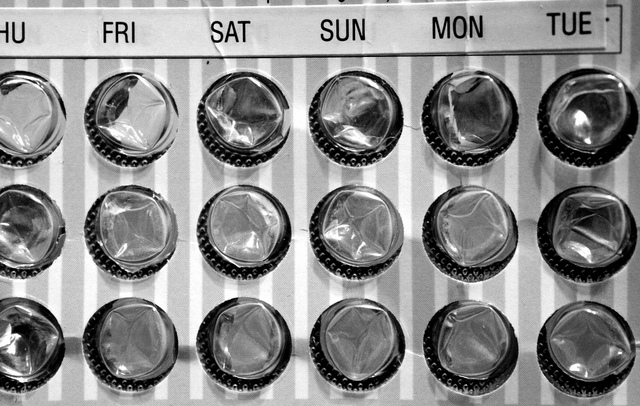
Only a latter-day Rip Van Winkle could avoid knowing that this month marks the 50th anniversary of the FDA’s approval of Enovid, the world’s first birth control pill. Hundreds of newspaper and magazine articles have marked this anniversary.
Many incorrectly credit the pill with giving birth to feminism. As Elaine Tyler May notes in the current issue of Ms., the pill didn’t start the feminist movement but was in the right place at the right time:
The timing could not have been better. The feminist movement gained momentum just as the Pill became available. With the ability to control their fertility, women could take full advantage of new opportunities for education, careers and participation in public life.
But in the midst of all this celebrating, we’ve neglected another anniversary: 2010 marks the 40th anniversary of U.S. Senator Gaylord Nelson’s congressional hearings about the pill’s safety profile, which arguably did launch the women’s health movement. Continue reading...
Tags: Activism, birth control pill, drugs, FDA, feminism, government agencies, oral contraceptive pills, women's health movement
Posted in Activism, Birth Control, Pharmaceutical, books | 2 Comments »
February 9th, 2010 by Elizabeth Kissling
There are Tupperware parties, Passion Parties, Pampered Chef parties, and…Mirena IUD parties? Yes, apparently these events popped up early last year and were a joint effort from Bayer Pharmaceuticals and the mom marketing site Mom Central.
Here’s one mom blogger’s description of the Mirena party that she hosted:
Then tonight I hosted a party at my house with Mom Central. Mom Central had found me through this blog and asked me if I would be interested in hosting an event sponsored by Mirena. As I welcome any opportunity to sit down with some girlfriends with some free food and drink, I was happy to accept. Before the party started, I walked around nervously, terrified that only a couple of people would show up. We’re all so busy, and I worried that people would end up skipping a strange commercial-sounding event. But one by one, they rolled in and I began to relax.
We had an amazing evening, talking about sex, fashion, and living a simpler life. I realized that we don’t actually spend a lot of time talking about sex and relationships. We laughed a lot but also went home with some great tips. Continue reading...
Tags: advertising, big pharma, Birth Control, blogging, drugs, economics, government agencies, guest post, IUD
Posted in Advertising, Birth Control, Law/Legal, Pharmaceutical | 3 Comments »
January 11th, 2010 by Elizabeth Kissling
Britain’s North West Evening Mail reports that nation’s department of defense is considering whether or not to allow women to serve on subs. Women have gone to sea on submarines in pilot studies in the past, but presently only the Norwegian, Danish, Swedish, Australian, and Canadian navies allow women on submarines.
The primary objections to the new inclusiveness are the possibility of minute radiation affecting chromosomes in pregnancy; screening equipment in submarine toilets that may not be capable of dealing with items like tampons; and the belief that having women and men working in close, cramped quarters could “create tension.” Plus, “it might worry submariners’ wives if women go on subs,” according to one merchant seaman who is a Petty Officer in the Sea Cadet corps.
However, it’s the Ministry of Defense that will be making the decision. A spokesperson told the paper, “The UK is bound by law to reassess occupations from which women are excluded every eight years. We expect the review will be completed in early 2010 and once the results have been evaluated we will publish our conclusions.”
Until then, I’ll join the Evening Mail in letting local businessperson Sally Broom have the last word.
“As far as I am aware, the only ‘official’ reasons for women not being allowed to spend time in submarines at depth are lack of facilities, and medical concerns surrounding pregnancy. In this case facilities should be made available and there should be no issue for women who are not pregnant.
“A traditional and ‘unofficial’ viewpoint is that the presence of women leads to lack of focus. But the idea that, as soon as a woman sets foot on a submarine with a team of highly drilled, disciplined men, the whole thing would collapse into a lustful mess is an absurd insult to both male and female sailors.

Tags: boys/men, discrimination, government agencies, Menstruation, military service, sexism, tampons
Posted in Law/Legal, Men, Menstruation | 2 Comments »
January 5th, 2010 by Elizabeth Kissling
There’s an intense, important discussion going on at FWD/Forward about how the latest ramp-up of security theatre of air travel could affect persons with disabilities. Blogger Lauredhel points out that the following items all show up in a back-scatter x-ray produced by a full-body scanner:
- Urinary catheters.
- Incontinence pads.
- Colostomy and ileostomy bags.
- PEG feeding tubes.
- Mastectomy prostheses.
- Certain medication pumps and implanted ports, such as insulin pumps.
- TENS machines.
- Pacemakers.
- The bodies, including genitalia, of transgender and intersex and genderqueer people.
Lauredhel notes, “All of these are the signs of bodies already marginalised. Some of these signs may be clear on current security screenings – some may not.” She explains how the resulting invasion of privacy is likely to be even more invasive than for able-bodied, cis-gendered, cissexual folks.
The list suggests that menstrual pads and tampons will also be visible. Will menstruating travelers be asked to confirm that they’re indeed menstruating? Will they be compelled to prove that item is really a tampon and not a concealed weapon? And what about menstruators who are transgender, intersex, genderqueer, or otherwise do not conform to conventional expectations about gender expression? Will they be subject to further interrogation or required to “prove” their sex?
If you didn’t already hate flying and the aggravation of TSA security theatre, you will.

Tags: government agencies, pads, security, tampons, travel
Posted in Internet, Menstruation, Objects | 4 Comments »
December 23rd, 2009 by Elizabeth Kissling
Guest Post by Holly Grigg-Spall, freelance writer (”Sweetening the Pill“)
In the summer of this year, I was researching for a feature for Easy Living magazine on the potential side effects of the birth control pill and when searching for a news hook for the piece, I found out about the preparation of a NHS scheme which would allow oral contraceptives to be distributed from pharmacies without a prescription. At that time, all of the doctors I interviewed expressed concerns about this development, even the most conservative GPs who stubbornly dismissed my concerns about side effects.
Then last week it hit British newspapers that this scheme had recently launched in the areas of London that have the highest rates of teenage pregnancy. Bold, bright posters in the style of laundry soap adverts exclaiming that the Pill is now available without prescription are up in pharmacy windows of Lambeth and Southwark. According to the news reports the pharmacists involved were given three weeks of training in order to provide consultations for young women looking to start taking oral contraceptives or wanting to move from the Pill to long acting methods like the injection, the implant or the hormonal IUS. The implication was also there that if young women came to the pharmacy for the emergency contraceptive pill then their consultation would involve the suggestion that they start on the Pill or a long-acting method. Continue reading...
Tags: advertising, birth control pill, England, Girls, government agencies, guest post
Posted in Birth Control, Girls, Health Care, Pharmaceutical | 2 Comments »
December 18th, 2009 by Elizabeth Kissling
You may have heard the news that 23 hormone replacement therapy lawsuits filed by women diagnosed with breast cancer were dismissed by a New York judge this week. Judge Martin Shulman granted Pfizer’s motion to dismiss for two reasons: the plaintiff’s delayed filing exceeded the the three-year statute of limitations in New York, and that “the potential risk of contracting breast cancer from taking HRT medication was well known at all times out there in the stream of public information.” Oddly, Judge Shulman simultaneously asserted “that the debate over HRT health problems has not yet been settled.”
I can’t argue about exceeding the statute of limitations, but it’s difficult for a judge to assert that breast cancer risk of hormone therapy is well known public information. The Lancet reported today that up to half of US adults have trouble interpreting medical information, displaying low levels of health literacy. Health literacy, according to The Lancet, is the ability to comprehend and use medical information that can affect access to and use of the health-care system. Health literacy is more than reading and comprehending news reports of medical issues (which are often of poor quality – see Health News Review for sharp analysis of health news); one must also know how to navigate the complexities of the health care system, including knowing how and when to question one’s physicians and pharmacists. Continue reading...
Tags: advertising, big pharma, breast cancer, drugs, government agencies, Health Care, hormones, lawsuit, Menopause
Posted in Health Care, Law/Legal, Menopause, Pharmaceutical | 1 Comment »
October 1st, 2009 by Elizabeth Kissling

Illustration from Feminist Women's Health Center
The Federal Drug Administration (FDA) announced today that Mirena® has been approved for use as treatment for heavy menstrual bleeding. Mirena® is an intra-uterine device (IUD) for preventing pregnancy. It combines the technology of old-school IUDs with the hormone levonorgestrel, a synthetic progesterone.
I’m a little puzzled, though, by the apparent limited usage recommended: the press release states,
The U.S. Food and Drug Administration today approved Mirena (levonorgestrel intrauterine system) to treat heavy menstrual bleeding in women who use intrauterine contraception as their method of pregnancy prevention.
This sounds like Mirena® is approved for women who already using IUDs. So if you’re already using Mirena® for birth control, congratulations. Now you can use it to reduce menstrual flow.
For those keeping score at home, Mirena® is manufactured by Bayer, also makers of beleaguered birth control pill, Yaz.

Tags: Birth Control, blood, drugs, government agencies
Posted in Birth Control, Menstruation, Pharmaceutical | 1 Comment »
September 3rd, 2009 by Elizabeth Kissling
Dot Girl™ First Period Products, a retailer of first menstrual period kits for pre-teen girls, announced today that they are partnering with Best Bones Forever!, a national campaign led by the U.S. Department of Health and Human Services’ Office on Women’s Health.
It’s hard to get cranky about a federal program that seems to consist mostly of PSAs about good health habits for girls, but a couple of things about this particular campaign make my SpideySense tingle:
- The press release about this new partnership states that Dot Girl™ is based in Seattle and was founded by sisters Terri Goodwin and Kathy Pickus with the intent to help parents manage the often difficult conversation about menstruation with their prepubescent daughters. The sisters’ products also “create empowered young women who have a positive first period experience.” But a closer look at the contents of the Dot Girl’s First Period Kit suggests a close relationship with Kimberly-Clark: it contains two Kotex products and coupons for discounted purchase of other Kotex products. I also note that the name and logo of the company, Dot Girl, evokes the red dot used in Kotex commercials and logos. Kotex received a lot of kudos when their Red Dot campaign was first launched in 2000, for its playfulness and for being the first advertising campaign in the U.S. to use the word “period”.
- The Kit also contains a sample package of “Scensibles™”, labeled “scented bags for clean, easy, discreet disposal of feminine care products” and a package of hand wipes. I suppose these are included because periods are so smelly and dirty; apparently empowerful young women need to be very clean. In the U.S., it is not unusual for key developmental moments such as menarche to be marked by increased consumer behavior but it still rubs me the wrong way that an organization purportedly focused on helping girls and their parents with this transition tries to do so by selling stuff – especially unnecessary stuff with shaming implications.
- I also note that all the material about how to develop and maintain healthy bones makes no mention of the link between bone health and menstruation. With each ovulatory cycle, the ovary secretes progesterone, which stimulates the production of osteoblasts. Osteoblasts are cells that build new bone. If menstruation is irregular or suppressed with cycle-stopping contraceptives (which work by suppressing ovulation), bone health can be negatively affected.

Tags: advertising, bone health, economics, government agencies, Menarche, Menstruation, PSA
Posted in FemCare, Media | 3 Comments »
Readers should note that statements published in re: Cycling are those of individual authors and do not necessarily reflect the positions of the Society as a whole.