Blog of the Society for Menstrual Cycle Research

“When it comes to their balls, guys just don’t seem to have any”

November 18th, 2011 by Elizabeth Kissling

I’ve spent so many years as a professor of Women’s Studies telling students that feminism is about equality, and that being pro-woman doesn’t mean being anti-men. I thought perhaps we’d moved past that 1990s meme of seeing everything that is for women as male-bashing, but here we go again.

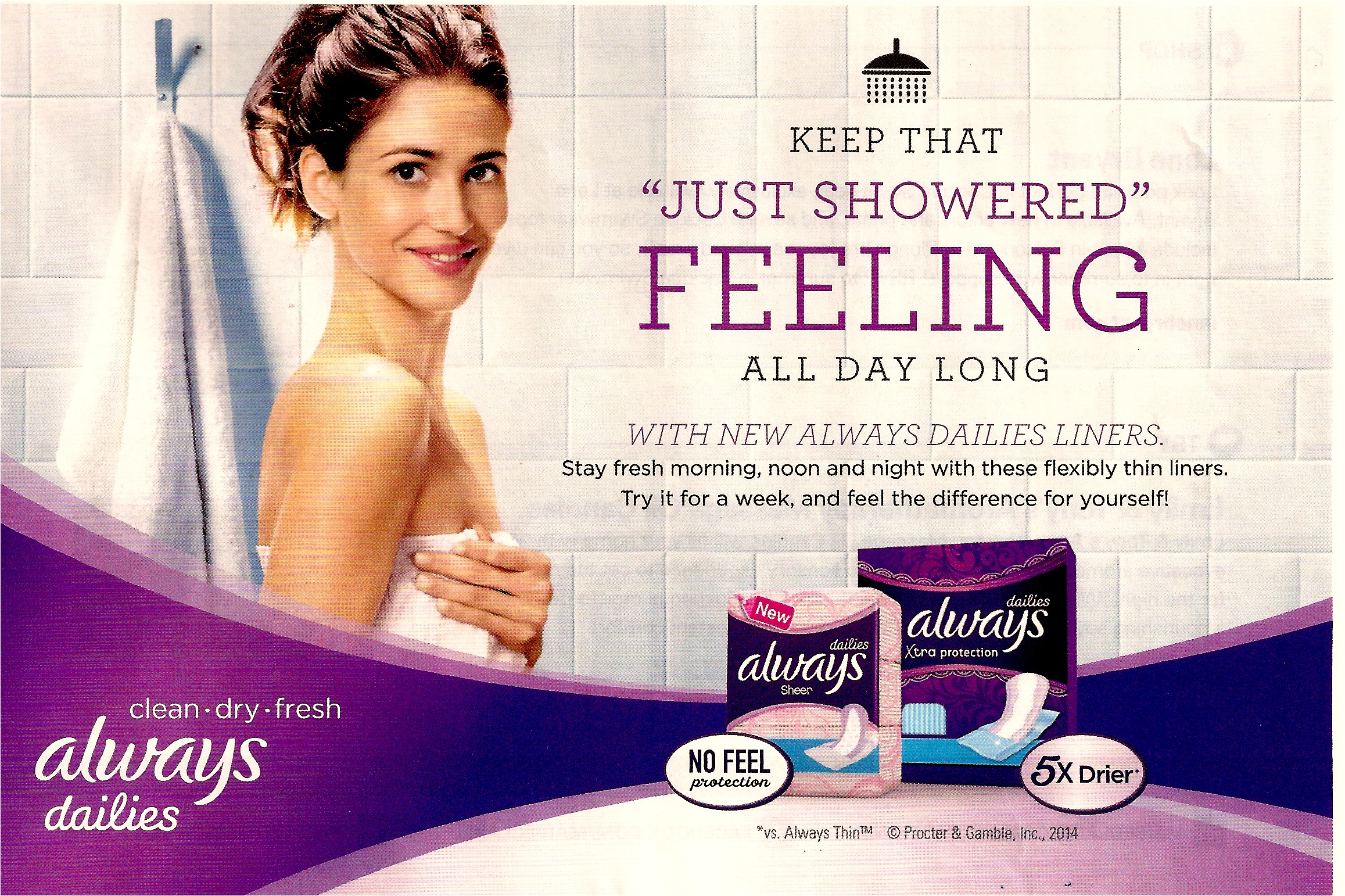
The latest marketing strategy of Essure, a permanent birth control method for women that destroys the Fallopian tubes, is to appeal to men’s fear of vasectomy: “because you can only wait so long for him to man up”.

Le sigh.

Post to Twitter Post to Plurk Post to Yahoo Buzz Post to Delicious Post to Digg Post to Facebook Post to MySpace Post to Reddit Post to StumbleUpon

How the Pill Gave Birth to the Women’s Health Movement

May 25th, 2010 by Elizabeth Kissling
Photo from http://www.flickr.com/photos/blmurch/486046904/  // CC BY 2.0

Photo from http://www.flickr.com/photos/blmurch/486046904/ // CC BY 2.0

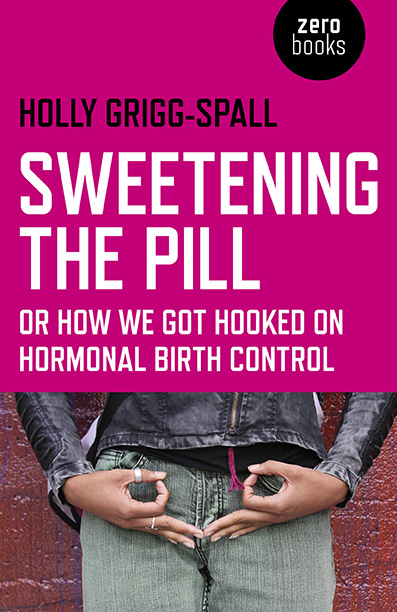
Only a latter-day Rip Van Winkle could avoid knowing that this month marks the 50th anniversary of the FDA’s approval of Enovid, the world’s first birth control pill. Hundreds of newspaper and magazine articles have marked this anniversary.

Many incorrectly credit the pill with giving birth to feminism. As Elaine Tyler May notes in the current issue of Ms., the pill didn’t start the feminist movement but was in the right place at the right time:

The timing could not have been better. The feminist movement gained momentum just as the Pill became available. With the ability to control their fertility, women could take full advantage of new opportunities for education, careers and participation in public life.

But in the midst of all this celebrating, we’ve neglected another anniversary: 2010 marks the 40th anniversary of U.S.  Senator Gaylord Nelson’s congressional hearings about the pill’s safety profile, which arguably did launch the women’s health movement.

That launch received a giant shove from Barbara Seaman, a magazine writer who published a book called The Doctor’s Case Against the Pill in 1969, and Alice Wolfson, a then-student and feminist activist. Seaman’s book documented medical risks of the pill–such as blood clots, decreased sex drive, mood disorders and certain cancers, and she alleged that the pharmaceutical industry had suppressed such information. Sen. Nelson was investigating other allegations against the pharmaceutical industry and read Seaman’s book, which motivated him to take on the pill as well.

At the time of the hearings, Wolfson was part of an activist collective known as D.C. Women’s Liberation. In discussing whether or not to attend the hearings, Wolfson and several other members discovered they all had experienced negative side effects of the pill, which their physicians had not warned them about. That revelation led to something bigger. As Wolfson later wrote in her memoir, “We went to the Hill to get information. We left having started a social movement.”

At the Nelson pill hearings, as they soon became known, medical experts delivered testimony about the known risks of synthetic estrogen, one of the main ingredients in birth control pills. No pill users were on the agenda. The only woman who testified was Dr. Elizabeth Connell, who expressed the fear that if dangers of the pill were publicized, women would give up birth control entirely. Connell said she worried that would lead to an explosion of unwanted pregnancies, or “Nelson babies.”

Alice Wolfson says she doesn’t remember the exact tipping point in the hearings that prompted her to speak up, but I like to think it was the moment when a medical researcher testified, “Estrogen is to cancer what fertilizer is to wheat.” Wolfson and other women raised their hands politely to comment, but when Sen. Gaylord refused to recognize them, they began shouting their questions.

Why weren’t we told about side effects?

Why aren’t any women testifying?

What happened to the women in the Puerto Rico study?

Why are you using women as guinea pigs?

Why are you letting the drug companies murder us for their profit and convenience?

The feminists immediately had the attention of reporters, and a movement was born. Seaman and Wolfson met during one of the breaks in testimony, and eventually worked together to create the National Women’s Health Network – still a vibrant and vital advocacy organization for women’s health.

50 years of The Pill

May 9th, 2010 by Chris Hitchcock

Today’s the day, ironically enough on Mother’s day, that marks half a century since the FDA approved the pill for contraceptive use in the USA. And, for better or for worse, it’s become part of the fabric of our culture, and allowed women to have both family and a career by providing reliable family planning. Although, as many have commented, the pill may get more credit than it deserves, it serves as a powerful symbol of women’s liberation and sexual freedom.

Recently, in the Vancouver Art Gallery, I learned that, around this time, feminist painters were bringing the body back into art, challenging the largely male trends of abstractionism. Ironically, at the same time, feminist psychologists were working to remove the body from the psychology of women, challenging the prevailing wisdom that the narrative of woman is the narrative of her womb, and that when it ceases to be productive, so does she. How does the pill, with its chemical silencing of women’s reproductive endocrinology, fit with this interplay between owning and disowning our female bodies? And how can we own our bodies without allowing them to be our only defining features?

Post to Twitter Post to Plurk Post to Yahoo Buzz Post to Delicious Post to Digg Post to Facebook Post to MySpace Post to Reddit Post to StumbleUpon

Colored Tampons: For Whites Only?

May 5th, 2010 by Elizabeth Kissling

Guest Post by Nicole Luna, Marymount Manhattan College

"Try Something BOLD"Elizabeth Kissling’s March 16 post on the launch of the U by Kotex campaign and the comments that followed touched on the implications of the “new” Kotex products and their accompanying empowerment crusade. Comments ranged from how the new tampon applicators resemble glow sticks to how, with the new “menstruation optional” pills and implants, tampon and pad manufacturers are grasping any marketing ploy to keep girls menstruating and buying their products. Indeed, “empowering” women about their menstrual cycle and encouraging women to “celebrate their bodies” is a smart marketing move by Kotex in the face of the menstrual suppression option. The following comment from Giovanna Chesler’s on Kissling’s March 16 post sums up my own opinion about the “radical new product”.:

“Might I add that when I heard that Kotex was bringing a new, radical product to market, I assumed it would be a menstrual cup. What’s new about painting a tampon applicator? Still plastic. Still disposable. Shows how naive I am. Kotex selling menstrual cups… that would be the day!”

Let us not forget, these products still have the same pesticide-infused cotton and the same one-time-use, land fill-bound plastic applicators and wrappers.

At first, Kotex had successfully baited me with their empowerment rhetoric (although I do not buy their products), because YES I want the shame and embarrassment that surrounds the menstrual cycle to be banished, and YES I want “vagina” to be taken off of the list of “dirty words”, and YES I think tampon and pad commercials are ridiculous. Thus, the Kotex marketing campaign is remarkably cleaver, since it speaks, at least on some level, to those of us who want what is on the “U by Kotex Declaration of real Talk” pledge, which is as follows:

I Will…

  • Celebrate my body and my period as natural, normal, and important
  • Respect my vagina, and know that ‘vagina’ is not a dirty word
  • Challenge society to think differently about what it means to be a woman
  • Talk openly and without embarrassment about periods and vaginal care with my friends and family
  • Take good care of myself and encourage my girlfriends to do the same

If you think this is a progressive step in the direction of menstrual activism, visit the U by Kotex website, where you will find a woman to show you, with the aid of a vulva pillow, how to insert a tampon. She mercifully doesn’t make any reference to freshness or boys; instead, she just gives you straight-forward tampon instructions using candid language and anatomy books (although the images she uses are depictions and not actual human genitalia). Also, the U by Kotex site makes the connection that women who are not ashamed about their periods are more likely to have a positive self-image. My own research has shown me that the more educated a woman is about the logistics of her menstrual cycle, the more likely she is to be assertive about safe sex practices and actually enjoy sex more. She is also less likely to fall for age-old myths like “you can’t get pregnant on your period”.

Men in Menstruation: Vinnie’s Tampon Case

February 3rd, 2010 by Elizabeth Kissling


We’ve had a couple of productive discussions recently here at re:Cycling about men and menstrual humor, so it seems a good time to introduce Vinnie D’Angelo, creator of Vinnie’s Tampon Case. Therese Shecter has graciously shared this clip from her thought-provoking film, I Was A Teenage Feminist.


I’ve written about Vinnie and the role of men in menstrual activism before, in the “Menstrual Counterculture” chapter of my book, Capitalizing on the Curse: The Business of Menstruation. Here is a brief excerpt from that chapter:

According to interviews, D’Angelo’s motivation in developing his tampon cases was to help out his female friends. He would see them fishing in purses or backpacks for a tampon and retrieve “a mangled applicator and a lump of cotton with old gum stuck to the string” (quoted in Raappana). He also liked the idea of changing attitudes toward menstruation. . . . Interviews with D’Angelo reveal a feminist sensibility that extends beyond providing menstrual support.

[ . . . .]

I confess to some ambivalence here: I am uncertain what men’s role should be in celebrating menstruation. I appreciate [Harry] Finley’s genuine curiosity, and I admire D’Angelo’s feminist approach and his lack of squeamishness. I’m glad to see men talking about menstruation and not insisting that it remain hidden. I like D’Angelo’s playful, accepting attitude toward menstruation, but at the same time I find the fact that he has built a cottage industry of it vaguely exploitive. No one is harmed by his products, of course, but it is more than a little ironic that someone who doesn’t menstruate launched this successful line of whimsical, self-conscious menstrual products. On the other hand, perhaps D’Angelo’s masculinity adds a social legitimacy (as well as a humorous novelty element, as he has noted in interviews) that a woman’s name would not carry in the current cultural climate. And he’s great with the clever slogans: He owns the domain name knowyourflow.com, and recent ads for his tampon case say, “Don’t let your period cramp your style.”


What do you think, re:Cycling readers? How do you feel about the fact that two of the most visible examples of menstrual activism in the U.S., Vinnie’s Tampon Case and Harry Finley’s Museum of Menstruation, are created and promoted by nonmenstruators? Does it matter if these ventures are commercially successful? (Just for the record, Finley has received no financial benefit – only internet notoriety – from the Museum of Menstruation. Since introducing his eponymous tampon case in the late 1990s, D’Angelo has also developed Vinnie’s Giant Roller Coaster Period Chart and Sticker Book, and Vinnie’s Cramp Relieving Bubble Bath, which is also available packaged with Vinnie’s Soothing Bubble Beats CD of “music to menstruate by”. I do not know how profitable these products are for him.)

Post to Twitter Post to Plurk Post to Yahoo Buzz Post to Delicious Post to Digg Post to Facebook Post to MySpace Post to Reddit Post to StumbleUpon

It’s In The Blood

October 3rd, 2009 by Elizabeth Kissling
Image via livejournal.com menstrual activism commmunity

Image via livejournal.com menstrual activism commmunity

I was quite excited to see our own Chris Bobel and Giovanna Chesler quoted in this piece from The Guardian about menstrual activism, and then to discover that the Guardian published a second piece the same day about menstruation: Rowena Davis explains What My Period Means to Me. Kira Cochrane’s article about menstrual activism provides a broad, useful definition of the term, and several examples, ranging from avant-garde artworks to Rachel Kauder Nalebuff’s collection of menarche stories to Chris’ forthcoming book about third-wave feminist activism and menstruation.

It seems that menstrual activism (otherwise known as radical menstruation, menstrual anarchy, or menarchy) is having a moment. The term is used to describe a whole range of actions, not all considered political by the person involved: simple efforts to speak openly about periods, radical affronts to negative attitudes and campaigns for more environmentally friendly sanitary products.

Davis’ essay is a personal one, describing the transformation of her negative attitude toward her own period to one of not only acceptance but appreciation of menstruation for the opportunity it provides to reflect:

[T]hese days I can’t wait for the next one – really! Like the women in The Red Tent, I use it as a time to slow down, rest and check in with myself. ‘What’s happened in this last chapter of my life?’ I ask myself. ‘What is my body telling me?’ If I’ve had a bad month where I’ve been suppressing tension or working too hard, my period is much heavier and more painful. It’s a sign that I haven’t been listening to my needs.

My enjoyment of these articles was marred, however, by reading the comments from Guardian readers. The vitriol is staggering. There are offensive remarks equating menstruation with elimination and menstrual blood with feces, admonishments to women to keep silent about their periods, criticism of the Guardian for publishing such “twaddle”, and rebukes to feminists for concerning themselves with something as trivial as women’s bodies. I think it’s that last one that disturbs me the most; modern feminism owes a great deal to the second-wave concept that the personal is political. As we have documented elsewhere in re: Cycling and the work of the Society for Menstrual Cycle Research, it is not menstruation that oppresses women. But attitudes toward women and menstruation and the communication and silences regarding menstruation can be oppressive. To draw upon one of my favorite theorists, Simone de Beauvoir, menstruation does not make women the Other; it is because she is Other that menstruation is a curse.

Just as the penis derives its privileged evaluation from the social context, so it is the social context that makes menstruation a curse. The one symbolizes manhood, the other femininity; and it is because femininity signifies alterity and inferiority that its manifestation is met with shame. (The Second Sex, p. 354)

Menstrual activist Chella Quint told Cochrane says that she plans to continue writing “Adventures in Menstruating” until it is time for Adventures in Menopausing instead, “but, of course, it would be great if I didn’t have to, if there was no shame whatsoever”.

Likewise, the Society for Menstrual Cycle Research will continue our work until it’s no longer necessary.

Post to Twitter Post to Plurk Post to Yahoo Buzz Post to Delicious Post to Digg Post to Facebook Post to MySpace Post to Reddit Post to StumbleUpon

Readers should note that statements published in re: Cycling are those of individual authors and do not necessarily reflect the positions of the Society as a whole.