Blog of the Society for Menstrual Cycle Research

Don’t Ask, Don’t Smell

January 27th, 2011 by Elizabeth Kissling

female-minority-happy-military-wide-horizontalGuest Post by Emily Swan, Marymount Manhattan College

With the military’s history of suppressing minority groups, its new effort to conceal and terminate menstruation comes as no surprise. Hopefully, the menses will be able to come out of the closet soon enough.

I recently wrote a paper about menstruation in the military and was excited to see this recent post at re:Cycling. Researchers have suddenly become sensitive to the “devastating” effects of menstruation on women in combat and training, citing a potential link to iron-deficiency, among other things. (Might I add that, while the article identifies menses as the culprit, the actual data suggest no correlation between the loss of menstrual blood and the low iron levels of the participants.) Researchers have also conducted studies and interviews to determine the level of difficulty menstruation adds to a variety of physical activities and expose reported difficulty in obtaining, storing, transporting, changing, and disposing of “sanitary products” (Note the hygiene-promoting terminology). These reports have indicated a significant struggle with menstrual management, giving grounds to the military’s new encouragement for women to use continuous oral contraceptive pills (OCPs) to “temporarily” induce amenorrhea.

What’s happening here is not simply a conquering of the menses but an overpowering of women as a whole. The article about iron deficiency says it best, with its opening paragraph explaining the biological disadvantages of women: women’s lower levels of physical strength, inferior aerobic performance, and a number of other physical and mental “shortcomings” that include the ability to menstruate. It states, “the physical differences between genders in the military setting should be minimized as much as possible” (866). They’re not trying to make women more comfortable by stopping their periods; they’re using men to set the physical and mental performance standard for which women must strive. The failure of women to meet this standard lies in their very biology; the study directly blamed their femaleness as the source of this imbalance. It’s not, “Stop menstruating because it will help you.” It’s, “Stop menstruating because it will get you that much closer to being a man.” Oh joy.

The misogyny embedded within this move toward menstrual suppression does not discount the results of the studies; menstrual management poses a serious issue for most military women! In addition to the difficulty reported in transporting, obtaining, and storing products, another article relayed the troubling results of interviews from women of the Air Force, Army, and Navy regarding personal hygiene and field menstrual management.4 These interviews told of highly unsanitary bathroom facilities in combat environments, lack of privacy for the use and changing of menstrual products, and bathrooms that rarely contained receptacles for disposing of the products. The women reported collecting used products in Ziploc bags to either bury them in the secrecy of night or to keep them in their luggage until they returned to the U.S. Because of the hot, moist climates inhabited during deployment; the heavy, reused, and unwashed clothing; and the frequent lack of water or time to wash up, the interviewees reported constant awareness and humiliation surrounding menstrual odor. Most of the women also admitted hesitancy toward utilizing the clinic for menstrual health issues because they were made to feel that their menstrual symptoms were not worthy of care. They also reported that gynecological exams were excluded from their general deployment health examinations.

What Women Really Want

November 10th, 2009 by Elizabeth Kissling

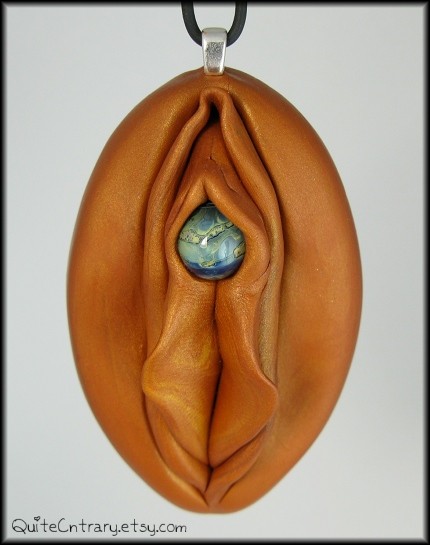
Image via QuiteCntary.etsy.com

Obviously I’m spending waaay too much time on the interwebz these days.

My elaborate system of RSS feeds, Twitter messages, email alerts, and random blog surfing just pointed me to a website called “Twirlit“, with the subtitle What Women Really Want. What women really want, apparently, is a special scented soap cleanser for their ladyparts: thanks to a Twirlit review, I learned of Propoline® For Women Multi-Gyn Cleanser. From Twirlit’s product review:

I’ve been using this product for years. My husband always makes fun of me for it, he calls it my “vagina wash” but Propoline Mylti-Gyn cleanser is an all over, hypoallergenic body wash that also happens to be beneficial for your vaginal area.

“Vagina Wash”? Vaginal area? Sorry, Eve Ensler, but this is one of my biggest linguistic pet peeves. The body part we’re talking about here is the vulva. The vagina is an internal organ, and does not require special soap. Vaginas do not require any soap, as they’re self-cleaning, just like eyes (and in some households, ovens). Washing your vagina is called douching, and is more likely to disrupt the normal ph balance of the vagina than do anything beneficial. Douching can even lead to health problems, such as vaginal irritation, bacterial infections, and pelvic inflammatory disease.

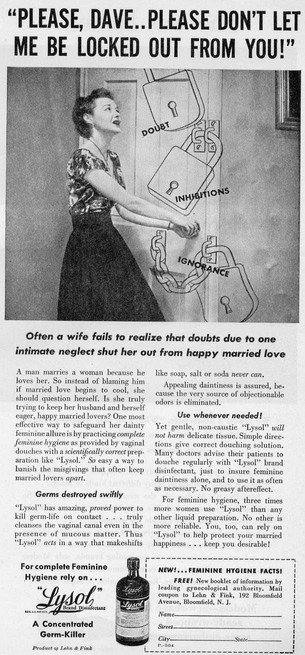
This, by the way, is why the terms douche and douchebag are frequently used to describe anti-feminist people and actions: douches are unnecessary, harmful to women, and sold to women with assaults on their self-esteem.

Mutli-Gyn Cleanser is safe to use during menstruation, after sexual intercourse, after swimming or hot tubs and is especially calming to the skin if you have a dreaded yeast infection.

“Safe to use during menstruation.” You know, pretty much any soap is safe to use during menstruation. Or after swimming, sex, or hot tubs, or any other time you want to wash your vulva. Just don’t use it internally. It even says on the Multi-Gyn package, For External Use Only. In other words, it’s a not douche. Do not use in YOUR VAGINA.

I’m so glad that skin care companies are finally realizing that a woman’s sensitive area is different than the rest of the skin on our bodies. I stock up on this stuff as my local apothecary is always running out and don’t feel guilty because it’s surprisingly affordable (around $14.00 a bottle).

$14.00 for SOAP is “surprisingly affordable”?!? No recession in your neighborhood, huh? Where I come from, $14 for an 8 1/2 ounce bottle of body wash is hella-expensive. A bar of Ivory soap costs 69¢ and does the job just as well.

To be fair here, a woman’s “sensitive area” is different than the rest of her skin (for one thing, it’s sensitive!). But that doesn’t mean it requires a $14 bottle of special soap.

The idea that vaginas and vulvas are smelly or somehow ‘extra dirty’ and require special cleansers or deodorants is product of advertising. And of misogyny. The fact that someone is selling – and women are buying – a special “Multi Gyn” cleanser at 14 bucks a pop is sign of the effectiveness of both.

Vulva pendant image used with kind permission of QuiteCntrary.etsy.com.

Post to Twitter Post to Plurk Post to Yahoo Buzz Post to Delicious Post to Digg Post to Facebook Post to MySpace Post to Reddit Post to StumbleUpon

Readers should note that statements published in re: Cycling are those of individual authors and do not necessarily reflect the positions of the Society as a whole.