Blog of the Society for Menstrual Cycle Research

Some recent news about Hot Flushes and Night Sweats

October 25th, 2011 by Chris Hitchcock

Prevalence of Hot Flushes and Night Sweats in UK women 54-65

In a new, large (over 10 000 women)  survey of UK women aged 54-65, Myra Hunter and colleagues reported on the proportion of women who have hot flushes and night sweats (HF/NS), and on how frequent and bothersome they found them. Surprisingly, they did not find a difference across ages; 54% of women reported that they currently experienced hot flushes and/or night sweats, and this was as true for women in their mid-60′s as in their mid-50′s. Current users of hormone therapy were less likely to have current HF/NS, while those who had discontinued hormone therapy were more likely to have HF/NS compared with never users. It is common to think that HF/NS last for 2-5 years in a woman’s early 50′s. This study suggests that there is a need for therapies that are effective and can be used safely for a much longer duration.

FDA says no to Pristiq for (Post)Menopausal Hot Flushes

In early September, the US FDA (Food and Drug Administration) turned down Pfizer’s request to market it’s antidepressant drug, Pristiq, as a treatment for hot flushes in menopausal women. Pfizer inherited Pristiq when it acquired Wyeth (makers of the hormone therapy medication PremPro).  This is the first anti-depressant to seek official approval for this indication, although there has been research and promotion of antidepressants as alternative, non-hormonal, off-label medications for vasomotor symptoms (hot flushes and night sweats) for some time.

Perhaps not surprisingly, there has been little coverage of this in the media, as contrasted with the coverage of the various steps towards this point.

I have noticed that when a drug therapy is approved or takes a step along the path towards approval, news coverage is general and widespread. When there is a hitch in the approval process, often only the financial markets pick up the story, because it affects share values. However, there is an article in Medscape that provides more background on the history of this application.


Post to Twitter Post to Plurk Post to Yahoo Buzz Post to Delicious Post to Digg Post to Facebook Post to MySpace Post to Reddit Post to StumbleUpon

Counterfeit EC in Circulation

July 29th, 2011 by Elizabeth Kissling

The U.S. Food and Drug Administration has issued a warning to consumers not to use the emergency birth control medicine labeled as Evital. The drug is not safe or effective in preventing pregnancy. The packaging label of the potentially ineffective and suspect counterfeit version says, “Evital Anticonceptivo de emergencia, 1.5 mg, 1 tablet”, by “Fluter Domull”. It has not been approved for use in the United States, but may be in distribution in some U.S. Hispanic communities.

The FDA is asking that people who have seen this version of the drug contact them with information.  Approved versions of EC are available over-the-counter and by prescription to those 17 and older.

[via Feministing.com]


Post to Twitter Post to Plurk Post to Yahoo Buzz Post to Delicious Post to Digg Post to Facebook Post to MySpace Post to Reddit Post to StumbleUpon

S.A.N.E Vax Objects to FDA Ruling Gardasil Use for Anal Cancer

December 29th, 2010 by Elizabeth Kissling

Guest post by Leslie Botha, S.A.N.E. Vax

Increasing Number of Consumers are Concerned over HPV Vaccine Safety

The FDA’s December 22, 2010 ruling to expand the use of Gardasil for anal cancer prevention is unacceptable, according to Norma Erickson, President of S.A.N.E Vax. Last Wednesday, the U.S. Food and Drug Administration approved Gardasil for the prevention of anal cancer and associated pre-cancer lesions due to human papillomavirus (HPV) types 6, 11, 16, and 18 in people ages 9 through 26 years. Immediately, the news flooded the media – with many postings on HIV/AIDS sites.

However, medical consumers are unaware the 2010 Gardasil® Patient Product Information (PPI) states if a woman has “…immune problems, like HIV infection, cancer, or takes medicines that affect the immune system” they must be reported to the health care provider. This should be of grave concern to HIV/AID patients and their physicians who may consider the vaccine to “prevent” anal cancer.

Gardasil is already approved for the same age population for the prevention of cervical, vulvar, and vaginal cancer and the associated precancerous lesions caused by HPV types 6, 11, 16, and 18 in females, and for the prevention of genital warts caused by types 6 and 11 in both males and females in the same age group. 
This same demographic has reported over 20,915 adverse reactions – mostly from Gardasil to VAERS – the Vaccine Adverse Event Reporting System. In addition, 89 deaths and 382 abnormal pap tests post vaccination have been reported with an estimated 1 to 10% of the population filing, according to the National Vaccine Information Center. The rate of deaths and adverse reactions are reported as a percentage of doses distributed, not doses actually administered, and therefore CDC statistics on reported injuries likely misrepresent their frequency.

Data on adverse reactions from males ages 9 to 26 are just starting to be reported to VAERS. Hundreds of social media sited, journalists, researchers and educators have joined forces to publicly decry the faulty science, data, research and fast-tracking of this vaccine through the FDA.

Of course, Merck & Co. denies a causal relationship between the adverse reactions and deaths to their award-winning vaccine. However, on December 20, the QMI News Agency in Canada reported a Quebec coroner can’t explain why a 14-year-old girl died after receiving a dose of the Gardasil vaccine. Even though coroner Michel Ferland’s report concludes the adolescent girl died from drowning, and while there is no evidence the shot killed the teenager, he is refusing to rule out a link between Gardasil and her death. On December 13, Michael Smith, North American Correspondent, MedPage Today wrote an article titled: Many Fail to Finish HPV Series as Recommended stating that “…Many girls and young women may not be completing all three doses of the quadrivalent human papillomavirus vaccine in a timely fashion…” According to Dr. Lea Widdice, Cincinnati Children’s Hospital Medical Center; in a single-institution retrospective analysis, only 14% of girls and young women completed all three doses within seven months of the first, and only 28% did so within 12 months.

Although statistical data was cited for non-compliance, SANE VAX wants to know if the girls were surveyed for their reasons in not completing the vaccine series. Until the true reasons are known, consumers must remain wary about the potential health dangers from the administration of Gardasil and Cervarix.

According to the FDA there are limitations on the use and effectiveness of Gardasil:

  • GARDASIL does not eliminate the necessity for women to continue to undergo recommended cervical cancer screening.

How the Pill Gave Birth to the Women’s Health Movement

May 25th, 2010 by Elizabeth Kissling
Photo from http://www.flickr.com/photos/blmurch/486046904/  // CC BY 2.0

Photo from http://www.flickr.com/photos/blmurch/486046904/ // CC BY 2.0

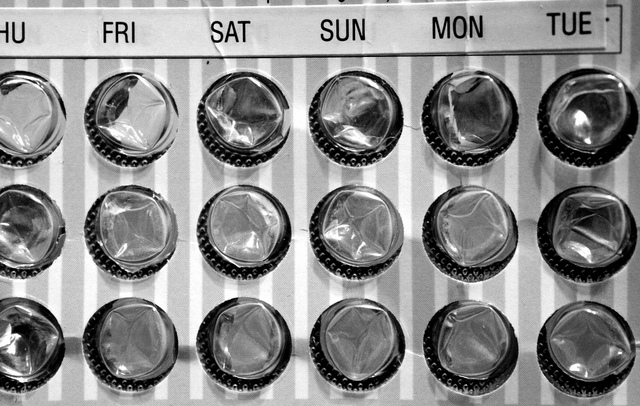
Only a latter-day Rip Van Winkle could avoid knowing that this month marks the 50th anniversary of the FDA’s approval of Enovid, the world’s first birth control pill. Hundreds of newspaper and magazine articles have marked this anniversary.

Many incorrectly credit the pill with giving birth to feminism. As Elaine Tyler May notes in the current issue of Ms., the pill didn’t start the feminist movement but was in the right place at the right time:

The timing could not have been better. The feminist movement gained momentum just as the Pill became available. With the ability to control their fertility, women could take full advantage of new opportunities for education, careers and participation in public life.

But in the midst of all this celebrating, we’ve neglected another anniversary: 2010 marks the 40th anniversary of U.S.  Senator Gaylord Nelson’s congressional hearings about the pill’s safety profile, which arguably did launch the women’s health movement.

That launch received a giant shove from Barbara Seaman, a magazine writer who published a book called The Doctor’s Case Against the Pill in 1969, and Alice Wolfson, a then-student and feminist activist. Seaman’s book documented medical risks of the pill–such as blood clots, decreased sex drive, mood disorders and certain cancers, and she alleged that the pharmaceutical industry had suppressed such information. Sen. Nelson was investigating other allegations against the pharmaceutical industry and read Seaman’s book, which motivated him to take on the pill as well.

At the time of the hearings, Wolfson was part of an activist collective known as D.C. Women’s Liberation. In discussing whether or not to attend the hearings, Wolfson and several other members discovered they all had experienced negative side effects of the pill, which their physicians had not warned them about. That revelation led to something bigger. As Wolfson later wrote in her memoir, “We went to the Hill to get information. We left having started a social movement.”

At the Nelson pill hearings, as they soon became known, medical experts delivered testimony about the known risks of synthetic estrogen, one of the main ingredients in birth control pills. No pill users were on the agenda. The only woman who testified was Dr. Elizabeth Connell, who expressed the fear that if dangers of the pill were publicized, women would give up birth control entirely. Connell said she worried that would lead to an explosion of unwanted pregnancies, or “Nelson babies.”

Alice Wolfson says she doesn’t remember the exact tipping point in the hearings that prompted her to speak up, but I like to think it was the moment when a medical researcher testified, “Estrogen is to cancer what fertilizer is to wheat.” Wolfson and other women raised their hands politely to comment, but when Sen. Gaylord refused to recognize them, they began shouting their questions.

Why weren’t we told about side effects?

Why aren’t any women testifying?

What happened to the women in the Puerto Rico study?

Why are you using women as guinea pigs?

Why are you letting the drug companies murder us for their profit and convenience?

The feminists immediately had the attention of reporters, and a movement was born. Seaman and Wolfson met during one of the breaks in testimony, and eventually worked together to create the National Women’s Health Network – still a vibrant and vital advocacy organization for women’s health.

New Drug for Heavy Periods

November 14th, 2009 by Elizabeth Kissling
Image by Brittany Reed

Image by Brittany Reed

The FDA announced yesterday that they have approved tranexamic acid tablets for the treatment of heavy menstrual bleeding, under the brand name Lysteda. According to the press release, approximately 3 million US women experience heavy bleeding, usually with no underlying health condition. The report states that there was  a statistically significant reduction in menstrual blood loss in women who received Lysteda, compared with those taking placebo.

As is the case with many newly approved drugs, tranexamic acid is not a new drug but an approval for a new usage: tranexamic acid has been used in injection form more than 20 years to reduce bleeding during tooth extraction in people with hemophilia (a blood disorder in which blood lacks a clotting factor).

Although it’s unlikely that anyone using hormonal contraceptives would also have heavy menstrual bleeding (remember, hormonal contraceptives suppress menstruation), the new drug comes with a big warning: taking Lysteda along with hormonal contraceptives increases one’s risk of blood clots, stroke, or heart attack.

I’m not a biochemist or a physician, but it sounds like Lysteda is a viable alternative for women who are currently taking (or recommended to take) hormonal contraceptives for the management of menstrual bleeding.

Post to Twitter Post to Plurk Post to Yahoo Buzz Post to Delicious Post to Digg Post to Facebook Post to MySpace Post to Reddit Post to StumbleUpon

What is the future of YAZ?

September 26th, 2009 by Elizabeth Kissling

The popular birth control pill, Yaz is in the news again. Readers may remember that last autumn, Bayer (the maker of Yaz) was sanctioned by the FDA for their television commercials, “because they encourage use of Yaz in circumstances other than those in which the drug has been approved, over-promise the benefits and minimize the risks associated with Yaz.” The FDA actually required Bayer not only to end the advertising campaign immediately but to make amends by publicizing corrective information — an unusually bold move from the FDA. That led to the ad shown at right.

Bayer was cited by the FDA again earlier this year, for failure to follow proper quality control in the plant that manufactures the synthetic hormones used in Yaz.

Bayer is now defending itself against 74 lawsuits filed by users who developed health problems, such as blood clots or heart attacks. Bayer is taking the FDA citations seriously and plans to “defend itself vigorously against the suits.” Dr. David A. Grimes, a clinical professor of obstetrics and gynecology at the University of North Carolina medical school and paid consultant to Bayer says the risk of injury from Yaz is tiny. “My dictum is that a multiple of a rare event is still a rare event,” says Grimes. And the New York Times seems far more concerned with how the FDA citations and the lawsuits will affect Yaz’ image and sales than they are with women’s health.

Didn’t these people learn anything from the saga of the Dalkon Shield?

October 2, 2009

Edited to Add: The New York Times report neglected to mention that Swissmedic is investigating the death of a young woman from the effects of pulmonary embolism that may be linked to her use of Yaz.

Post to Twitter Post to Plurk Post to Yahoo Buzz Post to Delicious Post to Digg Post to Facebook Post to MySpace Post to Reddit Post to StumbleUpon

Readers should note that statements published in re: Cycling are those of individual authors and do not necessarily reflect the positions of the Society as a whole.