Blog of the Society for Menstrual Cycle Research

Are You Too Physically Fit for Motherhood?

September 2nd, 2010 by Elizabeth Kissling

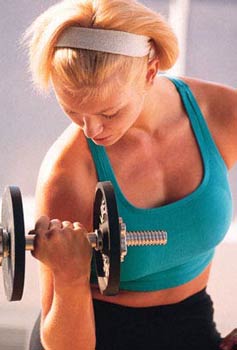
Image of slender white woman doing bicep curls with small barbell.The headline of a story at ABC news about infertility among female athletes is “Female Athletes Are Too Fit To Get Pregnant“. Many women athletes in their 20s, at peak performance levels and peak physical fitness by most measures, may find themselves unable to conceive. This is attributed to low percentages of body fat, which essentially shut down the hypothalamus, which then fails to trigger the H-P-O (hypothalamus, pituitary, ovary) hormone sequence necessary for regular menstrual cycles. About 12% of infertile women seeking treatment are athletes.

According to the article, even women who are not professional athletes (or training at that level) can experience infertility due to physical fitness:

It noted that recreational jogging — only 12 to 18 miles a week — can result in poor follicular development, decreased estrogen and progesterone secretion and absent ovulation.

Setting aside the seriousness of infertility, I’m intrigued by the tone of the article, and especially the language of the headline. In North America today, there is a strong emphasis socially and in mass media on the importance of exercise and being physically fit, and corresponding demonization of fatness as a personal moral failing. But amenorrhea and infertility as a result of thinness is reported without judgment and body-shaming. There are no quotations from experts about women exercising too much or advice to stop working out; instead, professional athletes are advised to freeze their eggs in their early 20s. When fat* women have trouble conceiving or have difficult pregnancies, it is frequently attributed to their weight, which is presumed to be a behavioral a matter of choice.


*I am following the practice of other advocates of fat acceptance and Health At Every Size (HAES) in using the term fat as a descriptive adjective, not a pejorative.

Post to Twitter Post to Plurk Post to Yahoo Buzz Post to Delicious Post to Digg Post to Facebook Post to MySpace Post to Reddit Post to StumbleUpon

Hot Flashes: Now Especially for Fat Ladies

July 14th, 2010 by Elizabeth Kissling
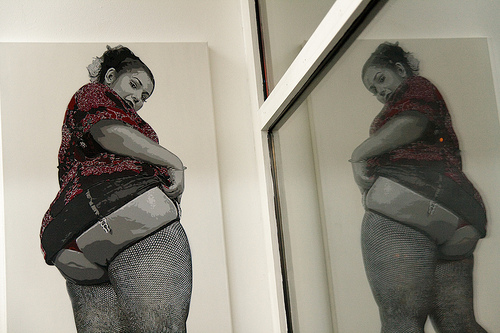
Photo of art by Czarnobyl by Flickr user urbanartcore.eu || CC 2.0

Photo of art by Czarnobyl by Flickr user urbanartcore.eu || CC 2.0

Since yesterday, although it seems longer, my RSS reader has been clogged with links to news reports about a UCSF study in which some women who lost weight found that their hot flashes diminished. Of course, that’s not what the headlines say. Here’s a sample of some of the titles of current stories about this study on Google news:

  • Hot Flash Relief: Weight Loss Works, What Doesn’t? (US News & World Report)
  • Bad hot flashes? Try dropping a few pounds (MSNBC.com)
  • Losing weight may ease menopause symptoms (NBC13.com)
  • Symptoms of Menopause Can Be Relieved by Weight Loss (Health News)
  • Weight Loss Helped Overweight And Obese Women Reduce Hot Flushes (Medical News Today)

OK, that’s enough – see the trend? Suddenly weight loss is the cure for hot flashes. But in the actual study – which was about urinary incontinence, not menopause -141 women provided researchers with data about their hot flash symptoms six months after the study began. Sixty-five of the 141 women said they were less bothered by their hot flashes six months after participating in the weight loss program, 53 reported no change, and 23 women reported a worsening of symptoms.

Look at those numbers again, more slowly this time: 65 of 141 women who participated in a weight loss program were less bothered by hot flashes after six months. That’s 46% of the women – less than half – who found relief. Almost as many reported no change in symptoms, so why is this being touted as a successful intervention?

Because the women lost weight. Most of the news reports of this research stop just short of fat-shaming, but I submit that is exactly why this study is getting so much media attention. Even though it is well-established that diets do not work, even if you call them a “lifestyle change” or “a whole new way of eating”, and that the BMI (Body Mass Index) is useless as a gauge of health. In fact, fat is not a measure of health. But why pass up an opportunity to shame women about their bodies?

Post to Twitter Post to Plurk Post to Yahoo Buzz Post to Delicious Post to Digg Post to Facebook Post to MySpace Post to Reddit Post to StumbleUpon

Readers should note that statements published in re: Cycling are those of individual authors and do not necessarily reflect the positions of the Society as a whole.