Blog of the Society for Menstrual Cycle Research

Ditch the Disposables

August 24th, 2010 by Elizabeth Kissling

The lovely ladies of LunaPads have made a sweet little video that explains why you should make the switch from paper products to cloth pads – in less than 90 seconds!

If you’ve already made the switch, this is an easy way to persuade your friends. You can email it, Tweet, share it on Facebook, heck, cue it up on your smartphone and show it to ‘em!

Post to Twitter Post to Plurk Post to Yahoo Buzz Post to Delicious Post to Digg Post to Facebook Post to MySpace Post to Reddit Post to StumbleUpon

Pill Protests – It’s About the Environment

May 25th, 2010 by Elizabeth Kissling
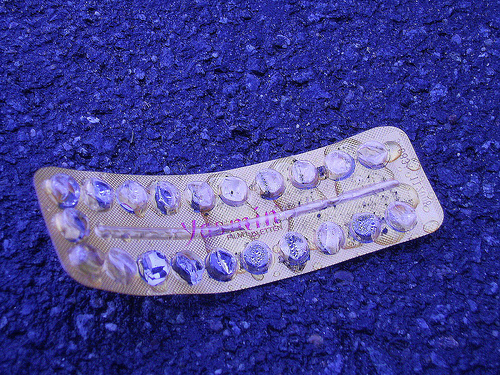
Empty birth control pill packet in the street

Photo by Gnarls Monkey // CC by 2.0

A whole bunch of anti-choice political organizations are co-sponsoring a national protest against birth control pills, but they say it’s not about killing babies or controlling women; it’s all about the environment!

The following is released by the American Life League and the following groups:

WHO: American Life League , Human Life International, Pro-Life Wisconsin, Pharmacists for Life International, Archdiocese of Mobile Respect Life, Operation Rescue, Jill Stanek, Generation Life/Brandi Swindell, Life Education Ministry, Pro-Life Unity, Movement for a Better America, AMEN (Abortion Must End Now), Pro-Life Action of Oregon, Children of God for Life, Expectant Mother Care/Chris Slattery, Mother and Unborn Baby Care, Defenders of the Unborn, California Right to Life Education Fund, Delaware Pro-Life Coalition, Life Guard, Homeschoolers for Life, Focus Pregnancy Center, Central Texas Voices for Life and Dubuque County Right to Life

WHAT: Protest the Pill Day 2010: The Pill Kills the Environment

This year, birth control advocates are celebrating 50 years of decriminalized hormonal contraceptives. American Life League and our co-sponsors don’t think half a century of contaminating our waterways is something to celebrate. Study after study has shown that hormonal estrogen in the water has severely damaged the ecosystem and our health.

Join American Life League and co-sponsors as they launch the largest nationwide protest against the birth control pill.

You know what, American Life League? ALL prescription drugs, not just birth control pills, contaminate our waterways, both through human excretion and production waste. And some of that “hormonal estrogen” is from the hormone supplements taken by middle-aged women. Are you protesting hormone “replacement” therapy, too?

[via Miriam at Feministing]

Post to Twitter Post to Plurk Post to Yahoo Buzz Post to Delicious Post to Digg Post to Facebook Post to MySpace Post to Reddit Post to StumbleUpon

Debating the Causes of Early Menarche

December 29th, 2009 by Elizabeth Kissling
Three of my young nieces.

Three of my young nieces, Labor Day Weekend 2009.

Janice Horowitiz’ “Dueling Docs” feature at Huffington Post today is about the issue of girls reaching puberty at increasingly earlier ages than previous generations. Both Dr. Alisan Goldfarb and Dr. Stephen Safe talk about endocrine disruptors such as BPA (bisphenol-A, a carcinogenic component of some plastics found in some baby bottles and water containers) and pesticides. Certainly both types of chemicals are likely to be a factor in early menarche, but I find it surprising that those are the only factors mentioned. There’s no discussion of the roles of psychosocial stressors, low birth weight, or formula feeding. Neither physician gives serious consideration to the endocrine disruptors that are the hormones used in raising beef and dairy cattle as well as chicken in this country; Dr. Safe acknowledges that “[a]lmost all foods have endocrine disruptors”, but qualifies that statement with, “particularly fruits and vegetables.” (Do you suppose the beef and dairy lobby advertise at Huffington Post?)

For a more thorough, nuanced analysis of this issue, see Sandra Steingraber’s report, The Falling Age of Puberty in U.S. Girls: What We Know, What We Need to Know, published in 2007 by the Breast Cancer Fund. Among other findings, Steingraber reports that new research has revealed that the amount of natural hormones a child’s body produces on its own is much lower than previously estimated; this means “safe levels” of exposure to synthetic hormones and endocrine disruptors must be recalibrated, and policy modified accordingly.

Post to Twitter Post to Plurk Post to Yahoo Buzz Post to Delicious Post to Digg Post to Facebook Post to MySpace Post to Reddit Post to StumbleUpon

Readers should note that statements published in re: Cycling are those of individual authors and do not necessarily reflect the positions of the Society as a whole.