Guest Post by Holly Grigg-Spall, freelance writer (“Sweetening the Pill“)
In the summer of this year, I was researching for a feature for Easy Living magazine on the potential side effects of the birth control pill and when searching for a news hook for the piece, I found out about the preparation of a NHS scheme which would allow oral contraceptives to be distributed from pharmacies without a prescription. At that time, all of the doctors I interviewed expressed concerns about this development, even the most conservative GPs who stubbornly dismissed my concerns about side effects.
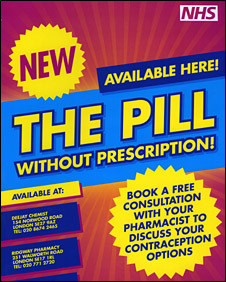
Then last week it hit British newspapers that this scheme had recently launched in the areas of London that have the highest rates of teenage pregnancy. Bold, bright posters in the style of laundry soap adverts exclaiming that the Pill is now available without prescription are up in pharmacy windows of Lambeth and Southwark. According to the news reports the pharmacists involved were given three weeks of training in order to provide consultations for young women looking to start taking oral contraceptives or wanting to move from the Pill to long acting methods like the injection, the implant or the hormonal IUS. The implication was also there that if young women came to the pharmacy for the emergency contraceptive pill then their consultation would involve the suggestion that they start on the Pill or a long-acting method.
The British government can’t seem to figure out how to handle their teenage pregnancy problem. They are looking for a quick, effective, wide-reaching fix that doesn’t cost much – certainly not as much as working with individual teenage girls to discuss their attitudes towards relationships and definitely not as much as providing holistic sex education that covers both the technical and emotional aspects. The NHS as a countrywide health service can be brilliant at organizing awareness campaigns – such as their quit smoking scheme – but providing the Pill without prescription is a step in the wrong direction.
Aside from the fact that this proposal will, without a doubt, devalue the Pill as a drug, a medication, and thus make it appear harmless, and therefore keep women ignorant of its potential impact on their health and wellbeing and prevent them from seeing the signs of side effects – any ‘consultations’ provided by pharmacists are very unlikely to be comprehensive or cautious. We already know how most doctors deal with doling out the Pill – many simply do not tell the truth about how it works, and do not talk about the potential problems it might cause, particularly in terms of mood and emotions.
The pharmacists have probably been told to check the teenagers weight and blood pressure on their first visit – but what about scheduling follow up appointments? Will the teenage girl go back every six months and check in with the pharmacist for another consultation? How many packets of the Pill will they be given to start? It can be assumed busy pharmacies aren’t going to want to have a constant round of check ups and would be more inclined to hand out Pills literally over-the-counter after an initial talk. This goes against even the loose policies presently in place for obtaining prescriptions. Women must return to their GP every three or six months to check for problems such as the increased blood pressure, migraines or breathing difficulties that might suggest a blood clot formation. Continue reading...