Blog of the Society for Menstrual Cycle Research

When Mirena Meets Mommybloggers

February 9th, 2010 by Elizabeth Kissling

Guest Post from Evil Slutopia

There are Tupperware parties, Passion Parties, Pampered Chef parties, and…Mirena IUD parties? Yes, apparently these events popped up early last year and were a joint effort from Bayer Pharmaceuticals and the mom marketing site Mom Central.

Here’s one mom blogger’s description of the Mirena party that she hosted:

Then tonight I hosted a party at my house with Mom Central. Mom Central had found me through this blog and asked me if I would be interested in hosting an event sponsored by Mirena. As I welcome any opportunity to sit down with some girlfriends with some free food and drink, I was happy to accept. Before the party started, I walked around nervously, terrified that only a couple of people would show up. We’re all so busy, and I worried that people would end up skipping a strange commercial-sounding event. But one by one, they rolled in and I began to relax.

We had an amazing evening, talking about sex, fashion, and living a simpler life. I realized that we don’t actually spend a lot of time talking about sex and relationships. We laughed a lot but also went home with some great tips.

Will HPV Screening Replace Pap Tests?

January 26th, 2010 by Elizabeth Kissling

Photo of two women in medical consult.Researchers in Italy have recently completed a study comparing the effectiveness of DNA testing for HPV (human papillomavirus) to the commonly used Pap smear for detecting cervical cancer. Their findings suggest that more cases of cervical cancer can be prevented with HPV testing than with the conventional Pap smear, especially for women over 35.

There are, however, some disadvantages to using DNA tests to detect HPV. For example, the test is less specific, which means that there are more false positives in the results. This means more women have to return for further testing. In practice, HPV screening has a callback rate of about 25-30%, compared to a callback rate of about 5-7% for Pap smears, according to Dr. Mark Einstein, a gynecologic oncologist and director of clinical research at Montefiore Medical Center in New York City.

Health News Review points out that although the HPV test is more effective in the sense that it prevents invasive cervical cancer by detecting persistent high-grade lesions earlier and providing a longer low-risk period for older women, replacing Pap smears with it is not necessarily more cost-effective for patients, given the costs of the additional colposcopies that result from the higher callback rate from HPV testing.


Post to Twitter Post to Plurk Post to Yahoo Buzz Post to Delicious Post to Digg Post to Facebook Post to MySpace Post to Reddit Post to StumbleUpon

SHE featured in Marie Claire

January 9th, 2010 by Elizabeth Kissling

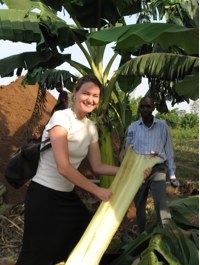
Elizabeth Scharpf working in RwandsWe’ve mentioned Elizabeth Scharpf’s SHE (Sustainable Health Enterprises) at re:Cycling before. In 2009, Scharpf won the inaugural Harvard Business School Social Entrepreneurship Fellowship for her project helping local women in developing countries “jump-start their own businesses to manufacture and distribute affordable, quality, and eco-friendly sanitary pads.” This is a truly innovative program, combining microloans with the use of local raw materials (instead of imported materials) to ensure affordability and accessibility – quite different than Proctor & Gamble’s “Protecting Futures” campaign of a few years ago.

Scharpf is currently working in Rwanda, helping local women set up business making sanitary pads out of banana tree trunks. Using banana tree trunks – a part of the plant that is normally trashed – means more use is made of an existing cash crop while the expense of importing raw materials is eliminated.

A brief story about Scharpf and her work is featured in the February 2010 issue of Marie Claire magazine. I’m glad to see this project getting more publicity. (Story is not yet online, but you can view a PDF here.) The article is online here.

Post to Twitter Post to Plurk Post to Yahoo Buzz Post to Delicious Post to Digg Post to Facebook Post to MySpace Post to Reddit Post to StumbleUpon

The Cosmetetical* Potential of Menstruation

December 18th, 2009 by Elizabeth Kissling

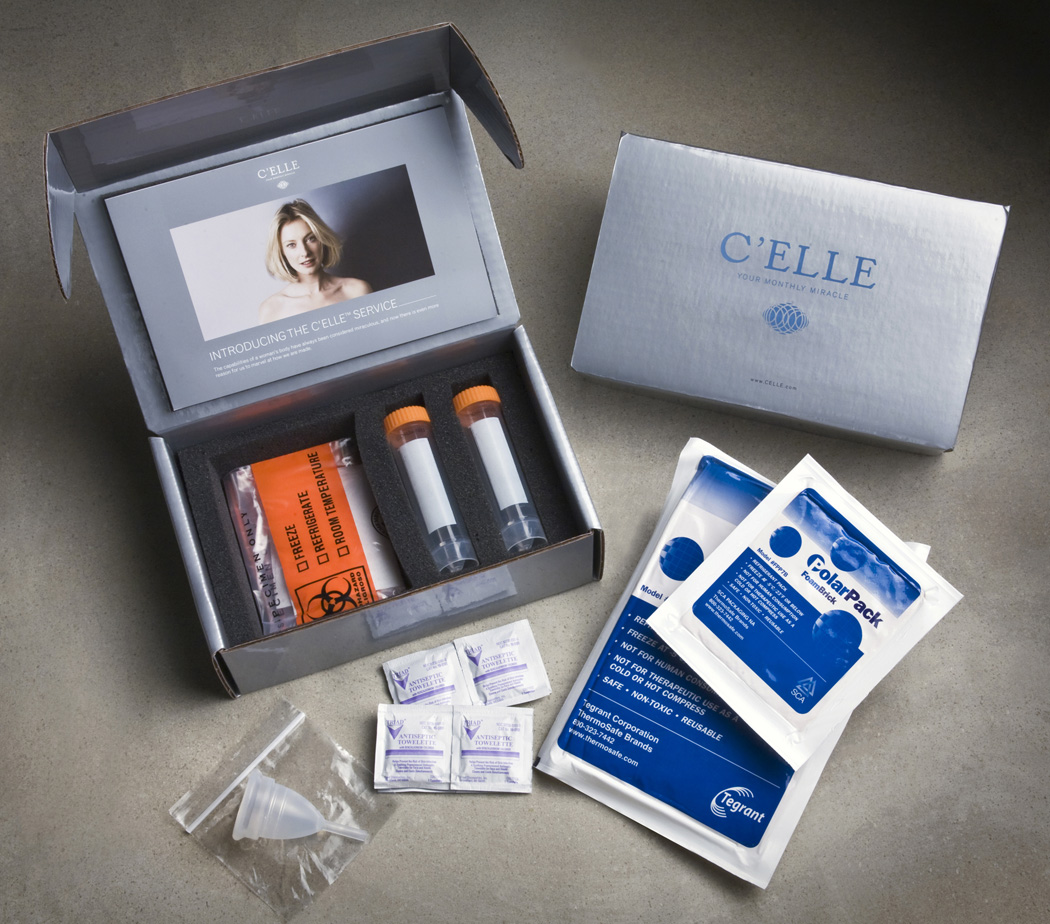
C'ELLE Collection Kit
*(I really did type “cosmetetical”. Readers under the age of 40 and/or outside the U.S. can find the origin of the term here.)

Guest Post by David Linton, Marymount Manhattan College

Here’s where exploitation and menstrual activism crash into each other.  While activists have been diligently working to reduce the “Ewww” factor so that women are not treated with disgust when (and because!) they menstruate, commercial interests have been just as diligently striving to find new ways to cash in on the period.

One of the newest gambits is found at an online beauty products site called M.S. Apothecary promoting a service that been around for a few years, C’ELLE®.  C’ELLE® offers to cryogenically freeze the stem cells found in menstrual blood for future use.  Originally the pitch for C’ELLE® focused mostly on the potential of stem cells to yield material that can be used to treat diseases, once medical science discovers a way to use them.  Meanwhile, the material is judiciously stored away in one’s “portfolio.”  The initial cost is described as a “special introductory rate for new clients” of $499, although the price hasn’t changed in more than a year.  Following the first year there is a yearly storage charge of $99 that is subject to later increases.

Marketing Menopause

December 13th, 2009 by Elizabeth Kissling

popupThere’s a pretty good essay in this weekend’s New York Times (online here Saturday, in print Sunday in the Business section) about how hard Big Pharma has worked to market menopause as an estrogen deficiency disease. In addition to discussion of Wyeth’s advertising campaigns, the article mentions the firm’s contract with DesignWrite, a company drug makers pay to develop manuscripts for publication in medical journals, to prepare at least 60 articles for publication in medical journals on the potential benefits of hormone therapy for cardiovascular disease, Alzheimer’s disease, diabetes, colon cancer, vision loss and other health problems.

The article also includes access to PDFs of some of the thousands of pages of documents from Wyeth that were requested by plaintiffs in the lawsuits against the drug manufacturer. (To date, more than 13,000 people have sued Wyeth claiming that they developed breast cancer and other health problems after taking the company’s menopausal hormone drugs. As we reported three weeks ago, in ten of the twelve verdicts so far, juries have awarded significant sums to plaintiffs. ) The documents available at the New York Times include a publication plan for Wyeth from DesignWrite, a 1995 product launch speech from Wyeth’s marketing director proclaiming the company’s mission of bringing to fruition Dr. Bernadine Healy’s vision of “a world in which the vast majority of women would begin taking HRT, and we know that means Prempro, at menopause and continue on for the rest of their lives.” There’s also this handwritten note from a 1996 meeting about how to respond to a new study raising breast cancer concerns (red markings added by me):

Women’s Health News: Cancer Genes, HPV Vaccine

December 11th, 2009 by Elizabeth Kissling

gardasilToday I want to point to two important articles about women’s health from our friends at Women’s eNews:

  1. Yesterday, they published a story about Myriad Genetics and their firm grasp on the patents for diagnostics tests for BRCA1 and BRCA2 genes, which are known to place women at high risk for breast and ovarian cancers. Until the patents expire in 2014 and 2015, its laboratory is the only place in the country where diagnostic testing for the BRCA genes can be performed. A lawsuit representing patients, women’s health groups, medical professionals and four organizations has been filed bythe American Civil Liberties Union, or ACLU, and the Public Patent Foundation.
  2. Today, Women’s eNews published a story about the need for more research on Gardasil, the HPV vaccine recommended for young women and recently approved for boys and young men too.

Post to Twitter Post to Plurk Post to Yahoo Buzz Post to Delicious Post to Digg Post to Facebook Post to MySpace Post to Reddit Post to StumbleUpon

Girls, Periods, and Missing School II: Breaking the Silence

November 1st, 2009 by Elizabeth Kissling

In Rwanda, Harvard Business School Fellow Elizabeth Scharpf is breaking menstrual silence and challenging female poverty with the Sustainable Health Enterprises (SHE) program. SHE helps local women in developing countries “jump-start their own businesses to manufacture and distribute affordable, quality, and eco-friendly sanitary pads.” This truly innovative program combines microloans with the use of local raw materials (instead of imported materials) to ensure affordability and accessibility.

In our previous post on this topic, Chris theorized, not unreasonably, that cramps and menstrual silence play at least as big a role as lack of menstrual products in keeping girls out of school in developing nations.

Both factors are likely at play, to varying degrees depending on the locale. The Forum of African Women Educationalists (FAWE) recently reported that in Uganda, lack of menstrual supplies coupled with inadequate latrine facilities for girls seriously impacts the education of girls ages 11-13.

Despite tax waivers introduced to reduce the cost of sanitary pads, finding money to buy them each month is a challenge for many grown women, never mind pre-teen girls.

A packet of sanitary pads costs the equivalent of $1.50 in Uganda – for the same amount you could get a kilo of sugar for the whole household. Girls whose parents can’t afford to give them the money improvise with strips of toilet paper or old cloth.   [. . . .]

As Chris suggested in her post, the solution is about communication as much as it is about resources; FAWE found this to be true among the girls they studied in Uganda. The silences and taboos around menstruation make it difficult for girls to ask their parents for money to buy pads. FAWE has launched a campaign to de-stigmatise menstruation through educating girls. They’ve started a “girl education movement”, organizing clubs in schools, and teaching girls that menstruation is is a normal occurrence, nothing to be scared of or ashamed of.

You can’t ask for help if you can’t talk about it.

Post to Twitter Post to Plurk Post to Yahoo Buzz Post to Delicious Post to Digg Post to Facebook Post to MySpace Post to Reddit Post to StumbleUpon

Dia de los Muertos Cloth Menstrual Pads

October 29th, 2009 by Elizabeth Kissling

diamuertas_padsFor your seasonal pleasure, I bring you cloth menstrual pads decorated with Dia de los Muertos motifs (with thanks to Lisa, one of my Women’s & Gender Studies alumnae). These handmade pads are available at Etsy (of course!), either individually or as a set with several different sizes for your menstruating convenience.

Soft flannel or terrycloth pads are far more comfortable than paper, as well as more economical and better for the environment. If you’re going to use cloth pads, you may as well have some fun with them! CherryRiot, the Etsy seller who makes these beauties, also offers mentrual pads with tattoo themes, cherry blossoms, and other designs, as well as plain red.

Post to Twitter Post to Plurk Post to Yahoo Buzz Post to Delicious Post to Digg Post to Facebook Post to MySpace Post to Reddit Post to StumbleUpon

Putting the ‘Men’ in Menstruation

October 8th, 2009 by Elizabeth Kissling

Guest Post by David Linton, Marymount Manhattan College

pms_buddyA lot of ideas get hatched in a bar over drinks with friends. Most don’t make it past the sober morning after.  But a conversation in a Denver bistro in 2008 led to the creation of a new Internet service that aims to address Rodney King’s eternal question, “Can’t we all just get along?”  In this case the “getting along” applies to men and women who feel afflicted by the scourge of Pre-Menstrual Syndrome – PMS – and its presumed negative impact on otherwise harmonious relationships.

Despite the sound research and persuasive arguments of writers such as Carol Tavris (The Mismeasure of Woman), Anne Fausto-Sterling (Myths of Gender), Joan C. Chrisler (Charting a New Course for Feminist Psychology) and Paula Caplan (Fighting the Pathologizing of PMS), to name just a few who have labored to dispel the pernicious misconceptions and stigma surrounding the menstrual cycle, stereotypes and myths have been tenacious.  Thus, in the digital age it was probably inevitable that PMS Lore would find new outlets for dissemination.  Which brings us back to Denver.

BBF: Best Bones Forever

September 3rd, 2009 by Elizabeth Kissling

DotgirlDot Girl™ First Period Products, a retailer of first menstrual period kits for pre-teen girls, announced today that they are partnering with Best Bones Forever!, a national campaign led by the U.S. Department of Health and Human Services’ Office on Women’s Health.

It’s hard to get cranky about a federal program that seems to consist mostly of PSAs about good health habits for girls, but a couple of things about this particular campaign make my SpideySense tingle:

  1. The press release about this new partnership states that Dot Girl™ is based in Seattle and was founded by sisters Terri Goodwin and Kathy Pickus with the intent to help parents manage the often difficult conversation about menstruation with their prepubescent daughters. The sisters’ products also “create empowered young women who have a positive first period experience.” But a closer look at the contents of the Dot Girl’s First Period Kit suggests a close relationship with Kimberly-Clark: it contains two Kotex products and coupons for discounted purchase of other Kotex products. I also note that the name and logo of the company, Dot Girl, evokes the red dot used in Kotex commercials and logos. Kotex received a lot of kudos when their Red Dot campaign was first launched in 2000, for its playfulness and for being the first advertising campaign in the U.S. to use the word “period”.
  2. The Kit also contains a sample package of “Scensibles™”, labeled “scented bags for clean, easy, discreet disposal of feminine care products” and a package of hand wipes. I suppose these are included because periods are so smelly and dirty; apparently empowerful young women need to be very clean. In the U.S., it is not unusual for key developmental moments such as menarche to be marked by increased consumer behavior but it still rubs me the wrong way that an organization purportedly focused on helping girls and their parents with this transition tries to do so by selling stuff – especially unnecessary stuff with shaming implications.
  3. I also note that all the material about how to develop and maintain healthy bones makes no mention of the link between bone health and menstruation. With each ovulatory cycle, the ovary secretes progesterone, which stimulates the production of osteoblasts. Osteoblasts are cells that build new bone. If menstruation is irregular or suppressed with cycle-stopping contraceptives (which work by suppressing ovulation), bone health can be negatively affected.

Post to Twitter Post to Plurk Post to Yahoo Buzz Post to Delicious Post to Digg Post to Facebook Post to MySpace Post to Reddit Post to StumbleUpon

Menstrual Cycle and Competitive Bidding

August 18th, 2009 by Elizabeth Kissling

This is an interesting study, in a “Whoa! Somebody actually thought to do a study of that” kind of way. And that’s saying something, coming from someone who studies discourses of menstruation. Two economists designed a study to try to demonstrate that women bid differently in auctions depending on the phase of their menstrual cycle. They found that women bid significantly higher than men in their menstrual and premenstrual phases, but do not bid significantly differently in other phases of the menstrual cycle. They extrapolate from this that women are greater risk-takers during the fertile phase of their cycle.

The detailed statistical modeling and analysis is beyond my expertise as a humanities scholar, but I find the underlying premises of the study and its conclusions problematic. First, they assess which phase of her cycle their research participants are in by self-report and the assumption of a 28-day cycle: “We distinguish the menstrual phase (days 1 to 5), the follicular phase (days 6 to 13), the peri-ovulatory phase (days 14 to 15), the luteal phase (days 16 to 23), and the premenstrual phase (days 24 to 28).” As my colleagues at CeMCOR will tell you, one cannot assess ovulation merely from self-report of date of last menstrual period and projected date of next period. Regular menstruation ≠ ovulation. And pretty much any menstruator can tell you that the average 28-day cycle is just that, an average. The researchers also noted that 15% of their participants used hormonal birth control, but

Readers should note that statements published in re: Cycling are those of individual authors and do not necessarily reflect the positions of the Society as a whole.