Blog of the Society for Menstrual Cycle Research

The pill, reduced period pain and the ongoing delusion

January 20th, 2012 by Laura Wershler

Is there a woman over the age of 18 anywhere who doesn’t know that taking the birth control pill can make her periods lighter and less painful? Most women know this, but not many know why. The news stories swirling around a new study about the pill and period pain will not enlighten them.

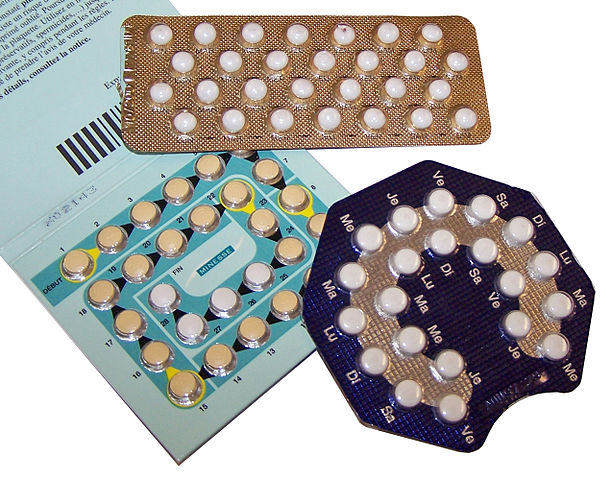
Photo credit: Ceridwen, Creative Commons 2.0

A 30-year longitudinal Swedish study has finally proved the worth of what is accepted practice in North America and Europe: the prescribing of combined oral contraceptives (COCs), or birth control pills with synthetic estrogen and progestin, to treat painful periods known clinically as dysmenorrhea.

Of course, pharmaceutical companies that manufacture COCs are probably eager for this research, as prescribing the pill for dysmenorrhea is still an off-label use in the U.S. (unlicensed use in the U.K.). Pill manufacturers may be able to use this finding to lobby the FDA (or equivalent agencies in other nations) to approve the pill as treatment for menstrual pain, leading to increased sales and insurance coverage. Perhaps that’s why news media have been treating this discovery as breaking news.

Take this headline: Yes, the Pill CAN ease the agony of period pain: Scientists confirm what millions of women already know, or this one: The pill ‘does ease period pain’, or this one: Combination oral contraception pills cut menstruation pain, or, really, any of these.

You can read the abstract of the study by Swedish researchers Ingela Lindh, Agneta Andersson Ellström and Ian Milsom, published this week in the journal Human Reproduction, here: The effect of combined oral contraceptives and age on dysmenorrhoea: an epidemiological study. The conclusions are simple: “COC use and increasing age, independent of each other, reduced the severity of dysmenorrhoea. COC use reduced the severity of dysmenorrhea more than increasing age and childbirth.”

Forget the age factor for the purposes of this discussion. The fact that COC use reduces the severity of dysmenorrhea is not astounding. This is old news. So says Dr. Steven Goldstein, an obstetrician/gynecologist at NYU Langone Medical Center in New York City, quoted in a USA Today story:

“The study results are not surprising. It’s gratifying to see researchers documenting scientifically what practitioners have been seeing for a very long time. The amount of discomfort from a woman’s period with a combination birth control pill is a fraction of what it is without the Pill. There is a diminution of pain from the Pill.”

What is astounding is what Dr. Goldstein, and other OBGYNs, didn’t say in responding to the study. That the reason the pill reduces menstrual pain is because the synthetic hormones in the pill shut down a woman’s own menstrual cycle. The “period” women experience when on the pill is technically known as a “withdrawal bleed,” brought on by seven days of placebo pills. While it feels like a period to menstruators, it is not the same physiologically as the period they experience when NOT on the pill. That’s why it doesn’t hurt as much.

The point is, the pill is too often credited with regulating the menstrual cycle. It does no such thing. The pill does not regulate any woman’s menstrual cycle; it supercedes it. This research, and the many news stories that reported it, once again ascribe power to the pill – this time the power to cut menstrual pain. This is an incomplete truth.

Post to Twitter Post to Plurk Post to Yahoo Buzz Post to Delicious Post to Digg Post to Facebook Post to MySpace Post to Reddit Post to StumbleUpon

Painful Periods as Predictor of Endometriosis?

November 29th, 2010 by Elizabeth Kissling

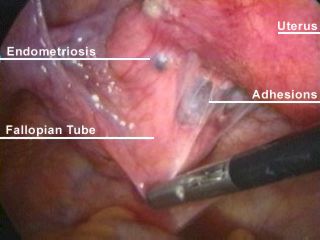
endometriosis_and_adhesionA cross-sectional study published in the November, 2010, issue of Fertility and Sterility reports that very painful menstrual periods during the teen years (that is, period pain so severe that girls miss school) may be predictive of an increased risk of developing deep infiltrating endometriosis (DIE), the most extensive form of endometriosis.

In a study of 229 women undergoing surgery for endometriosis, French researchers found that those with the most extensive form — known as deep infiltrating endometriosis (DIE) — were more likely to have had particularly painful periods as teenagers.

As a group, they were four times as likely as women with non-DIE endometriosis to have used birth control pills to treat severe menstrual pain before the age of 18. And they were 70 percent more likely to say they’d missed school days because of menstrual symptoms.

Although these findings may help women receive a diagnosis of endometriosis sooner,* it is unclear whether progression to DIE (what an unfortunate acronym!) can be prevented. And there is no real cure for endometriosis.

*As we reported previously in writing about Kate Seear’s research about the diagnostic delay in treating endometriosis, the delay is non-trivial: research estimates an average delay of 8 years in the UK and 11 years in the US.

Post to Twitter Post to Plurk Post to Yahoo Buzz Post to Delicious Post to Digg Post to Facebook Post to MySpace Post to Reddit Post to StumbleUpon

Social Effects of Menstrual Pain for Turkish Teens

September 10th, 2010 by Elizabeth Kissling
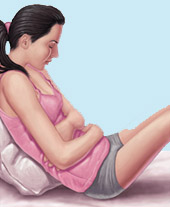
Illustration via sexualityandu.ca

Illustration via sexualityandu.ca

A new study published in the Journal of Pediatric Adolescent Gynecology reports on a study of how dysmenorrhea affects girls’ relationships with families and friends and school performance for girls in Turkey. Previously, we reported on research documenting that menstrual pain is the norm for adolescents; this study represents a next step by looking at the effects of that pain. 1951 girls from 26 high schools completed surveys assessing the level and the nature of menstrual pain they experienced and answered questions about how their pain affected their school work and relationships.

Unsurprisingly, more than half of the girls surveyed reported that dysmenorrhea does affect their ability to perform well at school, with 50% of the girls reporting “lack of focus on the content of the courses” and 26.9% reporting “not being able to answer the questions in exams despite having the knowledge”.  A staggering 77.3% report “having problems with their families” when they are experiencing menstrual pain.

Post to Twitter Post to Plurk Post to Yahoo Buzz Post to Delicious Post to Digg Post to Facebook Post to MySpace Post to Reddit Post to StumbleUpon

Exercise for dysmenorrhea?

July 26th, 2010 by Elizabeth Kissling

Women have long been advised that exercise is among the best pain relievers for painful periods. But a new Cochrane Review (also published in July, 2010, issue of Obstetrics & Gynecology) indicates that research confirming that advice is inconclusive.

Yet, the data on exercise and dysmenorrhea are quite limited, and only one clinical trial met review standards. The main outcome measure was the change in The MOOS Menstrual Distress Questionnaire (MDQ) after three cycles of treatment. The MDQ is commonly used in menstrual cycle research (and also commonly criticized). Exercise was found to improve MDQ scores within three cycles. This Cochrane review offers some preliminary, although not robust, evidence for the effectiveness of exercise in the treatment of dysmenorrhea.

So if exercise helps your period pain, keep it up!

Post to Twitter Post to Plurk Post to Yahoo Buzz Post to Delicious Post to Digg Post to Facebook Post to MySpace Post to Reddit Post to StumbleUpon

That Which Does Not Kill Me Makes Me Stronger

March 24th, 2010 by Elizabeth Kissling

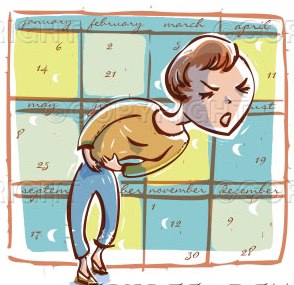
Cartoon of women with cramps

London newspaper The Telegraph reports on the development of a new medical treatment for dysmenorrhea, or painful periods. The article contains very little information about the new pill — most of the article describes the variety of misery some women experience with menstruation. The only information about the new medication is that the drug blocks vasopressin, a hormone involved in regulating uterine contractions and thus a cause of menstrual cramping.

But I was struck by this sentence in the second paragraph:

But now [women with painful periods] might no longer have to soldier on stoically after researchers have developed a pill which could put an end to the root cause of their discomfort.

See that? Women with cramps aren’t whiners or crybabies or just making excuses. They’re hard-working troupers who soldier on stoically despite being miserable.

Post to Twitter Post to Plurk Post to Yahoo Buzz Post to Delicious Post to Digg Post to Facebook Post to MySpace Post to Reddit Post to StumbleUpon

The cure for all things menstrual?

December 24th, 2009 by Chris Hitchcock

A recent press release from the American College of Obstetricians and Gynecologists announces that Hormonal Contraceptives Offer Benefits Beyond Pregnancy Prevention. This is in the same vein as similar articles published over the years about “non-contraceptive benefits of the pill” – a laundry list of the many benefits women may obtain by using hormonal contraception. It’s not clear how they should be used by practicing obgyn’s. One use is certainly as additional talking points to convince women who are cautious or reluctant to replace their body’s own menstrual physiology with a pharmaceutical product.

I haven’t been able to read the full document (for some reason my university access seems to only find the first page of the full document), but it appears that, like previous reviews I have read, it is a biased list, including benefits but not risks. Perhaps what is most in common is the sense that a spontaneous menstrual cycle is somehow suspect, that fluctuations over time are unnatural, and that pharmaceutical control is a good solution.

I can understand why the pharmaceutical industry might want to publish a long list of off-label uses (although they would be quickly stopped by the US’s FDA and regulatory bodies in other countries). But it is a curious thing to find a professional group extolling the many off-label benefits of a class of pharmaceutical drugs. Do cardiologists publish practice bulletins about the non-cardiovascular benefits of statins?

There are other perspectives about how one might treat painful periods or heavy menstrual flow. The published Cochrane Reviews (well-respected summaries of published studies) about cramps suggest that the evidence for non-steroidal anti-inflammatories (NSAIDS, such as ibuprofen) is more solid and clear than that for combined oral contraceptives, and that, to date, no studies have compared them head-to-head. Moreover, NSAIDs also have been shown to reduce menstrual flow.

The press release notes the protective effects against endometrial, ovarian and colorectal cancer, but fails to note the increased risk of sexually transmitted infections. Being on the pill is the most important risk factor for not using condoms.

And when absent or long periods occur, inducing regular and predictable flow will reduce the risk of endometrial cancer, but otherwise primarily serves to mask the underlying issue. In that case, going on the pill can be like hitting snooze on your smoke alarm.


Post to Twitter Post to Plurk Post to Yahoo Buzz Post to Delicious Post to Digg Post to Facebook Post to MySpace Post to Reddit Post to StumbleUpon

Readers should note that statements published in re: Cycling are those of individual authors and do not necessarily reflect the positions of the Society as a whole.