Blog of the Society for Menstrual Cycle Research

Riddle me this: What’s wrong with birth control?

April 20th, 2010 by Laura Wershler

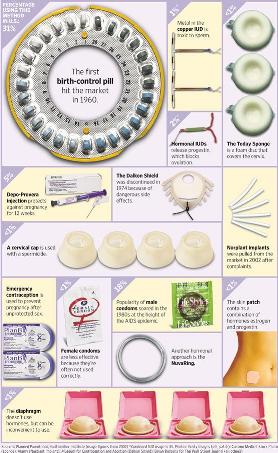
I read The Birth-Control Riddle by Melinda Beck, published today in The Wall Street Journal with interest and frustration.  As a veteran pro-choice sexual and reproductive health advocate, I’ve spent decades contemplating this ”riddle”. I have two specific comments in response to the piece, and a few suggestions for potential follow-up stories.
       birthcontrolmethods                                                                                                                                      
 1) I find it discouraging, but understandable, that the article failed even to mention fertility awareness based methods (FABM) of birth control, which when taught so that women/couples can use the method effectively and confidently have a 99.4% effectiveness rate. Don’t take my word for it. The German study called: The effectiveness of a fertility awareness based methods to avoid pregnancy in relation to a couple’s sexual behaviour during the fertile time: a prospective longitudinal study was published in the prestigious journal Human Reproduction in late 2007. 

In addition to the typical North American dismissiveness (by healthcare providers) of FABM as ineffective, is the dismissive response given to North American women who express an interest in learning FABM.  A quick google search or a week’s hits on a google news alert for “Fertility Awareness” (the secular, pro-choice variation of the religiously contextualized Natural Family Planning) quickly establishes the burgeoning interest and use of these methods by young American women. Why is this so readily ignored by the mainstream sexual and reproductive health community (of which I am a part)? I have been mulling over this question for years. I have arrived at several answers. How I would love to see a journalist, any journalist, start asking this question.

 2) My second comment is that this article is a missed opportunity. It is useless merely to list (yet again) the birth control “choices” available to women, as if just knowing about these methods of contraception should make the problem of unintended pregnancy go away. Of one thing we can all be certain: it can’t and it won’t. What this piece lacks is any attempt to explore in depth the writer’s accurate but unexamined statement – Why are the numbers so high? The answer is a complex tangle of cultural, religious, behavioral, educational and economic factors.  Why not make an effort to get to the bottom of the so-called birth control riddle?  

Should Beck be interested in continuing to write about this issue, one angle she might consider exploring is barriers to access to information, support and services for women seeking to use non-hormonal methods of birth control effectively and confidently, including diaphragms, cervical caps and fertility awareness based methods. This is a huge issue of concern to me and the many women who can’t, won’t or don’t want to use hormonal birth control.

I have a theory that a good number of unintended pregnancies happen because women are finding little or no support to access and effectively use non-hormonal methods. Yet this lack of support is not enough to keep them on the pill, patch or ring, or to agree to submit to invasive shots or implants.  Therefore, care providers’ dismissal of young women’s requests for non-hormonal methods may actually be the cause of some of the unintended pregnancies we seem to be so puzzled by. Another issue not being talked about is that some women are getting pregnant while using the pill, patch or ring. These unintended pregnancies, which oddly don’t seem to pull down the “typical use” effectiveness rate of these methods, is partly behind the growing interest in IUDs.  The other reason IUDs are growing in popularity is backlash against traditional hormonal methods.

Contraceptive Injections Increase Risk of Bone Loss

December 27th, 2009 by Elizabeth Kissling

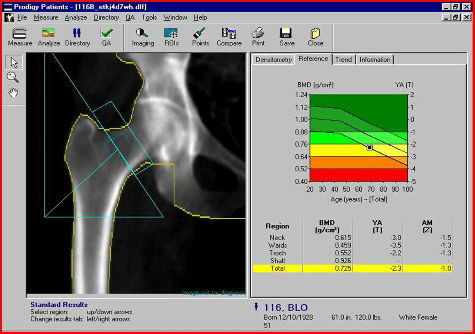
DEXA scan of femur.New research from the University of Texas Medical Branch at Galveston finds that nearly half of women using depot medroxyprogesterone acetate (DMPA), commonly known as the birth control shot, will experience high bone mineral density (BMD) loss in the hip or lower spine within two years of beginning the contraceptive. Women who smoke, have inadequate calcium intake, and have never given birth are at higher risk of BMD loss.

The study, published in the January 2010 issue of Obstetrics and Gynecology, followed 95 DMPA users for two years. In that time, 45 women had at least five percent BMD loss in the lower back or hip. A total of 50 women had less than five percent bone loss at both sites during the same period. The researchers followed 27 of the women for an additional year and found that those who experienced significant BMD loss in the first two years continued to lose bone mass.

“These losses, especially among women using DMPA for many years, are likely to take an extended period of time to reverse,” says first author Dr. Mahburbur Rahman, assistant professor in the department of obstetrics and gynecology and Center for Interdisciplinary Research in Women’s Health.

The researchers note that while this study will help physicians counsel women with modifiable risk factors who wish to use DMPA, prevention of bone loss while using the contraceptive and reversibility of BMD loss are still not well understood and further research is needed.

DMPA, an injected contraceptive given every three months, is used by more than two million women in the U.S.; nearly one-quarter of them teens. DMPA is popular with young women because it is less expensive than many other forms of birth control, has a low failure rate, and does not require daily use.

[Via Red Tent Sisters]

Post to Twitter Post to Plurk Post to Yahoo Buzz Post to Delicious Post to Digg Post to Facebook Post to MySpace Post to Reddit Post to StumbleUpon

What is the future of YAZ?

September 26th, 2009 by Elizabeth Kissling

The popular birth control pill, Yaz is in the news again. Readers may remember that last autumn, Bayer (the maker of Yaz) was sanctioned by the FDA for their television commercials, “because they encourage use of Yaz in circumstances other than those in which the drug has been approved, over-promise the benefits and minimize the risks associated with Yaz.” The FDA actually required Bayer not only to end the advertising campaign immediately but to make amends by publicizing corrective information — an unusually bold move from the FDA. That led to the ad shown at right.

Bayer was cited by the FDA again earlier this year, for failure to follow proper quality control in the plant that manufactures the synthetic hormones used in Yaz.

Bayer is now defending itself against 74 lawsuits filed by users who developed health problems, such as blood clots or heart attacks. Bayer is taking the FDA citations seriously and plans to “defend itself vigorously against the suits.” Dr. David A. Grimes, a clinical professor of obstetrics and gynecology at the University of North Carolina medical school and paid consultant to Bayer says the risk of injury from Yaz is tiny. “My dictum is that a multiple of a rare event is still a rare event,” says Grimes. And the New York Times seems far more concerned with how the FDA citations and the lawsuits will affect Yaz’ image and sales than they are with women’s health.

Didn’t these people learn anything from the saga of the Dalkon Shield?

October 2, 2009

Edited to Add: The New York Times report neglected to mention that Swissmedic is investigating the death of a young woman from the effects of pulmonary embolism that may be linked to her use of Yaz.

Post to Twitter Post to Plurk Post to Yahoo Buzz Post to Delicious Post to Digg Post to Facebook Post to MySpace Post to Reddit Post to StumbleUpon

Readers should note that statements published in re: Cycling are those of individual authors and do not necessarily reflect the positions of the Society as a whole.