Blog of the Society for Menstrual Cycle Research

Newsflash: Women threaten men

February 22nd, 2011 by Chris Hitchcock

The NYT article title reads The threatening scent of fertile women. I’ve felt it for years, and I still haven’t quite figured out why I react this way to this kind of article. Certainly it echos the age-old misogynistic discomfort of learned men for their own sexual urges, projected onto women. I’m trained in evolutionary biology, I believe that humans, like other animals, are subject to natural selection, and I believe that there are things that affect our behaviour that are not processed by our consciousness. But, for some reason, I feel a visceral reaction when I read discussions about the sex-related behaviours of women and men around ovulation.

Some of it is that I’m still annoyed that Nancy Burley’s American Naturalist article has been pretty much ignored. Yes, it’s well cited, but the fundamental conclusions seem to have been lost. In 1979, Burley proposed that so-called “concealed ovulation” is a mystery not just because it is concealed from men, but because it is also concealed from the ovulating woman. And she argued that the leading male-centred hypotheses did not account for this. Burley proposed that ovulation is unmarked because humans are smart and can count, and if they had a choice, many women would choose not to go through childbirth, or do so less often. She argued that natural selection acted to make it harder for women to know when to abstain from sex to avoid pregnancy. In other words, maybe concealed ovulation is not all about men, maybe it’s all about smart women.

Post to Twitter Post to Plurk Post to Yahoo Buzz Post to Delicious Post to Digg Post to Facebook Post to MySpace Post to Reddit Post to StumbleUpon

New Technology, Same Mistakes

July 22nd, 2010 by Elizabeth Kissling

Screen shot from iOvulation appWe’ve written previously about some of the apps for tracking menstruation and PMS, but this new iPhone/Pad app for tracking ovulation is problematic.

iOvulation is an application that calculates the time of ovulation and generates your personal fertility calendar. Simply enter the length of your menstrual cycle and the date of your last period, and iOvulation will calculate your fertile days.

The web site suggests it useful both for trying to conceive and for trying to prevent conception. However, I wouldn’t recommend the latter, as its algorithm appears to predict ovulation based on dates of menstruation: “The ovulation dates are calculated based on normal menstruation calculation logic for women having regular periods.”

In other words, it perpetuates what Toni Weschler, author of Taking Charge of Your Fertility: The Definitive Guide to Natural Birth Control, Pregnancy Achievement and Reproductive Health and Cycle Savvy: The Smart Teen’s Guide to the Mysteries of Her Body, labeled the two biggest myths about menstruation in this interview with Scarleteen: (1) the idea that ovulation occurs on Day 14, and (2) A normal menstrual cycle is 28 days.

Also of interest is how squeamish the creators appear to be about sex and reproduction: the web site refers to “unprotected i*********e” and notes that the probability of conception is calculated “based on your ovulation time and other factors such as lifespan of the egg and s***m”. (For those of you unaccustomed to the practice of concealing obscenity with asterisks, that’s “intercourse” and “sperm”.)

As someone who studies and teaches sociolinguistics and writes about menstruation, I’ve seen a lot of euphemistic language over the years. But marking intercourse and sperm as unfit for print is a first.

Post to Twitter Post to Plurk Post to Yahoo Buzz Post to Delicious Post to Digg Post to Facebook Post to MySpace Post to Reddit Post to StumbleUpon

Teens Using the Rhythm Method? It’s Time for Body Literacy

June 8th, 2010 by Laura Wershler

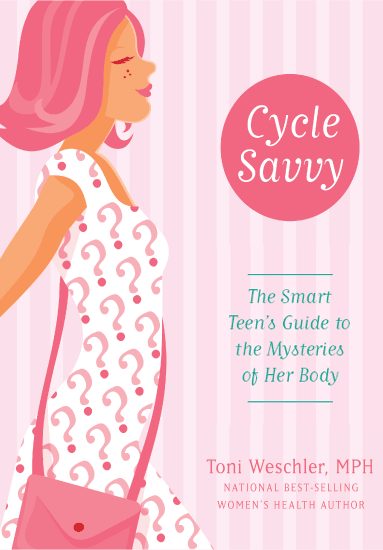
Cycle SavvyTeen sex: More use rhythm method for birth control.

It was an odd headline for an Associated Press story on the 86 page report on teen sexual activity just released by the Centre for Disease Control and Prevention. Not all that relevant to the broader subject of the study on which the report is based: Teenagers in the United States: Sexual Activity, Contraceptive Use, and Childbearing, National Survey of Family Growth 2006-2008. If you’re interested, it is a fascinating read.

But it was the headline and this excerpt from the story that caught my attention:

About 17 percent of sexually experienced teen girls say they had used the rhythm method – timing their sex to avoid fertile days to prevent getting pregnant. That’s up from 11 percent in 2002.

They may have been using another form of birth control at the same time. But the increase is considered worrisome because the rhythm method doesn’t work about 25 percent of the time, said Joyce Abma, the report’s lead author. She’s a social scientist at the CDC’s National Center for Health Statistics.

You can’t study what you don’t understand. The study authors demonstrate their lack of knowledge about natural birth control methods by the question they asked study participants:  Have you ever used rhythm or safe period by calendar to prevent pregnancy?

There are many brands of natural birth control. Some , like the Rhythm and Calendar methods, are not effective. No proponent of Natural Family Planning (NFP) or Fertility Awareness Based Methods (FABM), which have effectiveness rates as high as 99.4 percent, would recommend them.  Yet this study does nothing to differentiate between these methods of natural birth control, thereby confusing the public, the study results and themselves.

It’s high time researchers studied up on natural birth control methods if they want to include questions about them in a study on the contraceptive practices of teens or adults.

Until they do, I suggest anyone interested in the sexual and reproductive health of teen girls start buying copies of Cycle Savvy: The Smart Teen’s Guide to the Mysteries of Her Body.  This book can help our daughters acquire the life skill of body literacy – to understand the mysteries of their menstrual cycles and how this knowledge can serve them well as they make decisions about their sexual and reproductive health and lives.


Post to Twitter Post to Plurk Post to Yahoo Buzz Post to Delicious Post to Digg Post to Facebook Post to MySpace Post to Reddit Post to StumbleUpon

Riddle me this: What’s wrong with birth control?

April 20th, 2010 by Laura Wershler

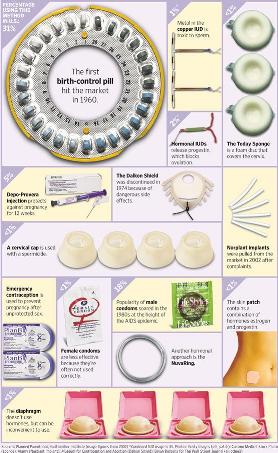
I read The Birth-Control Riddle by Melinda Beck, published today in The Wall Street Journal with interest and frustration.  As a veteran pro-choice sexual and reproductive health advocate, I’ve spent decades contemplating this ”riddle”. I have two specific comments in response to the piece, and a few suggestions for potential follow-up stories.
       birthcontrolmethods                                                                                                                                      
 1) I find it discouraging, but understandable, that the article failed even to mention fertility awareness based methods (FABM) of birth control, which when taught so that women/couples can use the method effectively and confidently have a 99.4% effectiveness rate. Don’t take my word for it. The German study called: The effectiveness of a fertility awareness based methods to avoid pregnancy in relation to a couple’s sexual behaviour during the fertile time: a prospective longitudinal study was published in the prestigious journal Human Reproduction in late 2007. 

In addition to the typical North American dismissiveness (by healthcare providers) of FABM as ineffective, is the dismissive response given to North American women who express an interest in learning FABM.  A quick google search or a week’s hits on a google news alert for “Fertility Awareness” (the secular, pro-choice variation of the religiously contextualized Natural Family Planning) quickly establishes the burgeoning interest and use of these methods by young American women. Why is this so readily ignored by the mainstream sexual and reproductive health community (of which I am a part)? I have been mulling over this question for years. I have arrived at several answers. How I would love to see a journalist, any journalist, start asking this question.

 2) My second comment is that this article is a missed opportunity. It is useless merely to list (yet again) the birth control “choices” available to women, as if just knowing about these methods of contraception should make the problem of unintended pregnancy go away. Of one thing we can all be certain: it can’t and it won’t. What this piece lacks is any attempt to explore in depth the writer’s accurate but unexamined statement – Why are the numbers so high? The answer is a complex tangle of cultural, religious, behavioral, educational and economic factors.  Why not make an effort to get to the bottom of the so-called birth control riddle?  

Should Beck be interested in continuing to write about this issue, one angle she might consider exploring is barriers to access to information, support and services for women seeking to use non-hormonal methods of birth control effectively and confidently, including diaphragms, cervical caps and fertility awareness based methods. This is a huge issue of concern to me and the many women who can’t, won’t or don’t want to use hormonal birth control.

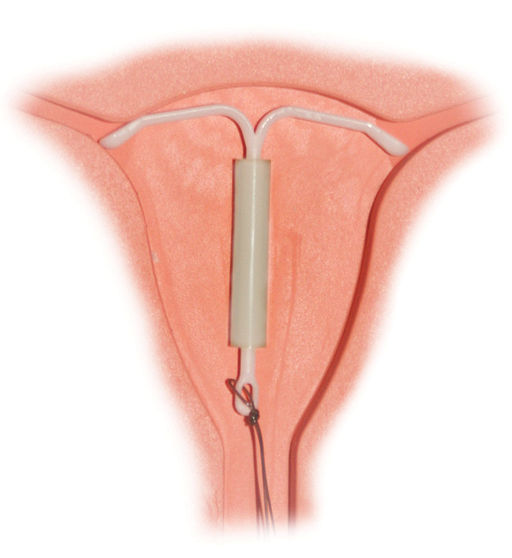
I have a theory that a good number of unintended pregnancies happen because women are finding little or no support to access and effectively use non-hormonal methods. Yet this lack of support is not enough to keep them on the pill, patch or ring, or to agree to submit to invasive shots or implants.  Therefore, care providers’ dismissal of young women’s requests for non-hormonal methods may actually be the cause of some of the unintended pregnancies we seem to be so puzzled by. Another issue not being talked about is that some women are getting pregnant while using the pill, patch or ring. These unintended pregnancies, which oddly don’t seem to pull down the “typical use” effectiveness rate of these methods, is partly behind the growing interest in IUDs.  The other reason IUDs are growing in popularity is backlash against traditional hormonal methods.

Does your birth control method stop your cycle?

April 20th, 2010 by Chris Hitchcock

It’s starting. With the approaching 50th anniversary of the birth control pill, there will be a flood of anniversary celebrations and reviews of birth control methods. Which is good. We should have those discussions more often. Just say “no” (on the part of parents who don’t want to hear about it) is a big contributor to unwanted teen pregnancy.

Today’s Wall Street Journal is running an article called The Birth-Control Riddle. The riddle is apparently the high rate of unwanted pregnancy, despite the availability of a range of effective birth control methods. And, as befits the Wall Street Journal, each birth control method is accompanied by a price tag, so you can make an informed consumer decision.

But what I noticed was that there is no real awareness of what we at SMCR feel is an important consideration: Does your birth control method stop your cycle?

Some methods do – they deliver progestins and/or estradiol in high enough doses to act on the parts of the brain that normally make the hormones that talk to the ovaries that stimulate growth of a follicle, then trigger its release. This is a complex, whole body system, that normally we only notice because of uterine effects (that would be menstrual bleeding or pregnancy). And as a culture we have fairly casually accepted the idea that it is optional, and perhaps even optimally replaced by a pill made by a drug company.

When addressing the (no longer so) new extended use cycle-stopping contraceptive options, the WSJ glibly explains that “Experts say there is no health reason that women need to have a period if they are not ovulating or building up uterine lining each month.” In other words, so long as your uterus is not endangered (by pregnancy or endometrial cancer), there is no worry. Never mind that both estrogen and progesterone act on receptors throughout the body (bone, skin, blood vessels, brain, gut, breast), or that the synthetic estrogens and progestins don’t quite act in the same way, and we don’t quite completely understand how yet. And it’s just a change of schedule, so what difference can it make that your tissues are stimulated for 12 (or 52) weeks at a time instead of 3 before they get a break?

The problem is, with changes in the schedule of delivery and the reduction in hormone-free time, we really won’t know whether there are any consequences for a while. Oral contraceptives are taken by healthy young women, so the base rate of problems is low, and you need large numbers to measure the rates of serious side effects. I haven’t heard any further about the post-marketing surveillance studies for blood clots (venous thromboembolism) that the FDA asked Lybrel to conduct following its 2007 approval. But those 5-year followup data should be out around 2013. It will be interesting to see whether they are published, or just submitted as a report to the FDA. I’m guessing that will depend on whether the company likes the story they tell.

Readers should note that statements published in re: Cycling are those of individual authors and do not necessarily reflect the positions of the Society as a whole.