Blog of the Society for Menstrual Cycle Research

Figure Girl Fertility

January 18th, 2012 by David Linton

Guest Post by Lianne McTavish — University of Alberta

(aka Feminist Figure Girl)

While working out at the gym yesterday—something I do on a daily basis—I felt a strangely familiar pressure in my lower abdomen and noticed that it was protruding, despite the strong elastic of my Lululemon pants. ‘Oh I know what is going on,’ I said to my fit workout partner. ‘I am getting my period!’ She too was bloated and crampy, and we wondered if our cycles had synchronized during strenuous sets of wide grip chin ups and heavy dead lifts. Deciding that we were probably romanticizing our ovarian activity, we stopped talking and returned to our tabata-inspired drills, grunting out 50 burpees. Life was good.

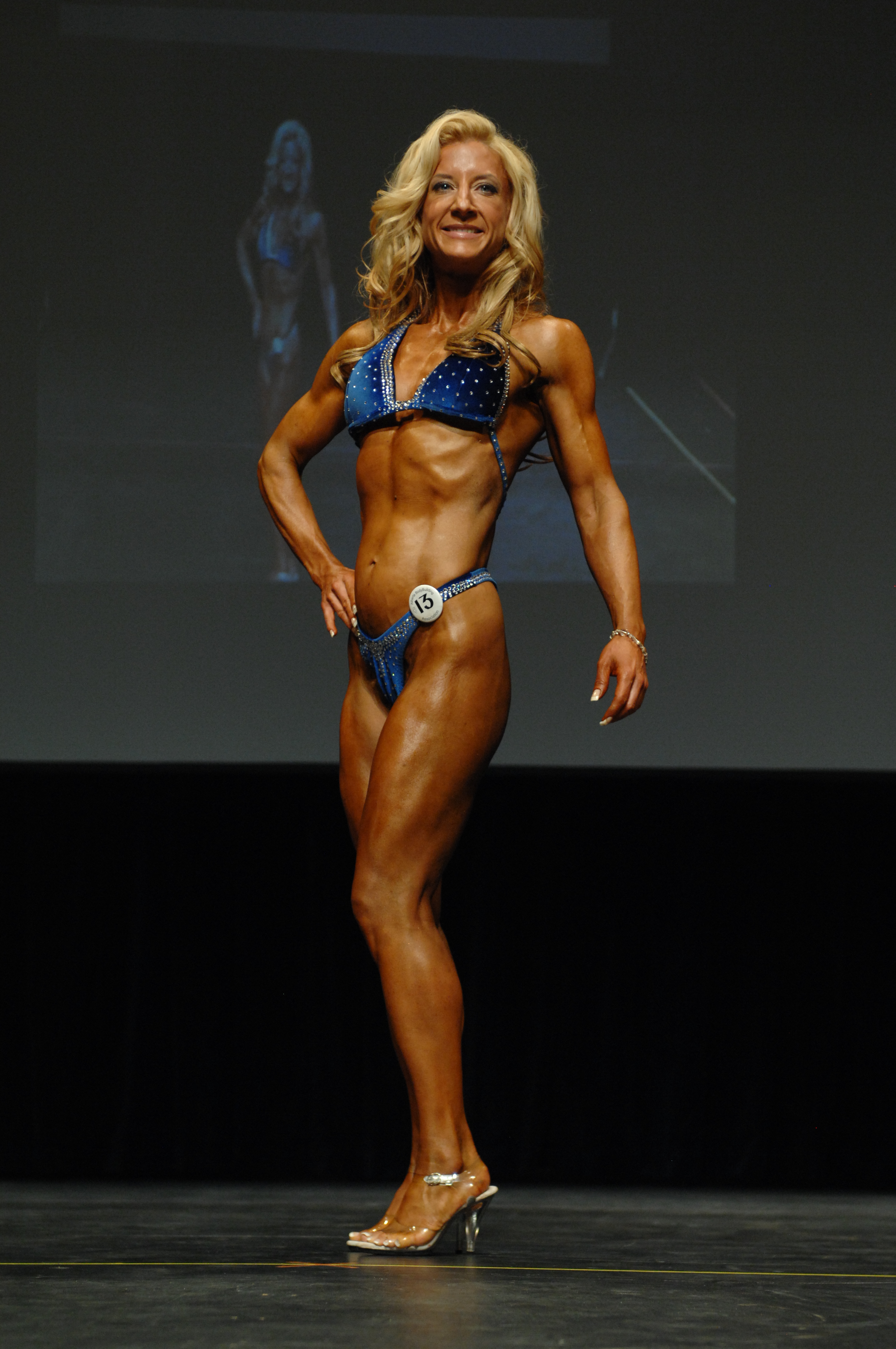
Feminist Figure Girl poses in competition (Used with permission)

I was pleased with my body and its potential fertility, which made me feel younger than my 44 years. Just a few months ago I thought I might have entered menopause, though without any accompanying symptoms, except for amenorrhea. I had stopped menstruating while training and dieting for a bodybuilding competition. After being promoted to full professor at the University of Alberta, writing a couple of books, and publishing numerous articles, I needed a new challenge. Already a dedicated gym rat, I decided to enter a bodybuilding competition, doing so as a form of research. I began reading feminist theories of embodiment and cultural accounts of weight lifting, hired an established diet coach, took posing lessons, and learned how to walk in high heels. I entered a local contest in the category called ‘Figure,’ which favours muscular physiques with wide, capped shoulders, broad upper backs, and well defined quads, but requires a softer appearance than traditional forms of bodybuilding. Adopting a beauty pageant aesthetic, the exclusively female participants in Figure—known colloquially as ‘Figure girls’—wear blinged out bikinis and four-inch high plastic shoes while performing mandatory four-quarter turns to display every angle of their bodies to a panel of judges. I wanted to know why women found such contests empowering, even though these events might initially seem both oppressive and sexist. I also wanted to experience what it felt like to compete.

One physical result was the loss of my period. Six months before my show I had weighed 145 pounds and had my body fat carefully measured at 17%, but when I hit the stage at the Northern Alberta Bodybuilding Championships on June 4, 2011, I was 118 pounds and had only about 6% body fat. During that diet-down phase I had ceased taking birth control pills because the estrogen could soften my body, at odds with my goals. Although I used alternative forms of contraception, I feared that they would be less effective and began taking monthly pregnancy tests. The single blue line on the plastic stick was a relief to me, replacing the role of menstrual blood by providing visual evidence of my non-pregnant state.

My period had not returned three months after my competition, though I had gained about 15 pounds by eating larger amounts of healthy, high protein food. I was training just as hard at the gym; indeed I was lifting much heavier weights. During a routine physical in September, I reluctantly told my sensible-shoes doctor that I had not had a period in quite some time. ‘If I have already gone through menopause,’ I exclaimed, ‘it’s the bomb and I say bring it!’ ‘Oh no,’ she chuckled, ‘most of my athletic female patients no longer menstruate. Plus, you are only 44 and can probably squeeze out a few more eggs.’  Horrified by this news I cried out: ‘No, no more eggs!’ I had been hoping to wear the crown of sterility for the rest of my life.

Are You Too Physically Fit for Motherhood?

September 2nd, 2010 by Elizabeth Kissling

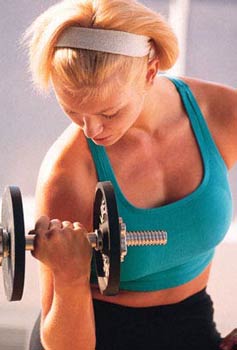
Image of slender white woman doing bicep curls with small barbell.The headline of a story at ABC news about infertility among female athletes is “Female Athletes Are Too Fit To Get Pregnant“. Many women athletes in their 20s, at peak performance levels and peak physical fitness by most measures, may find themselves unable to conceive. This is attributed to low percentages of body fat, which essentially shut down the hypothalamus, which then fails to trigger the H-P-O (hypothalamus, pituitary, ovary) hormone sequence necessary for regular menstrual cycles. About 12% of infertile women seeking treatment are athletes.

According to the article, even women who are not professional athletes (or training at that level) can experience infertility due to physical fitness:

It noted that recreational jogging — only 12 to 18 miles a week — can result in poor follicular development, decreased estrogen and progesterone secretion and absent ovulation.

Setting aside the seriousness of infertility, I’m intrigued by the tone of the article, and especially the language of the headline. In North America today, there is a strong emphasis socially and in mass media on the importance of exercise and being physically fit, and corresponding demonization of fatness as a personal moral failing. But amenorrhea and infertility as a result of thinness is reported without judgment and body-shaming. There are no quotations from experts about women exercising too much or advice to stop working out; instead, professional athletes are advised to freeze their eggs in their early 20s. When fat* women have trouble conceiving or have difficult pregnancies, it is frequently attributed to their weight, which is presumed to be a behavioral a matter of choice.


*I am following the practice of other advocates of fat acceptance and Health At Every Size (HAES) in using the term fat as a descriptive adjective, not a pejorative.

Post to Twitter Post to Plurk Post to Yahoo Buzz Post to Delicious Post to Digg Post to Facebook Post to MySpace Post to Reddit Post to StumbleUpon

Readers should note that statements published in re: Cycling are those of individual authors and do not necessarily reflect the positions of the Society as a whole.