Blog of the Society for Menstrual Cycle Research

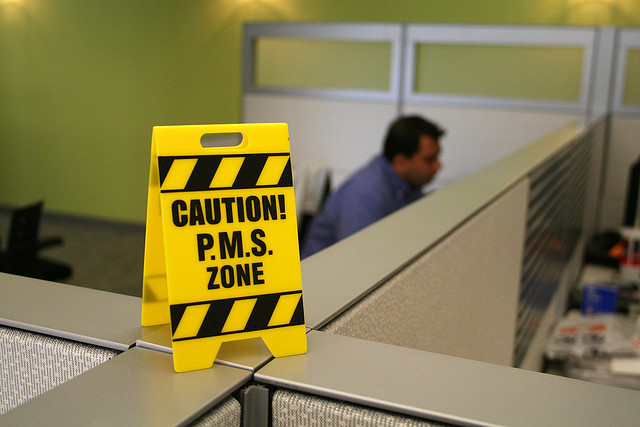
Because women aren’t medicated enough?

September 19th, 2010 by Elizabeth Kissling

ProzacSome of you may recall that in my book, Capitalizing on the Curse, I argued that the addition of PMDD to the DSM-IV and the re-branding of fluoxetine HCI as Sarafem are linked. It was no coincidence that pharmaceutical manufacturer Eli Lilly sought a unique FDA approval for Sarafem as treatment for PMDD just as the patent on Prozac, also composed of fluoxetine HCI, was about to expire. Eli Lilly initially secured the patent for Sarafem until 2007, and it is no longer the only FDA-approved treatment for PMDD.

Lilly must be in need of a new way to keep milking the cash cow. How fortunate that new research suggests that Prozac can relieve garden-variety PMS as well. A neuroscientist at the University of Birmingham presented research last week at the British Science Festival that asserts a 2mg daily dose of fluoxetine in the week before menstruation could alleviate PMS. She tested it for three years on rats. Of course, rats don’t actually experience PMS, so they were “induced to have PMS-like symptoms”.

Every time I read another article about new treatments for PMS, I remember Joan Chrisler’s comments about over-diagnosis of PMS and PMDD (which are both associated with high levels of relationship and family stress): “We’re conditioned to want a pill. Instead of something you might need more, like a nap or a divorce, or the ERA.”

Post to Twitter Post to Plurk Post to Yahoo Buzz Post to Delicious Post to Digg Post to Facebook Post to MySpace Post to Reddit Post to StumbleUpon

Is PMDD Genetic?

March 9th, 2010 by Elizabeth Kissling

White lab mouse sitting in a gloved palm.

Guest Post by Amber Steele, University of Cambridge

There have been a couple of stories in the press recently touting a study by Joanna Spencer and colleagues suggesting that PMDD may be genetic. I had a cursory look through the paper and read the article. Changes in dendritic branching of neurons in the limbic system across the menstrual cycle, owing to changes in estrogen, has been well documented in the female mice and rat. Additionally, changes in neuronal activity and accompanying receptor activity is also well document during periods of hormone change, again in the female mice and rat models. Individual differences in how this change occurs and the fact that it can be linked to differences in genes make sense. It seems that Spencer et al., have identified one of probably many genes that mediates these differences. This is not the first time that a gene of this kind has been identified or implicated. For example, Susan Girdler at Chapel Hill has done some interesting work on PMDD and suggests a genetic i.e., differing protein response to a hormone, difference in response to progesterone that might, in part, explain symptoms associated with PMDD.

The fact that Spencer et al., found a relationship to anxious behavior does not say anything conclusively about PMS or PMDD. It only states that if you have this variant then your levels of anxiety may change as estrogen fluctuates.

The news article is exploiting the findings from the Spencer study to construct a simplistic view of varying responses to hormone change within and across women. I suppose the author of the news article thought it might be interesting to examine the debate on whether or not there is a “clinically disordered” state during the luteal phase of the menstrual cycle in some women and whether it should be recognized officially. While it may do this, it also perpetuates misunderstandings and stereotypes about women’s hormones and their emotional states.

Amber Steele is a graduate student at the University of Cambridge with a biomedical background. She is writing a thesis is on wellbeing over the menstrual cycle and how it relates to hormonal “biomarkers” cortisol and progesterone.

Post to Twitter Post to Plurk Post to Yahoo Buzz Post to Delicious Post to Digg Post to Facebook Post to MySpace Post to Reddit Post to StumbleUpon

Will the new PMDD please stand up?

February 21st, 2010 by Chris Hitchcock

The American Psychiatric Association has pushed back their timeline for the 5th version of the Diagnostic and Statistics Manual. The new psychiatric bible was originally scheduled to come out in 2011, but has now been delayed to 2013 .

Initial drafts have been posted to the web page, but the controversial and provisional (that is, not yet officially accepted) diagnosis of premenstrual dysphoric disorder (PMDD) does not yet appear ready for comment. Which is a shame, because traditionally SMCR and its members have had a lot to say about PMDD, and we’re looking forward to the opportunity to consider and critique its new incarnation. Here’s a recent post as an example.

PMDD was first introduced in the DSM-III-R as Late Luteal Phase Dysphoric Disorder. The “late luteal” was meant to include cycling women who did not bleed, for example, those with a hysterectomy but preserved ovaries, but was criticized because “luteal phase” implies ovulation, and assessing ovulation was not part of the diagnosis.

Paula Caplan (e.g. this article) and other members of the SMCR were vocal in their challenge to the psychiatric label. Paula Caplan wrote a book about her experiences with the DSM process (They Say You’re Crazy), and the SMCR produced the following position statement:

June 2001 / Resolution #1: PMDD and Sarafem
Whereas the Society for Menstrual Cycle Research has since 1977 been the pre-eminent organization that focuses on scientific research on the menstrual cycle;

Whereas there is no empirical evidence that there is premenstrual illness that is separate or different from other forms of depression or anxiety or responses to stressful life circumstances;

Whereas there is good empirical evidence the Premenstrual Dysphoric Disorder does not exist;

Whereas the widespread use of Sarafem and related drugs results in both the masking of real causes of women’s suffering and the production of negative drug effects;

Therefore, be it resolved the the Society for Menstrual Cycle Research calls upon the Food and Drug Administration

a) to reconsider its approval of Sarafem for the treatment of “Premenstrual Dysphoric Disorder” and

b) to enjoin Eli Lilly from airing or publishing advertisements for Sarafem to lay and professional audiences until such reconsideration is completed.

In the end, The FDA approved Sarafem (Prozac, re-colored lavender and repackaged, with a brand new patent and a new lease on life) for the treatment of this newly minted psychiatric disorder; a panel from the European Agency for the Evaluation of Medicinal Products declined to follow suit, recognizing that PMDD was not a widely accepted diagnostic label in Europe, and concluding that

There was considerable concern that women with less severe premenstrual symptoms might erroneously receive a diagnosis of PMDD resulting in widespread inappropriate short- and long-term use of fluoxetine [Prozac].

Psychiatrists in the USA require an official DSM label to be paid by insurance companies for the services they provide to women with cyclic mood issues; insured treatment-seeking women in the USA require those who hold the medical purse strings to recognize their distress. And having an entry in the DSM meets both of those needs.

Here are some points that I think are helpful to start a discussion:

  1. We acknowledge that some women, at some times in their lives, experience significant increases in negative mood and physical symptoms around the time of menstrual bleeding, that for some these changes are extreme and seriously interfere with their lives, and that this experience needs to be recognized and treated.

Women, Men, and PMDD

October 15th, 2009 by Elizabeth Kissling

A new study published in a recent issue of Women & Therapy finds problems with the diagnostic criteria for PMDD. No surprise – feminist psychologists, researchers within the Society for Menstrual Cycle Research, and many others have repeatedly criticized the concept of PMDD as a mental illness related to menstruation for these and other reasons.

Supposedly, PMDD occurs in 3% to 8% of menstruating women. There is a host of problems with how this is determined, including varying means of defining and applying the DSM-IV criteria for PMDD across studies, but I’ll spare you that litany here. If PMDD is truly an illness related to the menstrual cycle, the criteria should be sex-specific; that is, only those capable of menstruating should meet the diagnosic criteria (the research implicitly assumes everyone is cissexual and that all non-pregnant women of reproductive age menstruate and no men do – let’s set that aside for now).

To test the sex-specificity of the criteria for PMDD, the researchers created two versions of the assessment tools they used to determine its presence: one version included sex-specific terms like menstruation, menstrual cycle, and premenstrual symptoms, while the other version substituted sex-neutral terms such as experiences and symptoms.

Lo and behold, women who completed the sex-specific diagnostic tools met the provisional criteria for PMDD at a significantly higher rate (20%) than women who completed the sex-neutral diagnostic assessment (8%). And 4.1% of men completing the sex-neutral assessment also met the criteria for PMDD. There was no statistically significant difference in the number of women and number of men meeting the criteria when sex-neutral language was used. The researchers tentatively conclude,

Therefore, these data suggest that PMDD may not be a premenstrual disorder per se. PMDD may instead reflect general cyclical changes in mood, and in women sometimes these changes occur during or near menstruation.

So this little study is far from being the last nail in the coffin PMDD deserves. But it’s a start.

Post to Twitter Post to Plurk Post to Yahoo Buzz Post to Delicious Post to Digg Post to Facebook Post to MySpace Post to Reddit Post to StumbleUpon

Readers should note that statements published in re: Cycling are those of individual authors and do not necessarily reflect the positions of the Society as a whole.