Blog of the Society for Menstrual Cycle Research

Teens and the IUD

July 8th, 2010 by Elizabeth Kissling


Art by Flickr user Buhny | CC 2.0

Art by Flickr user Buhny | CC 2.0

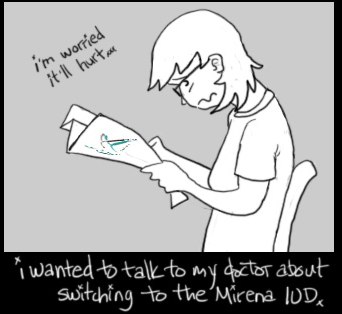
A new study published in the Journal of Obstetrics and Gynecology has found that adolescents are usually able to tolerate the Mirena® IUD rather well. The mean age of girls in this British study was 15.3 years, and they were prescribed the Mirena® for painful and/or heavy periods that did not respond to oral medications. 93.4% of girls in the study (45 young women) reported “significant improvement” within four months. The researchers conclude “that Mirena is a well tolerated and effective alternative for heavy periods±dysmenorrhoea in adolescents who do not respond to oral therapy.”


So will this finding make it easier for young women to obtain an IUD if they’d like it for birth control, now that there is evidence that it is well tolerated?

Post to Twitter Post to Plurk Post to Yahoo Buzz Post to Delicious Post to Digg Post to Facebook Post to MySpace Post to Reddit Post to StumbleUpon

Jesus: A Menstrual Hero?

March 10th, 2010 by Elizabeth Kissling

Guest Post by David Linton, Marymount Manhattan College

Debates about Christianity’s attitudes toward women sometimes focus on Jesus’ relationship with Mary Magdalene and isolated engagements with other unnamed women encountered during his travels.  Little is made of a healing scene in the book of Luke(8:43-48) where Jesus had momentary contact with a woman who, in all likelihood, had a severe case of menorrhagia.  Here’s how the translation is described in the Revised Standard Version”

“As he went, the people pressed round him.  And a woman who had a flow of blood for twelve years and could not be healed by any one came up behind him, and touched the fringe of his garment; and immediately her flow of blood ceased.  And Jesus said, “Who was it that touched me?”  When all denied it, Peter said, “Master, the multitudes surround you and press upon you!”  But Jesus said, “Some one touched me; for I perceive that power has gone forth from me.”  And when the woman saw that she was not hidden, she came trembling, and falling down before him declared in the presence of all the people why she had touched him and how she had been immediately healed.  And he said to her, “Daughter, your faith has made you well; go in peace.”

New Treatment for Uterine Fibroids

January 18th, 2010 by Elizabeth Kissling

Illustration of radiofrequency ablation technique to remove fibroids.Tuesday’s Wall Street Journal reports a new surgical technique for relief of uterine fibroids is currently being tested at six medical centers in the U.S., along with two in Mexico and one in Guatemala. Presently, the only sure cure is hysterectomy, because fibroids sometimes grow back when suppressed with drugs or removed individually.

Fibroids are benign growths in the uterus that are estimated to occur in as many as 70% of women. Fibroids are often asymptomatic; many women don’t even know they have them. But fibroids can become large and painful, and can cause heavy menstrual bleeding. Sometimes they can grow large enough to interfere with other organs.

The new technique under investigation is called radiofrequency ablation. The procedure involves three small incisions: one for the laproscopic camera so the surgeon can see inside the abdomen, a second for an intra-abdominal utrasound probe to determine the size and location of fibroids, and a third for the Halt device, a needle electrode that penetrates the fibroid and burns the cells, which are eventually reabsorbed by the body. The device also cauterizes the incision to minimize bleeding.

In early tests outside the U.S. with 70 women, 90% were satisfied with the results. It is unknown whether fibroids destroyed with this technique will grow back.


Post to Twitter Post to Plurk Post to Yahoo Buzz Post to Delicious Post to Digg Post to Facebook Post to MySpace Post to Reddit Post to StumbleUpon

Period Sex is a Bloody Good Time (says college newspapers)

January 4th, 2010 by Elizabeth Kissling

Back in November, we commended a bold student columnist for taking on menstrual sex in the student paper at Chico State University. In yesterday’s edition of The Faster Times, columnist Veronica Mittnacht advises a reader about how to broach the subject of period sex in a casual relationship, and works to normalize menstruation – even heavy flow.

Fortunately, most men, even if they don’t really like it [menstruation], know enough to pretend not to mind, because, after all, most women do it, and there’s not much men can do about it.  And for your purposes, for now, pretending is enough. There’s still the occasional guy who can’t handle blood, but the bell curve compensates by giving us the occasional fetishist or enthusiast to make up for it.

Post to Twitter Post to Plurk Post to Yahoo Buzz Post to Delicious Post to Digg Post to Facebook Post to MySpace Post to Reddit Post to StumbleUpon

The cure for all things menstrual?

December 24th, 2009 by Chris Hitchcock

A recent press release from the American College of Obstetricians and Gynecologists announces that Hormonal Contraceptives Offer Benefits Beyond Pregnancy Prevention. This is in the same vein as similar articles published over the years about “non-contraceptive benefits of the pill” – a laundry list of the many benefits women may obtain by using hormonal contraception. It’s not clear how they should be used by practicing obgyn’s. One use is certainly as additional talking points to convince women who are cautious or reluctant to replace their body’s own menstrual physiology with a pharmaceutical product.

I haven’t been able to read the full document (for some reason my university access seems to only find the first page of the full document), but it appears that, like previous reviews I have read, it is a biased list, including benefits but not risks. Perhaps what is most in common is the sense that a spontaneous menstrual cycle is somehow suspect, that fluctuations over time are unnatural, and that pharmaceutical control is a good solution.

Adenomyosis: Under-diagnosed cause of pelvic pain

December 3rd, 2009 by Elizabeth Kissling

adenomyosis1.jpg (JPEG Image, 250x297 pixels)A couple of months ago, we wrote about Kate Seear’s research findings that menstrual etiquette is a frequent cause of delayed diagnosis of endometriosis. In related news, medical researchers writing in a recent issue of the Journal of Obstetrics and Gynaecology have found that adenomyosis, the presence of endometrial tissue embedded within the muscular wall of the uterus, is under-diagnosed.

S. Basak and A. Saha, the study’s authors, examined the data of more than 1000 hysterectomies performed for pelvic pain or abnormal uterine bleeding (in other words, hysterectomies for cancer and uterine prolapse were excluded from the data set) in the UK in a three-year period. In 26 of those cases, adenomyosis was identified post-surgery via tissue analysis.

The medical histories in these 26 cases were then examined more closely. The majority of the women had sought medical attention for menorraghia (excessive menstrual bleeding) and dysmenorrhea (painful periods). Eleven of the women’s uteruses were enlarged, and 16 underwent pelvic ultrasound exams. But adenomyosis was suspected clinically in only one case; the others were identified as uterine fibroids (five cases) or “dysfunctional uterine bleeding” (20 cases).

Examination of patients’ case histories found that the medical consultations focused on menstrual flow. The researchers found that other symptoms of adenomyosis, such as pelvic pain, pain during intercourse, painful periods, and feelings of pelvic pressure, were not adequately addressed – even when examination or ultrasound findings indicated an enlarged uterus.

Basak and Saha ask,

Does failure of preoperative suspicion of adenomyosis matter? In the absence of an accurate diagnosis, appropriate treatment is unlikely to be offered, or may be delayed. This results in failure of treatment and continued suffering.

To identify adenomyosis earlier, they recommend more careful discussion with patients of pelvic symptoms, MRI, and follow-up care with women who elect for conservative management of their symptoms. Once again, open communication about all aspects of menstruation isn’t about challenging taboos just for the sake of challenge; it’s critical for women’s health and well-being.

Post to Twitter Post to Plurk Post to Yahoo Buzz Post to Delicious Post to Digg Post to Facebook Post to MySpace Post to Reddit Post to StumbleUpon

New Drug for Heavy Periods

November 14th, 2009 by Elizabeth Kissling
Image by Brittany Reed

Image by Brittany Reed

The FDA announced yesterday that they have approved tranexamic acid tablets for the treatment of heavy menstrual bleeding, under the brand name Lysteda. According to the press release, approximately 3 million US women experience heavy bleeding, usually with no underlying health condition. The report states that there was  a statistically significant reduction in menstrual blood loss in women who received Lysteda, compared with those taking placebo.

As is the case with many newly approved drugs, tranexamic acid is not a new drug but an approval for a new usage: tranexamic acid has been used in injection form more than 20 years to reduce bleeding during tooth extraction in people with hemophilia (a blood disorder in which blood lacks a clotting factor).

Although it’s unlikely that anyone using hormonal contraceptives would also have heavy menstrual bleeding (remember, hormonal contraceptives suppress menstruation), the new drug comes with a big warning: taking Lysteda along with hormonal contraceptives increases one’s risk of blood clots, stroke, or heart attack.

I’m not a biochemist or a physician, but it sounds like Lysteda is a viable alternative for women who are currently taking (or recommended to take) hormonal contraceptives for the management of menstrual bleeding.

Readers should note that statements published in re: Cycling are those of individual authors and do not necessarily reflect the positions of the Society as a whole.