Blog of the Society for Menstrual Cycle Research

The cure for all things menstrual?

December 24th, 2009 by Chris Hitchcock

A recent press release from the American College of Obstetricians and Gynecologists announces that Hormonal Contraceptives Offer Benefits Beyond Pregnancy Prevention. This is in the same vein as similar articles published over the years about “non-contraceptive benefits of the pill” – a laundry list of the many benefits women may obtain by using hormonal contraception. It’s not clear how they should be used by practicing obgyn’s. One use is certainly as additional talking points to convince women who are cautious or reluctant to replace their body’s own menstrual physiology with a pharmaceutical product.

I haven’t been able to read the full document (for some reason my university access seems to only find the first page of the full document), but it appears that, like previous reviews I have read, it is a biased list, including benefits but not risks. Perhaps what is most in common is the sense that a spontaneous menstrual cycle is somehow suspect, that fluctuations over time are unnatural, and that pharmaceutical control is a good solution.

I can understand why the pharmaceutical industry might want to publish a long list of off-label uses (although they would be quickly stopped by the US’s FDA and regulatory bodies in other countries). But it is a curious thing to find a professional group extolling the many off-label benefits of a class of pharmaceutical drugs. Do cardiologists publish practice bulletins about the non-cardiovascular benefits of statins?

There are other perspectives about how one might treat painful periods or heavy menstrual flow. The published Cochrane Reviews (well-respected summaries of published studies) about cramps suggest that the evidence for non-steroidal anti-inflammatories (NSAIDS, such as ibuprofen) is more solid and clear than that for combined oral contraceptives, and that, to date, no studies have compared them head-to-head. Moreover, NSAIDs also have been shown to reduce menstrual flow.

The press release notes the protective effects against endometrial, ovarian and colorectal cancer, but fails to note the increased risk of sexually transmitted infections. Being on the pill is the most important risk factor for not using condoms.

And when absent or long periods occur, inducing regular and predictable flow will reduce the risk of endometrial cancer, but otherwise primarily serves to mask the underlying issue. In that case, going on the pill can be like hitting snooze on your smoke alarm.


Post to Twitter Post to Plurk Post to Yahoo Buzz Post to Delicious Post to Digg Post to Facebook Post to MySpace Post to Reddit Post to StumbleUpon

Teenagers and Menstrual Pain

December 14th, 2009 by Elizabeth Kissling
Cover of 1963 edition of "Growing Up and Liking It" booklet from Personal Products, Inc.

Cover of 1963 edition of "Growing Up and Liking It" booklet from Personal Products, Inc.

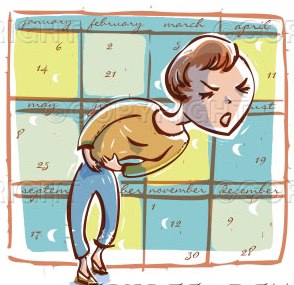
A recently published population-based study of teens in Australia found that menstrual pain is the norm among young women: Typical menstruation in adolescence includes pain (93%), cramping (71%), premenstrual symptoms (96%) and mood disturbance (73%).

This surprises me; I (mistakenly) thought the literature showed painful periods and PMS to be more common in the thirties, and fairly infrequent in the teen years. I can’t help but wonder if these reports of such high levels of pain and PMS are influenced by the pervasive cultural representations of periods as unpleasant and/or painful. It’s noteworthy that only 1% of the girls surveyed reported periods with no pain and no symptoms, and  78% consider their periods to be ‘normal’ most of the time. Assuming those other 22% significantly overlap with the 33% who experienced pain severe enough to consult a physician, I infer that most girls think painful periods are normal.

Please note that I am NOT suggesting that girls are lying about pain or that their period pain is “all in their heads” or psychosomatic; I am merely suggesting that our bodily experience and our perceptions of our bodies always take place in specific cultural and historical contexts. It may also be that dietary and environmental changes have influenced the rise in menstrual pain these researchers document.

(To see more editions of “Growing Up and Liking It”, visit the Museum of Menstruation.)

Post to Twitter Post to Plurk Post to Yahoo Buzz Post to Delicious Post to Digg Post to Facebook Post to MySpace Post to Reddit Post to StumbleUpon

Adenomyosis: Under-diagnosed cause of pelvic pain

December 3rd, 2009 by Elizabeth Kissling

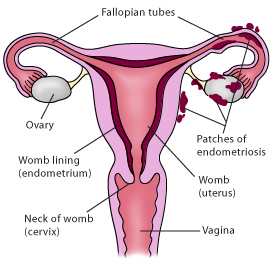
adenomyosis1.jpg (JPEG Image, 250x297 pixels)A couple of months ago, we wrote about Kate Seear’s research findings that menstrual etiquette is a frequent cause of delayed diagnosis of endometriosis. In related news, medical researchers writing in a recent issue of the Journal of Obstetrics and Gynaecology have found that adenomyosis, the presence of endometrial tissue embedded within the muscular wall of the uterus, is under-diagnosed.

S. Basak and A. Saha, the study’s authors, examined the data of more than 1000 hysterectomies performed for pelvic pain or abnormal uterine bleeding (in other words, hysterectomies for cancer and uterine prolapse were excluded from the data set) in the UK in a three-year period. In 26 of those cases, adenomyosis was identified post-surgery via tissue analysis.

The medical histories in these 26 cases were then examined more closely. The majority of the women had sought medical attention for menorraghia (excessive menstrual bleeding) and dysmenorrhea (painful periods). Eleven of the women’s uteruses were enlarged, and 16 underwent pelvic ultrasound exams. But adenomyosis was suspected clinically in only one case; the others were identified as uterine fibroids (five cases) or “dysfunctional uterine bleeding” (20 cases).

Examination of patients’ case histories found that the medical consultations focused on menstrual flow. The researchers found that other symptoms of adenomyosis, such as pelvic pain, pain during intercourse, painful periods, and feelings of pelvic pressure, were not adequately addressed – even when examination or ultrasound findings indicated an enlarged uterus.

Basak and Saha ask,

Does failure of preoperative suspicion of adenomyosis matter? In the absence of an accurate diagnosis, appropriate treatment is unlikely to be offered, or may be delayed. This results in failure of treatment and continued suffering.

To identify adenomyosis earlier, they recommend more careful discussion with patients of pelvic symptoms, MRI, and follow-up care with women who elect for conservative management of their symptoms. Once again, open communication about all aspects of menstruation isn’t about challenging taboos just for the sake of challenge; it’s critical for women’s health and well-being.

Post to Twitter Post to Plurk Post to Yahoo Buzz Post to Delicious Post to Digg Post to Facebook Post to MySpace Post to Reddit Post to StumbleUpon

Readers should note that statements published in re: Cycling are those of individual authors and do not necessarily reflect the positions of the Society as a whole.