March 7th, 2012 by Laura Wershler
Everybody can use a good map to help them get to where they’re going. Why not women heading to the land of non-hormonal contraception?
In my post on January 11, 2012 I asked if coming off the pill was a growing trend. I proposed to write a series of posts about the issues associated with the decision to stop using hormonal birth control. For the purposes of this discussion assume that “coming off the pill” refers to quitting any method of hormonal contraception including the pill, patch, ring, shot, implant or Mirena intrauterine system.
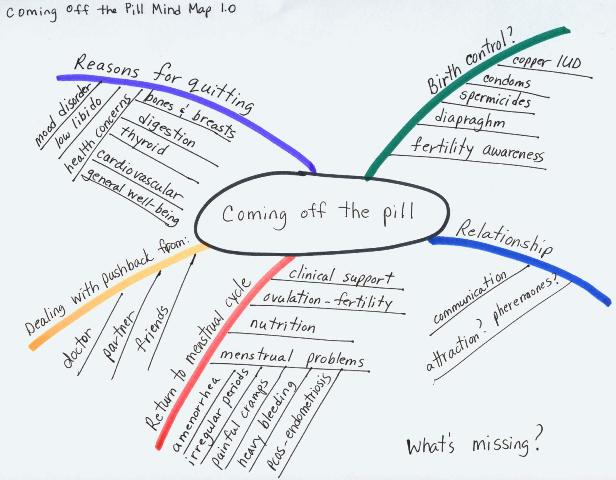
As I was preparing a list of possible topics, I realized that one way to represent the complexity of issues involved in this decision is with a mind map: “a diagram used to represent words, ideas, tasks, or other items linked to and arranged around a central key word or idea.” It also occurred to me that readers could then add to this schematic, filling in important points based on personal or professional experience. So I got out my colored markers, did a little brainstorming and came up with Coming Off the Pill: Mind Map 1.0. I invite readers to comment, offering additions under the key headings I’ve noted and suggesting other categories that should be included. Could this become a talking, planning or process guide for women considering the transition to non-hormonal birth control methods?

If you’ve thought about or been through the experience of quitting hormonal contraception, or if you’ve helped others through the experience, please contribute to the development of Coming Off The Pill: Mind Map 2.0 by posting your comments and suggestions. (I’ve already thought about other headings I could have included.) Besides providing me with a guide for writing future posts, what other ways can you imagine this mind map might be used?
Tags: Activism, big pharma, Birth Control, birth control pill, coming off the pill, Communication, drugs, Health Care, hormones, Laura Wershler, Menstruation, non-hormonal birth control, oral contraceptive pills
Posted in Activism, Amenorrhea, Birth Control, coming off the pill, Communication, Dysmenorrhea, Health Care, Hormones, Menorrhagia, Menstruation, ovulation, Pharmaceutical, PMS, Reproduction | 7 Comments »
January 20th, 2012 by Laura Wershler
Is there a woman over the age of 18 anywhere who doesn’t know that taking the birth control pill can make her periods lighter and less painful? Most women know this, but not many know why. The news stories swirling around a new study about the pill and period pain will not enlighten them.

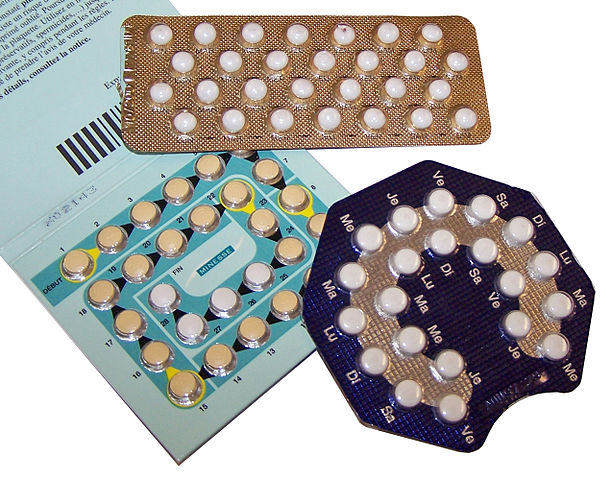
Photo credit: Ceridwen, Creative Commons 2.0
A 30-year longitudinal Swedish study has finally proved the worth of what is accepted practice in North America and Europe: the prescribing of combined oral contraceptives (COCs), or birth control pills with synthetic estrogen and progestin, to treat painful periods known clinically as dysmenorrhea.
Of course, pharmaceutical companies that manufacture COCs are probably eager for this research, as prescribing the pill for dysmenorrhea is still an off-label use in the U.S. (unlicensed use in the U.K.). Pill manufacturers may be able to use this finding to lobby the FDA (or equivalent agencies in other nations) to approve the pill as treatment for menstrual pain, leading to increased sales and insurance coverage. Perhaps that’s why news media have been treating this discovery as breaking news.
Take this headline: Yes, the Pill CAN ease the agony of period pain: Scientists confirm what millions of women already know, or this one: The pill ‘does ease period pain’, or this one: Combination oral contraception pills cut menstruation pain, or, really, any of these.
You can read the abstract of the study by Swedish researchers Ingela Lindh, Agneta Andersson Ellström and Ian Milsom, published this week in the journal Human Reproduction, here: The effect of combined oral contraceptives and age on dysmenorrhoea: an epidemiological study. The conclusions are simple: “COC use and increasing age, independent of each other, reduced the severity of dysmenorrhoea. COC use reduced the severity of dysmenorrhea more than increasing age and childbirth.”
Forget the age factor for the purposes of this discussion. The fact that COC use reduces the severity of dysmenorrhea is not astounding. This is old news. So says Dr. Steven Goldstein, an obstetrician/gynecologist at NYU Langone Medical Center in New York City, quoted in a USA Today story:
“The study results are not surprising. It’s gratifying to see researchers documenting scientifically what practitioners have been seeing for a very long time. The amount of discomfort from a woman’s period with a combination birth control pill is a fraction of what it is without the Pill. There is a diminution of pain from the Pill.”
What is astounding is what Dr. Goldstein, and other OBGYNs, didn’t say in responding to the study. That the reason the pill reduces menstrual pain is because the synthetic hormones in the pill shut down a woman’s own menstrual cycle. The “period” women experience when on the pill is technically known as a “withdrawal bleed,” brought on by seven days of placebo pills. While it feels like a period to menstruators, it is not the same physiologically as the period they experience when NOT on the pill. That’s why it doesn’t hurt as much.
The point is, the pill is too often credited with regulating the menstrual cycle. It does no such thing. The pill does not regulate any woman’s menstrual cycle; it supercedes it. This research, and the many news stories that reported it, once again ascribe power to the pill – this time the power to cut menstrual pain. This is an incomplete truth.
Tags: Activism, big pharma, Birth Control, birth control pill, drugs, Dysmenorrhea, estrogen, hormones, menstrual suppression, Menstruation, oral contraceptive pills, pain
Posted in Birth Control, Communication, Dysmenorrhea, Health Care, Menstruation, New Research, Pharmaceutical | 6 Comments »
February 16th, 2011 by Elizabeth Kissling

Photo by Abbey Hambright under Creative Commons 2.0
A new study published in the Journal of Experimental Psychology reports that menstrual pain — like annoying noises and tedious computer tasks — hurts more in retrospect, if we anticipate experiencing it again:
In the culminating field study of 180 women (average age 29), those whose menstrual periods had ended fewer than three days earlier or who expected their periods within three days remembered their last period as significantly more painful than women in the middle of their cycle (none were currently menstruating).
Oddly enough, I found this information about the study in article in Computers, Networks and Communication. They report that “[i]n a series of eight studies exposing people to annoying noise, subjecting them to tedious computer tasks, or asking them about menstrual pain, participants recalled such events as being significantly more negative if they expected them to happen again soon.”
The researchers suspect that this is an adaptive reaction; that is, people use the memory to steel themselves against future pain.
Tags: menstrual pain, Menstruation, pain, psychology
Posted in Dysmenorrhea, Menstruation, New Research | 1 Comment »
November 29th, 2010 by Elizabeth Kissling
A cross-sectional study published in the November, 2010, issue of Fertility and Sterility reports that very painful menstrual periods during the teen years (that is, period pain so severe that girls miss school) may be predictive of an increased risk of developing deep infiltrating endometriosis (DIE), the most extensive form of endometriosis.
In a study of 229 women undergoing surgery for endometriosis, French researchers found that those with the most extensive form — known as deep infiltrating endometriosis (DIE) — were more likely to have had particularly painful periods as teenagers.
As a group, they were four times as likely as women with non-DIE endometriosis to have used birth control pills to treat severe menstrual pain before the age of 18. And they were 70 percent more likely to say they’d missed school days because of menstrual symptoms.
Although these findings may help women receive a diagnosis of endometriosis sooner,* it is unclear whether progression to DIE (what an unfortunate acronym!) can be prevented. And there is no real cure for endometriosis.
*As we reported previously in writing about Kate Seear’s research about the diagnostic delay in treating endometriosis, the delay is non-trivial: research estimates an average delay of 8 years in the UK and 11 years in the US.
Tags: Dysmenorrhea, endometriosis, Girls, painful periods, teens
Posted in Dysmenorrhea, Health Care, Menstruation, New Research | 1 Comment »
September 10th, 2010 by Elizabeth Kissling

Illustration via sexualityandu.ca
A new study published in the Journal of Pediatric Adolescent Gynecology reports on a study of how dysmenorrhea affects girls’ relationships with families and friends and school performance for girls in Turkey. Previously, we reported on research documenting that menstrual pain is the norm for adolescents; this study represents a next step by looking at the effects of that pain. 1951 girls from 26 high schools completed surveys assessing the level and the nature of menstrual pain they experienced and answered questions about how their pain affected their school work and relationships.
Unsurprisingly, more than half of the girls surveyed reported that dysmenorrhea does affect their ability to perform well at school, with 50% of the girls reporting “lack of focus on the content of the courses” and 26.9% reporting “not being able to answer the questions in exams despite having the knowledge”. A staggering 77.3% report “having problems with their families” when they are experiencing menstrual pain.
Tags: adolescents, Dysmenorrhea, family relationships, Girls, pain, painful periods, Turkey
Posted in Dysmenorrhea, Girls, Menstruation, New Research | Comments Off
July 26th, 2010 by Elizabeth Kissling
Women have long been advised that exercise is among the best pain relievers for painful periods. But a new Cochrane Review (also published in July, 2010, issue of Obstetrics & Gynecology) indicates that research confirming that advice is inconclusive.
Yet, the data on exercise and dysmenorrhea are quite limited, and only one clinical trial met review standards. The main outcome measure was the change in The MOOS Menstrual Distress Questionnaire (MDQ) after three cycles of treatment. The MDQ is commonly used in menstrual cycle research (and also commonly criticized). Exercise was found to improve MDQ scores within three cycles. This Cochrane review offers some preliminary, although not robust, evidence for the effectiveness of exercise in the treatment of dysmenorrhea.
So if exercise helps your period pain, keep it up!
Tags: Dysmenorrhea, exercise, pain, painful periods
Posted in Dysmenorrhea, Menstruation, New Research | 5 Comments »
July 8th, 2010 by Elizabeth Kissling

Art by Flickr user Buhny | CC 2.0
A new study published in the Journal of Obstetrics and Gynecology has found that adolescents are usually able to tolerate the Mirena® IUD rather well. The mean age of girls in this British study was 15.3 years, and they were prescribed the Mirena® for painful and/or heavy periods that did not respond to oral medications. 93.4% of girls in the study (45 young women) reported “significant improvement” within four months. The researchers conclude “that Mirena is a well tolerated and effective alternative for heavy periods±dysmenorrhoea in adolescents who do not respond to oral therapy.”
So will this finding make it easier for young women to obtain an IUD if they’d like it for birth control, now that there is evidence that it is well tolerated?
Tags: Birth Control, heavy bleeding, IUD, Mirena, painful periods, teens
Posted in Birth Control, Dysmenorrhea, Girls, Health Care, Menorrhagia, New Research, Pharmaceutical | 1 Comment »
April 28th, 2010 by Elizabeth Kissling

The Importance of Nap Time by Age, graph by cmoney345
This is a very small study, but I don’t need much encouragement for an afternoon nap. Researchers wanted to test whether a mid-afternoon nap during the late-luteal phase of the menstrual cycle (commonly known as the premenstrual period) would improve symptoms of sleepiness, mood, and cognitive performance without negatively impacting subsequent nocturnal sleep. They tested this hypothesis on ten women with significant premenstrual symptoms and a control group of nine women with minimal or no symptoms, and found that napping made both groups feel better. More precisely,
Napping improved sleepiness, alertness, mood, and some aspects of cognitive performance. Improvements were maintained for at least 30 minutes and up to 6 hours after napping. An afternoon nap benefited both groups of women, but those with significant symptoms had a slightly greater improvement in intensity of mood 30 minutes after the nap.
Napping – it’s not just for kindergarteners. Wouldn’t the world be a better place if everyone could have a Fig Newton and a blankie at about 2:30 pm?
Tags: late-luteal phase, napping, PMS, sleep
Posted in Dysmenorrhea, New Research, PMS | 1 Comment »
March 24th, 2010 by Elizabeth Kissling

London newspaper The Telegraph reports on the development of a new medical treatment for dysmenorrhea, or painful periods. The article contains very little information about the new pill — most of the article describes the variety of misery some women experience with menstruation. The only information about the new medication is that the drug blocks vasopressin, a hormone involved in regulating uterine contractions and thus a cause of menstrual cramping.
But I was struck by this sentence in the second paragraph:
But now [women with painful periods] might no longer have to soldier on stoically after researchers have developed a pill which could put an end to the root cause of their discomfort.
See that? Women with cramps aren’t whiners or crybabies or just making excuses. They’re hard-working troupers who soldier on stoically despite being miserable.
Tags: Communication, Dysmenorrhea, Language, Menstruation, pain
Posted in Dysmenorrhea, Language, Menstruation, New Research, Newspapers, Pharmaceutical | 2 Comments »
March 12th, 2010 by Giovanna Chesler
(This post also published at the blog g6pix.)
I’ll try not to sound too fan-girlish here as I write about the documentary Scrambled: A Journey through PCOS by Randi Cecchine, but admittedly, it is a difficult task. For in this film, which chronicles Cecchine’s struggle with Polycystic Ovarian Syndrome, we meet a filmmaker brave enough to show us, wart-hairs and all, the challenges inherent in this disease embodied. She does so with humor, with information, and with space for personal reflection.
As Cecchine and the health practitioners she speaks with share, PCOS is a condition that affects 8% of women but that goes under-diagnosed. Though largely undetected in the women who have PCOS, the first sign of something wrong is the absence or change in the menstrual period. According to Cecchine’s participant Dr. Geoffrey Redmond, an endocrinologist who has studied female hormone problems for over twenty years, PCOS generally shows up during puberty or shortly during the menarche period. In his interview, he argues that a delay of fifteen years in diagnosis typically occurs because “people who care for teenagers are typically not clued into this condition.”
In popular rhetoric on menstruation and menstrual suppression, there are many voices who have argued that having a menstrual period is unnecessary and should be done away with through hormonal birth control regimens (for example, Lybrel, Depo-Provera and Seasonale.) These drugs are often presented as choices to girls and young women close to menarche. Scrambled serves to intercept this discourse by demonstrating how the cycle becomes a sign of imbalance and illness. This film reminds us of the value of attending to the menstrual cycle. In Cecchine’s case, as in the case of the many women she interviews in her film, the lack of a period is a personal introduction to the disease.
Cecchine works with a light yet serious tone. A visit to Harry Finley’s Museum of Menstruation underscores the connections between menstruation, body awareness and PCOS. Yet we are able to marvel and smirk at Finley’s collection of menstrual advertising and decades old menstrual protection products which now live in his basement. As her lived investigation continues, Cecchine meets up with the Polycystic Ovarian Association (PCOSA) at their conference. There her film does remarkable work, as it invites the viewer to join in the conversation. In the scenes around the conference, we see how this film works to invite fellow PCOS women into the information Cecchine has gleaned. Though knowledge will not cure one from the illness, certain techniques shared in the film (like limiting carbohydrate intake) will result in reduced symptoms.
In the recent release of the film, which is self distributed, Scrambled is a two disc set. The first disc includes the documentary, but the second disc is chock-full of informative interviews on a variety of topics. Cecchine profiles Redmond along with many other health workers practicing western, eastern and alternative medicine who speak of the options for treatment. These include diet alterations, drug regimens, psychotherapy, acupuncture and others. In this disc, Cecchine provides the tools for a viewer with PCOS to address her syndrome through many methods. By providing information in this manner, Scrambled becomes a guide and a tool for holistic health on a personal level.
But these treatments comes at an expense. Here Cecchine’s humor bubbles up again when she shares the different techniques, like hair removal, pills, acupuncture treatments and their resulting costs. Yet, the feeling that comes afterward: “Priceless!” Bitingly Cecchine reminds us that being a patient also involves being a consumer. Therein she complicates these treatments as choices and necessities simultaneously. Continue reading...
Tags: birth control pill, feminist film, Film, illness, medical treatment, menstrual suppression, PCOS
Posted in Amenorrhea, Dysmenorrhea, Film, Health Care, Independent Film, Menarche, Menstruation | 3 Comments »
March 11th, 2010 by Elizabeth Kissling
In a controlled study of 268 Australian women with surgically confirmed moderate-to-severe endometriosis (cases) and 244 women without endometriosis (controls), researchers found that characteristics of a woman’s early menstrual cycles were associated with later development of endometriosis. Data showed those who did not start their menstrual cycle until after they turned 14 had a significantly reduced risk of later developing endometriosis.
Duration of the cycle, intensity of flow, and preferred choice of menstrual product showed no association with endometriosis.
The results are published in the American Journal of Obstetrics and Gynecology, December 2009. You can read the abstract here.
Tags: endometriosis, FemCare, Menarche, Menstruation, pain
Posted in anatomy, Dysmenorrhea, FemCare, Menarche, Menstruation, New Research | Comments Off
January 20th, 2010 by Elizabeth Kissling
A new meta-analysis of previous research on acetaminophen (also known as paracetamol outside the U.S.) vs. NSAIDs (nonsteroidal anti-inflammatory drugs) for treatment of menstrual pain indicates that NSAIDs are more effective. NSAIDs include aspirin, ibuprofen, and naproxen sodium, which are all readily available over-the-counter in the U.S. The research pooled results from 73 randomized controlled trials comparing the effectiveness and safety of NSAIDs vs. placebo, vs. acetaminophen, and each other.
The results don’t indicate whether one NSAID is any better than any other for menstrual pain. Researcher Jane Marjoribanks, M.D., Cochrane Menstrual Disorders and Subfertility Group in Auckland, New Zealand, says they work by reducing prostaglandins, the substance manufactured by the uterine lining to help the uterus contract and expel menstrual fluid.
“Research has shown that women with dysmenorrhoea have high levels of prostaglandins, hormones known to cause cramping abdominal pain. …NSAIDs are drugs which act by blocking prostaglandin production.”
The study was published today in the Cochrane Database of Systematic Reviews.
Tags: cramps, drugs, Menstruation, pain
Posted in Dysmenorrhea, Menstruation, New Research, Pharmaceutical | 3 Comments »
Readers should note that statements published in re: Cycling are those of individual authors and do not necessarily reflect the positions of the Society as a whole.