Blog of the Society for Menstrual Cycle Research

The Last Snowflake

April 24th, 2013 by Heather Dillaway

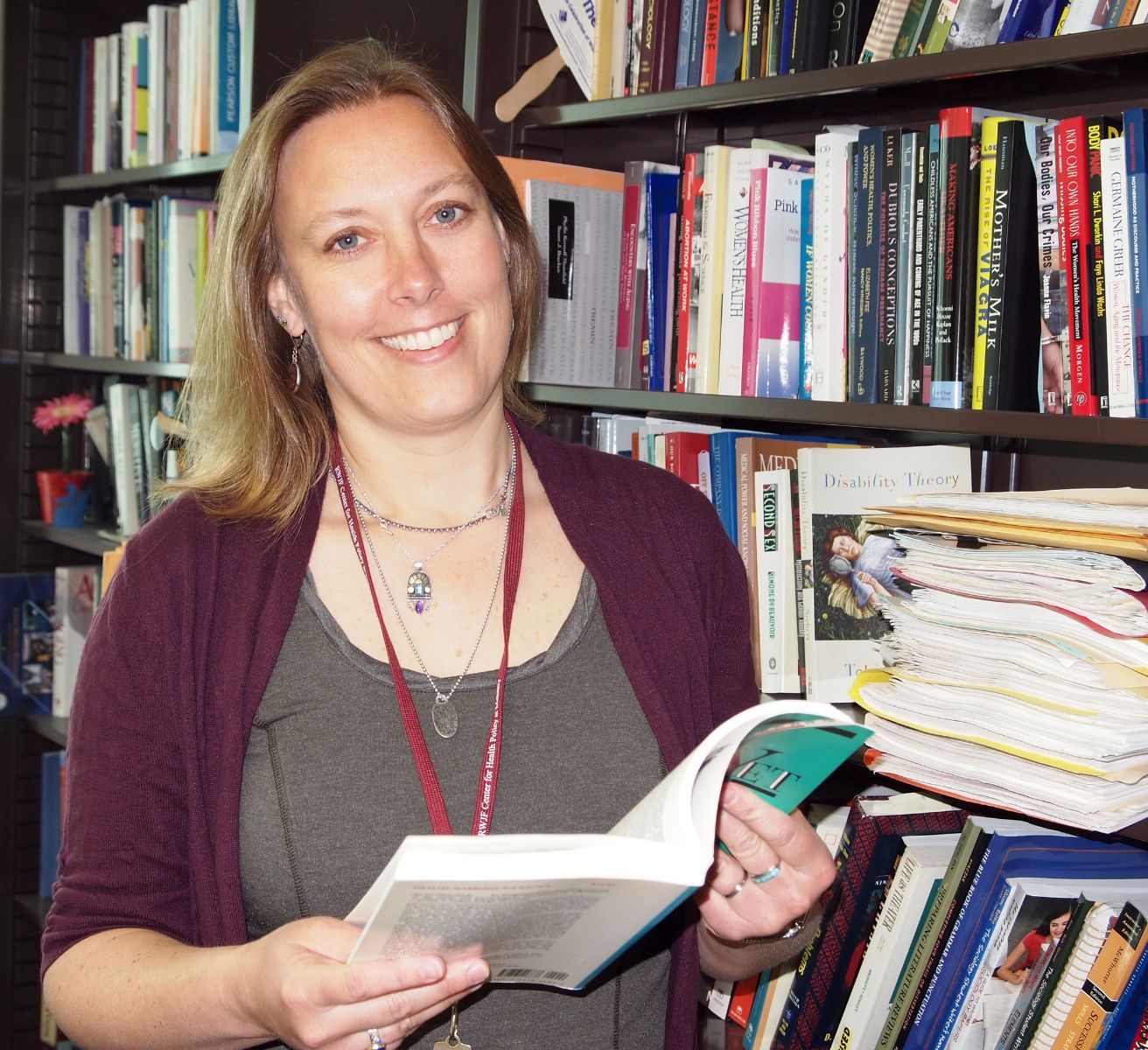
Photo by Heather Dillaway, April 2013

My kids and I read a book about “the last snowflake” a few years ago. The book was a story about how the last snowflake felt as it hit the ground each winter – lonely because his friends were ahead of him and probably melted already, or maybe carefree and floating on the wind to say the last goodbye to winter. This year my kids and I keep trying to wonder when that last snowflake would fall. Was it a few weeks ago? No. Was it last weekend? No. Well, here it is snowing again today so will I see the last snowflake tonight? At some point this snow has to end – it’s late April! When WILL that last flake fall?
Plenty of people have written and sang about the “last snowflake” (do a web search and you’ll see). It’s a great thing to philosophize about: when will it come, what will it look like, will I miss it, am I ready for what comes after it, and, in general, how do I feel about the transition it represents? Am I glad to see that last snowflake of the season, or am I melancholy about it? Am I ready for the warmer weather, or did I like wearing warm sweaters and fleece pajamas? Do I like winter after all, even though it’s hard and long and seemingly never-ending, until it’s over? I like spring a lot but it’s always so short in Michigan and we head right into hot weather, there’s really not much in-between. Plus spring and summer mean the ramping up of activities and a busier schedule – am I ready for that? A part of me is already missing that last snowflake even though I don’t know if I have seen it yet….but then again, I’m pretty ready for winter to be over. Can I feel two things at once? Can I be sad and glad to see that last snowflake?
Why am I writing about snowflakes? Because I read a piece on the Red Hot Mamas website the other day about a menopausal woman’s last period that reminded me that of my thoughts about last snowflakes. In “A Gentle Good-bye,” Christine Merser talks about how she did not get to say goodbye to her last period at age 42, that it came too fast and she mourns (at least in part) the idea that she’ll never menstruate again. She acknowledges the hardships menstruation sometimes caused and the hassles that were part and parcel of it, but also reminisces in its life-giving qualities and feels a sense of loss. She feels her last period was a “benchmark moment” and suggests that in not knowing that her last period was indeed her last, she did not get to say that “gentle goodbye” that she wanted to say. She also talks about menopause as representing the “October” of her life, signifying ends rather than beginnings, but at the same time wants it to mean new and better things. The idea that the last period cannot be predicted but is hoped for, but then may be bittersweet when it’s finally reached is something that I’ve heard from so many women. Menstruation is hard, especially when it is unpredictable in perimenopause or before, but a part of it is also safe and representative of a kind of stability and identity that is hard to give up. Merser proposes that cessation of menstruation is the “first thing she can’t fix” about her body. Regardless of the freedoms that you might get when it’s over for good or the things about it that you will gladly give up, women aren’t always quite sure they really want to be done with menstruation forever once they sit back and think about its meanings. So they ask, Am I glad to see that last period, or am I melancholy about its passing? Am I ready for the midlife and beyond, or did I like being younger? Am I ready to give up my monthly reminders of womanhood? Do I like menstruation after all, even though it’s hard and long and seemingly never-ending until it’s over? I might like midlife a lot but it seems like it might be short and it might head me right into aging for real, so how long will I really be in this good midlife stage? Does a part of me miss my period before I’ve seen my last one?
Like snow, menstruation can be unpredictable, uncertain, burdensome, and a hassle, and we might all be very happy to say goodbye. BUT, for those of accustomed to the seasons and the good parts of each season, we might also be somewhat sad to see snow and menstruation leave us. Especially if we don’t get to say a chance to say goodbye.
Disclaimer: This analogy probably only works for those who live in Northern climates and are used to the good and bad things that come with snow. And yes, I’m sort of making light of menstruation here, but my feelings about the last snowflake this year are noticeable to me and I thought it might be fun to play with this analogy.

Menstruation, Consciously?

April 17th, 2013 by Ashley Ross

In Heather Dillaway’s re:Cycling post of March 28, “The Physical Body and the Lived Body”, she invited a conversation about the importance of understanding the “lived bodily experience” when we examine menstruation. She suggests that “we cannot comprehend menstruation until we separate the physical body from the lived body”. Her inquiry reflects the dilemma many of us face when we attempt to enter the female experience through our cognition. Inevitably we rely on what we’ve heard repetitively and from many sources; what we’ve been taught, cajoled, shamed, brainwashed, and had whispered to us. In this way our experience has been formed from the outside in. This is what Dillaway delightfully (albeit cognitively) calls the “governmentality” of (our) bodies – that is, all the rules that surround bodies, all the norms that suggest exactly how our bodies should be and behave”.

If we agree reframing and embodying our own experience is called for, the logical question is no longer WHAT is our lived experience (that would still keep us in our heads) but HOW do we experience our bodies to discover our experience from the inside out? What are we called to do, or perhaps more relevantly, to BE, to develop the ability to fine-tune our inner attention, to deepen our listening and to familiarize ourselves with the terrain of our interiority?

How we chose to do this — how we each bypass the machinations, the loops, the highly developed editing abilities of our minds, the habituation of needing more, more, more information — is as personal and varied as the individuality of each inner landscape. However, I would like to suggest the following three components as a place to start:

Photo by Ashley Ross

“Going inward” only can happen when we slow down. This is a timeless realm, where attention will only settle on our experience, like a butterfly on a flower, when the air is still.

We also need to bring our curiosity to the unknown. We won’t free ourselves from the tyranny of imposed meaning until we are willing to enter into our experience and be willing to not know what we will find. Not even think we might know. Simply not expect to know.

We also need to build up the courage, the resources, the terra firma, the self-esteem, nay, the self-respect to go in and gently, lovingly touch those uncomfortable, painful, and often vulnerable parts of ourselves. These wary parts might even back away from us at first, but in truth, have been waiting for us to arrive for a long time. As the poet Mary Oliver says, “you only have to let the soft animal of your body love what it loves”.

These three mindfulness-based practices are at the foundation of a conscious embodiment of our menstruation, hormones and peri/menopause. They offer a way into our experience that allows understanding to bubble up from the experience itself. If we can BE in our bodies, if we can sit quietly and notice who we are when we menstruate, when we ovulate, and the tempo of our own monthly cycle, in this way we permit ourselves the experience of knowing ourselves from the inside out.

Who knows, something unexpected and remarkable might happen. By bringing consciousness into our experience, it might shift the experience itself…

Stopping Depo-Provera: Why and what to do about adverse experiences

April 11th, 2013 by Laura Wershler

Laura Wershler interviews Ask Jerilynn, clinician-scientist and endocrinologist

A screen shot of comments to Laura Wershler’s blog post of April 4, 2012: “Coming off Depo-Provera can be a woman’s worst nightmare.”

With 250 comments – and counting – to my year-old post Coming off Depo-Provera is a women’s worst nightmare (April 4, 2012) I thought it was time to revisit this topic.

That blog post has become a forum for women to share their negative experiences with stopping Depo-Provera (also called “the shot,” or Depo), the four-times-a-year contraceptive injection. (Commenters reporting positive experiences have been extremely rare.) Many women have experienced distressing effects either while taking Depo and/or after stopping it. They report that health-care professionals seem unable to explain their problems or to offer effective solutions. What is puzzling for many is why they are experiencing symptoms like sore breasts, heavy and ongoing bleeding (or not getting flow back at all), digestive problems, weight gain and mood issues when they stop Depo.

This post aims to briefly explain how Depo works to prevent pregnancy, its common side effects and, most importantly, why and what to do about adverse experiences when stopping it.

What follows is my interview with Dr. Jerilynn C. Prior, Society for Menstrual Cycle Research board member, professor of endocrinology at the University of British Columbia, and scientific director of the Centre for Menstrual Cycle and Ovulation Research (CeMCOR) Section 1 explains how Depo-Provera works and what causes its side effects. Section 2  explains the symptoms women are experiencing after stopping the drug.

1) Taking Depo-Provera: How it works and established side effects

Laura Wershler (LW): Dr. Prior, what is Depo-Provera® and how does it prevent pregnancy?

Ask Jerilynn: The term, “depo” means a deposit or injection and Provera is a common brand name of the most frequently used synthetic progestin in North America, medroxyprogesterone acetate (MPA). Depo is a shot of MPA given every three months in the large dose of 150 mg. Depo prevents pregnancy by “drying up” the cervical mucus so sperm have trouble swimming, by thinning the endometrium (uterine lining) so a fertilized egg can’t implant and primarily by suppressing the hypothalamic and pituitary signals that coordinate the menstrual cycle. That means a woman’s own hormone levels become almost as low as in menopause, with very low progesterone and lowered estrogen levels.

LW: Could you explain the hormonal changes behind the several established side effects of Depo? Let’s start with bleeding issues including spotting, unpredictable or non-stop bleeding that can last for several months before, in most women, leading to amenorrhea (no menstrual period).

Ask Jerilynn: It is not entirely clear, but probably the initial unpredictable bleeding relates to how long it takes for this big hormone injection to suppress women’s own estrogen levels. The other reason is that where the endometrium has gotten thin it is more likely to break down and bleed. These unpredictable flow side-effects of Depo are something that women should expect and plan for since they occur in the early days of use for every woman. After the first year of Depo (depending on the age and weight of the woman) about a third of women will have no more bleeding.

LW: What about headaches and depression?

Ask Jerilynn: It is not clear why headaches increase on Depo—they tend not to be serious migraine headaches but are more stress type. Perhaps they are related to the higher stress hormones the body makes whenever estrogen levels drop. Unfortunately, headaches tend to increase over time, rather than getting better as the not-so-funny bleeding does.

House of (Menopausal) Cards

March 26th, 2013 by David Linton

(Spoiler alert: if you haven’t finished or intend to watch the show discussed here, you might wait to read this post until later.)

The premises of the much-discussed new series House of Cards hosted on Netflix, are that no one in the world of politics can be trusted, that alliances are fragile, and that disaster looms at every moment. Beneath the surface of beautiful buildings, attractive people, glamorous receptions, and rousing rhetoric lie depths of deception and betrayal.

At the heart of the intrigue are the central power couple, US Congressman Frank Underwood and his wife, Claire, who heads a non-profit NGO dedicated to providing clean water to impoverished African villages. They appear to be well matched and unified in their ambitions for both personal power and their pet projects while expressing benign neglect toward each other’s outside sexual pursuits.

All is well in the Underwood cacoon until perimenopause makes its destabilizing entrance. There’s a concept that’s sometimes referred to as “Chekhof’s Gun” that goes something like this, “If you show a shotgun on the wall in an early scene, someone better use it before the play is over.” Well, the menstrual shotgun first appears in an early episode when Claire is seen standing before an open refrigerator door and she’s not looking for a quart of milk. Frank notices, says little, and the moment passes. Four or five episodes later Claire makes a deal to accomplish one of her goals, knowing it will undercut a grand scheme he is working on. When he learns of the betrayal, he employs the deadly menstrual shotgun, “Is it the hot flashes?” Whereupon she throws him out of her office and departs for New York to be with a long-time lover.

But this is only the first season of what promises to be an ongoing saga, so following yet another political crisis, she returns to Washington. But something has changed. She has been having dreams about saving a child who is being choked by vines and, in a final scene, visits an ob/gyn to discuss having a baby, despite the fact that she has had three prior abortions. Perimenopause has suddenly altered her perspective. As viewers have already learned that her husband hates children, the set up for next season’s drama is well established.

Menopausal Junk

February 28th, 2013 by Heather Dillaway

In response to my last blog entry about Helena Bonham Carter, Paula Derry commented that we treat menopause as a “junk category,” tossing in any symptom we can’t explain or don’t want to attribute to anything else. So true. In fact, Anne Fausto-Sterling said this long ago about menopause – that tons of symptoms were attributed to menopause when in fact only hot flashes really had a link to this life stage. BUT, we keep on attributing anything and everything to menopause.

    Photo by Flickr user Caterina // Creative Commons 2.0

  • Gaining weight at midlife? Must be menopause.
  • Sad or angry at midlife? Must be menopause.
  • Hairy at midlife? Must be menopause.
  • Dry at midlife? Must be menopause.
  • Blurry eyes at midlife? Must be menopause.
  • Headaches at midlife? Must be menopause.
  • Big boobs at midlife? Must be menopause.
  • Constipated at midlife? Must be menopause.
  • Have a symptom you can’t explain at midlife? Must be menopause.
  • Turned 50? Must be menopause. (Yes, see, it’s ridiculous.)

And the list goes on. And on. And on.

Okay, so, yes, menopause is a junk category because symptoms (junk) are just thrown in and declared “menopausal” (“perimenopausal”) at every turn. Just like when women go to the doctor and are given pregnancy tests no matter what their symptoms (“must be pregnant”). Ah, the fun of the reproductive life course.

BUT, I would say that there is another kind of “junk” that I see at menopause. I’ve interviewed menopausal women for 12 years now, and one of the hardest things is separating out menopause from all the other things (junk) going on in women’s lives as they make this transition. It is so hard to figure out what menopause really is and what it really means for women because it is surrounded by so much other “junk” at midlife. When you ask women about how they feel about menopause, they tell you but they also contextualize how they feel by telling you about:

  • their kids (the kids that live with them and the ones that have left)
  • their partners (current ones, ex-partners, and ones they wish they had)
  • their jobs (the ones they hate and the ones they care about)
  • their friends (the ones who support them and the ones who don’t)
  • their aging parents (and how hard it is to take care of them)
  • their worries about future aging
  • their doctors (good and bad)
  • their youth
  • their aches and pains
  • their bodies (the parts they like and don’t like)
  • their history of menstruation and other reproductive experiences…

You get the picture.
You have to wade through all of this to understand menopause. Sometimes it feels like junk clogging up their lives and clogging up the path to figuring out what menopause is really like. At the end of the day menopause is such a narrow part of most middle-aged women’s lives, but it is tied in with so much other midlife stuff that it’s hard to separate out. When you ask women about menopause, it’s sort of like asking someone, “How are you?”, on one of their busiest days. The answer you get back is surrounded and dictated by the junk in their lives and, unless you understand that going in, it might seem like menopause itself is a junk-filled process. But maybe it’s not. Despite all the news articles that predict new symptoms and conditions at menopause, and despite all of the midlife contexts that surround menopause, maybe menopause itself is very simple if we can weed out everything that’s not really menopause… What do YOU think?

We’re Ripe for the Third Talk, Actually!!

December 20th, 2012 by Ashley Ross

No question – Poise’s Second Talk Campaign is undeniably courageous, taking on Menopause, the Previously Unmentionable. Call me impatient and unappreciative, but I just can’t help mourning the missed opportunity to REALLY empower women, instead of aligning with those unrelenting forces bent on squeezing the Mojo from the second half of our lives.

Seeped as I am in the journey of menopause, (my own, and as co-creator of the Menopausal Mojo Teleseminar program), my curiosity was cautiously piqued when I opened the Poise link in this blog post  last month. (Cautious because, after all, Poise is an incontinence product and the association is not only anxiety provoking but inadvertently quantizes my experience into a demeaning and unimaginative metaphor — something like shame meets discouragement meets insult. Sorry, that’s just how it feels to me. Let it be known, I am not in denial here – it has been a while since I could safely jump on a trampoline with anything in my bladder.)

Nevertheless — someone is talking publicly about menopause. And I am certainly curious to see what aspect of this rich, challenging and potentially transformative experience they are choosing to highlight.

The first thing we see: “8 in 10 women agree, it’s time to change the way we think about menopause”.

YES!!! What we’ve been saying all along, my wonderful co-conspirator, Karen Clothier (creator of the body-mind-spirit focused and unexpectedly successful Menopause the Magical Telesummit) and me. We find ourselves coming back again and again to feeling the urgent need to rebrand menopause. We clearly do want another way to understand peri/menopause. After hundreds of years of agents of the male paradigm systematically dismantling our authority of our experience, using shame to silence our inherent collaborative tendencies, we have lost the language to talk about the transformative experience of our 40’s and 50’s – as we move from fertile women to mature women, from “child bearer’s to bearers of wisdom” (Kristi Meisenbach Boylan The Seven Sacred Rites of Menopause).

Clearly the difficulty begins with the term “menopause” itself. The term was coined in 1812 by the French physician de Gardanne and is defined as (a moment in time) 12 months after the last menstrual period. A little hard to acknowledge a rite of passage when its beginning, middle and end are as elusive, instantaneous and vague as that. But that’s not all, that’s simply the scientific use of the word. Our everyday use of it also describes perimenopause (the 5-10 year period before the Moment-In-Time) as well as post-menopause (an unspecified period after the Moment-In-Time). Confused yet?

Small wonder that we need new, updated language, imagery, descriptions, mythology and role-models — a full-spectrum, holographic map to describe the physical, emotional and spiritual terrain of our midlife experience.

Wait, I’m getting a little ahead of myself. Back to the Poise menopause page, and how it misleads women by reducing this remarkable transition into … yes, you got it … SYMPTOMS. As if symptoms are the menopausal experience. And the successful management of said symptoms is all there is to this phase of our life cycle. Tragically reductionist, when seen from the perspective of how insidiously the media molds our reality. This is brilliantly elucidated in Jennifer Siebel Newsom’s movie Miss Representation, which shows “the media’s limited and often disparaging portrayals of women and girls, which make it difficult for women … to feel powerful.”

“Disparaging”. Hold that thought while we listen to Dr. Jennifer Berman, Poise’s menopause and intimacy expert, describing mood swings. In the clip  “What’s the DEAL with my moodswings”*, does she validate our experience and perhaps suggest that our emotions might be valuable indicators of our experience? Does she acknowledge the virtually universal need of women at this stage to retreat (I would venture to say the developmental milestone in the female psyche to withdraw and self-reflect), and then acknowledge how at odds with our externally driven, production oriented culture this urge is? Perhaps she suggests that THAT might be the reason WHY our moods are swinging – that our emotions are accurately reflecting the environmental imbalance of the whole paradigm? Wouldn’t it be the moment for Poise, and all those interested in empowering women, to ask this crucial question: why are we making menopause all about what’s wrong with us?

Here’s what the good doctor says:   “Moodswings are very common during the perimenopause and menopause.  Women will describe symptoms of feeling more irritable and short fused, more weepy and depressed, more (uh) anxious and sort of, (uh) difficulty concentrating …and that’s very common during perimenopause, and it tends to level out, to some degree, as women approach menopause.”

Firstly, is it just me or is her tone patronizing? Is she explaining anything new here and offering solutions as promised? Is she even answering the question: “What’s the DEAL with my moodswings”?!

Now of course I see what a masterful campaign Poise have created here. They’ve captured an untapped market, have obviously paid close attention to the terms used by women in their focus group and have echoed the aspirations of menopausal women to save us from our Symptoms.

How much more interesting would it be if they used the global reach and collective power of the internet to invite us to create new language and ways to define our midlife experience that go beyond complaining about hot flashes (see “personal stories” on the site)? Ladies, instead of letting them reduce our experience to managing our symptoms, let’s demand inspiring stories about how we are stepping into the second half of our lives with the Mojo that comes from accessing our collective wisdom, our wizened humor and our well-earned self-respect. Now that’s a branding campaign worth following.

#periodtalk: Let’s keep talking about menstruation

November 14th, 2012 by Laura Wershler

Bloggers at re:Cycling often challenge and invite readers to open up and talk about our menstrual experiences.

In a September post, Heather Dillaway asked : “Why don’t we talk about the important variations in our menstrual cycles?” In another, she wrote about the “second talk” Poise ads that encourage women to share their perimenopause experiences.

Chris Bobel wrote in defense of hating her period, sparking a lively discussion and much support for both her honesty and her call for “a more (not less) pluralistic menstrual discourse.”

Alexandra Jacoby has been writing a series of posts exploring things about our bodies we tend not to talk about.  From Tell me again why we can’t talk about body stuff to her last post asking readers for suggestions on How to menstruate while camping , she is opening the door ever wider to menstrual cycle conversations.

We do our bit at re: Cycling to get people thinking and talking about menstruation from a broad range of perspectives, including the personal.  And, happily, we are not alone in bringing “period talk” out in the open.

Last Friday, I participated in a #periodtalk Tweet Chat, a monthly event hosted by Be Prepared Period, a website dedicated to providing accurate, helpful information about menstruation to girls, women and parents. One of Friday’s guests was Suzan Hutchinson (@periodwise), the Director of Connectivity for You Are Loved, a non-profit organization “focused on raising awareness about tampon related Toxic Shock Syndrome and providing factual information about menstruation.” You Are Loved has been an ongoing #periodtalk participant. Suzan, a self-described “menstrual cycle activist since youth,” herself experienced TSS.

Suzan’s topic was menstrual understanding; her introductory Tweets shared some of her story:

I began my menstrual journey at age 15 with a belted pad & knowledge that a week each month my body would betray me.

No one talked about periods. I thought my experience was unique – that I was odd. Embarrassment kept me silent.

Suzan eventually came to view her period as just one part of her menstrual cycle, and she brought this cycle perspective to the Tweet Chat. In a post-chat phone conversation, Suzan told me that she has seen how #periodtalk has helped others lose their embarrassment in talking about periods. “I’ve watched women who started out not being able to contribute become menstrual activists, bringing other women to the chats.”

She also told me about the day #periodtalk trended worldwide on Twitter. It was September 14, 2012 and the topic was Back to School: Periods101. A blog post at Lunapads.com describes what happened:

 Today #PeriodTalk had it’s big moment when it reached trending topic status worldwide. A pretty big accomplishment for a bunch of folks chatting about a topic which is usually so “hush-hush”. Of course the taboo-nature of the topic brought the trolls out of the woodwork and some pretty nasty things were said by a few crass individuals. Participants in #PeriodTalk were admonished for talking openly about something, which was in their opinion, not appropriate for the internet….seriously? Not appropriate for the internet? Have these people *seen* the internet?

Too bad for the trolls. Talking openly about our menstrual cycles is here to stay. We’ll keep doing it at re:Cycling and #periodtalk is thriving at Be Prepared Period. They have also launched an online Period Talk  forum where girls and parents can ask questions and get answers about anything related to menstruation and puberty.

The next #periodtalk Tweet Chat – on the topic of Non-Profits and Menstruation – is on Friday, December 14, 2012. Check it out.

When Can We Write the Obituary for the Critical Timing Hypothesis?

October 12th, 2012 by Chris Hitchcock

What Happened?

The highlight of last week’s meeting of the North American Menopause Society (NAMS) meeting was a presentation of the primary results of the KEEPS study (Kronos Early Estrogen Prevention Study). A press release describing the findings, along with a list of FAQ (frequently asked questions), is available on the Kronos website. KEEPS was designed to confirm the critical timing hypothesis by looking at the use of menopausal hormone therapy in healthy women who were 6-36 months from their last menstrual period. Primary outcomes were progression of two atherosclerosis markers: carotid artery wall thickness (cIMT) and coronary artery calcification (CAC). In both cases, there were no statistically significant differences among the three groups (two hormone therapy formulations and a placebo group). The study failed to meet the stated goals by the stated criteria. Medical and popular coverage of these preliminary, non-peer-reviewed results have been almost uniformly positive, advocating renewed use of estrogen as menopausal therapy to women, provided they are young and healthy.

The timing hypothesis1 was born out of the collective cognitive dissonance following the unexpected findings of the Women’s Health Initiative, which failed to confirm the widespread belief that menopausal hormone therapy (specifically, estrogen) would protect menopausal women from cardiovascular disease.

The birth of KEEPS

Soon after the results of the Women’s Health Initiative were published, the discredited idea of menopausal hormone therapy for the prevention of cardiovascular disease was resurrected in the form of the critical timing hypothesis. In 2005, the KEEPS study was launched with much fanfare in the popular press and the medical literature. The lead editorial2 in the journal Climacteric heralded it as a move “[t]owards safer women, safer doses, safer routes and safer timing of administration of safer menopausal therapies,” and the journal invited an article describing the study design3.

Study Design

KEEPS is a “prospective, randomized, controlled trial designed, using findings from basic science studies, to test the hypothesis that MHT when initiated early in menopause reduces progression of atherosclerosis. KEEPS participants are younger, healthier, and within 3 years of menopause thus matching more closely demographics of women in prior observational and epidemiological studies than women in the Women’s Health Initiative hormone trials. KEEPS will provide information relevant to the critical timing hypothesis for MHT use in reducing risk for CVD.”4 The target sample size was 450 women completing the study, with a goal of at least 150 women in each arm. The recruitment goal was 720 women.

Rather than using the synthetic hormones (conjugated equine estrogen, CEE and medroxyprogesterone acetate, MPA) from the WHI, KEEPS included more “natural” hormonal products, comparing oral conjugated equine estrogen (o-CEE, derived from pregnant mares’ urine, and taken as a pill – Premarin, 0.45 mg) with transdermal estradiol (t-E2, taken by patch – Climara, 50 mcg). Estrogen taken alone causes endometrial cancer; KEEPS added oral micronized progesterone (OMP, 200 mg for 12 days per month), which is identical to the human hormone molecule.

The three arms were:

  1. PLACEBO – placebo pill, placebo patch, placebo OMP
  2. o-CEE + OMP – active pill, placebo patch, active OMP
  3. t-E2 + OMP – placebo pill, active patch, active OMP

The purpose of KEEPS was to test the critical timing hypothesis, that is, to answer the question:

Does estrogen therapy, when administered during the critical timing period, protect women from cardiovascular decline?

A study of this size and duration in healthy young(er) women cannot hope to address clinical outcomes, such as stroke, heart attack and the like. Therefore the study had two surrogate markers of atherosclerosis (a part of cardiovascular health) as primary outcomes:

Readers should note that statements published in re: Cycling are those of individual authors and do not necessarily reflect the positions of the Society as a whole.