Blog of the Society for Menstrual Cycle Research

Childhood abuse and menarcheal age

January 17th, 2012 by Chris Hitchcock

Last month I wrote about menarcheal age in Ethiopian girls, and that food insecurity leads to a delay in the onset of menstruation. This fits with the general response of the reproductive system to energetic stress – low energy leads to suppression of the hypothalamus, which interferes with ovulatation and, in stronger cases, with menstruation itself.

But, it would seem, not all stressors are the same. Over the past decade or so, a series of studies have shown that, unlike food shortages, the stresses of childhood neglect, abuse, and even the absence of a father tend to accelerate rather than delay puberty.

So how do researchers understand the effects of these different types of stress during development? The leading hypothesis is an evolutionary one, based on something called life history theory. The theory is that there is a tradeoff between reproduction and survival. Early energy put into reproduction comes at a cost of long term survival, and delayed reproduction may result in no reproduction at all unless the chances of surviving are good. This can be used to understand different life history strategies such as weeds (early reproduction, short survival) versus trees (later reproduction, longer survival). It can be used to look at different strategies within a species. And it can also be used to look at a contingent strategy within a species, one that is expressed in different ways depending on the circumstances.

In the case of humans and abuse during development, the argument is that abuse, neglect and the absence of a father all indicate more adverse conditions, in which long-term survival is less likely, and accelerated reproduction is favored.

There is good reason to be cautious when assessing evolutionary arguments about humans, especially when sex and reproduction come into the story. However, in this case the data are persuasive. Here are a few links to articles that have addressed the topic:

Childhood abuse and early menarche: findings from the black women’s health study.

Childhood sexual abuse and early menarche: the direction of their relationship and its implications.

A life history assessment of early childhood sexual abuse in women.

Sexual trajectories of abused and neglected youths

Age of menarche: the role of some psychosocial factors.

Post to Twitter Post to Plurk Post to Yahoo Buzz Post to Delicious Post to Digg Post to Facebook Post to MySpace Post to Reddit Post to StumbleUpon

Is Coming Off the Pill a Growing Trend?

January 11th, 2012 by Laura Wershler

The Internet abounds with articles, posts and forum discussions about coming off the birth control pill. Women are looking for information and advice. Many are trying to get pregnant, others are just done with hormonal contraception.

It’s a topic that interests many of us connected to the Society for Menstrual Cycle Research (SMCR) because of

Created at an a menstrual arts and crafts event, Andrea, 25, said this piece depicts the multiple emotions she feels around menstruation. Photo by Laura Wershler

how the pill and other forms of hormonal contraception impact the menstrual cycles of the women who take these medications. Some of us are experts in menstrual cycle function and dysfunction, most are advocates for healthy, positive menstrual cycle experiences from menarche to menopause.

A recent blog post at nomoredirtylooks.com on the topic of quitting the pill caught our members’ attention.  Re: Cycling blogger Elizabeth Kissling included the post in Weekend Links on November 19.

A young woman in Paris was looking for advice and comments from other blog readers about how to manage the effects of coming off the pill. Siobhan O’Connor, the blog co-editor, shared Paris girl’s story with a graceful, inclusive invitation to readers:

There’s no judgment—implicit or explicit—on anyone who is on or has been on birth control pills. Some people love them, some people have to take them for medical reasons, some people abhor them. Here, we want to talk candidly about what happens when you go off them. Because, whoa. That can be hectic.

The post drew over 80 comments, with a few coming from SMCR members. What struck me was how many women:

1)  had already ditched the pill or were planning to
2) expressed a desire for the return of regular, normal menstrual cycles
3)  were concerned about their skin (it often breaks out after quitting the pill).

SMCR member, endocrinologist and guest blogger Dr. Jerilynn Prior answered the concerns about acne and bad cramps in a comment posted on November 22, and included a link to Centre for Menstrual Cycle and Ovulation Research website where readers can find information about all things related to menstrual cycle health.

Holistic Reproductive Health Practitioner Geraldine Matus, another member, commented on November 26 that it was concerns and experiences like those expressed by posters that prompted her and colleague Megan Lalonde to write the guide: Coming Off the Pill, the Patch, the Shot and Other Hormonal Contraception.

I invited No More Dirty Looks readers to visit this blog to learn more about the menstrual cycle and the issues raised by their online discussion.

Regular visitors to re: Cycling know that we cover a broad range of topics, but bloggers frequently address hormonal contraception as it relates to women’s health issues.

Check out this sampling from the re: cycling archive:

Several of the women who responded to the Paris girl post at nomoredirtylooks.com expressed eagerness to reclaim healthy, ovulatory menstruation and a willingness to learn how to  manage their fertility without the aid of hormonal contraception.

Everything you need to know about the menstrual cycle in less than 3000 words

December 26th, 2011 by Chris Bobel

The Research Pile by Krista Kennedy // CC 2.0

What happens when get a bunch of interdisciplinary menstrual cycle researchers together and give them each a topic or two and a word count?


You get a pithy document called “The Menstrual Cycle: A Feminist Lifespan Perspective” available to anyone who needs to put their finger on the state of menstrual cycle research today. Readers of re:Cycling know there is deep complexity swirling around the menstrual cycle (indeed, that’s why this blog exists!)  so it sure is helpful to have a resource that collects the key info in one tidy place.

The Fact Sheet –four pages of content and two pages of must-have references—was collaboratively written by a team of members of the Society for Menstrual Research. It is available for download here [pdf]. Sections include menstrual attitudes and representations, menarche, peri/menopause, menstrual care, problems associated with menstruation and more. Something for everybody.


The Fact Sheet is commissioned and published by Sociologists for Women and Society (SWS), who, since 2002, has been publishing several fact sheets each year on topics ranging from Women & Size to Title IX to Women, Poverty and Welfare Reform. These resources are immensely helpful to scores of folks—teachers, activists, clinicians, the interminably curious—anyone , really, who needs concise accurate info.


Impress your friends. Go grab the Fact Sheet!

Post to Twitter Post to Plurk Post to Yahoo Buzz Post to Delicious Post to Digg Post to Facebook Post to MySpace Post to Reddit Post to StumbleUpon

Food insecurity is associated with later puberty

December 20th, 2011 by Chris Hitchcock

Many girls in Africa have insecure access to food, that is, they worry about getting enough food, and they sometimes eat less than they want, or go without food. There are two theories about how this might affect the onset of menstruation (menarche). One is that the limitations in energy and nutrition might slow development, resulting in a later menarcheal age. The other evolutionary theory is that early life stressors trigger a shift in so-called life history strategy, leading to accelerated development and an earlier menarche. In a recent article in the journal Reproductive Biology and Endocrinology, researchers from Ethiopia, Belgium and the USA presented data from the first two years of the Jimma Longitudinal Family Survey of Youth to contrast these two theories. The survey was conducted in southwest Ethiopia, sampling across rural, urban and small town areas and including boys and girls. Data about the household and the girls’ experience of food insecurity were assessed by questionnaire in the first year, and in the second year girls were asked whether and how old they were when they first menstruated. 900 girls, with an average age of 14.8 at baseline, participated in both of the first two years of the five year study.

Overall, girls who reported some degree of food insecurity (n=225/900) were similar in age, region (urban, semi-urban, rural), and nutritional status (whether they were short for age). However, they were more likely to be in a male-headed household, tended to be in middle income rather than high income households, and reported more domestic work than those reporting food security. Overall, girls with moderate to severe food insecurity were significantly less likely to have undergone menarche. The estimate of the age at menarche was one year older for Ethiopian girls who have insecure access to food.

Girls in the developing world experience menarche at an older age than those in the developed world, and, with development, other countries are experiencing the secular change of earlier age at menarche. In this study, the estimated age at menarche was younger in urban centres (14) than in semi-urban or urban areas (15), and girls in high income households had an earlier menarche, suggesting that improved food security may be part of the puzzle explaining these changes.

Post to Twitter Post to Plurk Post to Yahoo Buzz Post to Delicious Post to Digg Post to Facebook Post to MySpace Post to Reddit Post to StumbleUpon

what to tell the girl in my life about menstruation?

November 24th, 2011 by Alexandra Jacoby

Ever since I saw this uterus pillow, I have been thinking about what to tell the girl in my life about menstruation. She’s ten years old. This pillow is exactly something I would give her! It’s handmade, using strong colors of the kind I like, and about a subject most people don’t want to talk about. [I like to annoy her!] Also, it’s pretty.

I’ve had it since the summer, and I still haven’t given it to her — because I want to say something with it.

uterus pillow - ovulating

uterus pillow by Wendy Caesar.

But – what?

I have no idea what she knows or thinks or feels about her body in general, or about menstruation in particular.

Where do I start?

[translate that to several months of procrastination]

Telling myself that it was research and preparation for a good talk, I started asking people what they think I should say to a ten-year old girl in my life. Most asked me if it wasn’t too early to start this topic? I mean if she isn’t menstruating yet…

why bring it up?

Her school will know when to start the conversation. Or maybe leave it up to her, to whenever she asks you…

She’ll ask her mother then probably. Or maybe her mother has already started this conversation….

Wait! None of that matters —

I am totally ducking. I am afraid to get it wrong.

How will she know that conversations are not tests, or competitions, if I keep acting like there’s a right way to do this— like I need training, expertise or approval to talk to the girl in my life about something that I have experienced myself for several of her lifetimes?

I want her to know that it’s ok to not-know EVERYTHING about your body and what comes next, and that it’s ok to ask questions from a place of not-knowing.

Right. Decision made. I will not become an expert before talking with her.

I’ll make this about her and about me.

Here’s what I’ll do:

I’ll ask her what she’s heard so far:

  • What do you know about menstruation?
  • What did your mother tell you?
  • School?
  • Friends?
  • Female relatives?
  • Your father?

I’ll check in with her:

  • What does it feel like? – What people told you —
  • Is it: scary, embarrassing, no big deal, exciting…

I’ll tell her why I brought this up:

The menstrual cycle is not just about bleeding and whether you can get pregnant today — though, those two situations are reason enough to learn as much as you can about your cycle. You want to be prepared for, and satisfied with, both experiences.

uterus pillow - menstruating

the same uterus pillow, by Wendy Caesar.

The menstrual cycle is one of your body’s vital signs.

Its hormones and processes affect and interact with how you feel, how your bones grow, how your skin looks, your body temperature… From the inside out, of your body-your home, your cycle determines your quality of life in many ways.

Most of us know little about how our bodies work. And, unless we feel pain, have difficulty doing something we want to do, or are incapacitated, we don’t necessarily need to know any more than the little we know.

But — and this is why I bring it up — the more you do know about how it works, the more power you have over the quality of your body-life, which in turn feeds your mental-spiritual-emotional life. And back around again.

Dads, Daughters, and Menarche

September 29th, 2011 by Elizabeth Kissling

Oh, Mr. Dad! Is that the best you can do?

Mr. Dad is a syndicated parenting advice column in my local paper, and the September 26 edition featured a query from a dad worried that his 11-year-old daughter may begin menstruating while her mom is deployed overseas (she just left, and she’ll be gone for a year).

Mr. Dad’s first bit of advice is for the squeamish father to find an adult woman to talk to his daughter about puberty:

Your first assignment is to find an adult woman to run point. This could be a relative, friend, or even one of the female spouses whose husband is deployed with your wife’s unit. She’ll be able to walk your daughter through the basics and give you a list of supplies you’ll want to have on hand.

To his credit, Mr. Dad doesn’t let Nervous Dad off the hook, and does advise that he learn about female puberty “just in case things don’t go exactly according to plan”. But I’d rather see more dads embrace the possibility that they may well be the one their daughter turns to at menarche, like this dad.

Heck, they could even up being the helpful, available next-door neighbor in a time of need, like ol’ Hank Hill, in this video clip.

Post to Twitter Post to Plurk Post to Yahoo Buzz Post to Delicious Post to Digg Post to Facebook Post to MySpace Post to Reddit Post to StumbleUpon

Vitamin D and Early Onset of Menstruation

September 21st, 2011 by Laura Wershler

Could vitamin D deficiency in young girls contribute to early onset of menstruation?  

A study conducted by the University of Michigan School of Public Health suggests this may be the case.  Blood vitamin D levels were measured in 242 girls between the ages of 5 and 12 in Bogota, Colombia. The girls were then followed for 30 months.

“Compared to girls in the vitamin D-sufficient group who first menstruated at the age 12.6 years, those in the vitamin D-deficient group started menstruating at11.8 years. (Epidemiologist Eduardo)Villamor says that although 10 months may seem like a small gap, the difference is momentous because at that age, a young girl’s body may undergo many changes rapidly.”

The findings are significant because of other research suggesting links between early onset of menarche, or first menstruation, before the age of 12 and serious health concerns later in life such as cardiovascular disease and breast cancer. Vitamin D deficiency is also associated with poor bone health and osteoporosis.

This study showing an association between vitamin D deficiency and early menarche raises many questions. Should mothers be asking their doctors to test their daughters vitamin D levels? How might vitamin D supplementation prevent future health concerns now associated with early menarche? What blood level for vitamin D is optimal?

Grassroots Health, a non-profit advocacy organization promoting optimal vitamin D levels for the prevention of disease and maintenance of good health, has recently launched a study on breast cancer prevention with vitamin D. The group also has an initiative called D*Action involving a consortium of scientists, institutions and individuals committed to solving what they consider to be a worldwide vitamin D deficiency epidemic.

Might the girls in Colombia lead the way for vitamin D supplementation to begin at a young age to protect the bones, breast and hearts of the next generation?

Post to Twitter Post to Plurk Post to Yahoo Buzz Post to Delicious Post to Digg Post to Facebook Post to MySpace Post to Reddit Post to StumbleUpon

Curb Your (Menstrual) Enthusiasm?

August 9th, 2011 by David Linton

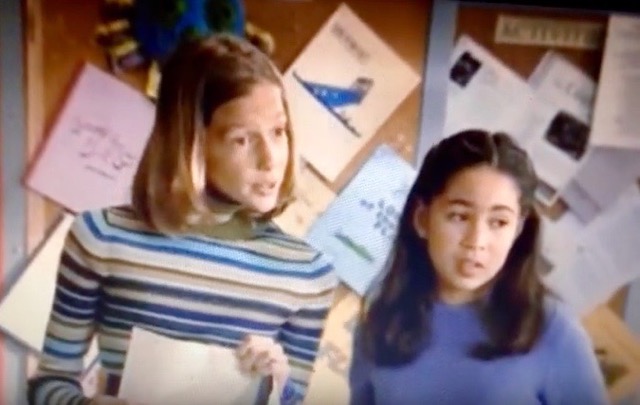
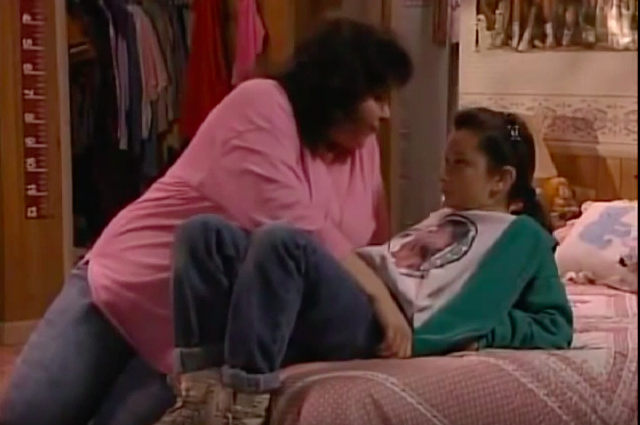
From time to time menstrual references show up in TV programs, mostly on situation comedies and, unsurprisingly, they are usually played for laughs.  The most common inclusions have had to do with menarche with menopause coming in second.  First periods have provided laughs and plot material for the writers of DeGrassi, Roseanne, Californication, Seventh Heaven, The Cosby Show, Beverly Hills 90210, King of the Hill, and others.  In nearly every one of these episodes the humor and plot tension derives, at least in part, from an exploration of male response to unwelcome exposure to the cycle: close encounters of the menstrual kind.

The most recent, and most daring, occurrence appeared in an episode of Curb Your Enthusiasm (Season 8, Episode 1) involving a girl selling Girl Scout cookies getting her first period standing in the foyer of Larry David’s home while writing up a cookie order.  Rather than dashing off to find a woman to “take care” of the situation, as depicted, for example, in King of the Hill and Beverly Hills 90210, the protagonist rushes upstairs to get a box of tampons, left behind by his wife who has left him, and stands outside a bathroom door shouting instructions to the bewildered girl inside.  Apparently she knows what the period is but has never been told how to use a tampon.

The episode is extraordinarily daring.  Even the simple detail of having an older man hand a young girl he just met a tampon is startling, given the depth of social taboos requiring strict gender separation in matters menstrual.  But to have him stand outside the bathroom door shouting instructions and reading the sheet packed in the box about placing the tampon in the vagina while the girl inside responds with confusion and frustration is risky indeed.  But the most striking thing of all is that while both characters find the situation awkward, neither one is overly embarrassed, particularly the girl who calmly announces, “I think I just got my period for the first time.”  Though she has apparently received little education about the technology, she is fully aware of what is happening in her body and accepts the fact that the adult she happens to be with when it happens is able to help her out.  The fact that it’s a male, and a quirky older one at that, seems not to matter at all.

This indifference on their parts is both a source of the humor and, perhaps, an indication of a watershed in menstrual decorum.  Or is that too optimistic a reading?

Cross-posted at The Communicated Stereotype


Post to Twitter Post to Plurk Post to Yahoo Buzz Post to Delicious Post to Digg Post to Facebook Post to MySpace Post to Reddit Post to StumbleUpon

Her First Period Won’t Be Forgotten

August 5th, 2011 by Elizabeth Kissling

This is funny, and in some ways, quite charming, sketch comedy about a dad talking his young daughter through her first period.

[via Glad Rags on Twitter ]

Post to Twitter Post to Plurk Post to Yahoo Buzz Post to Delicious Post to Digg Post to Facebook Post to MySpace Post to Reddit Post to StumbleUpon

Golly! Molly is growing up.

February 14th, 2011 by Elizabeth Kissling

Molly Grows Up _ screenshotPreparing for class discussions this week about sex education policy in the U.S. found me flipping through the Prelinger Archives, where I found this gem: Molly Grows Up. It’s a menstrual education film apparently intended for girls in about the sixth grade, made in 1953. Along with a basic explanation of the physiology of menstruation and puberty, the school nurse assures the girls that no one can tell when they are menstruating. But then she offers them this advice visible in this screen shot — and recommends the girls wear their best dresses and take extra care with “hygiene”.

You can view the film here.

Post to Twitter Post to Plurk Post to Yahoo Buzz Post to Delicious Post to Digg Post to Facebook Post to MySpace Post to Reddit Post to StumbleUpon

The Red Scare: Blood Rituals

July 16th, 2010 by Elizabeth Kissling

Red Scare illustration from Whore! MagazineAnyone else seen the premier issue of Whore! Magazine (Fast, Feminist, and Feminine) yet? My copy arrived yesterday and while I haven’t read the whole thing yet, I’m enjoying the quality of the writing and the production values.

I’m also pleased to see a positive story about menstruation in a magazine, in Tracy Merlau’s essay, “The Red Scare”. It’s short, sentimental essay about adolescence and menarche, and the sadness of the nearly complete absence of any public recognition, let alone celebration, of menarche for girls in the U.S.

Recommended.

Post to Twitter Post to Plurk Post to Yahoo Buzz Post to Delicious Post to Digg Post to Facebook Post to MySpace Post to Reddit Post to StumbleUpon

Early Menarche: A New Theory

June 13th, 2010 by Elizabeth Kissling
Photo by Splorp // CC 2.0

Photo by Splorp // CC 2.0

It’s well-documented that girls today reach menarche earlier than previous generations. A century ago, it was common to experience one’s first period at 16 or 17; today, that’s regarded as so late that medical examinations are often conducted to reassure parents and girls that their development is normal. The typical North American girl sees her first period at age 12, give or take a few months.

Many explanations have been posited for this phenomenon; personally, I’ve long suspected that a primary cause is endocrine disruptors that are the hormones used in raising beef and dairy cattle as well as chicken in this country. Also, girls today typically achieve the minimal body fat necessary to menstruate at younger ages, due to improved health and nutrition. Now a new study suggests that it is not merely consumption of meat that lowers the age of menarche, but the high content of zinc and iron in a meat-rich diet.

Oddly, the lead researcher is quoted in the news story as saying, “These results add to the evidence that it is healthiest to avoid diets containing very high amounts of meat,” but also that there is no need for young girls to cut their meat intake. (I haven’t yet been able to locate a copy of the actual study.)


Post to Twitter Post to Plurk Post to Yahoo Buzz Post to Delicious Post to Digg Post to Facebook Post to MySpace Post to Reddit Post to StumbleUpon

Readers should note that statements published in re: Cycling are those of individual authors and do not necessarily reflect the positions of the Society as a whole.