Blog of the Society for Menstrual Cycle Research

Menstruation Myths PSA

April 26th, 2010 by Elizabeth Kissling

Menstruation is DANGEROUS!!!The Jamaica Observer has published a list of menstrual myths, apparently as a public service to its readers. Among the fallacies:

  • Do not go to a funeral and look at the dead while having your period as this will cause your bones to rot.
  • If a menstruating woman cans fruits or vegetables, the fruits will spoil in the can.
  • Dentist visits should not be done during the menses, because fillings put in during this time will fall out.
  • During menstruation a woman should not go hunting as the animals will smell her blood, which will drive them away.

And if you happen to be from New Jersey and of Italian descent, stay away from the tomatoes.


Post to Twitter Post to Plurk Post to Yahoo Buzz Post to Delicious Post to Digg Post to Facebook Post to MySpace Post to Reddit Post to StumbleUpon

Menstrual Moments on Television: Parks and Recreation

March 27th, 2010 by Elizabeth Kissling

I’m surely not the only fan of Amy Poehler and Parks and Recreation around here, am I? (Oh, Amy Poehler, have you been reading my mail? Leslie Knope is more like me than I care to admit.)

As I’ve written elsewhere, menstruation is seldom mentioned or represented on television outside of femcare advertising. The one notable exception has been when a girl’s menarche is played for laughs in the family sitcom. Now there’s another exception, in last week’s episode of Parks and Recreation.

In this episode, Leslie brought together all the surviving Directors of the Pawnee Indiana Department of Parks and Recreation, hoping for some inspiration for the catalog copy she needed to write. Instead she found a lot of bullying, misogyny, and other bad behavior.

In clip at right, the oldest of the former directors advises Leslie to stay away from leadership roles because the intellectual demands will interfere with her reproductive abilities. Leslie politely dismisses this by explaining that times have changed, and she aspires to greatness. But more importantly, she turns off the tape recorder, letting viewers know that this retrograde attitude is so unacceptable that she won’t be recording it for posterity. Having such views expressed by the oldest character also makes them easy to dismiss.

It’s Still Not Funny

March 2nd, 2010 by Elizabeth Kissling


In the grand tradition of Ms. magazine, we present the latest installment of SNL’s “Classic ESPN Women’s Sports Tournament” with NO COMMENT.


(OK, if you really want to know what we think, see our previous posts about this misogynist series. We’re just too tired to say it again.)

Post to Twitter Post to Plurk Post to Yahoo Buzz Post to Delicious Post to Digg Post to Facebook Post to MySpace Post to Reddit Post to StumbleUpon

Whose “Last Stand?”

February 19th, 2010 by Chris Bobel

If you watched the Super Bowl this year, you likely saw the new Dodge Charger ad “Man’s Last Stand.” If not, drop what you are doing and watch it right this minute and sound the gender panic alarm!


There’s a crisis!

Masculinity is endangered! The women are taking over!

Men are-day in and day out–emasculated by the nagging, demanding, self-centered women in their lives and their trivial concerns (vampire lust! hairless sinks! fruit for breakfast!  civility toward family members!)

It is so bad out there, apparently, that men need to recapture their manliness by “driving the car (they) want to drive.” (I don’t know what’s more offensive here, women-as-problem or car-as-solution)

The blogosphere and its environs is a-buzz with the work of MacKenzie Fegan who found, in her words, the commercial uh….“oft-putting”. She posted this response.  Not sure I would have chosen the same complaints to highlight, but I did cheer with this dig:

“I will get angry and you will ask if it’s that time of the month.”


Crisis?  If only there were one and that tired old excuse for not taking women seriously was on the way out!


Post to Twitter Post to Plurk Post to Yahoo Buzz Post to Delicious Post to Digg Post to Facebook Post to MySpace Post to Reddit Post to StumbleUpon

Charlie’s Tampon

February 10th, 2010 by Elizabeth Kissling

Guest Post by David Linton, Marymount Manhattan College


Four years ago I published an article in Sex Roles (March 2006) about the twists and turns of the media coverage of a scandal that came to be known as “Camillagate.”  It concerned the publication of a surreptitiously recorded phone chat between Prince Charles, heir to the British throne, and his lover, Camilla Parker-Bowles, that occurred in 1993.  The reason the mild sex banter between two horny middle-aged royals got so much attention was that at one point they made joking references to tampons in an erotic context.  The exchange was widely misreported with a distorted claim that Charles expressed a desire to be transformed into a tampon.  It even became the basis for a skit on Saturday Night Live (only a small portion of it is available now online).

At the time I predicted that Charles would never get away from the tampon association.   What I could not predict was how nuanced the forms of mockery would be.  Who could possibly have guessed that the story would play out as a means of bolstering George W. Bush’s faltering reputation by contrasting his macho style with the more effete image of The Prince of Wales?

In October 2005 as Charles was about to visit the U.S., he told an interviewer in London that he hoped to speak with President Bush about improving relations with Muslims.  The thought of a Brit having the temerity to advise Bush so enraged some in the right wing that they attacked with menstrual guns blazing.  A blog called “The Citizen Journal: Conservative Political Forum, Articles & Resources” headlined a brief screed, “’Prince Tampon’ aka Prince Charles to lecture Bush on Muslims!!” (exclamations in original).  The next day (Halloween!), the blog of a woman named Debbie Schlussel, a self-described “conservative political commentator,” echoed the same theme and in a far more vicious tone.  Her piece was titled “Another Halloween Costume: Tampon Man Now Islam’s Envoy to U.S.”  She repeated the phrase “Tampon Man,” “Prince Tampon,” “Prince Charles of Tampon” or “Tampon Prince” eight times and also included a crude cartoon depicting a box of Tampax with legs and arms and several tampons sticking out of the top, one with a crown and Charles’ face with the caption, “Sweet Camilla, Your wish is granted.”Caricature of England's Prince Charles dressed as box of tampons

Whew!  What a lesson!  Would it be any wonder that men, particularly any men exposed to this kind of vitriol, would conclude that menstrual contact of any kind must be avoided at all cost?  The threat to one’s social standing is too great.  If the reputation of an heir apparent of a great nation can be so publicly bashed over an innocent and misreported sex joke, can any man escape menstrual mockery?

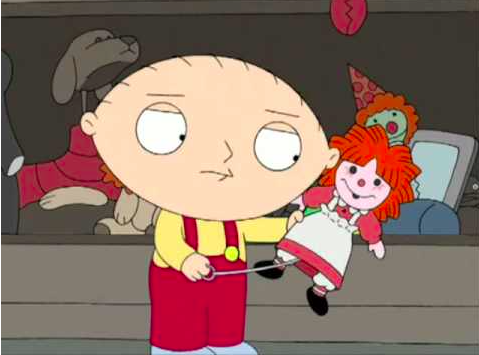
The public’s fascination with the story has manifested itself in curious ways as it has settled into the realm of popular myth.  In 2006 a British paper, the Daily Star, ran a survey to mark the 130th anniversary of Alexander Graham Bell’s invention of the telephone asking its readers to select “the biggest phone scandals of all time.”  To the paper’s surprise, Prince Charles and Camilla’s “saucy” chat edged out all others including soccer super star David Beckham’s text sex exchanges with Rebecca Loos (number two on the list) and Richard Nixon’s Watergate recordings (number four).  Further evidence of how well entrenched the tale has become is revealed by how efficiently and subtly it can be evoked.  An episode of the cartoon program The Family Guy once had the lead character say on the phone “I want to be your tampon,” and a ballet performance titled “Diana the Princess” choreographed by Peter Schaufuss in London in 2005 featured dancing tampons.  Is it possible that one day “Charlies’ tampon” will be as familiar an allusion as “Achilles’ heel?”  It would be shorthand for any man who even toyed with the thought of voluntarily exposing himself to anything menstrual.

The Guy with a Good Attitude Toward Menstruation

January 28th, 2010 by Chris Bobel


All this iPad humor has got us thinking about menstrual humor more generally–what’s funny (to some) what’s not (to others), why and why not.

In the end, anything-menstruation is almost always met with either

1) a shudder and a swift topic shift

OR

2) an uncomfortable laugh that reinforces once again, the menstruation-rule-we-live-by.

Then there’s our friends Chella Quint and Sarah Thomasin who brilliantly and creatively write and perform menstrual humor that is genuinely funny without being offensive to women. But their work is truly exceptional.

Usually, the humor is more like this classic from Kids in the Hall. Finally giving up the luddite’s fight, I joined Facebook this week and look what I found: this page referencing a sketch starring Dave Foley

The over-the-top earnestness of this guy is funny, sure, but that’s not all that’s going on.

Yeah—he offers a lot more appreciation for the menstrual cycle than even I aspire to– but is the premise–that a guy could offer something other than disgust (or at best, indifference) to menstruation– really that hysterical?

Granted, the concluding passage (below)had me laughing, but like most (all?) satire, after the laughs die down, I’m left wondering: why IS that funny, anyway?

And what does the success (or the failure–you decide) of the humor reveal about enduring assumptions about masculinity, women’s bodies, and heternormativity?

That’s why the woman I shall love will be able to menstruate as fully and freely as she desires. Even if her monthly flow should build in intensity to a raging rust colored torrent! An unbridled river of life giving blood flowing from between her legs! An awesome cataract plunging off the edge of our couch. I wouldn’t be phased! No, no, even if coureur de bois would come up stream, battling the rapids, and singing a ‘jaunty song’! I would take no offense, rather I would ford across that mighty womanly river, and fetch herbal tea and Pamprin. And then I would mop her brow and admire her fecundity. For I…Have A Good Attitude….Towards MENSTRUATION!

Post to Twitter Post to Plurk Post to Yahoo Buzz Post to Delicious Post to Digg Post to Facebook Post to MySpace Post to Reddit Post to StumbleUpon

Introducing the iPad

January 27th, 2010 by Elizabeth Kissling


Word on the street is that Apple is introducing their first tablet computer today. With their usual flourish, they’ve named it . . . wait for it . . . the iPad.

ETA: The ladies at Jezebel have published more than one compilation of period-related iPad jokes. A sample:

Are you there, God? It’s me, Marketing.

Don’t make fun. The iPad is the technology of the future. Period.

Can I get a scented iPad for when my data feels not-so-fresh?

Edited again to add: The Week has an interesting comparison of historical femcare slogans and Apple slogans – more similar than one might expect.

[Video via Lunapads]

Post to Twitter Post to Plurk Post to Yahoo Buzz Post to Delicious Post to Digg Post to Facebook Post to MySpace Post to Reddit Post to StumbleUpon

Don’t Let The Cat(amenial) Out

January 27th, 2010 by Elizabeth Kissling

Word Search puzzle featuring menstrual cycle termsGuest Post by David Linton, Manhattan Marymount College

A short item in the February 2010 issue of Harper’s Magazine captures, yet again, how nervous some folks are about any mention of matters menstrual.  The piece referred to the publication of a list of words and terms that were blacklisted from use in crossword puzzles and other word games by a British computer program called Crossword Compiler.

Among the partial list of problematic terms, along with others such as bollocksing, bonk, clitoridectomy, fanny, nooky, ruttish, sapphic, sexy and shtup, was the word “catamenial.”  This rather arcane term is one of the more obscure references to the period, more likely to appear in medical or, surprisingly, broadcasting documents.

For the first 25 years of commercial TV’s existence in the US, the National Association of Broadcasters specifically banned the advertising of feminine sanitary products.  It was not until 1972 that the ban was lifted and a year later, 1973, the first mention of the menstrual cycle appeared in a ground breaking episode of All in the Family.

Once the ban was lifted, strict rules were put in place.  Network “standards and practices” guidelines detailed how and when menstrual products could be advertised using the most non-colloquial language they could find.  For example, NBC’s “Personal Products Advertising Guidelines” included a sub-category labeled “Catamenial Devices and Panty Shields,” and ABC used a similar phrase, “Catamenial Devices, Panty Shields, Douche Products”

Use of this Greek derivative (meaning to occur periodically) captures the sense of mystery and semantic evasion characteristic of the way menstruation is commonly discussed.  It is noteworthy that the guidelines issued by ABC, CBS and NBC all avoided any use of the more common terms, menstruation and period.  Furthermore, the most common generic terms used to apply to the products themselves are also avoided.  Nowhere in the network guidelines is there a reference to pads, napkins or tampons.

Not only is the language of the network advertising guidelines sanitized (so to speak), but the rules for ad content insured that the ads themselves would be similarly discrete.  In this regard, the most important rule was that men have no significant presence in the ads.  The NBC guidelines stated that, “Use of mixed social situations is limited to incidental appearances.”  CBS insisted that “Sexual themes are unacceptable.”  ABC agreed that, “The use of either children or mixed social situations in advertising is acceptable when incidental and unrelated to the product.”

The rise of cable TV has altered the menstrual landscape considerably, yet evasions continue to prevail.  As I type this observation, my spell check repeatedly underlines the word “catamenial” in red, and when I ask what the preferred spelling is I learn that it is “cat menial,” whatever that could possibly mean.  So here’s an invitation to re:Cycling readers.  If the folks at Crossword Compiler decide to rescind their ban, what crossword clue would you suggest as an appropriate one for the word catamenial?

Post to Twitter Post to Plurk Post to Yahoo Buzz Post to Delicious Post to Digg Post to Facebook Post to MySpace Post to Reddit Post to StumbleUpon

It’s Official: At Least One SNL Writer Fears and Disrespects Women’s Bodies

January 19th, 2010 by Elizabeth Kissling

Guest Post by Heather Dillaway, Wayne State University

First, it was Tampax, and then it was Vagisil. But it’s good they didn’t leave out Summer’s Eve. And I expect Midol (for those irritating PMS-y women) and something about menopausal women’s hot flashes (can’t they control themselves with hormone therapies?) to be next. Although probably SNL writers aren’t savvy enough yet to even contemplate what menopause is or how they feel about it, so they’ll probably stick with skits that revolve around women’s body parts and younger women’s reproductive experiences.

I was frustrated with SNL’s skit about ESPN’s coverage of a women’s billiards tournament, “Tampax to the Max Tournament of Champions” (see my blog post about it). I was disgusted and concerned that SNL writers revised this skit for a second airing, to include a spoof about women’s yeast infections during a Women’s bowling tournament, “Vagisil Superstars of Bowling Tournament”. After seeing the second skit, I (along with many other critics) knew that the power of the skits was not in jokes about women’s menstruation alone but, rather, in jokes about the disgusting nature of women’s bodies more generally.

This past weekend, SNL revised the skit once again to be a skit about ESPN coverage of a women’s darts tournament, and the main sponsor was Summer’s Eve, “Summer’s Eve Stars of Darts Competition”. The skit was as dumb as it was the first two times, but the one-line jokes within the skit carried even more jarring phrases in my opinion (e.g., “when your situation down south makes him breathe through his mouth” or “when your man’s in a coma from your panty aroma”). As a trio, these skits point to the fear, dislike, and disrespect for women’s bodies. The three skits also all revolve around talk about women’s vaginas, and the mysteries, misunderstandings, fears, and disgust surrounding this body part. As a trio, the skits produce the message that vaginas are gross, that men do not understand women’s reproductive processes and conditions, and the not-so-subtle message specifically to women is that women should keep their vaginal “conditions” private and not bother men with them. Indeed, the message in the one-liners this time around is that vaginas should be good-smelling, unbloodied, and available for men’s use at all times (and no other situation is acceptable).

After watching all three skits, I think we can safely conclude the following:

  1. Commenters on our previous blog entries about these skits that thought it was “just a spoof on ESPN’s early coverage of women’s sporting events” were wrong. While this may be one of the ideas behind the initial creation of the skits, the skits’ messages move way beyond and mask this. These skits are about making fun of women’s bodies.
  2. Commenters  who suggested that SNL writers were just picking random products, and that these skits “could have very well been about Preparation H” were wrong. These skits will never be about products that everyone could use. The power of these skits is the fact that they are making fun of women’s bodies and products for only women’s bodies.
  3. One commenter on the previous blog entry about these skits also suggested that we have “been taught since childhood that vaginas and penises are serious business. Laughing at them is naughty, so we laugh at them because being naughty is fun.” Sure, this is true, but everyone also knows that when you decide to continually joke about one body part over the other funny ones, there is a reason. (Just like when that one kid was picked on over and over in elementary school – that kid wasn’t picked at random.) At least one SNL writer (and probably several, given how television writing typically works) doesn’t understand and respect women’s body parts. They understand penises and respect them and therefore aren’t joking about them in this particular skit. If they were making fun of everyone’s body parts and everyone’s products, then we wouldn’t be writing about these skits here at re:Cycling.

They Don’t Call Her the “Anatomy Whisperer”

January 16th, 2010 by Elizabeth Kissling

The original Bedazzler

The feminist blogosphere has been buzzing lately over all the decorations available for ladyparts. We chimed in ourselves on the labia dye, My New Pink Button. Now, via Broadsheet, we learn of “vajazzling”, or bedazzling one’s vajayjay. Actor Jennifer Love Hewitt, star of The Ghost Whisperer, recently announced to George Lopez and his talk show audience that her “precious lady” now “shines like a disco ball” because it is covered with Swarovski crystals.

Note that I used the term “vajayjay” above only because that is the term used by Love Hewitt in advocating the practice of vajazzling. (She says all women should vajazzle their vajayjays, and has an entire chapter of her new book dedicated to the topic.) Perhaps I take things too literally, but I understood vajayjay = vagina, so when I read Mary Elizabeth Williams’ Broadsheet article, I had a lot of questions. Like, WHY? why put crystals in your vagina? No one but your gynecologist will see them! And doesn’t it hurt? Aren’t crystals sharp? And what, exactly, does one use to ATTACH Swarovski crystals?

Of course, Jennifer Love Hewitt isn’t putting crystals in her vagina. She’s decorating her vulva. But cutesy terms like precious lady and vajayjay obscure women’s anatomy even more than Swarovski crystals and pink colorants. Vajayjay entered the pop culture lexicon because network censors would not approve a Grey’s Anatomy script using the word vagina too many times:

Shonda Rhimes, the creator and executive producer of “Grey’s Anatomy,” who brought the word into full public view, never intended to promote a euphemism or slang term for the female anatomy. Rather, she fought to use vagina in the script.

“I had written an episode during the second season of ‘Grey’s’ in which we used the word vagina a great many times (perhaps 11),” Ms. Rhimes wrote in an e-mail message. “Now, we’d once used the word penis 17 times in a single episode and no one blinked. But with vagina, the good folks at broadcast standards and practices blinked over and over and over. I think no one is comfortable experiencing the female anatomy out loud — which is a shame considering our anatomy is half the population.”

When grown men start referring to their penises as “pee-pee” or “winky”, I’ll consider vajayjay an acceptable label for my vulva. As for vajazzling, I’m with Madeleine and the other Lunapad ladies:

At the end of the day, for all the language of self-love and empowerment used in the marketing copy for these products, I still can’t get around the underlying implication that our vulvas are not in fact just fine, thanks, without smelling or looking any different than they already do. To my way of thinking, even planting a seed of doubt of this kind in a woman’s (let alone a girl’s) mind about her bodily self-esteem is to perpetuate a dangerous climate of self-loathing against which most girls and women will struggle at some point during their lives.


Post to Twitter Post to Plurk Post to Yahoo Buzz Post to Delicious Post to Digg Post to Facebook Post to MySpace Post to Reddit Post to StumbleUpon

What makes it funny?

December 7th, 2009 by Elizabeth Kissling

Readers of re:Cycling know that we love menstrual humor – we’re always willing to mock femcare adverts and can even laugh at ourselves. But, honestly, what’s funny about repeating the names of feminine hygiene products? It wasn’t funny when SNL had their fake sportscasters say “Tampax” over and over again in October, and repeating the same skit with Vagisil last weekend wasn’t funny either.

The show has a history of having a writers’ conference room that resembles a men’s locker room, and it appears that little has changed since the days when John Belushi would run around the set ranting about how “Women aren’t funny.” I wonder if he would think vaginas are hi-larious the way the show’s current staff does.

Post to Twitter Post to Plurk Post to Yahoo Buzz Post to Delicious Post to Digg Post to Facebook Post to MySpace Post to Reddit Post to StumbleUpon

A Critique of SNL’s Recent “Ladies Billiards” Skit: “Tampax to the Max Tournament of Champions”

October 13th, 2009 by Elizabeth Kissling

Guest Post by Heather Dillaway, Wayne State University

Screenshot

Screenshot

Trying to find a reason to stay up late this past Saturday night, I found myself watching Saturday Night Live for a few minutes. Unfortunately I tuned in right before a skit called “Tampax to the Max,” a skit within which two male SNL actors played sports announcers for a “Ladies’ Billiards” competition. Drew Barrymore and SNL’s Kristen Wiig played the two billiards players, but the skit wasn’t really about the billiards tournament at all. The skit was written specifically to highlight Tampax as a sponsor of the billiards event and, therefore, the skit was filled with superfluous tampon jokes and random interjections of the word “Tampax” (which, of course, brought the most laughs for the skit). Putting all other comments aside about the perpetuation of gender inequality in sports as well as all of my feelings about how ridiculous Drew Barrymore and her SNL counterpart (Kristen Wiig) were made to look in this skit, I think that we cannot just sit by and let this skit air without commenting about the place of menstrual products (and, by default, menstruation itself) within it. On one hand, this skit was simply a way for some SNL writer to air some really bad Tampax jokes and allow male actors on SNL to get a chance to say “Tampax” as many times as they could within one skit. In this context, perhaps some could characterize this skit as harmless. Yet, on the other hand, menstruation and women’s activities surrounding menstruation become a complete joke in this skit as a result. The inferences made about the connections between menstrual products and women’s sports are strange (Is Tampax what everyone thinks about when they watch women’s sports events? And are the sponsors more important than the actual sports event, if it is a female sports event? And is it more fun to think about women’s menstruation than to watch women compete?).  The fact that the billiard players’ place within the skit becomes shadowed by their menstrual products is maddening, however. The skit makes clear that women’s involvement in billiards (perhaps sports in general?) is unimportant but their use of menstrual products is much more interesting to men…

While I understand that SNL makes light of all different kinds of bodily processes (and that IS funny at times), the underlying equations of women with their reproductive processes and the laughs gotten from the pure mention of Tampax in this skit are disturbing. As I watched this skit, I couldn’t help thinking about why we haven’t moved on from laughing about menstruation and menstrual products.  As we all know, jokes often let us know exactly how unequal the world is and, in my opinion, letting male SNL actors just get a chance to make some random Tampax jokes in a skit is not doing women or reproduction or menstruation any good at all. Does menstruation become any more positive or any more well understood because of this skit? I don’t think so. I was offended by this skit, and would be interested to hear if I was the only one who was….

Post to Twitter Post to Plurk Post to Yahoo Buzz Post to Delicious Post to Digg Post to Facebook Post to MySpace Post to Reddit Post to StumbleUpon

Readers should note that statements published in re: Cycling are those of individual authors and do not necessarily reflect the positions of the Society as a whole.