Blog of the Society for Menstrual Cycle Research

Tina Fey’s Menstrual Musings

January 31st, 2012 by David Linton

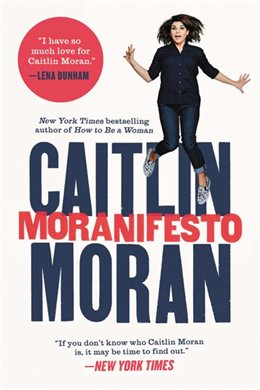
Tina Fey, true to her reputation for being feisty and transgressive, tells two amusing menstrual tales in her recent bestselling book, Bossypants.


The first is, appropriately for a “tell all” memoire, about her menarche.  The story, familiar to thousands of other women, relates how her mother gave her a “first period” kit from the Modess company that contained two pamphlets, “Growing Up and Liking it” and “How Shall I Tell My Daughter,” and pretty much left her on her own.  Fey’s humor derives largely from exaggeration and in this case she compares the Modess box stashed in her closet to a Freddy Krueger nightmare figure lurking in the dark: “Modessssss is coming for you.”


She goes on to describe the moment of the period’s arrival when she was ten years old and performing in a choral concert.  She claims that her surprise was not so much that she got her period but that the fluid wasn’t blue as she’d been lead to expect from TV ads.


The second, and more interesting, story is about how as a writer for the long-running TV series, Saturday Night Live, she managed to get the Kotex Classic sketch on the air.  Fey refers to it as “my proudest moment as one of the head writers of SNL.”  (The anecdote was also published in the March 14, 2011 New Yorker.)  The ad parody has become an SNL classic in itself and an indispensible inclusion in any discussion of the history of menstrual references on television.


The Kotex sketch is a send-up of the trend at the time for nostalgia sales pitches such as the Coke Classis campaign.  Written by Paula Pell, it features women proudly flaunting their Kotex belts and bulging sanitary napkins, even in a swimming pool and while wearing low cut, tight evening wear.  A man in the ad comments approvingly, “Them  girls are Old School!”


Fey describes how the men at the studio who had to approve the scripts balked at selecting it.  Their resistance was eventually overcome once the women explained the exact nature of the unfamiliar menstrual technology and how it was worn.  As Fey puts it, “They didn’t know what a maxi pad belt was.  It was the moment I realized that there was no ‘institutional sexism’ at that place.  Sometimes they just literally didn’t know what we were talking about.”


Beyond the fascinating behind-the –scenes access that Tina Fey’s book provides to the working of an influential TV show – and lots of other settings as well – she has also offered a glimpse of the menstrual social gap, the chasm of ignorance that separates women and men when it comes to understanding even the most rudimentary details of menstrual management.  In this case she was able to educate the men and succeed in producing a memorable – and perhaps even liberating! – piece of TV comedy.

Post to Twitter Post to Plurk Post to Yahoo Buzz Post to Delicious Post to Digg Post to Facebook Post to MySpace Post to Reddit Post to StumbleUpon

Menopause Isn’t for Dummies

September 23rd, 2011 by Elizabeth Kissling

Roseanne’s Nuts was one of the delights of summer 2011, especially for those of us who have missed the comedic talents of Roseanne Barr. If you don’t watch television (or are outside the US), Roseanne’s Nuts is Roseanne Barr’s return to episodic television, this time in the form of a reality show set on the star’s 40-acre macadamia nut farm in Hawaii. When her eponymous sitcom ended in 1997, she made a couple of attempts at talk show hosting, then left L.A. and the limelight to raise her youngest son and macadamias in Hawaii. He’s now a teenager, and the nuts are ready to harvest.

An ongoing thread of the show is Roseanne’s plan to harvest and distribute her nuts as a low-cost protein source for impoverished people. Each episode also has its own self-contained, seemingly unscripted plotline. Unlike many of today’s popular reality shows, however, there are no manipulated showdowns or drunken feuds. Much of the time, Roseanne and her family seem like everyone else’s family — if only the rest of us could live off sitcom residuals and were followed around by a camera crew. There is laughter and teasing, and some conflict underpinned with genuine affection, but everything isn’t always tidily resolved in 22 minutes.

In the Episode #15 (original air date September 10), 58-year-old Roseanne copes with continuing symptoms of menopause. It’s handled so honestly (for the most part) that I’m going to overlook the fact that the episode was titled “Menopause for Dummies”.* The episode opens with Johnny Argent, Roseanne’s manpanion**, sharing a list of menopause symptoms he has found on the internet. Roseanne acknowledges having them all, except for tingling in her extremities, and decides to visit her friend, Dr. Allen, and to investigate whether she should receive hormone treatments. (The full episode can be watched online at Lifetime.com until Oct. 11; preview a short clip at right.)

-+-+-+- SPOILERS AHEAD -+-+-+-

Roseanne visits Dr. Allen — on camera, of course — this is a reality show — and explains her concerns. He asks about her libido and her sex life, and she replies, “It’s like an old person’s”. She responds forthrightly to his suggestion that dryness may be the cause of her ‘feminine itching’: “that’s all dried up like a sonofabitch”. Dr. Allen wants to measure Roseanne’s hormone levels with a 24-hour urine test, as he believes that will provide more precise information than any blood test. Roseanne is horrified by his description of her contribution to the procedure (“You pee in a bucket for 24 hours”), but even more horrified by his other recommendation: she needs to exercise.

Roseanne tells the camera — the proxy for us, the audience at home — that she doesn’t know if she’ll go on hormones or not. Her women friends recommend red wine, saying it’s bad for menopause (“because it makes you sweat”) but good for the libido. Her eldest son Jake is delighted to hear that his mom is considering hormones, telling the camera, “After eight years of being batshit crazy, I think she’s finally ready. I’m so happy — once she gets hormones, my life’s gonna be a lot easier.”

Some of my SMCR colleagues who study menopause may cringe at these scenes, but I think they’re representative of the kind of communication many women experience around menopause; that is, well-meaning, if ill-informed, advice from friends and family. It feels like the kinds of conversations lots of us have in our own living rooms and front porches. It is this feeling of unscripted authenticity that draws viewers to Roseanne’s Nuts. I also note the special irony of menopause; after 20 or 30 years of our hormones being blamed for erratic and irritable behavior, we’re now advised to consume hormones to rein in our erratic and irritable “batshit crazy” behavior.

Curb Your (Menstrual) Enthusiasm?

August 9th, 2011 by David Linton

From time to time menstrual references show up in TV programs, mostly on situation comedies and, unsurprisingly, they are usually played for laughs.  The most common inclusions have had to do with menarche with menopause coming in second.  First periods have provided laughs and plot material for the writers of DeGrassi, Roseanne, Californication, Seventh Heaven, The Cosby Show, Beverly Hills 90210, King of the Hill, and others.  In nearly every one of these episodes the humor and plot tension derives, at least in part, from an exploration of male response to unwelcome exposure to the cycle: close encounters of the menstrual kind.

The most recent, and most daring, occurrence appeared in an episode of Curb Your Enthusiasm (Season 8, Episode 1) involving a girl selling Girl Scout cookies getting her first period standing in the foyer of Larry David’s home while writing up a cookie order.  Rather than dashing off to find a woman to “take care” of the situation, as depicted, for example, in King of the Hill and Beverly Hills 90210, the protagonist rushes upstairs to get a box of tampons, left behind by his wife who has left him, and stands outside a bathroom door shouting instructions to the bewildered girl inside.  Apparently she knows what the period is but has never been told how to use a tampon.

The episode is extraordinarily daring.  Even the simple detail of having an older man hand a young girl he just met a tampon is startling, given the depth of social taboos requiring strict gender separation in matters menstrual.  But to have him stand outside the bathroom door shouting instructions and reading the sheet packed in the box about placing the tampon in the vagina while the girl inside responds with confusion and frustration is risky indeed.  But the most striking thing of all is that while both characters find the situation awkward, neither one is overly embarrassed, particularly the girl who calmly announces, “I think I just got my period for the first time.”  Though she has apparently received little education about the technology, she is fully aware of what is happening in her body and accepts the fact that the adult she happens to be with when it happens is able to help her out.  The fact that it’s a male, and a quirky older one at that, seems not to matter at all.

This indifference on their parts is both a source of the humor and, perhaps, an indication of a watershed in menstrual decorum.  Or is that too optimistic a reading?

Cross-posted at The Communicated Stereotype


Post to Twitter Post to Plurk Post to Yahoo Buzz Post to Delicious Post to Digg Post to Facebook Post to MySpace Post to Reddit Post to StumbleUpon

In Search of The Perfect Vagina

February 28th, 2011 by Elizabeth Kissling

“If you’d told me three months ago that I’d let a plastic surgeon examine my froufrou, that I’d show it to another woman (who wasn’t a doctor) and then allow an artist to take a cast of my Mary, I’d have laughed you out of the house. But it’s extraordinary how documentary-making changes your mind about even the most concrete of things . . . “

–Lisa Rogers, presenter of Channel 4 documentary “The Perfect Vagina”


Rogers’ film is a poignant exploration of why young women in the UK seek labiaplasty and hymenoplasty.

Post to Twitter Post to Plurk Post to Yahoo Buzz Post to Delicious Post to Digg Post to Facebook Post to MySpace Post to Reddit Post to StumbleUpon

Vintage FemCare Advertising: “What is fresh?”

February 3rd, 2011 by Elizabeth Kissling

This 1981 ad for Summer’s Eve explains fresh.

This message is provided as historical information only; we here at re:Cycling do not endorse the practice of douching.

Post to Twitter Post to Plurk Post to Yahoo Buzz Post to Delicious Post to Digg Post to Facebook Post to MySpace Post to Reddit Post to StumbleUpon

How much blood is too much?

January 24th, 2011 by Elizabeth Kissling

The US Food and Drug Administration (FDA) approved tranexamic acid tablets as treatment for heavy menstrual bleeding more than a year ago, but you probably haven’t seen much of this television commercial to promote the drug (brand name Lysteda). Matthew Arnold reports in Medical Marketing and Media that television network executives are put off by the ad’s explicit mention of “periods” and “bleeding” combined with the symbolism of fall red rose petals.

(The article appeared in the December, 2010, print issue of MMM, but online October 20, 2010.)

Post to Twitter Post to Plurk Post to Yahoo Buzz Post to Delicious Post to Digg Post to Facebook Post to MySpace Post to Reddit Post to StumbleUpon

Vintage FemCare Advertising

January 20th, 2011 by Elizabeth Kissling

In my visual communication class this week, I used several femcare ads (along with a couple of cell phone commercials and other images) to illustrate Althusser’s concept of interpellation. My students got more of a lesson than they bargained for, as I ended up also talking a little about the history of advertising for femcare products. I mentioned but did not show this historically significant ad, notable to my students for the appearance of pre-Friends Courtney Cox, but more important because it was the first time the word “period” was uttered on television in a menstrual product ad.

It aired in 1985.

Post to Twitter Post to Plurk Post to Yahoo Buzz Post to Delicious Post to Digg Post to Facebook Post to MySpace Post to Reddit Post to StumbleUpon

“They Don’t Spoil”

January 15th, 2011 by Elizabeth Kissling

Like Sheldon says, you could save a lot of money if you buy tampons in bulk. Lots of women are probably wishing they’d bought o.b. tampons in bulk, now that they’re going for $20 a box on ebay.


Post to Twitter Post to Plurk Post to Yahoo Buzz Post to Delicious Post to Digg Post to Facebook Post to MySpace Post to Reddit Post to StumbleUpon

Menstruating Women are Like Vikings!

December 13th, 2010 by Elizabeth Kissling

At least according to the newest ad for Kitadol, a menstrual pain reliever sold in Chile.

According to The Viking Network, Viking women retained property and inheritance rights after marriage, plus the right to divorce a husband who mistreated her or their children, insulted her family, or failed to be a good provider. These are considerably greater legal rights than most women had in that era (approximately 800-1050 CE).

I can think of worse metaphors for menstruating women.

(So can Kitadol.)

[Via Copyranter]

Post to Twitter Post to Plurk Post to Yahoo Buzz Post to Delicious Post to Digg Post to Facebook Post to MySpace Post to Reddit Post to StumbleUpon

Block that Bloody Metaphor

September 14th, 2010 by David Linton

The challenge that advertisers face when promoting the sale of menstrual products is how to visually demonstrate how the product works or the aspects of the cycle that product addresses without showing actual menstrual blood or a woman’s anatomy. One well established solution is the use of blue liquid to demonstrate absorbency or the ubiquitous white clothing every menstruating woman is thought to prefer.

Creative metaphors and symbols abound.

Recently, a TV ad and associated web site have appeared marketing a product to treat what is called (in Capital Letters) “Heavy Menstrual Bleeding (HMB).” The web site states, “Heavy Menstrual Bleeding (HMB) is a medical condition also known as Menorrhagia.” Perhaps it would be more accurate to say, “Menorrhagia is a medical condition also known as heavy medical bleeding,” but maybe that’s just being picky.

The home page of the site claims that “Millions of women don’t have normal periods. Their periods are too heavy. But how much is too much?” The last sentence is printed in large type in a bright menstrual red color. Later, citing the US census, the site claims that there may be as many as 22 million women in the US who “suffer” from HMB, leaving unanswered how they define “normal,” a statistical term, if such a large number of women have the condition.

Since the ads and the site are the creation of a drug company, Ferring Pharmaceuticals, and the advice given is the usual “speak to your doctor” if you have these conditions, obviously there is a financial interest involved. Nothing new there. But it is fascinating to see how women’s bodies and their menstrual flow are visually constructed.

In this case, women are likened to a variety of drinking glasses containing some clear water. There are tall, slender glasses, short, round glasses, wine glasses with stems, glasses that bulge in the middle, glasses that flare out at the top. Each glass (there are nine different ones on the home page) has a different level of water in it, one only a quarter full, another three quarters, another half full, etc. We are to understand that this represents the wide variety in women’s bodies as well as the variations in the amount of menstrual blood each one produces each month.

I suppose that still water at a high level in a clear glass is an effective metaphor for a menstruating body, but when they did the video version of the promotion, they got carried away. The first image is of at lest three dozen different glasses with the suggestion of many more off to both sides of the frame. Then, as gentle music plays and a soft woman’s voice tells about HMB and that it can be treated, we see a number of glasses with low water levels. The narrator tells us that, “Every month millions of women have perfectly normal periods,” as the camera pans glasses with small amounts of water, but then, as we learn that “millions of other women don’t have normal periods,” we see a variety of glasses sinking into water or running over with water dripping down the lip or whirling through the air in slow motion as their contents spew across the frame in large and small blobs and droplets. The women represented by these glasses are in trouble and while a large glass tumbles out of control, its contents spewing every which way, the phone number and web site info settle on the screen.

I suppose it’s a good thing they used clear water. Had it been red it would have resembled a horror movie. But maybe that’s what was actually intended.

Really? Even “Period” is Bleep-worthy?

May 19th, 2010 by Chris Bobel

Joan Rivers guests on talk showMonday morning: A friend tips me off that Joan Rivers’s on-TV use of the word PERIOD was bleeped! Yes, dear reader, somewhere, a censor deems even the innocuous euphemism for MENSTRUATION unsuitable for television.

Uh…speechless.

[You can view the clip at Jezebel.com, my friend's source for this sad information.]

Post to Twitter Post to Plurk Post to Yahoo Buzz Post to Delicious Post to Digg Post to Facebook Post to MySpace Post to Reddit Post to StumbleUpon

Menstruation Myths PSA

April 26th, 2010 by Elizabeth Kissling

Menstruation is DANGEROUS!!!The Jamaica Observer has published a list of menstrual myths, apparently as a public service to its readers. Among the fallacies:

  • Do not go to a funeral and look at the dead while having your period as this will cause your bones to rot.
  • If a menstruating woman cans fruits or vegetables, the fruits will spoil in the can.
  • Dentist visits should not be done during the menses, because fillings put in during this time will fall out.
  • During menstruation a woman should not go hunting as the animals will smell her blood, which will drive them away.

And if you happen to be from New Jersey and of Italian descent, stay away from the tomatoes.


Post to Twitter Post to Plurk Post to Yahoo Buzz Post to Delicious Post to Digg Post to Facebook Post to MySpace Post to Reddit Post to StumbleUpon

Readers should note that statements published in re: Cycling are those of individual authors and do not necessarily reflect the positions of the Society as a whole.