February 9th, 2010 by Elizabeth Kissling
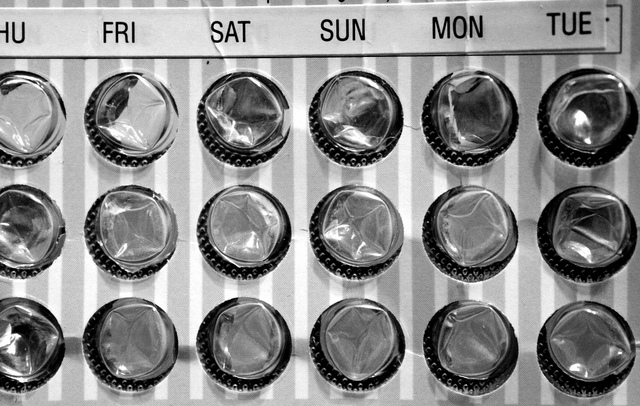
There are Tupperware parties, Passion Parties, Pampered Chef parties, and…Mirena IUD parties? Yes, apparently these events popped up early last year and were a joint effort from Bayer Pharmaceuticals and the mom marketing site Mom Central.
Here’s one mom blogger’s description of the Mirena party that she hosted:
Then tonight I hosted a party at my house with Mom Central. Mom Central had found me through this blog and asked me if I would be interested in hosting an event sponsored by Mirena. As I welcome any opportunity to sit down with some girlfriends with some free food and drink, I was happy to accept. Before the party started, I walked around nervously, terrified that only a couple of people would show up. We’re all so busy, and I worried that people would end up skipping a strange commercial-sounding event. But one by one, they rolled in and I began to relax.
We had an amazing evening, talking about sex, fashion, and living a simpler life. I realized that we don’t actually spend a lot of time talking about sex and relationships. We laughed a lot but also went home with some great tips.
If you’re thinking that “strange commercial-sounding event” sounds like an accurate description for a party like this, you won’t be surprised by what comes next. What this mom didn’t mention, possibly because she wasn’t aware, was the fact that the script used at these parties didn’t comply with FDA implementing regulations or the Federal Food, Drug, and Cosmetic Act, prompting the FDA to send a warning letter to Bayer at the end of last year. (Bayer is no stranger to FDA warnings – they recently had to “correct” ads for their Yaz/Yasmin birth control pills, which are also the subject of several lawsuits, after the FDA said they were unclear and misleading.)
Before I get into the specifics of the FDA violations in this case, let’s take a look at some more details about these events. First, let’s look at Mom Central. The main Mom Central site has forums, blogs, parenting tips, a product testing panel, giveaways, and so on, but it’s the Mom Central Consulting site that we’re really interested in. Here are some quotes from the site about what they do:
- Companies eager to tap the powerful, abundant, dominant women’s market are often challenged to target and reach Moms simply through their own internal “experts.” We at Mom Central Consulting are Mom Experts currently engaged in crafting messaging, marketing to mothers and reaching millions of Moms nationwide every month.
- TODAY’S MOMS REQUIRE TARGETED, HOLISTIC MARKETING APPROACHES that reach them where they are in their lives today. At Mom Central Consulting we create customer loyalty and word of mouth programs that: foster credibility, drive evangelism and engage Moms in irresistible brand experiences that drive sales and fuel profits.
Our two-pronged targeted approach connects clients with our vast proprietary network of leading Mom Experts and Opinion Leaders and then activates Moms to become trusting, loyal advocates and consumers of your brand, product or service, making us experts at marketing to women.
- CORPORATE SPOKESPERSON BUREAU: We can draw from our pool of hundreds of talented media savvy spokespeople to create a customized corporate press campaign featuring credible experts within your product category.
So maybe the goal of the hosts and attendees at these parties was to have a fun night eating free food and talking about sex and relationships, but it’s important to keep in mind that that’s not the main goal of Mom Central or the product that they’ve been hired to represent. What they want to do is “activate” some Mirena evangelists. Continue reading...
Tags: advertising, big pharma, Birth Control, blogging, drugs, economics, government agencies, guest post, IUD
Posted in Advertising, Birth Control, Law/Legal, Pharmaceutical | 3 Comments »
January 22nd, 2010 by Elizabeth Kissling
It was 37 years ago today that the U.S. Supreme Court decided Roe v. Wade, in which the Court held that a woman’s right to an abortion fell within the right to privacy protected by the Fourteenth Amendment.
In commemoration of that decision and women’s right to autonomy over personal reproductive decisions, I’m posting some of the newly released video of the late Dr. George Tiller talking about why he performed abortions.
Thank you, Dr. Tiller, for trusting women.

Tags: abortion, Health Care
Posted in Activism, Health Care, Law/Legal | 1 Comment »
January 11th, 2010 by Elizabeth Kissling
Britain’s North West Evening Mail reports that nation’s department of defense is considering whether or not to allow women to serve on subs. Women have gone to sea on submarines in pilot studies in the past, but presently only the Norwegian, Danish, Swedish, Australian, and Canadian navies allow women on submarines.
The primary objections to the new inclusiveness are the possibility of minute radiation affecting chromosomes in pregnancy; screening equipment in submarine toilets that may not be capable of dealing with items like tampons; and the belief that having women and men working in close, cramped quarters could “create tension.” Plus, “it might worry submariners’ wives if women go on subs,” according to one merchant seaman who is a Petty Officer in the Sea Cadet corps.
However, it’s the Ministry of Defense that will be making the decision. A spokesperson told the paper, “The UK is bound by law to reassess occupations from which women are excluded every eight years. We expect the review will be completed in early 2010 and once the results have been evaluated we will publish our conclusions.”
Until then, I’ll join the Evening Mail in letting local businessperson Sally Broom have the last word.
“As far as I am aware, the only ‘official’ reasons for women not being allowed to spend time in submarines at depth are lack of facilities, and medical concerns surrounding pregnancy. In this case facilities should be made available and there should be no issue for women who are not pregnant.
“A traditional and ‘unofficial’ viewpoint is that the presence of women leads to lack of focus. But the idea that, as soon as a woman sets foot on a submarine with a team of highly drilled, disciplined men, the whole thing would collapse into a lustful mess is an absurd insult to both male and female sailors.
Tags: boys/men, discrimination, government agencies, Menstruation, military service, sexism, tampons
Posted in Law/Legal, Men, Menstruation | 2 Comments »
December 18th, 2009 by Elizabeth Kissling
You may have heard the news that 23 hormone replacement therapy lawsuits filed by women diagnosed with breast cancer were dismissed by a New York judge this week. Judge Martin Shulman granted Pfizer’s motion to dismiss for two reasons: the plaintiff’s delayed filing exceeded the the three-year statute of limitations in New York, and that “the potential risk of contracting breast cancer from taking HRT medication was well known at all times out there in the stream of public information.” Oddly, Judge Shulman simultaneously asserted “that the debate over HRT health problems has not yet been settled.”
I can’t argue about exceeding the statute of limitations, but it’s difficult for a judge to assert that breast cancer risk of hormone therapy is well known public information. The Lancet reported today that up to half of US adults have trouble interpreting medical information, displaying low levels of health literacy. Health literacy, according to The Lancet, is the ability to comprehend and use medical information that can affect access to and use of the health-care system. Health literacy is more than reading and comprehending news reports of medical issues (which are often of poor quality – see Health News Review for sharp analysis of health news); one must also know how to navigate the complexities of the health care system, including knowing how and when to question one’s physicians and pharmacists.
It’s also hard to argue that HT risks are well known when gynecologists, the primary prescribers of HT, refuse to believe the scientific evidence. In 2000 – well after 1990s publication of data from the Heart and Estrogen/Progestin Replacement Study (HERS), a prospective, randomized, double-blind study of 2,763 women with coronary disease which found no benefit of hormones in preventing heart disease – 94.6% of American gynecologists surveyed recommended HT during menopause. Denial continued even after the Women’s Health Initiative (WHI) study – a large, prospective, randomized placebo-controlled trial of estrogen (with and without progestin) in healthy menopausal women – was stopped early in July 2002, because the treated group experienced higher rates of breast cancer, cardiovascular disease, as well as other risks of harm.
WHI was a large, primary prevention trial that contained enough subjects (more than 27,000) to answer the research question; used a design widely acknowledged to be the standard in testing therapeutic efficacy; tested Prempro, the most popular hormone combination; and was monitored by a data safety monitoring board using pre-established criteria. Practitioners should have been satisfied that the question of estrogen as a health-protecting drug had been resolved. Instead, a storm of protest erupted from physicians who could not, or would not, believe the results. Objections to the WHI results (almost exclusively from gynecologists) were so widespread that the media characterized the WHI results as confusing and controversial.
In truth, there was no confusion about the data, which were monotonously consistent with HERS and other randomized controlled studies. [Fugh-Berman & Scialli, 2006]
Why do gynecologists, judges, and others still regard this question as unsettled? Scholars offer several explanations. Paula Derry (board member of the Society for Menstrual Cycle Research) proposed in a 2008 article that faulty decision-making criteria are in play, such as
not valuing rigorous scientific thinking (e.g., ignoring normal rules for judging what counts as scientific evidence, sometimes while claiming to be scientific); not placing a primary value on avoiding harm (e.g., considering heart disease outcomes while not simultaneously considering other risks such as stroke); and basing judgments on a preconception about menopause (i.e., that menopause is an estrogen deficiency disease that causes health problems). [Derry, 2008] Continue reading...
Tags: advertising, big pharma, breast cancer, drugs, government agencies, Health Care, hormones, lawsuit, Menopause
Posted in Health Care, Law/Legal, Menopause, Pharmaceutical | 1 Comment »
December 16th, 2009 by Elizabeth Kissling
That was Zoe Littlepage’s response to Pfizer’s request to a judge that her law firm remove this video press release about Pfizer’s malfeasance regarding cancer risk of Prempro, their menopause hormone therapy drug. The motion reads, in part, “Plaintiff’s counsel should be compelled to remove this video from the Internet and refrain from making any further inflammatory and prejudicial public statements.”
No word on when the court will make its decision, but Oscar Chase, a professor of legal ethics at New York University School of Law, said a lawyer’s use of YouTube videos to promote his or her case isn’t all that different from a press release.
“We might say it is typical lawyer grandstanding,” Chase said in an interview. “The danger of jury tainting is outweighed by the public’s right to know.”
(Alert readers may recall seeing this video at re:Cycling last month.)
Tags: big pharma, breast cancer, hormones, lawsuit, Menopause, Prempro, viral video
Posted in Internet, Law/Legal, Media, Menopause, Pharmaceutical | Comments Off
December 13th, 2009 by Elizabeth Kissling
There’s a pretty good essay in this weekend’s New York Times (online here Saturday, in print Sunday in the Business section) about how hard Big Pharma has worked to market menopause as an estrogen deficiency disease. In addition to discussion of Wyeth’s advertising campaigns, the article mentions the firm’s contract with DesignWrite, a company drug makers pay to develop manuscripts for publication in medical journals, to prepare at least 60 articles for publication in medical journals on the potential benefits of hormone therapy for cardiovascular disease, Alzheimer’s disease, diabetes, colon cancer, vision loss and other health problems.
The article also includes access to PDFs of some of the thousands of pages of documents from Wyeth that were requested by plaintiffs in the lawsuits against the drug manufacturer. (To date, more than 13,000 people have sued Wyeth claiming that they developed breast cancer and other health problems after taking the company’s menopausal hormone drugs. As we reported three weeks ago, in ten of the twelve verdicts so far, juries have awarded significant sums to plaintiffs. ) The documents available at the New York Times include a publication plan for Wyeth from DesignWrite, a 1995 product launch speech from Wyeth’s marketing director proclaiming the company’s mission of bringing to fruition Dr. Bernadine Healy’s vision of “a world in which the vast majority of women would begin taking HRT, and we know that means Prempro, at menopause and continue on for the rest of their lives.” There’s also this handwritten note from a 1996 meeting about how to respond to a new study raising breast cancer concerns (red markings added by me):

Tags: advertising, big pharma, breast cancer, drugs, economics, hormones, lawsuit, Menopause
Posted in Advertising, Law/Legal, Media, Menopause | 2 Comments »
December 11th, 2009 by Elizabeth Kissling
Today I want to point to two important articles about women’s health from our friends at Women’s eNews:
- Yesterday, they published a story about Myriad Genetics and their firm grasp on the patents for diagnostics tests for BRCA1 and BRCA2 genes, which are known to place women at high risk for breast and ovarian cancers. Until the patents expire in 2014 and 2015, its laboratory is the only place in the country where diagnostic testing for the BRCA genes can be performed. A lawsuit representing patients, women’s health groups, medical professionals and four organizations has been filed bythe American Civil Liberties Union, or ACLU, and the Public Patent Foundation.
- Today, Women’s eNews published a story about the need for more research on Gardasil, the HPV vaccine recommended for young women and recently approved for boys and young men too.
Tags: big pharma, boys/men, breast cancer, drugs, economics, Girls, Health Care, lawsuit
Posted in Girls, Health Care, Law/Legal, New Research, Pharmaceutical | 2 Comments »
December 8th, 2009 by Elizabeth Kissling
Here’s one way that Canada shows some concern for risks to women’s health: the owner of a New Brunswick health food store was fined $7500 for smuggling a progesterone-laced cream from the U.S. The cream, called Aim Renewed Balance, is purported “to help restore balance between the hormones that cause premenstrual syndrome and menopause symptoms, such as hot flashes and mood swings.” It is not approved for use in Canada.
Tags: drugs, Menopause, progesterone
Posted in Law/Legal, Menopause, Pharmaceutical | 1 Comment »
November 23rd, 2009 by Elizabeth Kissling
There are more than 10,000 lawsuits against Wyeth/Pfizer regarding the link between PremPro and breast cancer. There have been 12 verdicts so far, and juries have awarded money to the plaintiffs in ten of those cases. The latest was announced today, in Donna Kendall v. Wyeth (Phila. CCP, June Term, 2004, No. 0965). The jury awarded Ms. Kendall $6.3 million in compensatory damages, and $28 million in punitive damages.
So far, thirteen women have settled their claims with Wyeth/Pfizer, but if awards like these continue, can we expect Pfizer soon to be offering to settle the rest?
The film clip at left is a video press release prepared by Littlepage Booth, the Houston law firm that represented both Connie Barton and Donna Kendall in their claims against Wyeth/Pfizer.
Tags: big pharma, breast cancer, lawsuit, Menopause, Prempro
Posted in Law/Legal, Menopause, Pharmaceutical | 2 Comments »
November 4th, 2009 by Elizabeth Kissling

Image from Online Journal
Even though the verdict regarding punitive damages awarded to Connie Barton in her suit against Prempro was sealed (as we wrote last week), the figure has leaked out. A Philadelphia jury awarded her $75 million in punitive damages, in addition to $3.7 million in compensation for her trouble. Although Pfizer/Wyeth will surely appeal, it’s a substantial victory to see punitive damages in an amount that is more than 20 times the compensatory damages. The jury found Wyeth’s conduct in marketing and selling the drug was “willful and wanton,” and put their money where their mouth is.
Tags: big pharma, breast cancer, lawsuit, Menopause, Prempro
Posted in Law/Legal, Menopause, Pharmaceutical | 2 Comments »
October 27th, 2009 by Elizabeth Kissling
Connie Barton, an Illinois woman who developed breast cancer after taking Prempro for menopausal symptoms, was awarded punitive damages by a jury in Philadelphia yesterday. The jury has already awarded her $3.7 million in compensatory damages, back in September, but we will not learn the amount of punitive damages until another Philadelphia jury reaches their verdict in similar case against the Pfizer, the drug’s manufacturer. (Technically, the case was filed against Wyeth, but the two companies just completed a merger deal last week, and Wyeth is now a subsidiary of Pfizer.)
Wyeth’s attorneys successfully argued that public revelation of the amount of damages might influence the jurors in Kendall v. Wyeth. However, the jury’s finding that Wyeth ignored evidence that the drug could cause cancer is now public information. Would I sound bitter if I said I hope that news influences potential jurors?
According to the news story about Barton’s case at philly.com, Pfizer has now lost five of eight trials over its hormone-replacement drugs since cases began reaching juries in 2006. 1500 more trials against Wyeth are pending at the Philadelphia Court of Common Pleas. But a longer story in Philadelphia Magazine reports 23 out of 31 cases set for trial have been resolved favorably for Wyeth; the company has settled five, and several are on appeal.
Christine Speer also writes,
The future of Prempro . . . seems pretty stable, no matter what the juries decide. Doctors in some 85 countries continue to prescribe it for hot flashes.
[. . . .]
The Philadelphia judge who basically invented mass tort pharmaceutical litigation — Sandra Mazer Moss — has made it her court’s mission to get through this docket and hear all 1,500 Philly-based trials. There might even be cases tried in groups. “The plaintiffs are due their day in court,” Moss says. “And so are the defendants. That is justice. Even one-tenth of a courtroom in your lifetime is better than nothing because you’re dead.”
If you were on the jury, you’d likely hear that Moss — who came to this court’s bench in January — arrived too late for the 205 women who died still waiting for their cases to come to trial. If you were on the jury, you’d hear that WHI’s lead researcher thinks 200,000 women who got breast cancer in the past decade have long-term hormone therapy to thank for it. If you were on the jury, you’d hear that Wyeth did everything a responsible drug company can possibly do in getting out a drug whose benefits still outweigh its risks.
Of course, if you’re not on the jury, you might never hear any of that. You might just be a patient.
Tags: big pharma, breast cancer, lawsuit, Menopause, Prempro
Posted in Law/Legal, Menopause, Pharmaceutical | Comments Off
September 26th, 2009 by Elizabeth Kissling
The popular birth control pill, Yaz is in the news again. Readers may remember that last autumn, Bayer (the maker of Yaz) was sanctioned by the FDA for their television commercials, “because they encourage use of Yaz in circumstances other than those in which the drug has been approved, over-promise the benefits and minimize the risks associated with Yaz.” The FDA actually required Bayer not only to end the advertising campaign immediately but to make amends by publicizing corrective information — an unusually bold move from the FDA. That led to the ad shown at right.
Bayer was cited by the FDA again earlier this year, for failure to follow proper quality control in the plant that manufactures the synthetic hormones used in Yaz.
Bayer is now defending itself against 74 lawsuits filed by users who developed health problems, such as blood clots or heart attacks. Bayer is taking the FDA citations seriously and plans to “defend itself vigorously against the suits.” Dr. David A. Grimes, a clinical professor of obstetrics and gynecology at the University of North Carolina medical school and paid consultant to Bayer says the risk of injury from Yaz is tiny. “My dictum is that a multiple of a rare event is still a rare event,” says Grimes. And the New York Times seems far more concerned with how the FDA citations and the lawsuits will affect Yaz’ image and sales than they are with women’s health.
Didn’t these people learn anything from the saga of the Dalkon Shield?
October 2, 2009
Edited to Add: The New York Times report neglected to mention that Swissmedic is investigating the death of a young woman from the effects of pulmonary embolism that may be linked to her use of Yaz.
Tags: birth control pill, commercials, contraceptives, FDA, lawsuit
Posted in Law/Legal, Newspapers, Pharmaceutical | Comments Off
Readers should note that statements published in re: Cycling are those of individual authors and do not necessarily reflect the positions of the Society as a whole.