- We are big fans of Sarah Haskins Target Women series here at re:Cycling, and were sad to see her leave Current TV in 2010. So sad that we failed to notice the talents of her successor, Erin Gibson.
- A longitudinal population study of 2102 women over 20 years found that copper intrauterine contraceptive devices (IUDs) did not increase pain during menstruation, and levonorgestrel-releasing IUDs did reduce dysmenorrhea. The full study is available online and in downloadable PDF at the link.
- Think Before You Pink, the activist arm of Breast Cancer Action, is offering a free webinar about media literacy related to breast cancer news and health journalism on Wednesday May 29 and Thursday May 30 (it’s the same program offered twice for your convenience – sign up for one or the other, not both).
- Dr. Jen Gunter reports on an Australian study that shows the HPV vaccine to be highly effective in eliminating genital warts. She notes that at least 83% of girls ages 12-18 have received one dose of the vaccine and 73% in this age range have received all three doses in Australia, compared to the Unites States where only 32% of girls ages 13-17 have been vaccinated.
- Sociologist Lisa Wade reports that finances are a larger factor in the choice to remain childless for young women than for previous generations.
- Another outcome of the terminated Women’s Health Initiative hormone study in 2002? Researchers found that ovarian cancer rates were falling by about one percent each year before 2002, then dropped by more than two percent per year. Correlation doesn’t mean causation, as we all learned in basic statistics, but “the association is compelling”, said Hannah Yang of the National Cancer Institute in Bethesda, Maryland.
- A group of about 60 Ontario women, among whom there have been 40 unwanted pregnancies and four abortions, are suing the manufacturers of Alysena birth control pill, recalled April 8 when it was discovered that some packs contained two rows of placebo pills instead of just one. The class action suit is seeking $800 million in damages.
- This week’s TMI at The Vagenda: What is it like to have a transvaginal ultrasound?
- In the onslaught of all the coverage of Angelina Jolie’s breasts this week, Susan Goldberg asks some important questions about her ovaries at Ms. magazine’s blog.
Falling Cancer Rates, Class Action Suit against the Pill, Angelina’s Ovaries, and More Weekend Links
May 18th, 2013 by Elizabeth KisslingSMCR 2013: By the Numbers
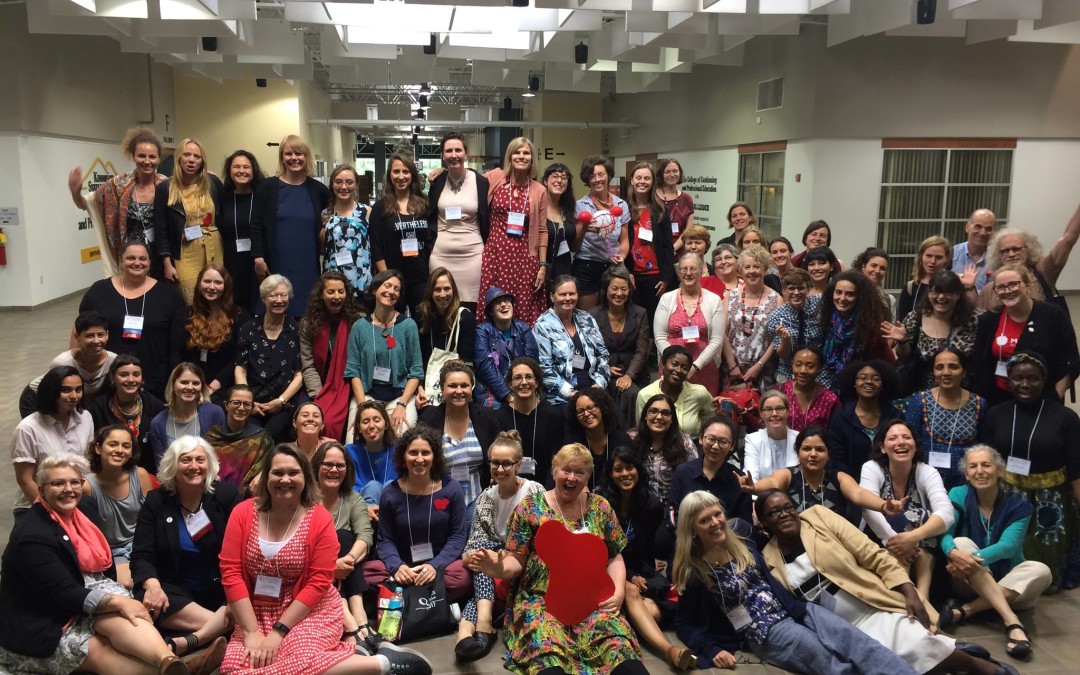
May 13th, 2013 by Chris BobelWith apologies to the Harpers Index, we present you with a snapshot of the upcoming 20th Biennial Society for Menstrual Cycle Research Conference held at Manhattan Marymount College, June 6-8, 2013.
Number of presenters on the program: 125
Number of these that are students: 32
Activists, artists, and clinicians: 32
That are Gloria Steinem, world-renowned feminist pioneer: 1
Number of Google hits for her iconic essay “If Men Could Menstruate”: 8,980
For the words “Kim Kardashian Pregnancy Weight Gain”: 22, 2000
Number of countries represented by all presenters: 12
Other than the U.S: 11
Number of presentations that are research projects: 60
Workshops: 7
Posters: 17
Plenaries: 4
Performance Pieces: 2
Poetry Slams: 1
Number of scholarship requests made by conference attendees: 39
In 2011: 6
Number of presentations focused on MENOPAUSE: 13
On MENARCHE: 17
Number of presentation abstracts that mention the words LIBERATE, FREEDOM, JUSTICE or CHALLENGE: 18
That mention the words SHAME, SUFFER and PAIN: 15
Red Riding Hood: 1
The film Carrie: 1
Pharmaceuticals: 4
Education: 10
Gender, Men, Women, and/or Girls, : 133
Number of Days Before the Conference: 24
Days left until you can register: 24 (you can register on site)
Years you will have to wait for the next SMCR conference : 2
Join Us! Be Counted!
NIMH rejects the DSM, One More Girl, and More Weekend Links
May 11th, 2013 by Elizabeth Kissling- The National Institute of Mental Health – the world’s biggest mental health research funder — has announced that it will be “re-orienting its research away from DSM categories”. This announcement comes just a few weeks before the release of the newest edition of the famed Diagnostic and Statistical Manual of Mental Disorders (DSM-5), later this month.
- Doctors at NYU Langone Medical Center have found some women on low-dose birth control pills may have more pelvic pain during orgasm than women on higher-dose pills.
- One More Girl is a film in development about adverse effects of Gardasil and other HPV vaccines. The title is a spin on Merck’s advertising campaign, One Less Girl.
- We’ve linked and referenced a number of articles over the last several years about the pressure to have the right kind of labia, or a good vagina — whatever the hell that is. Each time another one pops up, there’s another bruise on my heart.
- More signs of the failure of sex education and of contraception education: Even teens and young women with the good fortune to have access to birth control often don’t understand how it — or their bodies — works.
Yaz and Yasmin Back in the Spotlight
May 9th, 2013 by Elizabeth KisslingGuest Post by Holly Grigg-Spall, Sweetening the Pill
Last year the FDA made the decision to keep the birth control pills Yaz, Yasmin, and Beyaz on the market despite controversy over corporate corruption of the review process.These drugs are back in the spotlight.
The French health minister has called for doctors to stop writing prescriptions, 2,000 lawsuits against Bayer launched in Canada last month, and Marie Claire Australia dedicated five pages to an in-depth feature about the side effects, instigating an investigation by the country’s top current affairs show Today Tonight.
Bayer has gone about settling the 13,000 lawsuits in the US out of court, likely with the hope of keeping the details of confidential files regarding marketing techniques and research out of the public eye. Unperturbed by mounting reports from women of the myriad health issues caused by their products, the company launched Yaz Flex in Australia at the end of 2012. The first oral contraceptive on the Australian market presented as being for the purpose of preventing periods, Yaz Flex comes in a digital dispenser that records how many pills have been taken and alerts the user when she’s missed a dose. There are enough tablets to allow for just three breaks a year. In the US in April the FDA, equally unperturbed, ruled that pharmaceutical company Activis can start selling generic versions of Yaz, providing a low-cost version of what has been the most expensive oral contraceptive of recent years.
The feature in Marie Claire Australia generated 300+ comments on the magazine and television show’s Facebook pages. Many of the commenters were women who had developed blood clots when taking these brands. Some had made the connection at the time and others made the link only as a result of the coverage after months or years of not knowing why they had endured the injuries. Some of the women were presently experiencing the symptoms of a blood clot mentioned in the show and made the decision to stop taking the pill as they typed.
The piece was written by a long-time member of the Yaz and Yasmin Survivors forum and balances interviews with women who suffered the serious physical side effects with those who have been victim to the serious psychological side effects. I’m among those who experienced a long list of negative physical and psychological effects when taking Yasmin for more than two years and it was this forum that prompted me to stop taking it.
Monash University in Australia is one of the few facilities to have undertaken research into the correlation between birth control pills and depression. Professor Jayashri Kulkarni found that women on the pill were twice as likely to experience depression, anxiety, and mental numbness (known as anhedonia). The Yale Daily News reports that in the wake of her research receiving a little media attention Dr Kulkarni received more than 300 emails from women “clearly describing when they went off the pill that they felt subjectively more happy. The anhedonia, for example, disappeared, the irritability disappeared, the sense of poor self esteem disappeared”.
She is now focusing her attention on researching what she believes to be the particular psychological impact of the Yaz brands, those pills containing the synthetic progesterone drospirenone and low-dose synthetic estrogen.
The Many Faces of Cervical Fluid
May 7th, 2013 by Elizabeth KisslingGuest Post by Kati Bicknell, Kindara
It has been brought to my attention several times that not all women’s cervical fluid matches the usual descriptions of sticky, creamy, egg white, or watery. This means some women are having a hard time charting their fertility, because they don’t know how to categorize their cervical fluid for their chart.
So today I’ll give you very detailed descriptions of the different types of cervical fluid, and how to classify them.
I’m going to be incorporating vaginal sensation into the mix here. Vaginal sensation is the way your vagina *feels* when different types of cervical fluid are present. You know how you can tell if the inside of your nose is wet, like when you have a runny nose? And you know how you can tell if the inside of your nose feels dry, like when you are in a dusty desert? You can tell the same things about your vagina as well, if you pay attention. The way your vagina feels can give you a lot of insight on the state of your fertility and what kind of cervical fluid you’re likely to find.
One thing to keep in mind when it comes to cervical fluid is that there is a baseline level of moisture that will always be present in the vagina. After all, it’s a mucus membrane, like your mouth. If you touched the inside of your cheek, it would be damp — same thing with the vagina. Don’t let that normal vaginal moisture confuse you. Unless there is a physical substance on your fingers or toilet paper, it doesn’t count as cervical fluid. (The exception here is watery cervical fluid: sometimes the water content is so high that there is nothing that will hold together, and it’s just plain wet. But in those cases there is usually so much of it that there is no question about whether or not it’s cervical fluid.)
Cervical fluid is measured above that baseline level of moisture. It tends to start out on the drier end of the spectrum, and it increases in water content as a woman approaches ovulation. Generally, the higher the water content, the more fertile the cervical fluid. After ovulation the water content will decrease.
Note: all cervical fluid is potentially fertile. If you are charting to avoid pregnancy, any cervical fluid you notice before ovulation means that your fertile window has begun. But for women who are trying to achieve pregnancy, there are definitely types of cervical fluid that are more optimal for getting pregnant. So, shall we launch our boat onto the sea of cervical fluid exploration? Lets!
These are the different categories of cervical fluid.
None:
- What it feels like (vaginal sensation): dry, or like “nothing’s going on.”
- What it looks like: nothing! Maybe a slight dampness on your fingers that will quickly evaporate.
- What it feels like on your fingers: a slight dampness.
- What it looks like on your underpants: nothing. Squeaky clean. You could wear those underpants again tomorrow if you wanted to (ain’t no one gots to know about it!).
Sticky:
- What it feels like (vaginal sensation): dry, sticky, or like “nothing’s going on.”
- What it looks like: whitish or yellowish, tiny bits of clear gummy bears, tiny pieces of drying rubber cement, grade school paste, wet Elmer’s glue, wet wood glue, crumbly off-white Play-doh, thick white or yellow cream, clumpy, pasty, tacky, gummy.
- What it feels like on your fingers: springy, sticky, crumbly, dry, pasty.
- What it looks like on your underpants: white or yellowish lines or areas that tend to sit on the top of the fabric, as opposed to soaking in. When it dries it forms a crust that can hard to wash out on laundry day.
Creamy (similar to sticky, but with a higher water content.):
- What it feels like (vaginal sensation): cool, slightly damp, or may not feel like anything.
- What it looks like: milky, cloudy, like hand lotion, yogurt, whole milk, or heavy cream.
- What it feels like on your fingers: smooth, creamy.
- What it looks like on your underpants: white or yellowish lines or areas that tend to sit on the top of the fabric, as opposed to soaking in. When it dries it forms a crust that can be hard to wash out on laundry day.
Eggwhite:
- What it feels like (vaginal sensation): slippery, lubricative.
- What it looks like: raw egg whites, wet rubber cement, clear, stretchy.
- What it feels like on your fingers: slippery or lubricative or stretches an inch or more between thumb and forefinger.
- What it looks like on your underpants: slippery, wet, may sit on top of the fabric, or soak in slightly.
Watery:
- What it feels like (vaginal sensation): water rushing, dripping or gushing out of your vagina; cold, wet sensation.
- What it looks like: clear or milky/clear, about the consistency of water or skim milk.
- What it feels like on your fingers: wet, slippery.
- What it looks like on your underpants: leaves round wet patches that soak into your underpants.
I’m sure I left out some possible descriptions of cervical fluid here. If I didn’t name one that you’ve personally experienced, let me know in the comments. I’ll add in more descriptors as needed, so we can make the most thorough cervical fluid compendium known to humankind!
Cross-posted at Kindara, February 20, 2013.
Altering Cycles, the End of Birth Control Training, and More Weekend Links
May 4th, 2013 by Elizabeth Kissling- This open letter to Facebook from MotherWise is being circulated widely on the giant social network, protesting Facebook’s censorship of anatomical drawings of women’s bodies while objectifying representations of the same body parts and other violations of the Terms of Service are allowed to stand.
- The Family Medicine Committee of the Accreditation Council of Graduate Medical Education (ACGME) is preparing to drop training in reproductive care, like providing women with contraception and counseling them about unintended pregnancies, from the training requirements for residents in family medicine.
- In this interview, Australian GP Dr Deirdre Little tells the story of a case report she previously published in the British Medical Journal of a 16-year-old female patient who suffered premature menopause following the Gardasil vaccine.
- More and more experts question the wisdom of annual pelvic exams.
- A new study from the University of Oregon found that 17% of young women surveyed alter the frequency and/or schedule of their menstrual cycle “by deviating from the instructions of hormonal contraceptives, which include birth-control pills, vaginal contraceptive rings and transdermal contraceptive patches”. More than half of these women learned how to do this from non-medical sources, such as friends or family members.
- What is like to have endometriosis?
“I have a decent tolerance to pain. I’ve had a baby, I have tattoos, I’ve had dental surgery without anesthetic because I’m crazy like that. I’m pretty good at distancing myself from pain and carrying on with what I have to do in my daily life.
The pain of endometriosis is so intolerable I would rather get tattooed on my teeth while giving birth to triplets every day of the week than endure another second of the pain of endometriosis.”
In Praise of Cycles
May 3rd, 2013 by Breanne FahsAs a professor and therapist, I see many people come through the door who struggle with a variety of feelings they identify as problematic to their lives: depression, anxiety, mania, suicidal thoughts, panic, grief, anger (and so on). We are taught, as therapists, to see the cycles of mood as an inherent problem—something indicative of a “mood disorder,” something to keep high alert about, to monitor, to control, to consider medicating. While I do not deny the existence of some cyclic mood disorders—where people experience “episodes” of severe negative feelings or intense anxiety that cause notable distress—it does seem problematic, both within and outside of therapy, that people so often consider cycles detrimental.
Never is this disdain of cycles more evident than in people’s descriptions of women’s menstrual cycles as inherently troubling. Women feel more moody, less energetic, more bloated, angrier, less sexual, hungrier, more tender (and men, too often, quickly hurl these cyclic changes into women’s faces as an insult). This bothers women, they say, because they like to feel “normal” (that is, emulating men who supposedly lack emotional and physical cycles). But, isn’t the fundamental nature of things quite…cyclic? Nearly everything that comes in cycles has benefits, teaching us that the world is non-static, ever-changing, always in flux. The changing seasons (even here in Phoenix, where the seasons move from pleasantly warm to unbearably hot) signal the onset of new weather patterns, shorter or longer days, and necessary difference. Growing up in the West, I have heard East Coast and Midwest people lament the loss of changing seasons when they move to California or Arizona—they want the rhythms, pace, and visual scenery that accompanies the traditional four seasons existence.
We are creatures that crave cycles, I think. Academics rely on the ebbs and flows of the academic year to guide their work, pausing in the summer and over the holiday break for some much-needed rest before starting again each school year with full gusto. College professors’ job satisfaction is among the highest in all professions, alongside computer programmers, who overwhelmingly set their own hours, and physical therapists, who have more autonomy than most American workers. (Cross-culturally, European workers generally report more happiness as well, as Europe generally recognizes the cyclic nature of life by offering extended vacation time, paid maternity leave, and generous sick pay.) More and more American companies have started giving employees period “sabbaticals”, acknowledging that larger chunks of time to shift focus, relax, start a new project, or travel will earn company loyalty and will markedly increase job satisfaction. The monotony of the year-round 9-5 job with little vacation time and, more importantly, no cycles of work and play, creates the most havoc on people’s lives. Shift workers who disrupt the natural cycles of their bodies—staying up all night, sleeping all day—have poor life expectancies, substantially higher risk of at least six different kinds of cancer, more heart attacks, and far poorer health outcomes as a result. Even those who take anti-depressants and anti-anxiety medication—perhaps to lift them out of their low moods or panicky states—often report feeling apathetic and robotic as a side effect, missing, it seems, the cycles of mood they once had.
I would argue that the disdain for cycles, the need to convince people that they should never feel too sad nor too happy, the loathing we seem to direct toward the menstruating body, the insistence that people work themselves to death without breaks or cyclic expenditures of energy, results from the dangerous fusion of patriarchy, capitalism, and the pharmaceutical industry. The dogged insistence that people must always be happy, must work until they drop without ever taking time to fully rest, must always “manage” the cycles of their bodies (for example, losing their “baby weight” right after pregnancy, controlling menstrual blood, forcing themselves to work following a death in the family, clocking in the same hours year round), reveals a deep-seated disavowal of cycles as fundamental to human life. Cycles matter—they reflect the truths women have always known, the necessity of change and movement, the power of the body to teach us about the world and, perhaps, to undermine the institutions that deplete and eradicate the natural cycles of human life in favor of sexism and profit.
How do girls learn about periods?
May 1st, 2013 by Laura WershlerHow do girls learn about menstruation today? Who talks to them? Who do they talk to? Or do most girls rely on the Internet for information about periods?
Take this article by Elizabeth (bylines are first names only) – What I Wish I Knew About My Period – posted last week at Rookie, an online magazine for teenage girls. Not a teenager but definitely a young woman, Elizabeth (Spiridakus) shares the wisdom she’s gained through her menstrual experience. Here’s her sum-up:
These are all the things I wish someone had told me before I got my first period, and in the couple of years that followed. Most of all, I wish I had FOUND SOMEONE TO TALK TO! I had so many questions and fears about the whole business, and I think I would have been so much less self-conscious, and so much HAPPIER, if I had only had access to some friendly advice. So, talk to your friends! Talk to your cool older cousin or aunt or sister or your best friend’s cool mom or your OWN cool mom. Leave your questions—and your good advice—in the comments, because I certainly haven’t been able to cover all the bases here.
Read this again: “Most of all, I wish I had FOUND SOMEONE TO TALK TO!”
Elizabeth urges readers to talk to their friends, cool older relatives, or their own – or somebody else’s – “cool mom.” Great advice, but I have to ask: Why aren’t cool moms and older relatives already talking to the girls in their lives about menstruation? Sharing friendly advice? Passing on wisdom from mother to daughter, woman to woman?
Suzan Hutchinson, menstrual activist, educator and founder of periodwise.com, a project dedicated to empowering girls and women to embrace the taboo subject of menstruation, has a few ideas about this. She thinks many moms don’t know when to begin “the period talk” or what to say, so they remain silent until their daughters start their periods, or they wait thinking their daughters will initiate period talk. She warns against this.
“We should all remember that when moms offer too little information or start providing information too late, girls often question their credibility and hesitate to return as new questions arise.”
Although Suzan’s mother talked to her about menstruation, she didn’t start early enough, before Suzan heard things from other girls that she didn’t understand. Her early menstrual experience included lying to her friends about getting her period long before she did at age 15. By then she was “too embarrassed to ask my much more experienced friends” and “too proud to turn to Mom.” She tried to deal with things on her own.
“I needed a period coach – someone to walk through things with me and instruct me…help me figure out what to do, when to do, how to do.”
A period coach. This is exactly what Elizabeth is for the girls at Rookie. Read the comments. Readers loved it.
She’s not the only one using the Internet to connect with girls about menstruation. Despite my reservations about a website operated by the company that sells Always and Tampax, the content of which deserves serious critique, I must acknowledge that thousands of girls are turning to beinggirl.com for period coaching, including tips on how to talk to their moms!
Moms shouldn’t be waiting for their daughters to talk to them. They need to find their own period coaches. Other mothers like Suzan Hutchinson and the mom who started bepreparedperiod.com.
The more information girls have the better. Brava to Elizabeth for What I Wish I Knew About My Period. But moms and cool older relatives have got to get in the game. Now. Don’t wait until the girls in your life come to you.
Working Mothers
April 29th, 2013 by Paula Derry
“Working Mother and Son” Photo by Russell Chopping // Creative Commons 2.0
http://www.flickr.com/photos/russellchopping/3501039851/
Research is often reported as though it is news, as though the most recent article is the best and research that was not published this year is somehow not as interesting or is out-of-date. I recently dug out some articles I wrote about the psychology of working mothers that were based on a study I did in the mid-1980s. I interviewed psychotherapists about how being a mother had affected their professional lives. This study was qualitative research. I offer the results as interesting ideas, not as definitive conclusions. Some points I think are still interesting:
- Overall, about 64% of the 25 mothers I interviewed opted for part-time work; when children were preschoolers, this was about 78%. Psychotherapists, unlike many other women, have the option of working part-time: part-time jobs, especially for therapists who see clients in private practice, are the same jobs that a full-time worker would have.
- I compared the mothers with another group of 19 therapists who did not have children. The non-mothers tended to work full time (about 90%). However, both groups of women were deeply and apparently equally committed to their jobs.
- Many of the mothers (about 60%) felt that work was not as important to them as it would be if they were childless. However, this did not mean that work was unimportant. For most women, it only meant that they now had two strong priorities instead of one.
- Almost all of the mothers (88%) felt that having children affected their work as psychotherapists by deepening their empathy, understanding, or emotional knowledge about parents and parenting. This was not simply intellectual, that they knew more facts, although this was also true. It was experiential understanding, a different experience of what facts mean. This was so even though their profession involves helping clients understand their parents or their parenting, and was reported whether they had a child while in graduate school or after they had worked for many years.
- One aspect of this increased knowledge was an experience of how passionate an experience mothering is. Another aspect was a less idealized view of both parents and children, and greater tendency to see the experiences of parents and children from their own perspectives. For example, in addition to seeing parents in terms of how their children felt (e.g., that the parent was mean or rejecting), the therapists might perceive more clearly where parents were coming from or that children might misunderstand or be unreasonable.
- This greater ability to see the position of both parents and children more clearly is what a psychologist might call psychological individuation. That is, the stereotype is that mothers are or should be all-giving, selfless, thinking only about their children. However, these mothers seemed to grow more realistic, clear about and accepting of who children as well as parents are. As I said in one paper: “Interconnectedness, or intimacy, requires a sense of oneself and the other as separate but related. (If children really do lack a sense of this separation, that is no reason why their parents, who are adults, should identify with their perspective.)”
References
Derry, P.S. (1994) Motherhood and the importance of professional identity to psychotherapists. Women & Therapy, 15, 149-163.
Derry, P.S. (1992) Motherhood and the clinician/mother’s view of parent and child. In J. Chrisler & D. Howard (Eds.), New directions in feminist psychology: Scholarship/Practice/Research. New York: Springer.
Empty Tampon Dispensers, Adolescent Endometriosis, Something about the Men in Menstruation, & More Weekend Links
April 27th, 2013 by Elizabeth Kissling- The video at right was made by the editor of the student newspaper, The Easterner, at Eastern Washington University, where I teach. I swear, I didn’t put her up to it! She made this video before I met her, when she came to interview me for the accompanying article.
- Tumblr user StewieIsMyHomeboy explains how to deal with a woman in your life who is on her period, because apparently there are still some people mystified by this.
- A new study in the Swedish journal, Acta Obstetricia et Gynecologica Scandinavica, reports that endometriosis may occur in adolescence. The disease is thought mostly to affect adult women, but apparently certain markers in adolescence are associated with a subsequent diagnosis of the disease.
- Talking about the men in menstruation with our own man in menstruation: re:Cycling contributor David Linton was the guest on Leslie Botha’s radio show, Holy Hormones, Honey!, on April 22. You can listen to the whole thing here.
- Tavi Gevinson’s version of Sassy for today’s teens, Rookie, has a thorough article about what young women wish they knew about periods: “Pointers for those who menstruate, or are about to“.
- There’s a new kind of menstrual education in town! Meet the Menstrual Doula.
- Users of Fertility Awareness Methods/Natural Family Planning are sure to appreciate this collection of illustrative gifs.
- FDA Creates New Mobile Cellphone App to Help Doctors And Consumers Report Deaths and Injuries From Medical Devices and Drugs. They promise not to sell your data.This could make a big difference in the reporting and collecting of data regarding adverse effects of all kinds of medications.
- Many re:Cycling readers are familiar with Menstrala, the menstrual art of Vanessa Tiegs (featured in a special menstruation-themed issue of Women’s Studies), or perhaps other artists who paint with menstrual blood. Laura Wershler sent in this link to Beauty in Blood, a project dedicated to capturing the natural beauty of menstrual blood flowing in water.
- Documentary filmmakers are casting women in their twenties and thirties to be part of a feature documentary based on a forthcoming book, Sweetening the Pill or How We Got Hooked on Hormonal Birth Control. If you’re in L.A. (or can get there easily), you could be in it. More detail here.
The Last Snowflake
April 24th, 2013 by Heather DillawayMy kids and I read a book about “the last snowflake” a few years ago. The book was a story about how the last snowflake felt as it hit the ground each winter – lonely because his friends were ahead of him and probably melted already, or maybe carefree and floating on the wind to say the last goodbye to winter. This year my kids and I keep trying to wonder when that last snowflake would fall. Was it a few weeks ago? No. Was it last weekend? No. Well, here it is snowing again today so will I see the last snowflake tonight? At some point this snow has to end – it’s late April! When WILL that last flake fall?
Plenty of people have written and sang about the “last snowflake” (do a web search and you’ll see). It’s a great thing to philosophize about: when will it come, what will it look like, will I miss it, am I ready for what comes after it, and, in general, how do I feel about the transition it represents? Am I glad to see that last snowflake of the season, or am I melancholy about it? Am I ready for the warmer weather, or did I like wearing warm sweaters and fleece pajamas? Do I like winter after all, even though it’s hard and long and seemingly never-ending, until it’s over? I like spring a lot but it’s always so short in Michigan and we head right into hot weather, there’s really not much in-between. Plus spring and summer mean the ramping up of activities and a busier schedule – am I ready for that? A part of me is already missing that last snowflake even though I don’t know if I have seen it yet….but then again, I’m pretty ready for winter to be over. Can I feel two things at once? Can I be sad and glad to see that last snowflake?
Why am I writing about snowflakes? Because I read a piece on the Red Hot Mamas website the other day about a menopausal woman’s last period that reminded me that of my thoughts about last snowflakes. In “A Gentle Good-bye,” Christine Merser talks about how she did not get to say goodbye to her last period at age 42, that it came too fast and she mourns (at least in part) the idea that she’ll never menstruate again. She acknowledges the hardships menstruation sometimes caused and the hassles that were part and parcel of it, but also reminisces in its life-giving qualities and feels a sense of loss. She feels her last period was a “benchmark moment” and suggests that in not knowing that her last period was indeed her last, she did not get to say that “gentle goodbye” that she wanted to say. She also talks about menopause as representing the “October” of her life, signifying ends rather than beginnings, but at the same time wants it to mean new and better things. The idea that the last period cannot be predicted but is hoped for, but then may be bittersweet when it’s finally reached is something that I’ve heard from so many women. Menstruation is hard, especially when it is unpredictable in perimenopause or before, but a part of it is also safe and representative of a kind of stability and identity that is hard to give up. Merser proposes that cessation of menstruation is the “first thing she can’t fix” about her body. Regardless of the freedoms that you might get when it’s over for good or the things about it that you will gladly give up, women aren’t always quite sure they really want to be done with menstruation forever once they sit back and think about its meanings. So they ask, Am I glad to see that last period, or am I melancholy about its passing? Am I ready for the midlife and beyond, or did I like being younger? Am I ready to give up my monthly reminders of womanhood? Do I like menstruation after all, even though it’s hard and long and seemingly never-ending until it’s over? I might like midlife a lot but it seems like it might be short and it might head me right into aging for real, so how long will I really be in this good midlife stage? Does a part of me miss my period before I’ve seen my last one?
Like snow, menstruation can be unpredictable, uncertain, burdensome, and a hassle, and we might all be very happy to say goodbye. BUT, for those of accustomed to the seasons and the good parts of each season, we might also be somewhat sad to see snow and menstruation leave us. Especially if we don’t get to say a chance to say goodbye.
Disclaimer: This analogy probably only works for those who live in Northern climates and are used to the good and bad things that come with snow. And yes, I’m sort of making light of menstruation here, but my feelings about the last snowflake this year are noticeable to me and I thought it might be fun to play with this analogy.
Health Literacy, the End of Vagina Jokes, Greening Your Period, and More Weekend Links
April 20th, 2013 by Elizabeth Kissling- Some useful definitions: health literacy and e-health.
- It’s great that we can finally say the word vagina, but are we done with vagina jokes yet?
- Your breasts aren’t perfect until your nipples are exactly the right color — enter nipple tattooing, or tittooing, if you prefer.
- Kosher medicine: How can doctors without knowledge of rabbinic law treat halachic infertility?
- BePreparedPeriod is offering a free Earth Day webinar about greening your period on April 22 — information to be discussed will include how chemicals in the environment (food & beauty products) are affecting women’s health; effects traditional menstrual products are having on the environment and your health, solutions to many menstrual product complaints such as irritation, vaginal dryness, TSS concerns; and eco-friendly, body-friendly, period-friendly products. Register here.
- Crankyfest has announced the winners of their First Annual Period Film Contest! You can view the winner and all eleven finalists at the Crankyfest site.