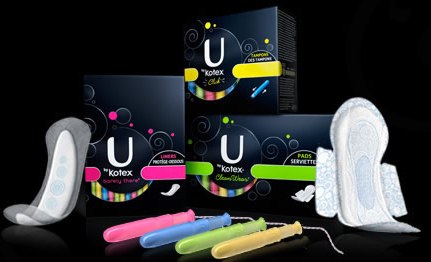
Is it wrong that I like this ad because it makes men look foolish for fearing tampons? It’s not that I mean to endorse mocking men as a class, it’s just that unlike the Kotex “Ridiculous” ad, this new ad frames something other than menstruation as this lady’s biggest problem.
I’d Rather Hold Your Bike than Your Tampons
April 19th, 2010 by Elizabeth KisslingTime and Time Again
April 18th, 2010 by Elizabeth KisslingGuest Post by Paula S. Derry, Ph.D.
Déjà vu
An article in today’s New York Times Magazine recounts the author’s experience with a debilitating depression that began during her perimenopause, the transitional time leading up to menopause. For her, prescription estrogen was a life-saver that alleviated her symptoms. The article places her experience in the context of research on the Timing Hypothesis, an idea that arose after the Women’s Health Initiative, or WHI, research project. WHI clinical trials documented that hormone supplements after menopause did not, as had previously been assumed, lower a woman’s risk of heart disease. Heart disease risk was not lower, and, in fact, when a number of chronic illnesses were considered together, the medication did more harm than good overall. The Timing Hypothesis is the idea that the WHI was fundamentally flawed, because hormones must be started right around the time of menopause to have a health-promoting effect and the subjects in WHI were on average over 60; if started when a woman is older, when chronic illnesses have already started, the hormones are actually harmful rather than helpful. The Sunday New York Times article presents this idea uncritically, without quoting any of the many experts who do not find it plausible or convincing, and, in addition, presents a lurid, unscientific description of perimenopausal hormonal dynamics with words like “ricocheting hormones” and an “upheaval” that causes a “hellacious strain” on the brain. The author suggests that WHI was a poorly planned study that asked the wrong questions with the wrong methodology. The Timing Hypothesis, if true, might lead to a cure for Alzheimers and have other important health repercussions.
Time for a reality check.
Let’s go back in time to before the WHI research. Beginning in the 1980s, professionals asserted that hormone therapies were safe and effective to prevent chronic illnesses, especially heart disease, in postmenopausal women. This idea was aggressively promoted, and it was not limited to women around the time of menopause. Clinical trials are required to prove that a new medication is safe and effective before the Food and Drug Administration will approve that medication. However, once approved and available on the market, it is okay for doctors to use their judgment and prescribe the drug for whatever use they believe is reasonable. Many of the claims for estrogen were for this kind of off-label use because there was no clinical trial proof that estrogens reduced heart disease, made women “feel better,” or improved their lives in many other ways being claimed. However, other kinds of evidence made it seem plausible. There were “biologically plausible” mechanisms–this means that because of things we know about the body–like the fact that there are estrogen receptors in the brain–it is plausible, we can hypothesize a way that estrogen would have a certain health effect. There were the personal experiences of women. There was the idea that menopause was intrinsically unhealthy and that women were not meant to “outlive their ovaries.” Using estrogens was compared by some to using vitamin supplements or to a diabetic using insulin. There was a strong conviction among certain enthusiastic scientists and practitioners, some of them highly respected individuals, that it was all so. Professional groups of various sorts frequently issue opinions about medications; here, many groups offered the opinion that all women be offered hormone treatment. Physicians were encouraged to prescribe hormones for disease prevention because it was so certain that it would help their patients, rather than waiting for the slow process of clinical trials to take place. Wyeth, a pharmaceutical company, asked the FDA to approve estrogen for heart disease prevention even without clinical trials.
And 58.4% of statistics are made up on the spot
April 18th, 2010 by Elizabeth Kissling
The latest magazine ad for Always pads (pictured at right) reads, “97% of women who tried Always Infinity said they’d recommend it to their friends.” Smaller print notes that these data are from a survey at Always.com — suggesting a self-selected population of women who like Always. Respondents who won’t recommend the product are dismissed as women who never like anything.
Sounds like someone’s been reading Darrell Huff’s classic book, How to Lie with Statistics!
Saturday Surfing
April 17th, 2010 by Elizabeth KisslingLots of great stuff this week:
- Dr. LeRoy Carhart on the new anti-choice laws in Nebraska: “This latest anti-woman and anti-health legislation merely strengthens my commitment to fight for women’s reproductive health and rights.“
- Awesome slide show of tampon ads at Slate.com reveals their startling similarity to cigarette ads.
- We are on the verge of a highly untreatable gonorrhea epidemic. And four other things the new executive director of the National Coalition of STD Directors (NCSD) learned in his first three months on the job.
- Bitch magazine bloggers and commenters take on the mysterious mixed messages of I Love My Muff vaginal deodorant spray.
- Bedazzling one’s genital region: It’s not just for the ladies anymore.
- PSA for Dudes: Menstruation does not make women insane, so you don’t need a stupid app for your phone to track PMS.
In the bathroom
April 15th, 2010 by Elizabeth KisslingGuest Post by David Linton, Marymount Manhattan College
Women are sadly accustomed to encountering menstrual prejudices, negative stereotypes and condescending attitudes in movies, TV shows, ads, jokes and causal conversations. But, there’s one place you’d think would be free of menstrual malice: women’s public toilets. Here’s a place protected from the intrusive male gaze, a place where women often engage in conversational bonding, where secrets are shared, where pads and tampons are given to the friend or stranger caught unprepared by the unexpected arrival of an early or first period.
This phenomenon is captured sensitively in an episode of the Canadian situation comedy, DeGrassi: The Next Generation, titled “Coming of Age,” that depicts the story of Emma, one of the featured characters, when she gets her first period. She stains her pale skirt (a detail that is shown explicitly) and races to the bathroom with a friend. Neither girl is carrying the needed product but a girl with whom Emma is in conflict comes in and, setting aside their enmity, provides her with a pad. The menarche story is told with candor, and the bathroom scene captures the special nature of the kinds of menstrual transactions that occur in the sheltered environment of the “Women’s Room.” An earlier posting on re:Cycling portrayed another such menstrual transaction with humor.
However, sometimes even the bathroom sanctuary is not off limits to the invasive and strange lens through which the menstrual cycle can be viewed. A few years ago a colleague, Anastacia Kurylo, returned from a trip to Europe with a souvenir for me. In a public toilet in an office building in Switzerland she noticed a receptacle in one of the cubicles that contained individual bags for the disposal of used menstrual products. What caught her attention was the signage on the receptacle as well as the image and writing on the bag.
The tin box was labeled “Lady Killer” and the image on the disposal bag was of a hand gun accompanied by the following: “Lady Bag – Hande hoch und Beutel vollmachen.” I am told that this translates to “Hands up and put it in the bag” in English. I am totally puzzled as to what was in the minds of those who wrote these captions and copy. While one can understand the importance to plumbing maintenance of not flushing products down the drain, why this kind of weird (jocular?!) threat would be deemed an effective deterrent is beyond me. Could this be uniquely Swiss humor?
Perhaps even sillier is the name given the huge toilet paper dispenser which, presumably, is the same as found in the men’s toilet: Big Willie. And then there’s the ash tray!
Adventures in Menstruating cycles through New York
April 14th, 2010 by Giovanna Chesler
Sarah Thomasin at Bluestockings
Last Sunday evening, at the Lower East Side bookstore (and feminist Mecca) Bluestockings, Chella Quint attempted to begin her 5th installment of a performance built from her zine Adventures in Menstruating. However this piece, Here’s The Science Bit, was quite rudely interrupted by Mother Nature, in tweed, presenting a pink and red wrapped box. Mother Nature who typically appears in Tampax adverts, exclaimed “It’s your monthly gift!” Chella seemed pleased to accept it. This confused the woman. “But…but, she stammered. It’s your monthly gift?!” Chella reminded her that she was quite happy taking it, thank you very much, and proceeded to open up the box (wondering why boxes are a running theme in fem care advertising.) For the next hour, as the paper flew and big red bows zoomed around the room, the gifts kept coming from Chella and co-performer, Sarah Thomasin, now donning lab coats.
Chella (a contributor to this blog) and Sarah’s writing on the fem care industry is spot on. Since 2005, they have produced the zine and now a blog which attempt to poke and prod the hawkers of pads and tampons out of their shameful marketing strategies. This evening they re-examined ads from the 1950′s for Zonite, a douche so powerful yet “safe to tissues” (??!) and Modess, a menstrual product pre-wrapped (i.e. disguised) in plain brown packaging. Of course, as Quint pointed out, the only other product to be wrapped in this manner were bombs.

Chella Quint and Sarah Thomasin
In another hilarious bit, Quint played a Mooncup while Sarah proclaimed “I’m a tampon!” They argued back and forth of their varying abilities to collect and discard menstrual blood. However, The Tampon had to leave the conversation mid-sentence, only to be replaced by another Tampon who had not been part of the initial conversation with Mooncup. This happened thrice over (though of course, this would happen thousands of times over in a 10 year period, the typical lifetime of a menstrual cup, wherein the average woman would cycle through approximately 2,750 tampons.)

Adventures in Menstruating on S.H.A.M.E., photos by Chris Bobel
To combat the side effect of pop culture’s representations of menstruation, S.H.A.M.E. (Shame, Horror, Ads/Media, Erasure) Quint presented a takeaway for the evening – The Stain. The latest in fashion, Stains are red felt blobs akin to blood stains which you adhere to the front of your clothing (at your crotch) or at the back side. As Chella and Sarah presented their gift they praised the product “The best defense against stains is a healthy dose of shamelessness!” Several attendees wore their stains out the door, proudly walking down the street impervious to shame-induced fear and carried forth the overall feeling of Adventures in Menstruating – high brow and low brow at the same time.
Can you make a baby with a bottle of cough syrup?
April 13th, 2010 by Chris HitchcockIn a story featuring a photo of a lovely couple holding a beautiful newborn, the Globe and Mail (a reputable Canadian national newspaper) has an article this week about using Robitussin as a fertility aid. According to the article, the TTC (trying to conceive) community is abuzz with this.
How an off-label application of over-the-counter cold medicine found a shelf life as a conception tool widely promoted online is a story marked with skepticism and disbelief. Robitussin’s effectiveness has been debated on chat forums, and references to its impact can be found in bestselling pregnancy books. In a time when fertility treatments cost thousands of dollars, it’s not surprising that a $5 solution has intrigued women for more than 20 years. But it is unusual that despite almost three decades of word-of-mouth debate, there’s little scientific evidence to prove that it works – or that it doesn’t – leaving it in a strange realm somewhere between old wives’ tale and unsung miracle drug.
The article later describes the published support for the active ingredient in aiding conception:
A Pennsylvania doctor, Jerome Check, published an article called “Improvement of cervical factor with guaifenesin” in the Journal of Fertility and Sterility in 1982. It documented a study of 40 couples who had been attempting unsuccessfully to conceive for at least 10 months.
The women were given 200 milligrams of guaifenesin three times a day, from the fifth day of menstruation through to ovulation. Dr. Check found that 23 of the women showed “marked improvement in postcoital tests after treatment, while seven showed slight improvement,” meaning that their cervical mucus was noticeably thinner.
More important, of those 23 couples, Dr. Check wrote that 15 became pregnant while testing the regimen. One patient with only mild improvement in her mucus levels also conceived. Dr. Check concluded that guaifenesin is “one of the simplest and cheapest treatment methods of addressing the cervical factor.”
I see that JH Check has published 3 further articles mentioning guaifenesin fertility, but he is a lone voice, aside from the TTC community of women, and some authors of lay books on becoming pregnant. A spokeswoman for the manufacturer said in e-mail, “We do not have any data for the use of Mucinex [the US product name] for fertility issues nor do we recommend its use for this purpose.” There’s no pharmaceutical interest driving (and funding) the research, so individual researchers need to somehow fund this themselves (would a national health granting agency fund such work?).
And apparently things like the quality of cervical mucous (which is part of how oral contraceptives block pregnancy) are no longer relevant, because
… the medical community has moved on, propelled by advances in technology that have seen in-vitro fertilization become standard treatment for fertility problems. “Cervical mucus can be overcome by doing insemination, so it doesn’t even matter,” Dr. Cheung said of Robitussin’s possible effect.
The article also describes the serious issues with ethics of research on infertility treatments, given the desperation of people seeking help:
“We see people who come to the support group who seem to be rushed into IVF without a real assessment,” she [Diane Allen, who runs the Canada-based Infertility Network] said. “They feel so desperate that if somebody told them to stand in the corner or cut off their arm or something – if they thought they’d have a child out of it – maybe they’d do it.”
Seeing Ourselves for Ourselves
April 12th, 2010 by Chris BobelGuest Post by Alexandra Jacoby

handmirror
“Controversy Rages Over Female Genital Cosmetic Surgery”. You can read the full article by Betsy Bates in Ob.Gyn. News. Bates interviews doctors as to whether performing these procedures meets a need or exploits a lack of body-knowledge among women. Both sides claim to be taking care of, and empowering, women.
One of the doctors who performs genital cosmetic surgery is not only sure that women are well-educated on the range of diversity of normal-looking vulva, he also feels it would be insulting to our intelligence and confidence to raise the question.
From where I sit, he is mistaken about this – we do need to be educated! – and, on another note: why is it disrespectful to offer information?
Admittedly, Ob.Gyn. is not my field, nevertheless, I’d like to say a few words. No – wait, it IS my field, or rather I’m its field – as I am a woman. One who didn’t give her body a lot of thought – until I started photographing vulvas.
The photography project began as a response to a friend who told me that she “didn’t like the way her vagina looked”. I wanted her to know that there was no one right way to look, that we were all unique.
I’ve photographed 107 vulvas so far, and produce exhibitions of the v-portraits. The most common response among women is “Wow! So, we really are all different.” The next most common response is “I guess I’m not so weird after all.”
I’ve been exhibiting since 2002, and these are consistently the most common responses.
One response to the project back when I first announced it was: “Great. Another body part to worry about!” She had not given what her vulva looked like a thought until I brought it up.
Here’s a response emailed to me after an exhibition last summer:
“…The photographs made me aware again of how incredibly different and beautiful we all are, and how (taken out of context) the images look like intricate, unique sculptures. The colors and shapes and attitudes are so utterly individual…
It made me wish I had had an experience like this (encountering you and this open attitude) when I was in college (now more than 30 years ago) because at that point I was completely clueless and embarrassed about my body. My ignorance was stunning, and I was ashamed of that ignorance. I have since learned to love and appreciate my body, even though it in no way conforms to the traditional standards of what’s supposed to be beautiful and sexy. Beauty and sexiness are emotional, not physical, and all of our bodies should be celebrated. And you gave me a view of myself I had never had before…”
My friend, she hadn’t seen other vulvas. Most of the women attending the exhibitions, they hadn’t either. Some women told me that they were nervous to come to an exhibition, and then were relieved and empowered having attended. They now felt they were part of something. A continuum of unique and normal.
So far no one has told me to cease and desist my v-portraiture because OBVIOUSLY we’ve all seen this before.
I do it, too. I don’t always offer information because I don’t want to offend anyone by thinking that s/he doesn’t already know the answer. Similarly, I don’t always ask questions because I believe I should already know the answer. And, I ALWAYS regret both withholds.
News: Mooncup leaks less than pads or tampons
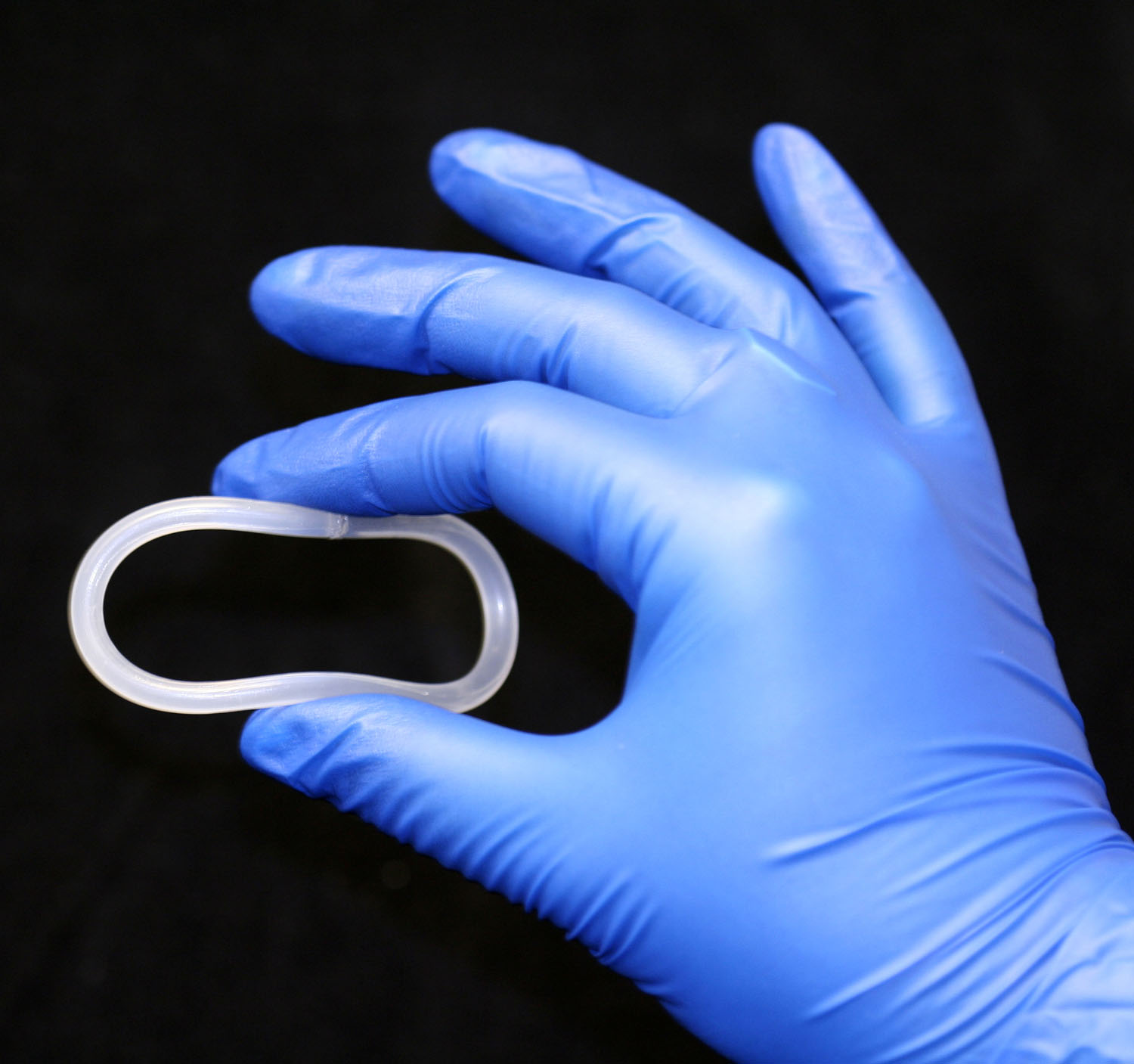
April 10th, 2010 by Elizabeth KisslingA small study published this month in the Journal of Obstetrics & Gynaecology tested effectiveness of the mooncup. The results won’t surprise anyone who has used one: “The Mooncup leaked 0.5 times less frequently and required to be changed 2.8 times less frequently, on average, during one menstrual period than regular sanitary protection.”
Saturday Surfing: Link-ariffic Reading
April 10th, 2010 by Elizabeth KisslingThis week’s recommended reading:
- Is your period late? Or are you just counting days incorrectly? Heather Corrina @Scarleteen explains. (For more about how to track your cycle, CeMCOR offers Structured Daily Diary forms, and how-to instructions.)
- You’re not a feminist, but . . . what?! Yes, you are a feminist. Say so, says Chloe Angyal.
- Ethics of commodification of human eggs – Morganne Rosenhaus at RH Reality Check asks what is the real cost of eggs for sale?
- Via reader Betsy Lavolette, we learn that the Hawai’ian island named Ka-hoʻolawe translates into English as “bright vagina”. Does anyone know the story behind that name?
The IUD Makes a Comeback?
April 9th, 2010 by Giovanna Chesler
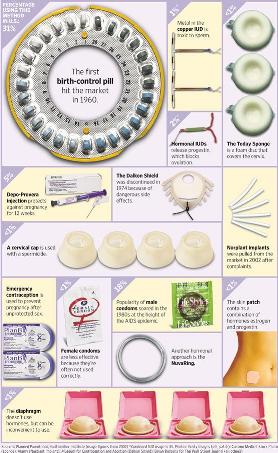
In our pill popping economy, the go-to option for long term birth control has, since the late 1970′s, been the pill. In the 1970′s the copper IUD (Intrauterine Device) fell out of favor after recalls, cases of infection and cases of sterilization. However, this recent Newsweek article, The IUD Reborn by Meredith Melnick suggests that the IUD is on the rise. The article cites both ParaGard (the copper IUC) and Mirena (the hormonal IUD by Bayer) as making comebacks, building from a Virginia Commonwealth study that “surveyed women with clinically defined “high-risk” sexual behavior (one third had documented histories of sexually transmitted disease), and found that modern IUDs do not increase the rate of pelvic inflammatory disease or infertility among women who have multiple partners or contract STDs. Some of the study’s data suggested that the Mirena actually protects against STDs by causing an overproduction of cervical mucus, which can act as a barrier to pathogens.”
I hope this copper IUD resurgence proves true, for the device has been so tainted that obtaining one sometimes proves quite a feat of strength on the part of the client. Not only might one have to ask for a non-hormonal IUD by name (“I’ll take ParaGard, please. No, the copper one.”) you may need to explain why you are choosing this device (“Birth control at a fraction of the cost, normal ovulation, 99.2%-99.9% effective, etc.”) In my experience, and in the cases of other recent IUD recipients, we needed to coach our gynecologists through the process of insertion. A friend who obtained an IUD this week reported to me that, while in stirrups waiting for the procedure to begin, she noticed her gynecologist reading the instructions on the package. She asked him if he knew what he was doing and he said, with some degree of uncertainty, “Oh yes. They’ve just changed the packaging.” My own gynecologist admitted that she needed to re-read the packaging as well for she inserts less than one IUD per month at her hopping New York City clinic.
Finally, to get coverage from an insurance company, in some cases you must convince them to cover the device (of course, this is if you are lucky enough to have insurance.) Conversations may go something like this: “No. I cannot buy a copper IUD at the drug store and bring it to my gynecologist. I must order it directly from the company and they ship to the gynecologist. And yes, you WILL reimburse me for this charge.” Then, they may not reimburse you, and in that case I recommend putting up a fight. Mine included writing a letter laying out the costs of other birth control options. “My gynecologist prescribed this device to me as a safe, non-hormonal contraceptive that is effective for 10 years. I will not need hormonal pills for those 10 years and will not incur additional expenses based on failure of a hormonal product. If you calculate the savings you accrue, based on my choice to use a non-hormonal IUD, it is quite significant.” Needless to say, I received the check in the mail two weeks later without apology.
Thankfully, while IUD questions and problems arise, there are helpful discussion boards like IUD Divas. As with hormonal birth control pills, you are still at risk for contracting STD’s. Condoms, dental dams, gloves and the like must still be part of any non-monogamous sexual practice. But this is an interesting development and it will be followed here. For, as with the diaphragm, inexpensive birth control options seem to fall far out of favor when there are expensive pills to be swallowed en masse.