December 29th, 2009 by Elizabeth Kissling

Three of my young nieces, Labor Day Weekend 2009.
Janice Horowitiz’ “Dueling Docs” feature at Huffington Post today is about the issue of girls reaching puberty at increasingly earlier ages than previous generations. Both Dr. Alisan Goldfarb and Dr. Stephen Safe talk about endocrine disruptors such as BPA (bisphenol-A, a carcinogenic component of some plastics found in some baby bottles and water containers) and pesticides. Certainly both types of chemicals are likely to be a factor in early menarche, but I find it surprising that those are the only factors mentioned. There’s no discussion of the roles of psychosocial stressors, low birth weight, or formula feeding. Neither physician gives serious consideration to the endocrine disruptors that are the hormones used in raising beef and dairy cattle as well as chicken in this country; Dr. Safe acknowledges that “[a]lmost all foods have endocrine disruptors”, but qualifies that statement with, “particularly fruits and vegetables.” (Do you suppose the beef and dairy lobby advertise at Huffington Post?)
For a more thorough, nuanced analysis of this issue, see Sandra Steingraber’s report, The Falling Age of Puberty in U.S. Girls: What We Know, What We Need to Know, published in 2007 by the Breast Cancer Fund. Among other findings, Steingraber reports that new research has revealed that the amount of natural hormones a child’s body produces on its own is much lower than previously estimated; this means “safe levels” of exposure to synthetic hormones and endocrine disruptors must be recalibrated, and policy modified accordingly.

Tags: breast cancer, environment, Girls, hormones, Menarche, puberty
Posted in Girls, Internet, Menarche, New Research | 3 Comments »
December 29th, 2009 by Elizabeth Kissling
Tags: Humor, zine
Posted in Activism, DIY, Humor, zine | Comments Off
December 27th, 2009 by Elizabeth Kissling
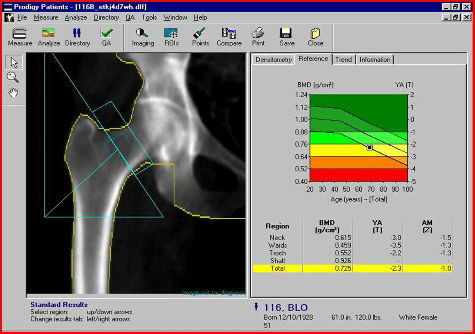
New research from the University of Texas Medical Branch at Galveston finds that nearly half of women using depot medroxyprogesterone acetate (DMPA), commonly known as the birth control shot, will experience high bone mineral density (BMD) loss in the hip or lower spine within two years of beginning the contraceptive. Women who smoke, have inadequate calcium intake, and have never given birth are at higher risk of BMD loss.
The study, published in the January 2010 issue of Obstetrics and Gynecology, followed 95 DMPA users for two years. In that time, 45 women had at least five percent BMD loss in the lower back or hip. A total of 50 women had less than five percent bone loss at both sites during the same period. The researchers followed 27 of the women for an additional year and found that those who experienced significant BMD loss in the first two years continued to lose bone mass.
“These losses, especially among women using DMPA for many years, are likely to take an extended period of time to reverse,” says first author Dr. Mahburbur Rahman, assistant professor in the department of obstetrics and gynecology and Center for Interdisciplinary Research in Women’s Health.
The researchers note that while this study will help physicians counsel women with modifiable risk factors who wish to use DMPA, prevention of bone loss while using the contraceptive and reversibility of BMD loss are still not well understood and further research is needed.
DMPA, an injected contraceptive given every three months, is used by more than two million women in the U.S.; nearly one-quarter of them teens. DMPA is popular with young women because it is less expensive than many other forms of birth control, has a low failure rate, and does not require daily use.
[Via Red Tent Sisters]

Tags: bone health, contraceptives, DMPA, drugs
Posted in Birth Control, New Research, Pharmaceutical | 1 Comment »
December 27th, 2009 by Elizabeth Kissling
One of the reviewers for the forthcoming edition of Our Bodies, Ourselves, who blogs anonymously at Mom’s Tinfoil Hat, is seeking contributions for the chapter she is reviewing.
I am busy reviewing and contributing to the second chapter of Our Bodies, Ourselves that was assigned to me. It is called “Unique to Women” and is about screening tests and medical procedures. I am trying to get through the technical side of writing this: checking on new screening guidelines, new screening tools, and such scientific type things. But, I really want to take into account the needs and points of view of many women, including disabled women, women of color, women from different cultural and religious backgrounds, women who are trans, men who are trans, women who are survivors of sexual abuse and/or assault, women who work in the sex industry, women who are polyamorous, women who are gay, women with piercings and tattoos, women of size, etc.
Her deadline is New Year’s Eve, so please contact her ASAP if you can contribute.

Tags: books, Health Care, medical procedures, Our Bodies, Ourselves
Posted in Health Care, books | 1 Comment »
December 24th, 2009 by Chris Hitchcock
A recent press release from the American College of Obstetricians and Gynecologists announces that Hormonal Contraceptives Offer Benefits Beyond Pregnancy Prevention. This is in the same vein as similar articles published over the years about “non-contraceptive benefits of the pill” – a laundry list of the many benefits women may obtain by using hormonal contraception. It’s not clear how they should be used by practicing obgyn’s. One use is certainly as additional talking points to convince women who are cautious or reluctant to replace their body’s own menstrual physiology with a pharmaceutical product.
I haven’t been able to read the full document (for some reason my university access seems to only find the first page of the full document), but it appears that, like previous reviews I have read, it is a biased list, including benefits but not risks. Perhaps what is most in common is the sense that a spontaneous menstrual cycle is somehow suspect, that fluctuations over time are unnatural, and that pharmaceutical control is a good solution. Continue reading...
Tags: ACOG, adolescents, birth control pill, Dysmenorrhea, heavy bleeding, menstrual cramps, Menstruation, NSAIDs, off-label use, oral contraceptives, pain, PMS
Posted in Birth Control, Dysmenorrhea, Health Care, Menorrhagia, Menstruation, PMS, Pharmaceutical | 2 Comments »
December 23rd, 2009 by Elizabeth Kissling
Tags: holiday, tampons
Posted in Humor, Music | Comments Off
December 23rd, 2009 by Elizabeth Kissling
Guest Post by Holly Grigg-Spall, freelance writer (”Sweetening the Pill“)
In the summer of this year, I was researching for a feature for Easy Living magazine on the potential side effects of the birth control pill and when searching for a news hook for the piece, I found out about the preparation of a NHS scheme which would allow oral contraceptives to be distributed from pharmacies without a prescription. At that time, all of the doctors I interviewed expressed concerns about this development, even the most conservative GPs who stubbornly dismissed my concerns about side effects.
Then last week it hit British newspapers that this scheme had recently launched in the areas of London that have the highest rates of teenage pregnancy. Bold, bright posters in the style of laundry soap adverts exclaiming that the Pill is now available without prescription are up in pharmacy windows of Lambeth and Southwark. According to the news reports the pharmacists involved were given three weeks of training in order to provide consultations for young women looking to start taking oral contraceptives or wanting to move from the Pill to long acting methods like the injection, the implant or the hormonal IUS. The implication was also there that if young women came to the pharmacy for the emergency contraceptive pill then their consultation would involve the suggestion that they start on the Pill or a long-acting method. Continue reading...
Tags: advertising, birth control pill, England, Girls, government agencies, guest post
Posted in Birth Control, Girls, Health Care, Pharmaceutical | 2 Comments »
December 22nd, 2009 by Laura Wershler
In a December 21, 2009 news release the American College of Obstetricians and Gynecologists (ACOG) proclaimed that “hormonal contraceptives offer benefits beyond pregnancy prevention“.
You’d have to be an ostrich with her head in the sand not to have heard this message before. Just open any woman’s magazine to any ad for the pill, or any of the myriad varieties of drug-based birth control, and you’ll find the litany (a prolonged and tedious account) of non-contraceptive benefits used as marketing messages to “sell” birth control to girls and women. So the news release begs the question: why now?
Maybe the pharmaceutical companies are putting pressure on the gynies to protect their funding and the drug companies profits. Maybe this news release is damage control. A recent article in Maclean’s magazine proclaimed a trend towards ”ditching the pill for good“.
[O]ral contraceptive prescriptions in Canada levelled off in 2008, reports pharmaceutical industry analyst IMS Health Canada. Health care workers are seeing a growing demand for non-hormonal methods. Spurred by concerns about their health, the environment, or even frustration with family doctors, who sometimes seem to push the pill as a modern-day cure-all, Canadian women are looking for other options.
Are declining prescriptions for hormonal contraceptives a growing trend in North America? Is there a backlash brewing against the pill, the patch and the ring? One can only hope that the days when your gynecologist could convince you that taking the pill is a panacea for everything that, supposedly, is “wrong” with women’s bodies are coming to an end.
Hormonal contraceptives are drugs that disrupt a woman’s normally functioning endocrine system with synthetic versions of estrogen (ethinyl estradiol) and progesterone (progestin) to induce infertility. [Do not be fooled by the language used in the press release.] These drugs have a time and place. But precribing the pill must never become the “standard of care” for being a girl. Mothers everywhere, take note.

Tags: ACOG, birth control pill, Health Care, oral contraceptive pills
Posted in Activism, Advertising, Birth Control, Girls, Health Care, Language, Menstruation, Pharmaceutical, magazines | 2 Comments »
December 22nd, 2009 by Elizabeth Kissling

Mel Gibson claims his work has suffered due to male menopause.
Guest Post by David Linton, Marymount Manhattan College
An earlier re: Cycling post about a clever viral marketing strategy that exploited the notion of male cramps reminded me of some other ways that men have tried to appropriate aspects of the menstrual mythos for their own interests.
Gender jealousy was spelled out by Freud with his concept of “penis envy” and rebutted by Karen Horney who claimed that “womb envy” was an even stronger psychosocial phenomenon that expressed male anxiety at their inability to give birth. Then the term “menstrual envy” came along in an attempt to explain a variety of male attractions to behaviors including sports and war.
Recently there has been a rise in use of the term “male menopause,” probably a reflection of demographic shifts and concern for the well being of the aging American male. An early advocate of this syndrome was Jed Diamond whose 1998 book, Male Menopause, claims that the purpose of the hypothesized phenomenon (also called viropause or andropause) “is to signal the end of First Adulthood and prepare men for Second Adulthood.”
Another web site identifies eight “symptoms of male menopause,” but reading the list reveals that what is now being called male menopause used to be called simply “getting old,” as it includes items such as declining sex drive, forgetfulness, weight gain, and irritability.
The Fox news network has also gotten behind the idea with testimony from the “Foxsexpert,” Yvonne Fulbright, who sports a sexy pose to support her title under a headline that reads, “NOT SUCH A MYTH: MALE MENOPAUSE” The Sexpert goes on to state, “He’s feeling hot flashes — and they have nothing to do with desire. Like a woman, his body is letting him know it’s going through “male menopause.” Far from being a myth, this hotly debated experience really does exist. Yet few people know about the condition more formally known as andropause.”
Actually, once the article turns its attention to the medical circumstances surrounding andropause, it raises some very important issues that men would be well advised to know about.
(more…)

Tags: boys/men, guest post, Menopause
Posted in Celebrities, Men, Menopause | 3 Comments »
December 19th, 2009 by Elizabeth Kissling
Guest Post by Therese Shechter, filmmaker (Trixie Films)
Alert: Links are Not Safe for Work
German teen magazine Bravo, known for it’s explicit information on sexuality and sexual health has done it again with their feature: Vulva-Galerie: Schau, welche Unterschiede es gibt! which according to my Google translator means”Vulva Gallery: Look, what are the differences?”
The text says: The vulva is the externally visible part of the vagina. Do you want to finally know what it looks like on other girls? We show you the variations! If you click on Hier siehst du, welche Vulva-Variationen es gibt! (Here are the vulva variations!), you get a gallery of photographs of female genitals, photographed from the front. Some are pierced, some are hairy, some are shaved, some have larger labia…but unfortunately, they’re all white and none of the women seem to be on the larger side.
That’s too bad, because the underlying message is a good one: Stop comparing your ladyparts to women in mainstream porn. This is what we look like when we’re not being seen through the male gaze. Every vulva is different and special in its own way. Again, I wish there had been some diversity in race and size. Is Germany really such a homogeneous society? I don’t think so. The photo series ends with a more explicit photo of the inner vulva, complete with labels. Continue reading...
Tags: Girls, guest post, magazines, sex education, vulva
Posted in Communication, Girls, magazines | 8 Comments »
December 18th, 2009 by Elizabeth Kissling
You may have heard the news that 23 hormone replacement therapy lawsuits filed by women diagnosed with breast cancer were dismissed by a New York judge this week. Judge Martin Shulman granted Pfizer’s motion to dismiss for two reasons: the plaintiff’s delayed filing exceeded the the three-year statute of limitations in New York, and that “the potential risk of contracting breast cancer from taking HRT medication was well known at all times out there in the stream of public information.” Oddly, Judge Shulman simultaneously asserted “that the debate over HRT health problems has not yet been settled.”
I can’t argue about exceeding the statute of limitations, but it’s difficult for a judge to assert that breast cancer risk of hormone therapy is well known public information. The Lancet reported today that up to half of US adults have trouble interpreting medical information, displaying low levels of health literacy. Health literacy, according to The Lancet, is the ability to comprehend and use medical information that can affect access to and use of the health-care system. Health literacy is more than reading and comprehending news reports of medical issues (which are often of poor quality – see Health News Review for sharp analysis of health news); one must also know how to navigate the complexities of the health care system, including knowing how and when to question one’s physicians and pharmacists. Continue reading...
Tags: advertising, big pharma, breast cancer, drugs, government agencies, Health Care, hormones, lawsuit, Menopause
Posted in Health Care, Law/Legal, Menopause, Pharmaceutical | 1 Comment »
December 18th, 2009 by Elizabeth Kissling

*(I really did type “cosmetetical”. Readers under the age of 40 and/or outside the U.S. can find the origin of the term here.)
Guest Post by David Linton, Marymount Manhattan College
Here’s where exploitation and menstrual activism crash into each other. While activists have been diligently working to reduce the “Ewww” factor so that women are not treated with disgust when (and because!) they menstruate, commercial interests have been just as diligently striving to find new ways to cash in on the period.
One of the newest gambits is found at an online beauty products site called M.S. Apothecary promoting a service that been around for a few years, C’ELLE®. C’ELLE® offers to cryogenically freeze the stem cells found in menstrual blood for future use. Originally the pitch for C’ELLE® focused mostly on the potential of stem cells to yield material that can be used to treat diseases, once medical science discovers a way to use them. Meanwhile, the material is judiciously stored away in one’s “portfolio.” The initial cost is described as a “special introductory rate for new clients” of $499, although the price hasn’t changed in more than a year. Following the first year there is a yearly storage charge of $99 that is subject to later increases. Continue reading...
Tags: Activism, advertising, economics, guest post, internet, Menstruation
Posted in Activism, Advertising, DIY, FemCare, Menstruation | Comments Off
Readers should note that statements published in re: Cycling are those of individual authors and do not necessarily reflect the positions of the Society as a whole.